Courage of Samuel; Cowardice of a Nation

Introduction: Have you ever studied the life of Samuel? Each year as I study and think through the doctrines of Scripture I am stunned at the courage and faithfulness of Samuel. And I wonder if God has his Samuels today. I tend to think so. I tend to think that God raises up truth-tellers in each generation.

At the same time, some patterns seem to accompany the Samuels of each generation. Some of those patterns are gaslighting, defamation, and persecution. There are other patterns, of course, like ultimate vindication, but that is another topic for another time.

Samuel lived and ministered during a time of cultural tumult and a falling away from God. Yet Samuel was called to tell convicting, inconvenient, and uncomfortable truth to a nation and culture that did not want truth. The nation and culture wanted to be like the world, to be “like all the nations” (1 Samuel 8:5 ESV).

And I wonder if God has his Samuels today. I tend to think so.

Biblical context: Around 1000-800s B.C. were the centuries covered in the books titles 1 and 2 Samuel, of course. It was a time, as I referenced above, of cultural tumult and a falling away from God. Yet God called Samuel to such times. And Samuel’s roles were to be as a minister/prophet and judge. Israel was not yet officially a kingdom. God was supposed to be their king, but the people had rejected God as king. They desired to be just like the other nations.

Samuel’s birth: Hannah prayed for a son, even though God had closed her womb for a time (1 Samuel 1:6). Eventually Hannah conceived and gave birth to Samuel. He was given to the LORD “all the days of his life,” just as Hannah had promised the Lord (1 Samuel 1:11).

Corrupt clergy: As then, so now. When Samuel was still young, God had him come up in a time when there were “worthless men” who “did not know the LORD” in ministry (1 Samuel 2:12). One might sense what Samuel’s ministry was going to be like. He was not being equipped by the Lord for a life of ease or of tickling his heares’ ears. No, he was being raised up by God to tell the truth and to call the people back to God, but at the same time, he was told that the people would not listen. They loved comfort, not God.

Israel’s loss of the ark, & their loss of God: In 1 Samuel 4, the short version of the story is that Israel was defeated by the Philistines: “So the Philistines fought, and Israel was defeated, and they fled, every man to his home. And there was a very great slaughter, for thirty thousand foot soldiers of Israel fell. And the ark of God was captured, and the two sons of Eli, Hophni and Phinehas, died” (1 Samuel 4:10-11).

More judgment followed: in 1 Samuel 6, we see the gospel in microcosm. God reveals his holiness to sinful people; sacrifice is made; restoration is witnessed–all granted by God’s longsuffering and grace towards a corrupt nation, a depraved people.

Intermediary: And in 1 Samuel 7 we see Samuel again in a crucial spot. He is the one to pray for sinners. He calls his people to repent and return to the truth: “If you are returning to the LORD with all your heart, then put away the foreign gods and the Ashtaroth from among you and direct your heart to the LORD and serve him only, and he will deliver you out of the hand of the Philistines.”

Samuel’s prayer: And we see Samuel pray. He prays in repentance over his own sin and the sin of those he represents: “We have sinned against the LORD” (1 Samuel 7:6). How is that for a short but pithy prayer? Straight to the point; no fluff.

The chapter so many folks reference (with good reason): It’s chapter 8 of 1 Samuel that many folks have some familiarity with. Why? It is because this is where Israel, supposedly God’s nation, demands a king like all the other nations. And once again, there’s Samuel. In his position–ordained by God–to the perilous position of telling the truth to a wicked people. Samuel is warning the people that they are storing up wrath–just wrath–by rejecting God, by rejecting truth. As then, so now. Most people don’t want the truth; they want comfort.

God’s terrible answer was to give the people over to what they wanted: Samuel prayed against the people’s wishes (1 Samuel 8:6), but God told Samuel to give the people their desires as a form of judgment. That should terrify us, but I do not think it does–yet:

And the Lord said to Samuel, “Obey the voice of the people in all that they say to you, for they have not rejected you, but they have rejected me from being king over them. According to all the deeds that they have done, from the day I brought them up out of Egypt even to this day, forsaking me and serving other gods, so they are also doing to you. Now then, obey their voice; only you shall solemnly warn them and show them the ways of the king who shall reign over them” (1 Samuel 8:7-9).

God told Samuel that the people were rejecting him (God) and God’s messenger (Samuel). They go together. That’s the pattern, you see. Most reject God and God’s messenger. As it was then, so it is now.

Encouragement in spite of all: The good news, however, is that God still raises up Samuels. He has sent not just Samuels to each generation but has sent the ultimate judge/prophet/minister/king, and “the darkness has not overcome it” (John 1:5).
Consider the Alternative: Shepherd vs. __________

Introduction: How many people are familiar with Psalm 23? I am old enough that I grew up amidst a culture that was at least culturally Christian. Many in my extended family knew the Bible quite well. Both my maternal and paternal grandfathers were pastors and labored in Christian ministry as their vocations. So the Scriptures were not far from our reach, so to speak. And at funerals especially, it was not uncommon to hear Psalm 23 read or referenced. With good reason. It is arguably the most powerful poem in the Psalms about God’s providence. It is about how God is the shepherd of his people, about how he is with his people. He is near.

We so seldom want to admit that our spiritual lives ebb and flow, that sometimes we don’t feel the closeness and fellowship with God the good shepherd as we ought to. We might act super pious, as if we are above such matters. But that is clearly Pharisaical. It is revealing of spiritual pride. If we are honest, we do walk through valleys. We do battle doubts. We do feel plagued by questions at times. We do shake our heads at the world, and at ourselves, and cry out in anguish, “How long, O Lord?” That refrain runs throughout the Scriptures.

Connections: This coming Sunday, I will be with my fellow Christian pilgrims. And I will open the Scriptures before them and with them. And we will look at Psalm 23 and explore one crucial question: Consider the alternative to having no shepherd; how awful must be that alternative.

Psalm 23 reads this way:

A Psalm of David.


23 The Lord is my shepherd; I shall not want.
2 He makes me lie down in green pastures.
He leads me beside still waters.
3 He restores my soul.
He leads me in paths of righteousness
for his name’s sake.

4 Even though I walk through the valley of the shadow of death,
I will fear no evil,
for you are with me;
your rod and your staff,
they comfort me.

5 You prepare a table before me
in the presence of my enemies;
you anoint my head with oil;
my cup overflows.
6 Surely goodness and mercy shall follow me
all the days of my life,
and I shall dwell in the house of the Lord
forever
. (Psalm 23, ESV)

And if there’s one thing the Scriptures so clearly do, it is this: they cohere. They hold together. They tell a unified story. They have a controlling idea, in sum.

NT Connection: When Jesus discourses in the New Testament, John records how overt Jesus was in his clarifying of his identity. The setting was one in which Jesus was again calling out the spiritual hypocrisy and spiritual pride of the Pharisees–and to all those who put on a face of being above others, of being more spiritual, of being holier than thou, of being sanctimonious.

Jesus’ words are blunt:

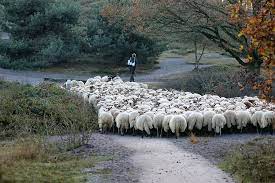
11 I am the good shepherd. The good shepherd lays down his life for the sheep. 12 He who is a hired hand and not a shepherd, who does not own the sheep, sees the wolf coming and leaves the sheep and flees, and the wolf snatches them and scatters them. 13 He flees because he is a hired hand and cares nothing for the sheep. 14 I am the good shepherd. I know my own and my own know me, 15 just as the Father knows me and I know the Father; and I lay down my life for the sheep. 16 And I have other sheep that are not of this fold. I must bring them also, and they will listen to my voice. So there will be one flock, one shepherd. 17 For this reason the Father loves me, because I lay down my life that I may take it up again. 18 No one takes it from me, but I lay it down of my own accord. I have authority to lay it down, and I have authority to take it up again. This charge I have received from my Father. (John 10:11-18, ESV)

Teaching: It is so clear. Jesus taught that he was and is the good shepherd to his people. To all who are “in Christ,” to use biblical language. Jesus Christ–the one who was and is the good shepherd–the one who was slain for sinners, is also the risen lamb to whom the whole cosmos will pay tribute, either in adoration or condemnation.

He is the shepherding God, you see. And he is good. Completely good. Holy. And he walks with the hurting through the valleys of this life. He restores them. He prapares tables for them. He anoints. This is the nature of the good shepherd. And Jesus said that he was and is that good shepherd, the one David wrote about in Psalm 23.

Encouragement: Consider the alternative. What if there were no shepherd? What if your sufferings are only yours alone? What if they had no purpose? What if there was no one to care? What if you are just so much cosmic dust, dust in the wind, as Kansas sang about? There would be no reason for you to whine or complain. Why? Because you don’t matter in that worldview. Nothing matters in that worldview. You’re just a speck of dust in an unguided biological machine that cannot account for itself, for mind, or for why anything should matter.

But in the biblical worldview, it all makes sense. You do matter. Your suffering does matter. And there is a good shepherd who offers himself to you in the gospel that runs throughout the Bible. There is an alternative to materialism and despair, dear one, and it comes by fleeing to the good shepherd. He is the wise and saving alternative. He has sustained others, and he can and will sustain you, too.

A Glimpse

The thunderstorm spent itself in less than five minutes. Brigades of staggering humidity hung as invisible pressing armies. The sun descended beyond the river to the west. Beyond the oaks. All was heavy and silent. And gold fell from the firmament.

God’s Whetted Sword?

If you ask people what they think God is like, how do they generally respond? Is it that God is holy? Is it that God is just? Is it that God is transcendent? Is it that God is immutable? No, those are not generally the responses. Usually the responses are along the lines of, “Well, I feel like God is just … um … you know … like … um, loving.”

Many modern sensibilities demand that God love, condone, and celebrate whatever fallen sinners laud. But is it possible that God is altogether different from fallen sinners’ nature?

Spiritual Warfare: Here’s an example of the alphabet jihadists chanting, “We’re here; we’re queer; we’re coming for your children!”

Again, is it possible that God is altogether different from sinners’ nature?

Isaiah’s Warning: To use the prophet’s language, All who fashion idols are nothing, and the things they delight in do not profit. Their witnesses neither see nor know, that they may be put to shame. Who fashions a god or casts an idol that is profitable for nothing? Behold, all his companions shall be put to shame, and the craftsmen are only human. Let them all assemble, let them stand forth. They shall be terrified; they shall be put to shame together” (Isaiah 44:9-12, ESV).

When I study the Scriptures, it’s shocking how many times God had to whet His sword in judgment over man’s sin. So often that sin involved perversions of sexuality.

There are reasons that the Lird forbids sleeping with animals. There are reasons God condemns pedophilia. There are reasons God condemns infanticide. It’s because fallen, sinful, twisted human beings engage in such things. Left to themselves, there is no bottom to man’s depravity.

There are reasons God honors and blesses the marriage bed and the raising up of godly children.

Because God is altogether holy. Holy, holy, holy, to use Isaiah’s language (cf. Isaiah 6).

David in Psalm 7:

I was reading in Psalm 7 recently. In verse 9 David writes, “Oh, let the evil of the wicked come to an end, and may you establish the righteous–you who test the minds and hearts, O righteous God!”

It surely strikes the unbeliever as pure silliness to read such a thing, right? Here is a man crying out to God for wickedness to come to an end. He wants, to put it in simple terms, good to win. His heart’s cry is for justice–true Godly justice–and goodness, and beauty to be ushered in. A triumphal procession, in other words, is David’s longing, a triumphal procession of the holy and clean and good.

Why does David pray like that?

Because of what we see in verses 11-12:

11 God is a righteous judge,
    and a God who feels indignation every day.

12 If a man does not repent, God will whet his sword;
    he has bent and readied his bow

Connection to the Big Picture:

God did whet His sword, of course. Not just in His raising up nations to bring low other nations. Not just in allowing invading armies to conquer Israel. Not just in Babylonian exiles.

Not just in World Economic Forums. Not just in efforts to establish a pagan one-world governmental system by self-styled elitists and billionaires.

Not just in depopulating the world via nefarious injections. Not just in having the wicked or cowardly and gullible call good evil and evil good.

He did it by the cross of Christ for all who will repent and believe the gospel. But it’s death to man’s pride in that exchange.

It’s God’s righteousness imputed to the broken and humble sinner because of the person and work of Christ. It’s the individual sinner’s sin imputed to the sin-bearing substitutionary atonement of Christ.

It’s the whetting of God’s sword, don’t you see?

If we will not come to Christ, the sword will devour us, because that is what our sin merits. And yet, God sends forth His light and truth via the gospel offer. Why? To redeem sinners.

When the alphabet mobs chant, “We’re here; we’re queer; we’re coming for your children!” I don’t know how much more brazen the spiritual darkness may become.

I don’t know what it will take for the West to awake and get engaged against the enemy of their souls, and the enemy of all righteousness.

In the end, dear ones, it’s not the rainbow-clad mobs we should most fear, but the One who has whet His sword of judgment for those who reject the gospel.

Butterflies, Psalm 8, & Some Questions

Narrative Thoughts: 

If I had another life to live and could pursue another career or passion, I would have loved to have been a wildlife conservationist or ranger of some sort, I think. Why? Because I could have studied zoology and learned how creatures are sustained and upheld by the creation upon which they are dependent, and perhaps played a role in wisely stewarding the earth, and perhaps encouraged others to do the same.

How one can study the intricacies and beauties and mysteries of nature and not be moved to contemplate who and what lay behind all of that beggars belief.

But I suppose that theology is the queen of the sciences for a reason. How so? Because the various ologies (biology, zoology, immunology, geology, archaeology, etc.) and schools of thought hinge upon the supreme artist and craftsman, the unmoved mover, the transcendent, God.

No intellectually honest person can study butterflies or hummingbirds and say to himself, “Yep, purely accidental. No rhyme or reason. Just matter in motion.”

The Word for the World:

Psalm 8 is among the most beautiful poems in the Bible:

1 O Lord, our Lord,
    how majestic is your name in all the earth!
You have set your glory above the heavens.
    Out of the mouth of babies and infants,
you have established strength because of your foes,
    to still the enemy and the avenger.

When I look at your heavens, the work of your fingers,
    the moon and the stars, which you have set in place,
what is man that you are mindful of him,
    and the son of man that you care for him?

Yet you have made him a little lower than the heavenly beings
    and crowned him with glory and honor.
You have given him dominion over the works of your hands;
    you have put all things under his feet,
all sheep and oxen,
    and also the beasts of the field,
the birds of the heavens, and the fish of the sea,
    whatever passes along the paths of the seas.

O Lord, our Lord,
    how majestic is your name in all the earth!

Some Questions:

  1. How can an atheist explain, much less justify, the existence of beauty?
  2. Isn’t it interesting how we long for beauty? (We vacation at beaches, snap photos of sunrises and sunsets, and water and shells, and of our loved ones on the sands, for example. Or we go to the mountains and try to capture their glories in similar fashion.)
  3. Isn’t it interesting that not only do we as a species love and admire beauty, but we also have the means with which to explore it? If we were just accidental unguided cosmic fizz, the odds we’d have eyes to relish the pastiche of colors this world affords would be quite called into suspicion, would it not? And the fact that we have ears to hear the trilling of the birds and the sounds of our children coo, that does seem to call for an intelligent designer, does it not?

A Link, Snippets of a Conversation, & Encouragement

Intro: I had no idea who Jason Aldean was and is. But that is over now. Why? Apparently, to write and/or sing about the obvious is hate speech in clown world, brought to you courtesy of all things progressive/Leftist/pagan/woke, etc.

But Jason’s probably laughing all the way to the bank. His type of pop country is not really to my taste, but I rejoice with him and the millions of others who resonate with the song’s message. Small town life is different from urban life, eh? Wow, who knew? Small town folks are generally kind, neighborly, and often culturally Christian, eh? Wow, who knew? Urbanites tend to be less kind, seldom say ‘sir’ and ‘ma’am’, and are often secular, eh? Wow, who knew?

Earth-shattering insights. Completely groundbreaking in their originality.

Here’s Jason’s song. Better be prepared to be called a nazi, a racist, and all other manner of deplorable appellations:

Snippets of a Conversation: Today when I was on the treadmill in the gym, one of my friends and I were texting back and forth. He always encourages me with his ideas. He is about to launch a podcast and YouTube channel. I think he said the title is to be “Written on Their Hearts.” It’s to be biblical and aimed at engaging the culture. My buddy is well-read, biblical, articulate, and versed in the world’s way of thinking. That is, he knows the playbook of the secularists, the globalists, the pagans, the Hollyweirdos … but I repeat myself.

A Link: Larry Alex Taunton sat down with Chad Prather and laughed intelligently at all the madness we see continuing to unfold in clown world. It was a wonderful episode. I much prefer to read than to watch podcasts, but I concede the fact that most folks are not going to do the work of reading deeply. Since that is the case, enjoy Larry Alex Taunton and Chad Prather as they dialogue intelligently, laugh, lament, then laugh again at the moral melee brought to you courtesy of the wokesters, the alphabet jihad, the pagan, and the oh-so-tolerant progressives:

Encouragement: The enemy of men’s souls knows the truth-tellers are over the target. He knows the vast majority of folks know that Harry is not Sally, and Harry does not menstruate. Harry doesn’t even have babies. Again, what news, right? Truly amazing insights.

Laugh at the devil, Christians. Laugh at the insanity. Laugh at the clown world he is attempting to institute and with which he is indoctrinating the naive, gullible, ignorant, and morally weak.

But gird up your loins, too, Christians. Be of good courage. Be not afraid. Count the costs. Fight like men. Trust the Lord.

Don’t expect the world’s applause. The world system hates you. Always has. That is the nature of truth-telling. It’s not popular. But in the end, truth wins, even through all the lies of clown world. And judgment is real, too. Ultimate judgment.

So, be of good courage. Unite with the few brave biblical souls remaining, and be of good courage.

Be faithful to engage the enemies of the isms–atheism, paganism, secularism, scientism, naturalism, progressivism, etc.–in hopes that God may grant repentance and faith.

Why do you seem surprised when fiery trials come upon you? Have you not read the Book? “Beloved, do not be surprised at the fiery trial when it comes upon you to test you, as though something strange were happening to you” (1 Peter 4:12, ESV).

No Designer, eh?

My thanks to my friend again for pictures of the avian world.

When one ponders the male and female birds, their colors, their intricate designs, their camouflage, their displays, their being fed and provided for, their being sustained, their songs, their joy and their flight, it humbles the proud and exalts the name that is above every name.

But one has to be honest and humble and teachable to see and rejoice rightly. The fool is proud and will persist in his folly. But we continue to show and to share in hopes that mercy will triumph over judgment.

All the Way to Death

“Americans no longer talk to each other, they entertain each other. They do not exchange ideas; they exchange images. They do not argue with propositions; they argue with good looks, celebrities and commercials.”

When I read this the first time, I was in my twenties. When I read it again, I was in my thirties. When I read it again, another decade had come and gone.

Now I am reading it again. Reading, yes. Reading.

Tolle Lege.

Young Bucks

Some of the boys came out during the daytime recently.

They are still in velvet and ‘friends’ for the moment.

But autumn is coming, and changes in hormones, and girls. And, well, things will change.

How anyone can watch nature’s cycles and say, “Yep, just random. No order. Accidental unguided matter in motion” is both intellectually dishonest and blind to what is plain and incontrovertible.

I love watching these creatures. They, like the rest of creation, have an author.

And that author is anything but silent.

Morning Strut

At a military observance today in honor of veterans of the Korean War.

It was 70 years ago that the Korean War Armistice was signed under Eisenhower, and the 38th parallel and the DMZ became (for those who pay attention to history) markers of yet another war.

While in NGA, I was also able to watch the turkeys strut their stuff for a bit, too, prior to the observance.

To the Marine who spoke at the observance, to the hosting organization, to the Patriot Guard Riders, and more, salute.