Thoughts on Psalm 55: Encouragement Amidst Enemies

Introduction: When I was a kid in high school I went with a friend to see one of music’s great lyricists in concert. Bob Dylan was playing at Chastain Park and we got tickets and saw him. I knew all the words to his songs. I cannot say that it was a very good show. He seemed oblivious to his audience and made few efforts to acknowledge that we paid good money to come see him. Just a little, “Hey, thanks for coming out” would have been nice. I was still glad I went, but was disappointed that he didn’t play one of my favorites from the massive Dylan catalogue, “Shelter from the Storm.” Here are the lyrics:

‘Twas in another lifetime, one of toil and blood
When blackness was a virtue the road was full of mud
I came in from the wilderness, a creature void of form
Come in, she said
I’ll give ya shelter from the storm

And if I pass this way again, you can rest assured
I’ll always do my best for her, on that I give my word
In a world of steel-eyed death, and men who are fighting to be warm
Come in, she said
I’ll give ya shelter from the storm

Not a word was spoke between us, there was little risk involved
Everything up to that point had been left unresolved
Try imagining a place where it’s always safe and warm
Come in, she said
I’ll give ya shelter from the storm

I was burned out from exhaustion, buried in the hail
Poisoned in the bushes an’ blown out on the trail
Hunted like a crocodile, ravaged in the corn
Come in, she said
I’ll give ya shelter from the storm

Suddenly I turned around and she was standin’ there
With silver bracelets on her wrists and flowers in her hair
She walked up to me so gracefully and took my crown of thorns
Come in, she said
I’ll give ya shelter from the storm

Now there’s a wall between us, somethin’ there’s been lost
I took too much for granted, I got my signals crossed
Just to think that it all began on an uneventful morn
Come in, she said
I’ll give ya shelter from the storm

Well, the deputy walks on hard nails and the preacher rides a mount
But nothing really matters much, it’s doom alone that counts
And the one-eyed undertaker, he blows a futile horn
Come in, she said
I’ll give ya shelter from the storm

I’ve heard newborn babies wailin’ like a mournin’ dove
And old men with broken teeth stranded without love
Do I understand your question, man, is it hopeless and forlorn
Come in, she said
I’ll give ya shelter from the storm

In a little hilltop village, they gambled for my clothes
I bargained for salvation and she gave me a lethal dose
I offered up my innocence I got repaid with scorn
Come in, she said
I’ll give ya shelter from the storm

Well, I’m livin’ in a foreign country but I’m bound to cross the line
Beauty walks a razor’s edge, someday I’ll make it mine
If I could only turn back the clock to when God and her were born
Come in, she said
I’ll give ya shelter from the storm

The phrase “shelter from the storm,” like so many of Dylan’s lyrics, comes from Scripture. Isaiah 4:6 reads, “There will be a booth for shade by day from the heat, and for a refuge and a shelter from the storm and rain.” That passage’s context is about “God as a refuge to his people in all weathers,” as Matthew Henry notes.

Segue to Psalm 55: This coming Sunday I will assemble with fellow Christian pilgrims, and with them I will open to Psalm 55 which centers on David’s anguish of soul amidst so much that is false. David cries out to God. In verse two, he lays it out all before the Lord with his heart’s cry: “Attend to me, and answer me; I am restless in my complaint and I moan.”

I adore the book of Psalms because it keeps life real. It does not paint a spiritual facade over the suffering that people endure. The psalms show people like David–fallen but redeemed people like David–suffer amidst a vicious pagan world system replete with leaders who long ago sold out to the demonic. They serve their master, the devil. Meanwhile, David and other pilgrims like him, suffer while trying to do good. David is clearly a sinful man, but unlike the unregenerate masses, David repents and returns to God. He knows he will answer to God. He will give an account. There will be a reckoning.

David writes of treacherous people who betrayed him: “My companion stretched out his hand against his friends; he violated his covenant. His speech was smooth as butter, yet war was in his heart; his words were softer than oil, yet they were drawn swords” (Psalm 55, 20-21 ESV).

Who cannot identify with that experience? Who among us has not trusted someone only to be betrayed?

But all of this is to be understood in light of the metanarrative–the overarching message of the Bible–namely, that the ultimate king was not David; it was and is Jesus. And he was betrayed. He was lied about. He gave himself for sinners. He endured the wrath that sinners merited, yet was without sin himself. He was made sin for all who who repent and believe and flee to him in the gospel. Shelter from the storm.

David recommits himself to God in the last verse: “But I will trust in you” (Psalm 55:23b ESV). Shelter from the storm.

David recognizes that treachery is afoot, both far and near. Therefore, the wise will trust the Lord, not the fake professions of those following the father of lies. David knew where his shelter from the storm was. It was a place and a person.

Connections to Our Day: When you listen to politicians utter bromides about how wonderful they are, about how they’ll fix your problems, just look at their actions rather than listen to their empty words. They print money as fund whores gush borrowed inflated funds into Ukraine but America’s borders remain open for continued invasion. They may shut down the U.S. government next week because we’re out of money, but we send billions of armaments to Ukraine because we apparently believe some borders are important. Storms are gathering, you see.

Regardless of your politics, surely you see that. Storms are gathering. Just look what actions are taking place. Open borders; a total breakdown of the prosecution of violent crime; fentanyl-laden druggies gesticulating in crazed eruptions under our bridges and at intersections; kids being castrated, drugged, and mutilated by government indoctrination camps and medical Josef Mengeles of today. The children cannot read or think critically, but they are being drilled in the alphabet jihad pronoun nonsense. Storms are gathering, you see.

And where is shelter for the godly man or woman to be found? Read Psalm 55 and see the hope of all who hate wickedness and love goodness.

Encouragement: To quote David’s words again but from another of his poems, “Some trust in chariots and some in horses, but we trust in the name of the LORD our God” (Psalm 20:7 ESV). That’s the shelter from the storm, beloved, the shelter that conquered the lies and is a refuge for all who will come.


Trees & the Gospel

Question: In the Bible, trees are central. Why, do you think, God the Son was made to die upon the tree? It’s reflexive and flippant to say, “Well, because that was Rome’s way: crucifixion.”

Anyone who has spent even an inkling of time in Scripture and history recognizes there is much more going on here.

On the Track: Today I got in a few miles in on the track. One of the many beautiful trees left standing was this one. The second one is one (or perhaps more than one) you have seen before, as it is/they are what I see in the evenings as I return from work.

Question: Is it possible God speaks through timber, through the rooted message that springs from his earth’s timber, hangs upon his timber, and fashions that timber to honor his victory? As for me, you can likely induce my view. God speaks, dear ones. One need only ears to hear and eyes to see. And then: praise.

As I was in Ezekiel’s book later in the day, I was again prodded to think on these things. God spoke to his prophet Ezekiel thus:

22 Thus says the Lord God: “I myself will take a sprig from the lofty top of the cedar and will set it out. I will break off from the topmost of its young twigs a tender one, and I myself will plant it on a high and lofty mountain. 23 On the mountain height of Israel will I plant it, that it may bear branches and produce fruit and become a noble cedar. And under it will dwell every kind of bird; in the shade of its branches birds of every sort will nest. 24 And all the trees of the field shall know that I am the Lord; I bring low the high tree, and make high the low tree, dry up the green tree, and make the dry tree flourish. I am the Lord; I have spoken, and I will do it.” (Ezekiel 17:22-24 ESV).

Ephesians 5: The Power of Contrasts

Introduction: There is a lot of moralistic therapeutic deism (to use Christian Smith’s phrase in his book Soul Searching) about. I lament how many people have chucked the Christian faith because they were insulted at the shallowness and baby talk that passes for ostensibly Christian teaching. If my mind is not engaged, I check out. I think there may be others who understand.

I was having to do what I would normally caution against unless it’s necessary: I was having to view the Christian body today via sermons from solid expositors on YouTube. I was blessed to easily find Sinclair Ferguson’s ministry again. He is a resource for me, one to whom I can rely for depth and wisdom. I have read many of his books and have benefited from him immensely.

With Ferguson my mind is engaged. He refers oftentimes in his teaching to church history, so that believers today understand our kinship and lineage with saints who have gone before us. I wish that Christians today would study church history. I’m sitting in my reading chair at the moment and on my shelves are the sermons of the Puritans, the works of Jonathan Edwards, volumes of Lloyd-Jones and seminal volumes from the Reformation. Why? Because one sees there the connections to the gospel and to the saints of the past and to the development of theology as we refine our understanding in light of the authority of Scripture.

Ephsians 5: One of my favorite sections of Scripture comes in Ephesians 5. I think I appreciate it so much because it is filled with contrasts: not this way but that way; rather than that, do this, etc. We learn best by seeing contrasts. Here’s the way Paul puts it in Ephesians 5:15-21:

Look carefully then how you walk, not as unwise but as wise, making the best use of the time, because the days are evil. Therefore do not be foolish, but understand what the will of the Lord is. And do not get drunk with wine, for that is debauchery, but be filled with the Spirit, addressing one another in psalms and hymns and spiritual songs, singing and making melody to the Lord with your heart, giving thanks always and for everything to God the Father in the name of our Lord Jesus Christ, submitting to one another out of reverence for Christ.

Paul Calls Believers’ Attention to the Contrasts:

V. 15–Unwise vs. wise

V. 16–Wasting of time vs. stewardship of one’s allotted time

Vv. 17-21–Secular squandering vs. sacred vocation

Ephesians 5:16 remains one of my favorite gems of Scripture: “making the best use of the time, because the days are evil.” The older I get, the fewer days I have remaining. That’s a tautology and self-evident. And so this gem from the NT becomes more and more potent when I think on it and in light of the biblical narrative.

We have a portion of days marked out for us. Therefore, the wise person will steward those days rather than squander them. I don’t know about you, but when I reflect on how much time I have wasted on things and activities that were just wood, hay, and straw, I am convicted. I don’t want to repeat that pattern. I think that’s why this passage from Paul is so powerful. It shows the sundry contrasts between the foolish way vs. the wise way.

Encouragement: Maybe it’s just to me, but maybe to you, too: If you have ever known in your gut–at the visceral level–that you have one life, and that you long for it to count for the right reasons, and you long to be a faithful doulos, may we heed what has been revealed: “Whatever your hand finds to do, do it with your might, for there is no work or thought or knowledge or wisdom in Sheol, to which you are going” (Ecclesiastes 9:10).

If You’re Surprised by This, That’s the Saddest Indicator

Bottom Line, Up Front: Andy Stanley, the face of the Atlanta-area North Point Community Church, continues to reveal his true colors and consistent theological trajectory away from biblical orthodoxy and the Christian worldview.

Remember Paul’s Address to the Ephesian Elders: When I was ordained into Christian ministry, the presiding elder was the professor from my seminary from whom I saw the most consistent biblical walk. And the text he preached from that day was this passage from Acts 20 where Paul warns of false brethren and of how believers need to know up front that the visible church is filled with false converts and false leaders.

Dr. C. taught me a course in spiritual disciplines of the Christian life and another course in Christian marriage. He was a wise man, a humble man, but above all, he was a discerning man. I can still hear his voice in my head, even though he has since gone to be with the Lord. But he used to say, “Jon, I think when we get to heaven, there will be many surprises. I think we will find that many we thought would be there, aren’t. And many we thought would not be there, are. I think there will be many surprises.”

We Were Warned: These are Paul’s words to the Ephesian elders:

Pay careful attention to yourselves and to all the flock, in which the Holy Spirit has made you overseers, to care for the church of God, which he obtained with his own blood. I know that after my departure fierce wolves will come in among you, not sparing the flock; and from among your own selves will arise men speaking twisted things, to draw away the disciples after them. Therefore be alert, remembering that for three years I did not cease night or day to admonish every one with tears. (Acts 20:28-31 ESV)

Of course there are innumberable other warnings of fierce wolves and false teachers, but this is the passage that Dr. C. preached on. I remember it well. Each time I read the passage I can still hear Dr. C’s voice in my head and feel his hands on my shoulders in the church that day as he and other elders and my loved ones were present. It was sage counsel from a sagacious man and based upon the sagacity of God as reavealed in Acts. Wisdom upon wisdom upon wisdom.

The Question: Why is anyone surprised that Andy Stanley is hosting such a conference? If you are surpised by this, you are likely part of the problem. And what is that problem? Lack of discernment. Spiritual blindness. Obtuseness. Lack of wisdom.

Wolves, Sheep, & the Sheepdogs:

Wolves run in packs; they prey upon the vulnerable, the weak. They devour. They creep in, often on soft paws, but they devour nonetheless. If you’ve ever seen the remains of a wolf attack, it’s bloody, but the wolves eat just fine.

Sheep are not discerning creatures. They need to be shepherded and protected from the wolves. Because sheep desire comfort above courage, and discernment is not a characteristic associated with sheep.

Sheepdogs are the ones who have counted the costs of actually engaging in battle against the wolves for the sake of the true sheep. We have very few sheepdogs today or in any day.

Takeaway: For the discerning, this latest revelation from Andy is about as surprising as the fact that the sun will rise tomorrow. But for the sheep who refuse to see, let us pray that God will send you some sheepdogs who actually are discerning, who actually do care, who actually do act with courage and conviction, and will sacrifice themselves for the sake of the true sheep.

Folks, you will be forced to care. None of us escapes. Theology matters. You can pretend you’re exempt from the lies that your culture is feeding you, but you will be made to care. That is the nature of wolves. They attack. Andy just happens to do it with a soft voice and smooth hands and bromides about a “quieter middle space.”

Wolves, sheep, and sheepdogs. And the discernment seems to be in the first and third groups, by and large, and you are witnessing the results.

Below are linked three articles on this latest evidence of a continued falling away.

  1. https://wng.org/opinions/the-train-is-leaving-the-station-1695036498

2.

3. https://wng.org/podcasts/culture-friday-counting-the-cost-of-biblical-ethics-1695333263

Time in the Barber’s Chair & Thoughts on Kinship

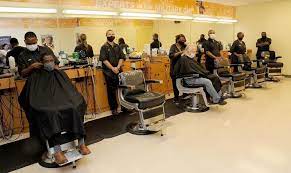
Introduction: I was blessed to get one of the best barbers at the barber shop. To judge by appearances, he and I could not have been more different. He was part Hispanic and part Black. I am thoroughly of northern European stock. He had a deep and rich skin color that reminded me of trips with my dad’s family to Sarasota, FL in the 1980s where the wind carried scents of coconut oil. His skin was that tone of rich brown one might associate with Brazil. I have the pigmentation of Anglo-Saxons who prefer English rains over Italian gloamings. He had tattoos all over his arms and hands and neck. I am the last guy that would ever get a tattoo. He spoke with the rhythm of hip-hop lyrics and dressed like one who trafficked in that lifestyle. I speak like an English literature teacher. But here’s where it all arrested me. When he saw me, he said, “Hey, Chap. How you doin’?” Even though I was not in uniform, he recognized me and was kind. He knew I was a chaplain and he had launched the conversation.

I told him how to shave my head and in no time at all, I was all done. He held up the square plastic-handled mirror for me to check my cut at the end, and I nodded and smiled and said, “You’re fast, brother. You’ve done this a lot. I appreciate it.”

We walked over to the register. I handed over my debit card and paid and tipped him generously. As he was running my card, he told me of his plans for the eveving. “I gotta go get my son and take him to the ballgame. Then I gotta get my daughter from her mom’s so she can stay with me tonight, Chap.”

“You have two kids, is that right?”

“Yeh, two. But dawg, they keep me so busy, Chap.”

“I hear you,” I said.

“Have a good one, Chap, and thanks,” he said.

“Take care, brother,” I said, taking my debit card. I walked out from the barber shop and felt the air conditioning cool on my freshly shaven scalp.

As I exited the barber shop and walked out to my car, I thought of him, of how he shared about his two children, of how he and the mother of the children are now ostensibly separated, of how busy he would be with dad duties after he leaves the barber shop.

He and I were so different by appearances–he with his inked skin and hip-hop lifestyle and the cadence of his speech that reflected the musical styles he relished, etc.

But we are both dads. We both love our children. We both work to provide for those we love. We both enjoy music.

I felt a sudden guilt and sadness over my former initial discomfort when I focused on all the tattoos and appearances, and I had been afraid I’d not know the handshake regimen he used with some of his other customers.

But he was so kind, and he simply operated out of his world. As did I. He was the better person. And now, I will seek him out for my next trip to the barber shop. He may not know it but I learned from him today.

It’s All There from the Beginning

One of the Most Haunting, Powerful, Portentous Openings:

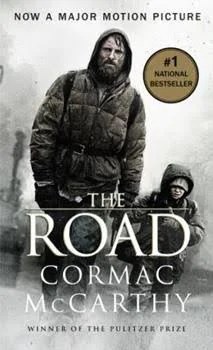
When he woke in the woods in the dark and the cold of the night he’d reach out to touch the child sleeping beside him. Nights dark beyond darkness and the days more gray each one than what had gone before. Like the onset of some cold glaucoma dimming away the world. His hand rose and fell softly with each precious breath. He pushed away the plastic tarpaulin and raised himself in the stinking robes and blankets and looked toward the east for any light but there was none. In the dream from which he’d wakened he had wandered in a cave where the child led him by the hand. Their light playing over the wet flowstone walls. Like pilgrims in a fable swallowed up and lost among the inward parts of some granitic beast (Cormac McCarthy, The Road, New York: Vintage International, 2006), 3.

I have read the novel as many times as I have my favorite pieces from the classics. I think I’ve only read Hamlet, Macbeth, King Lear, and Othello more often than I’ve read The Road. Why? Well, so much is put before the informed reader amidst McCarthy’s minimalism in language.

In the first lines alone we have so much with which to grapple. The imagery is haunting. It’s night when the story opens but it’s one of many nights that is “beyond darkness,” suggesting ominousness. There are laden portents of dark forces at play from the very first paragraph. Vision, the ability to see clearly, is obscured. McCarthy writes that it is like “the onset of some cold glaucoma” and that the world is “dimming away.”

The figurative language kicks with feet in the womb of meaning. The world darkens. Evil forces work, but the remedy (remote though it may seem at the moment) is in connection–in love, in the reaching out to touch the son. That’s the image in the very first lines of the novel. When all is dark, cold, gray, blasted apart, the hope is connection. And that connection is seen in the bonds of love. And that love is seen from the very genesis of the story in the relationship of the father and the son, and the sacrifice for and from love.

Connection to the Contemporary: When I listen to the cultural din that characterizes much of contemporary media, it can be depressing. Why? Because one could come to believe that man really is a useless passion, as Sartre wrote. It just appears that critical thinking has been abandoned. It appears that kindness has been abandoned. It appears we have grown so used to lies now that we don’t even expect to be told the truth. We just assume we’re being lied to. It’s a time where there is a death of trust. And when you have a culture that does not trust itself, you get dissolution and death. And that’s precisely what we are seeing. So, folks retreat into their bubbles of Netflix and YouTube and endless mindless distractions rather than going to battle against the lies and the father of lies.

That’s one more reason I think The Road is especially poignant. McCarthy saw, at least in my view, where we were. He saw that the center was not holding and that mere anarchy was being loosed upon the world, a la Yeats’ “The Second Coming.” And he wrote this profound novel to show that devastation was not just possible but rather likely. But he also wrote this profound novel to show the means by which hope is enkindled and life is redeemed. It hinges upon the father, the son, and the light that is carried. Folks who have any semblance of a biblical worldview should perk up when such terms are used in a novel.

I don’t know if McCarthy was a Christian. He certainly knew about the gospel, but that is not the same as being a Christian–actually being in Christ. But like the motif of light in The Road, I tend to look for “the good guys,” for the light, and see the love that exists between a father, a son, and the spirit that causes connection and light amidst all that darkness.

Even the Lame Eat at the King’s Table

Intro: Tonight after I drove back to my place of work and settled into my chair after a light supper for my evening reading time, I was in a wonderful novel entitled Revolutionary Road by Richard Yates, a book that was a finalist for the National Book Award in 1962. This is my first time reading it. It is a fine read in my view. Why? For one reason, when Postmodernism’s showiness was all the rage in the 1960s, Yates wrote in the tradition of realism. He was more like John Updikde that John Barth. I enjoy many of the finest writers from the literary schools of Victorianism, Realism, and Modernism, but Postmodernism gets so solipsistic and self-absorbed that the absurdities grow tiresome.

At the end of the day, I long for stories that hold together, that cohere, that tell the truth, and address the human predicament. My favorite novels all do that. Great Expectations, David Copperfield, Madame Bovary, The Great Gatsby, The Road, All the Pretty Horses, The Crossing, and John Updike’s best novels all more than satisfy. And the short stories of Flannery O’Connor, Hemingway, Alice Munro, and Larry Brown are unbeatable. They repay reading and rereading over a lifetime; they are that profound. How can one read Chekhov just once? That would be sinful. Read his stories. Finish the last page. Then start again. It’s the same way I feel about what I wanted to write about tonight: 2 Samuel 9.

Connection to Scripture: As I was in my chair reading, part of my reading tonight was in the Old Testament book of 2 Samuel. It’s a precious part of Scripture because it is replete with stories of David’s rise to prominence and leadership. But it’s precious for another reason, too. We see David’s generosity and David’s tenderness.

I think so often we tend to focus on David as a warrior-king, as a national leader, as a man of war, etc. that we downplay David’s tenderness. Even when he had every right to be spiteful and unforgiving to the family members of a man who sought his life (Saul), we see David (not always, of course, but at least in 2 Samuel 9) be tender to those who could in no way repay him. We see, in short, a man who gave and who expected nothing in return. Stick with me as I look at the story of David and Mephibosheth.

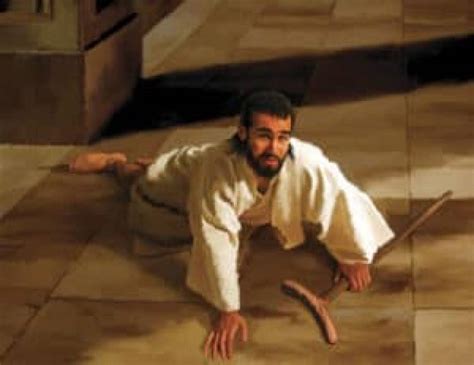
Context: Mephibosheth was lame in his feet. He was not going to be a soldier; he was not going to rise to a position of prominence because of his looks, acumen, or athleticism. Moreoever, he was the grandson of David’s former mortal enemy, Saul. Mephibosheth should have expected nothing from David except scorn and possibly vengeance or worse. But that was not David’s nature. David was not generally a spiteful man. He was a tender man, slow to anger, compassionate, forgiving of his enemies, and a man who kept short accounts with God.

Did David oftentimes have days and seasons of sin in his life for which he reaped tragic consequences? Yes, of course. The list is long. But David was a man who returned to God (Psalm 51), a man who loved the Lord and knew that the Lord always does what is right.

David’s Kindness: Verse 1 of the chapter begins:

And David said, Is there still anyone left of the house of Saul, that I may show him kindness for Jonathan’s sake?”

How many of us would have done what David did? Here was a man who actively sought ways to do good to those whom he (David) would naturally harbor the most unforgiveness towards–the lineage of Saul. But Saul did have Jonathan, a truly good son and dear friend to David. And David wanted to honor “the house of Saul” in spite of the past.

And you know what happened, right? Mephibosheth “[would] always eat at [the king’s] table” (2 Samuel 9:10).

Why? Because of the king. Read that again: because of the king.

Encouragement: One of the motifs I try to stress to the saints in class at our church is this: all of the Bible is telling one coherent story.

Mephibosheth had nothing to offer the king. Mephibosheth was a cripple. He was weak. And yet the king (David) condescended to him.

The king came down, you see, and offered that weak and lame man a seat at the king’s table. Folks, if you don’t connect the dots, I don’t know what else there is to say: it’s right there–the gospel.

The king invites us lame and broken and unworthy to a seat at the table. And the king does it out of pure unmerited favor. It’s grace towards us Mephibosheths.

Be encouraged. He is not a king far away. He has come down to us and invites us to sup with him. That is incomparably good news.

Struggling to Praise God: Thoughts on How Pilgrims Endure When the World Mocks

Introduction: If we are honest, we admit there are times it is difficult–and maybe it sometimes even feels impossible–to pray. We might struggle to find the right words. We might be so overcome with emotion that words don’t come but tears do. We might opt to recite prayers that we know from church history, creeds, confessions, memory, habit, or from Scripture.

Connection: One of the most beautiful and encouraging things about the Bible is that it shows us how we really are, not how we sometimes would like to think we are. No, the Bible keeps it real. It shows us time and again that believers throughout history have sometimes struggled to pray, struggled to praise, struggled to overcome the enemies of the true faith. They were mocked. People scoffed at them and their faith. And despite sometimes feigned bravado, people hurt people. And hurt people especially hurt people.

Psalms 42-43 are just such examples of what I mean. The Sons of Korah penned these two poems/hymns/psalms. And their theme is straightforward. It occurs as the refrain three times (Psalm 42:5, 11 & Psalm 43:5):

Why are you cast down, O my soul,

and why are you in turmoil within me?

Hope in God; for I shall again praise him,

my salvation and my God.

Encouragement: Tomorrow morning, I will gather with fellow Christian pilgrims and open Psalms 42 & 43 with them. Why? To show them (and myself) that “whatever was written in former days was written for our instruction, that through endurance and through the encouragement of the Scriptures we might have hope” (Romans 15:4).

We will see how believers should respond when the pagan world mocks and jeers and shouts, “Where is your God?”

We will find encouragement to see we are not unique in history. Believers have always had enemies. That’s a good thing; it shows you stood for something.

Stand fast, dear ones. The unbelieving, rejecting world laughs now, but their scoffing is temporary and destined for a terrifying end.

As Edgar sums up King Lear at the conclusion of the play that bears Lear’s name:

The weight of this sad time we must obey,

Speak what we feel, not what we ought to say.

The oldest hath borne most: we that are young

Shall never see so much, nor live so long (5.3.25-28).

Prophets vs. Politicians

Introduction: In one of the books I’m currently reading, I came across this quote:

In every age, including Elijah’s and our own, there are too many politicians and too few prophets. Politicians tell people what they want to hear, prophets tell people what they need to hear. Politicians are worried about keeping their power, prophets are worried about honoring their God. Politicians are covert, and dishonest, prophets are overt and honest. Politicians say what they want, prophets say what God wants. Today, as much as in the days of Elijah, we need far more prophets and far fewer politicians. This is especially true in the church where the politicians too often get onto the board, into the pulpit, or running the denomination.

Segue: Remember the Christian kitschy fad a few years back with the plastic bracelets that read, “What Would Jesus Do?” Sometimes they were just abbreviated: WWJD.

You know what’s interesting? We don’t have to guess. He actually spoke. He actually wrote 66 books. He actually has told us so that we are not left in the dark. Here are just a few examples:

  • O Jerusalem, Jerusalem, the city that kills the prophets and stones those who are sent to it! How often would I have gathered your children together as a hen gathers her brood under her wings, and you would not! (Matthew 23:37)

Here’s another example:

Jesus said to them, “Have you never read in the Scriptures:

“‘The stone that the builders rejected has become the cornerstone; this was the Lord’s doing, and it is marvelous in our eyes’?

Therefore I tell you, the kingdom of God will be taken away from you and given to a people producing its fruits. And the one who falls on this stone will be broken to pieces; and when it falls on anyone, it will crush him.”

When the chief priests and the Pharisees heard his parables, they perceived that he was speaking about them. And although they were seeking to arrest him, they feared the crowds, because they held him to be a prophet. (Matthew 21:42-46)

And here’s another example:

And Jesus said to them, A prophet is not without honor, except in his hometown and among his relatives and in his own household” (Mark 6:4).

And Paul’s Words to Timothy, as yet another example:

For the time is coming when people will not endure sound teaching, but having itching ears they will accumulate for themselves teachers to suit their own passions, and will turn away from listening to the truth and wonder off into myths. As for you, always be sober-minded, endure suffering, do the work of an evangelist, fulfill your ministry (2 Timothy 4:3-5).

Stephen was about to be murdered:

Remember the book of Acts? Remember how the whole point of the book of Acts is what the young Christian church was facing amidst great suffering and persecution? Remember how Stephen was stoned with rocks by those who hated his message of the truth? Remember how Jesus told his people that the world system hates the truth and kills the prophets of truth? Remember Acts 7, as just one example?

The whole point of Acts 7 is that Stephen is telling the truth to a hard-hearted people who largely rejected the truth and him. Why? Because he was a man of courage and conviction who told the truth. And they killed him because of it. He was not there to curry favor. He was not there to be what the New Tesament calls a man-pleaser: “For am I now seeking the approval of man, or of God? Or am I trying to please man? If I were still trying to please man, I would not be a servant of Christ” (Galatians 1:10).

No, Stephen loved people. He actually loved them. That is why he told them the truth.

The whole thrust of the argument Luke makes throughout Acts by recording the acts of the apostles is how God’s judgment is just and deserved. Why? Because fallen sinful people don’t like truth. They crave soft words, sweet words, words that comfort rather than confront them in their position before the holy God of Scripture. The crowds didn’t murder Jesus and Stephen and Paul for being nice and proffering sentimentality.

Stephen calls them “stiff-necked people, uncircumcised in heart and ears, you always resist the Holy Spirit. As your fathers did, so do you. Which of the prophets did your fathers not persecute? And they killed those who announced beforehand the coming of the Righteous One, whom you have now betrayed and murdered, you who received the law as delivered by angels and did not keep it” (Acts 7:51-53).

Stephen was murdered. Paul was executed. Peter was crucified. John was exiled. Thomas was run through with a spear. Jesus was spat upon, mocked, flogged, whipped, and crucified. These are not insignificant details, dear ones.

Encouragement: “For whatever was written in former days was written for our instruction, that through endurance and through the encouragement of the Scriptures we might have hope” (Romans 15:13).

May God be pleased to send us courageous men who are faithful to the Scriptures. Why? Because as Stephen was uttering his magnificent speech before those casting stones to murder him, Stephen said these words that day: “Behold, I see the heavens opened, and the Son of Man standing at the right hand of God” (Acts 7:56).

And then Stephen saw his Lord and prayed as he died at the hands of wicked men, “Lord Jesus, receive my spirit” (Acts 7:59). And the Lord Jesus did. But Stephen was faitfhul amidst the crowds. He was not in it for Stephen; he was in it for truth. Because he loved the truth, he was courageous to tell the truth, the whole truth, and nothing but the redeeming truth. And he went to his reward.