Evening with Willie Morris, Skip the Dog, & Spit McGee

If you adored The Andy Griffith Show, skipping stones across the pond, placing pennies on the railroad tracks, and have ever been frog giggin’, Willie Morris is probably your type of writer, too.

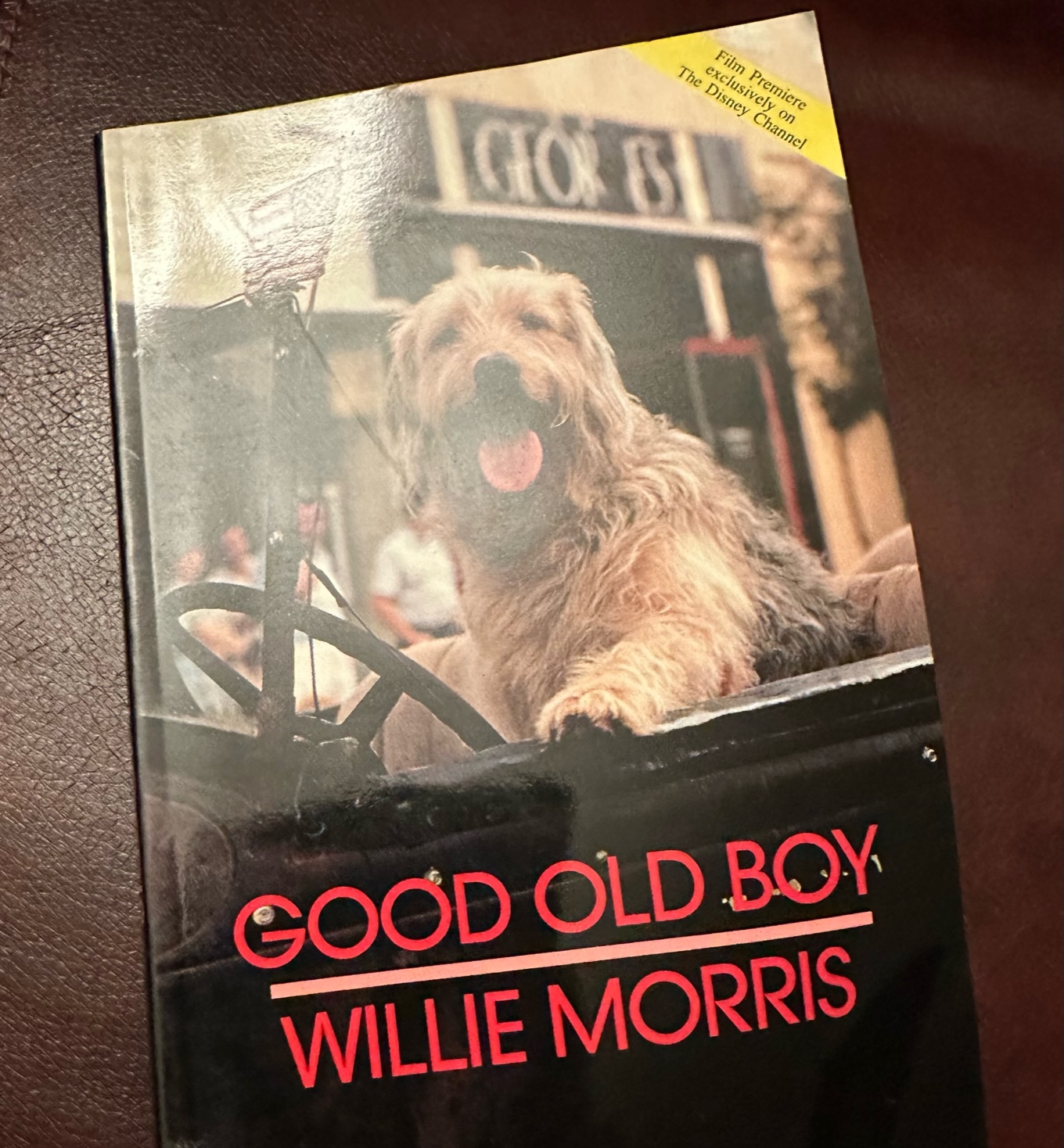
I am reading his Good Old Boy and My Dog Skip this week, and when I went for a stroll in the gloaming, the sunset burned in majestic bronze, and I came across two mature does in the river bottom just when it was growing dark enough, and they did not even dart into cover when I approached.

When you read a master of capturing simple pleasures, especially ones that bring your formative years back to you in burning and joyous remembrance, it’s a good day.

Thanks, Willie, for bringing it all back.

An Enduring Dozen

Recently I came across a former peer of mine who’d written on books that mean a great deal to him, so I thought I’d share a glimpse at 12 books that mean a great deal to me and speculate at perhaps why each has a hold on me.

These books and/or collections I return to. I’ve bought multiple copies over the years. They’re marked up, the way, say, one’s Bibles might be worn from writing and years of reading from them.

If you have books that continue to move you, would you let me know what they are? They may deserve a similar place in my literary affections.

Here’s an enduring dozen for me:

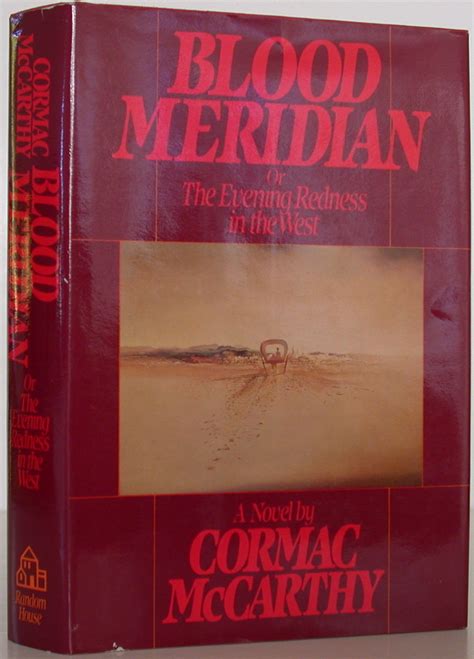
Cormac McCarthy’s Blood Meridian. By far the most violent book I’ve ever read, it explores McCarthy’s enduring themes about God, evil, judgment, and man’s capacity for both unspeakable evil and goodness.

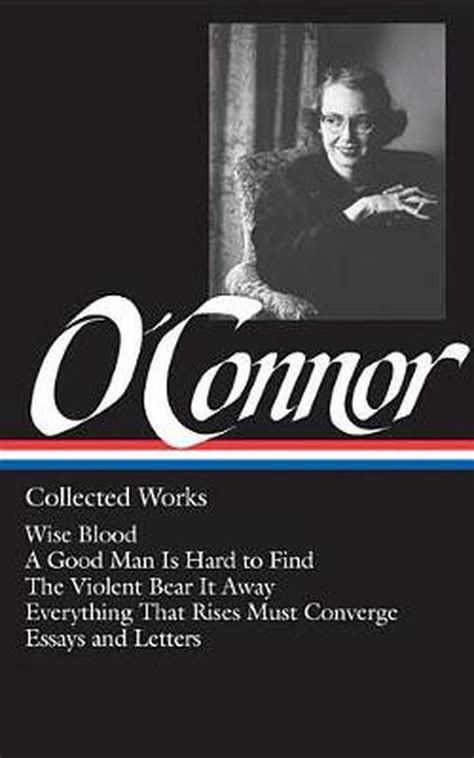
The Collected Works of Flannery O’Connor. I have read O’Connor so much that it is difficult say anything about her that has not already been well said. But for any unfamiliar with her genius, she excelled in making sin so blatant, so egregious, so horrific, that the reader has to deal with it. Why? As she wrote and said many times, because we as a species are deaf and blind, and so only the grotesque is sufficient to jar us from our spiritual and intellectual stupor.

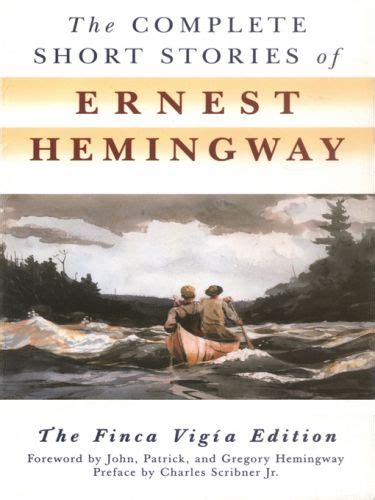
The Collected Short Stories of Ernest Hemingway. War, men and women, shell shock/PTSD/numbness, God, endurance, cruelty, booze, friendship, honor vs. dishonor, courage, etc. Hemingway touched on it all. Though often a monster in his personal life, his stories are unbeatable in terms of the pathos they call us into.

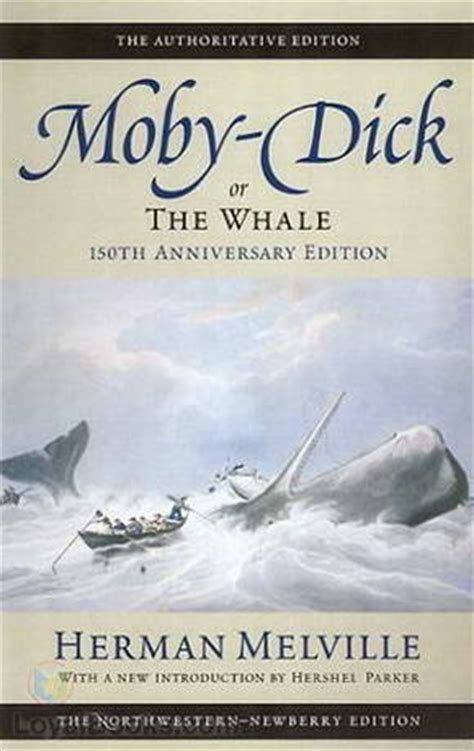
Melville’s Moby-Dick. Melville’s mind, like his themes, was a Pacific. It’s all here: God, theodicy, friendship, monomania, violence, love, meaning, strife vs. repose, and countless more. A lifetime of learning.

McCarthy’s The Road. Each time I read this novel, I know that I will weep. That is not, of course, why I return. But this book has among the most beautiful and heart-rending language, scenes, understatement, and pathos I’ve ever found in the world’s best literature. McCarthy’s recurring themes are here, too, but the love between the father and the son, and what McCarthy is driving at, is unparalleled.

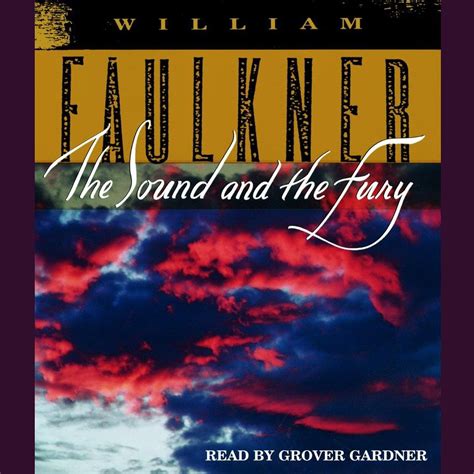
Faulkner’s The Sound and the Fury. When I read it as an English major for the first time several decades ago, I was simply overwhelmed. But if you return again and again, you’ll begin to see what he was up to. A-chronological time; interior monologues; Bergsonian plays upon time and consciousness; multiple narrative points of view; stream of consciousness, and more. Faulkner broke the mold over and over again, and we are indebted to him for his courage and artistry.

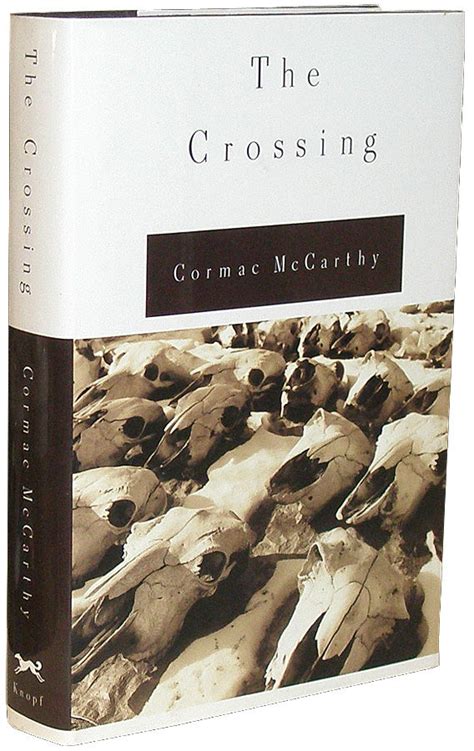
McCarthy’s The Crossing. Part II of The Border Trilogy, The Crossing is definitely a novel of ideas, but–again–it’s McCarthy’s gift of language, of landscape writing, and the cogitations of his characters that enrapture. Not a fast read but a deep read.

Eudora Welty’s Complete Stories. Welty is a master of the short story, and especially of irony, dialogue, and understatement. She exhibits the mind of a scholar and the finesse of a linguisitic savante. No detail escapes her attention.

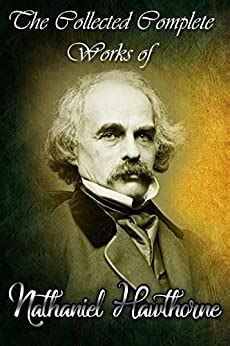
The Collected Complete Works of Hawthorne. King of the Dark Romantics, Hawthorne’s characters don’t leave you. Hester Prynne, Chillingsworth, Dr. Heidegger, Young Goodman Brown, and on and on.

Faulkner again. Absalom, Absalom! Not for the tepid, but here is Faulkner at his zenith. With the longest sentence in a novel (I don’t think it’s been beaten, but I may be mistaken), with Quentin Compson, and Thomas Sutpen, and the cast of Yoknapatawpha County legends, this is Faulkner’s literary genius on display. With biblical allusions and Greek references sufficient for countless theses and dissertations, it’s all here. (Bring your dictionary.)

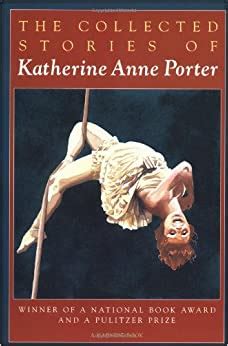
Porter’s stories. Specifically, The Collected Stories of Katherine Anne Porter. A troubled but beautiful soul and linguistic magician, Porter will make you continually ask, “What’s really real?”

And this’ll be no surprise to folks who know me well, but it’s Dickens. Great Expectations holds a place in my heart unlike almost any other piece of literary fiction. I love his other tops like David Copperfield and A Tale of Two Cities and Bleak House, etc. but GE still grips me like no other.

The Little Things (Aren’t) Little

One of the traits I inherited from my mom is a tender heart. When something/someone grips my heart, I’m not a good bluffer. If I love something/someone, there’s no hiding it. It shines through. So with that as a warning, read on if you track with slice-of-life stories about appreciating the small things.

Most of you know that I’m in the military. I spend my weeks away from my family. I’m a geo-bachelor, as the saying goes. So I only see my wife and children a day, perhaps a day and a half a week. So those few hours are precious to me.

As I drove home Saturday, it was a cool misty morning. The rain fell gently on my car’s windshield from a leaden sky for the three-hour drive north to home. When I arrived, my son was at his job, and my wife was busy about the house. She had baked homemade bread and I was eager to try some.

I played with the dogs, as is my custom. And our cat (much sweeter on my wife and son than on me) eventually wanted some affection, too. But I make no apologies about being a dog person. I really wouldn’t want to imagine life without dogs (but my wife would welcome dogs that don’t shed!).

Anyway, as the afternoon wore on, we went to pick up our son when he got off from work and went to a Mexican restaurant we frequent near our home. After that, we all wanted something sweet, so we stopped by the store for some Snickers ice cream bars, quite possibly a dessert from the angelic realm.

That evening my wife and I took in a movie with Paul Newman and Jude Law that we both enjoyed. And Sunday morning, we rose to prepare for Sunday school and corporate worship with our church family.

In Sunday school, our class is going through the book of Esther. Today we covered the climax of the historical narrative, where wicked Haman received his justice. He was hanged on the gallows he’d had erected for (he thought) Mordecai. But God had other plans. Haman’s evil was thwarted. Esther received favor as intercessor before King Ahasuerus/Xerxes, Mordecai was lauded for his obedience and courage, and Haman was executed.

Our Sunday school class rejoiced in seeing God superintend history. We talked of how God opens the scroll, as it were, like Ahasuerus opened the chronicles and had them read. The good done with seemingly no notice before was suddenly accounted for, and benediction came to Mordecai, Esther, and ultimately the Jewish people in Persia. Good came from evil. Evil was used as part of God’s good sovereign plan. Purim was instituted and we saw the sovereignty of God in and over history.

I engaged in deep conversations with the saints from class and from church. We sang, we prayed, we sat under the heralding of the gospel for our souls. And later the pastor taught from 2 Timothy, one of Paul’s salvos in the pastoral epistles, about keeping the main thing the main thing, and not quarreling about adiaphora.

After church, we went to our favorite Italian place for pizza and wings. We had a wonderful new waitress (we go there so often, we know who is new.) I left her a generous tip. She worked very hard, and the place was packed with customers. Not an easy job, if you ask me. Some customers can be less than ideal.

When we got back home, we were all stuffed. I played with the dogs again, and my wife, though, (and here’s where it’s the sentimental slice-of-life part I mentioned above), she never even changed out of her church clothes. She went right to the kitchen. She wrapped the bread she had baked for me. She made a breakfast casserole for me and told me how long to bake it when I got back to post. She boxed up some chicken parmesan for me to eat on through the week. She even put in the leftover fajitas from Saturday in a cooler for me. She helped me load the car and came down to the basement with me as I prepared to hit the road for another week of military life.

I drove the three hours back to post. I watched the sun set over post as I entered the gate and drove to my little apartment.

And when I walked in my place and unloaded the cooler and reflected on my brief time with my loved ones, I realized once again that it’s the little things that aren’t little at all. It’s that steady, faithful, committed love that sees us through. She’s so much like her dad. They’re the most organized people I’ve ever met. There’s a drawer or folder or box for everything. Like her parents, she’s faithful. She presses on in the daily grind, and puts up with her sinful and so-often-absent husband. She puts up with my book-buying regimen. And she still lets me snuggle up beside her and kiss her.

Now that I’m back in my little apartment away from the family, it is quiet. And a loneliness hits me because I miss those I love. But I look around me, and I see the bread she made, the coolers she packed, and her hairs are on my shirt (and I love it).

See? I told you it was a sentimental story.

My takeaway? The small things aren’t small. They reveal what’s inside.

I have a book where I record the most meaningful phrases/proverbs/folk wisdom I’ve heard in my years. And those who know me have probably heard me say this one a lot: “What’s down in the well comes up in the bucket.”

When I look at the little glasses of grace that I’m able to drink, so to speak, I pray that I never outgrow saying, Thank you, Lord, for who you are and for those you have given me. I do not deserve them. But I thank you for them.

Idolatry: Ancient, Contemporary, Enduring & Its Opposite: The Gospel of Christ and Redemption

Introduction: It’ll never happen here, right? Temples to Satan in America. They’re for ‘religious abortion’. Child sacrifice in the name of Satan. Of course, Scripture records this practice in the ancient Near East. Idolatry is nothing new. It is rather the enduring cosmic battle. Will we creatures worship the One and only triune God of the Bible or will we worship Molech (2 Kings 23:10), a golden calf (Exodus 32:1-24), Chemosh (1 Kings 11:33), bestiality (Leviticus 18:23), altars to Baal (2 Kings 21:3)?

But if there are any skeptics, if there remain some who refuse to see contemporary idolatry, pictured above is the Baphomet in the Satanic Temple in Salem, Massachusetts. And the adoring children looking up in worship, doesn’t that just warm your heart?

Here’s the link to just one example from our times, a temple to Satan:

https://www.foxnews.com/politics/the-satanic-temple-opens-clinic-provide-religious-abortion-care-named-justice-samuel-alito-mother

You can diagnose a lot about a culture when you see how it treats its children. We can bring our children up in the discipline and instruction of the true God (Ephesians 6:4) or we can subject them to chemical hormones, castration, and mastectomies. In short, we can pass them through the fires of abomination (Ezekiel 16:20-22). And we’re witnessing a time when taxpayers are funding child sacrifice.

The Recurring Theme: Idolatry (worship of anyone/anything other than the one true God) is damning, of course. But man is incorrigible, is he not, in his mad pursuit of autonomy and rebellion against what he knows to be true–namely, that God exists and that God is holy, and that we are accountable to Him.

But the reprobate mind says the opposite. And of course Scripture reveals exactly what the reprobate mind is like, what people’s behavior is like, when they have cast off God’s design:

And since they did not see fit to acknowledge God, God gave them up to a debased mind to do what ought not to be done. They were filled with all manner of unrighteousness, evil, covetousness, malice. They are full of envy, murder, strife, deceit, maliciousness. They are gossips, slanderers, haters of God, insolent, haughty, boastful, inventors of evil, disobedient to parents, foolish, faithless, heartless, ruthless. Though they know God’s righteous decree that those who practice such things deserve to die, they not only do them but give approval to those who practice them. (Romans 1:28-32)

In short, this is what degeneracy looks like. It is what happens when man, in love with his sin, in rebellion against his Creator, exchanges the truth and embraces the lie (Romans 1:25). Man becomes like what he worships. And what we are witnessing is man becoming a beast. Temples to Satan in the good ‘ole U.S.A.

Idolatry is the recurring theme. As David wrote in Psalm 14:2–3, “The LORD looks down from heaven on the children of man, to see if there are any who understand, who seek after God. They have all turned aside; together they have become corrupt; there is none who does good, not even one.”

The Alternative to Idolatry: the Gospel

In Christianity alone, there is forgiveess and hope. This is not another Baal, another Molech, another Planned Parenthood. No, not just another idolatrous evil, but redemption and restoration. But it comes at a price. It is called the gospel. It’s the good news that God rescues and redeems a people for Himself through the person and work of the Christ. The price was the life, passion, crucifixion, death, burial, and resurrection of the Christ (1 Corinthians 15).

The New Testament describes it this way: “For our sake he [God the Father] made him [God the Son, Jesus Christ] to be sin who knew no sin, so that in him [God the Son, Jesus Christ] we might become the righteousness of God” (2 Corinthians 5:21).

A Personal Closing Illustration:

It was many years ago now, but I still remember it well. The church my family and I served at and were members of had an evangelist come lead a series of messages. He was not one of those gifted orators who swept you up by way of his rhetorical prowess. He was much more of an academic type. He struck most people as somewhat boring, flat, and, well, kind of nerdy. But on his last night at the church, he taught a message on the exclusivity of Christ. His message was simple and straightforward. It was taken from John 14.

It is one of the most quoted sections of the Bible, and with good reason. But this message was not a sentimental message one might hear at a funeral about rooms prepared in heaven for dead saints. No, this message focused on Thomas’ question to Jesus: “Lord, we do not know where you are going. How can we know the way?” (John 14:5). Remember Jesus’ answer to Thomas? You have probably heard it mistaught many times:

Jesus said to him, “I am the way, and the truth, and the life. No one comes to the Father except through me. If you had known me, you would have known my Father also. From now on you do know him and have seen him.” (John 14:6-7)

I have heard messages from John 14 for much of my life. I have preached no small number of them, myself. But when I sat in the pew and listened to that man explain the glory, the grace, the beauty, the pride-shattering truth that Jesus Christ came to rescue sinners, that he took on flesh and dwelled among us, that he conquered the grave, that he was seen visibly for weeks after his resurrection, the message was personal. It was not something I could just sit back and neglect, or pretend that I could dismiss in a position of intellectual repose or posturing. No, it was a message for me.

At the end of the man’s message, God had so gripped me that I found myself at the front of the church praying on my knees while hymns were played and the congregation sang. I was the only one, if I remember correctly, who was so moved by that man’s simple but biblical message about the exclusive hope and truth of the gospel of Christ. That, in sum, is the alternative to the idols, dear reader. We will worship the truth or we’ll worship at an idol. We’ll continue to erect temples to Satan or revival will come from God for his people.

There is so much talk of the binary in modern parlance. Well, here’s the ultimate binary: God or Satan; Christ or chaos. Let the reader understand.

Hard to Know

I had to make a Walmart run recently to purchase a few small items. As I turned into the store’s parking lot, a man sat on a folding tripod in soiled pants, tennis shoes, a t-shirt, flannel shirt, and a green jacket. His hands were soiled. I could see grime under his long nails. He wore a long gray beard that made him resemble a 50-something Harley rider.

As I stopped at the four-way stop sign in order to proceed farther into the store parking lot, I watched a man in a black Ford F-250 roll down his passenger window and the girl in the truck’s passenger’s seat extended her hand to the man who arose from the folding tripod seat. He took the bills the girl handed him and sat back down on his seat, as if by rote.

Another car stopped by and extended a bag of food from the Wendy’s fast food business adjacent to the Walmart. He sat the bag of food on a concrete pillar next to him.

I waited my turn and then passed through the intersection and entered the parking lot, found an open space, parked, turned off the car, walked inside, and purchased the items needed.

When I exited the store, I noticed how sunny and cool it was out. A sign on the window in flourescent orange read HELP WANTED. I pushed my cart into the corral for shopping carts, retrieved my purchased items, placed them in the back of the car, cranked the car, and proceeded to head home.

When I got to the four-way stop sign, I looked over at the man. He was holding something. He was concentrating. So I watched closely. He was holding an iPhone. It was inside a green protective case. He was texting. I could see his dirty hands typing away in a message. The Wendy’s bag was still on the concrete pillar beside him. And he was still sitting on his folding tripod.

The cars kept entering and exiting in steady rhythm. Some drivers paused and watched him, as I had done. Other drivers pretended not to see him. Others rolled down their windows and handed him change, or cash, or food. His expression remained fixed regardless of people’s responses: blankness. Numbness.

It is hard for me to know. A HELP WANTED sign in the world’s largest retailer just a hundred yards from a man petitioning for charity. And the iPhone. I don’t think they are cheap. But at the same time, he did look dirty, unkempt, and his skin was red and windburned, and he had the appearance of one familiar with drink. At such times it is, for me at least, hard to know the right thing to do.

Does God Get a Say?

When I was a a new Christian, there was a deacon in my girlfriend’s (and wife-to-be) church who told me, “Jon, if God would just speak to me about my son’s death, I would know why . . .”

Background: The deacon’s son had died an early, premature death. The dad and mom outlived their son. It was, to state the obvious, horrible and sad. No Christian parent would want to outlive his/her children. He/she would want what is natural and in the normal pattern/design of the Lord.

But that was not the case with this deacon and my dear friend. His son had died and he (the deacon) did not understand why. Why had God allowed this? Wasn’t God good? Didn’t God understand parenting? Didn’t God love His Son? Why?

Contemporary Events: I read the news online today. “2023: Biden Sends Tanks to Ukraine” headlined: (https://www.breitbart.com/politics/2023/01/31/joe-biden-sends-tanks-to-ukraine-after-warning-doing-so-would-be-world-war-iii/)

And there were other headlines:

And in TN, ‘pro-trans’ gyrated in “peaceful protest.” Why? Because, per the article, they were incensed at people’s repulsion at minors’ sex change operations. On minors. Yup, that’s where we are. If you say to the god of secularism that you should not mutilate the genitals of boys and girls, well, you’re the problem. Hush up, troglodyte.

Here’s the link to that article:

https://www.breitbart.com/politics/2023/01/30/video-pro-trans-protesters-disrupt-rally-against-child-sex-changes-tennessee/

Perspective/Does God Get a Say?

We are living in a time when what outrages the media is that the vast majority of sane people see gender mutilation/castration/hormone therapy/etc. for what it is: Frankesteinian gothic horror, disfigurement, abasement, cosmic treason, and reprobation.

But will God get a say?

No, not in the eyes of the world system.

But rest assured, God gets a say, world system.

As a matter of fact, He laughs. He scoffs. He holds the worldly secular system in derision.

Psalm 2 reads this way. It is, in short, what God says about the secular system:

The Reign of the Lord’s Anointed


Why do the nations rage

and the peoples plot in vain?

The kings of the earth set themselves,

and the rulers take counsel together,

against the LORD and against his Anointed, saying,

“Let us burst their bonds apart

and cast away their cords from us.”

He who sits in the heavens laughs;

the Lord holds them in derision.

Then he will speak to them in his wrath,

and terrify them in his fury, saying,

“As for me, I have set my King

on Zion, my holy hill.”

I will tell of the decree:

The LORD said to me, “You are my Son;

today I have begotten you.

Ask of me, and I will make the nations your heritage,

and the ends of the earth your possession.

You shall break them with a rod of iron

and dash them in pieces like a potter’s vessel.”

Now therefore, O kings, be wise;

be warned, O rulers of the earth.

Serve the LORD with fear,

and rejoice with trembling.

Kiss the Son,

lest he be angry, and you perish in the way,

for his wrath is quickly kindled.

Blessed are all who take refuge in him.

Takeaway: Judas Iscariot hanged himself. His guts gushed out. He couldn’t live with himself. He denied the truth. He betrayed it. He hated it.

He was a picture of what it means to reject the truth.

It’s suicide to reject truth. It’s self-destruction. That’s what the world system begets.

And yet.

People are being socially pimped to conform to insanity where black is white, where white is black, where how one feels somehow alters reality. I’m sure glad my airline pilot doesn’t fly by his feelings. That could make for a no-good, very bad day.

And yet we’re told that up is down, that we’re racists, that the 19th booster shot will really vanquish the ‘rona this time. I know it was 10 days to flatten the curve three years ago, but, come on, man.

God has spoken, you see.

He has spoken through His Word, the Scriptures, 66 books of revelation of how we should then live.

This world is an existential tilt-a-whirl because most folks are being led by mindless clowns in clownworld. Folks have bought tickets from clowns masquerading as angels of light. And as the tilt-a-whirl comes crashing down, folks deny they purchased the tickets.

It’s not that God is silent. It’s that most don’t want truth. They think judgment is just a word. And then they lament the state of things.

And yet.

One might even go so far as to say that the peoples plot in vain (Psalm 2:1).

Reading: Why Bother?

If you ask that question, I suspect you’ve already decided against it.

But for a few of us, not reading would be intellectual and spiritual prison. Complete incarceration.

As is my pattern, I have deviated a bit from my regimen I designed.

Some writers came into my life that I thought I felt I had to read early this year. And so, my ‘scheduled’ books got pushed to the right a bit.

But I’m still on track.

So far in 2023, I’ve fallen in love (again for some volumes … like Melville’s masterpiece and, of course, one of my “bromances,” Charles Dickens) with certain books/stories/plays/poems, but here’s a glimpse at some of those I’ve been through in January 2023:

  1. Carson McCullers’ The Heart Is a Lonely Hunter
  2. Harry Crews’ The Mulching of America
  3. Herman Melville’s Moby-Dick
  4. Ernest Hemingway’s For Whom the Bell Tolls
  5. Collection: The Greatest Stories of Anton Chekhov
  6. Cormac McCarthy’s The Passenger
  7. Cormac McCarthy’s Stella Maris
  8. Thomas Wolfe’s Look Homeward, Angel
  9. Charles Dickens’ Little Dorrit (still reading)
  10. Ligonier Ministries: A Field Guide On False Teaching

I’m working through Hawthorne’s oeuvre, as well as some of my war stories and books about soldiers and war, of which I never seem to tire, especially WWI and Vietnam, two wars where you could smell your ‘enemy’ and see his pupils.

If you’re a reader, I know we’re the minority, but people remember Plato, Calvin, and Shakespeare. They don’t remember who’s trending on the world wide dread, I mean, web. Sorry, not sorry.

Press on, bibliophiles.

The written word abides.