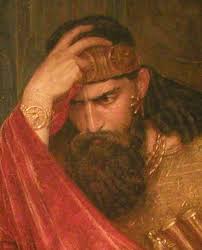
Chaplain Daily Touchpoint #308: Leadership Lessons

Introduction: In 1 Samuel 28 we read this episode of wicked King Saul first disguising himself to get his way. Second, wicked King Saul practices necromancy in this episode. He consults a medium and summons the dead. Third, we see wicked King Saul be again rejected by God due to his (Saul’s) disobedience and lack of integrity.

  • Disguises
  • Spiritual darkness
  • Divine rejection

First, “So Saul disguised himself and put on other garments and went, he and two men with him. And they came to the woman by night” (1 Sam 28:8a, ESV). Disguises. Masks. Saul’s wickedness is on full display.

Second, “And he [Saul] said, ‘Divine for me by a spirit and bring up for me whomever I shall name to you.’” (1 Sam 28:8b, ESV). That’s spiritual darkness on full display. Consulting a medium is strictly forbidden in Scripture (Lev 19:31; 20:6, 27; Dt 18:10-12; 1 Sam 15:23).

Third, the truth-teller and prophet of God again was the vessel through which God rejected wicked King Saul:

15 Then Samuel said to Saul, “Why have you disturbed me by bringing me up?” Saul answered, “I am in great distress, for the Philistines are warring against me, and God has turned away from me and answers me no more, either by prophets or by dreams. Therefore I have summoned you to tell me what I shall do.” 16 And Samuel said, “Why then do you ask me, since the Lord has turned from you and become your enemy? 17 The Lord has done to you as he spoke by me, for the Lord has torn the kingdom out of your hand and given it to your neighbor, David. 18 Because you did not obey the voice of the Lord and did not carry out his fierce wrath against Amalek, therefore the Lord has done this thing to you this day. 19 Moreover, the Lord will give Israel also with you into the hand of the Philistines, and tomorrow you and your sons shall be with me. The Lord will give the army of Israel also into the hand of the Philistines.” (1 Sam 28:15-19, ESV)

  • Disguises
  • Spiritual darkness
  • Divine rejection

Encouragement: What we see repeatedly with the wrong leader is narcissism and weakness of character. Saul was a man of disguises, of masks. He was a fraud. His kingship was characterized by darkness, secrecy, suspicion, envy, and insecurity. What he feared more than anything else was for the spiritual lights to shine in on his backroom deals. Finally, however, we see God remove him. God had his truth-teller Samuel who again served to teach wicked King Saul that he was a dead man walking.

How is this instructive for us? We are to be a people of discernment and not be deceived by the Sauls of the world. We’re to seek out leaders who care for the sheep rather than fleece the flock for their own comfort. We are to watch how our leaders respond to demands for transparency and for the light to be shone upon them. Lord, forgive us for falling for salesmen. Teach us to cultivate authentic shepherds. Equip us to understand the times in order that we know what to do. Raise up Godly shepherds for Your people.

Chaplain Daily Touchpoint #307: Biblical Reminders about Leadership

Introduction: It is perhaps a story from history with which you are familiar. It’s the story of David being anointed king. It’s found in 1 Samuel 16. But we dare not allow familiarity blind us to profound truths here, namely, that it was God who provided the king, and that it was the circumcised heart of a man (David) that God used to shepherd His people in distinction from the uncircumcised heart of a false shepherd (Saul) that wrought destruction upon the people.

Text from 1 Samuel:  

16 The Lord said to Samuel, “How long will you grieve over Saul, since I have rejected him from being king over Israel? Fill your horn with oil, and go. I will send you to Jesse the Bethlehemite, for I have provided for myself a king among his sons.” And Samuel said, “How can I go? If Saul hears it, he will kill me.” And the Lord said, “Take a heifer with you and say, ‘I have come to sacrifice to the Lord.’ And invite Jesse to the sacrifice, and I will show you what you shall do. And you shall anoint for me him whom I declare to you.” Samuel did what the Lord commanded and came to Bethlehem. The elders of the city came to meet him trembling and said, “Do you come peaceably?” And he said, “Peaceably; I have come to sacrifice to the Lord. Consecrate yourselves, and come with me to the sacrifice.” And he consecrated Jesse and his sons and invited them to the sacrifice.

When they came, he looked on Eliab and thought, “Surely the Lord’s anointed is before him.” But the Lord said to Samuel, “Do not look on his appearance or on the height of his stature, because I have rejected him. For the Lord sees not as man sees: man looks on the outward appearance, but the Lord looks on the heart.” Then Jesse called Abinadab and made him pass before Samuel. And he said, “Neither has the Lord chosen this one.” Then Jesse made Shammah pass by. And he said, “Neither has the Lord chosen this one.” 10 And Jesse made seven of his sons pass before Samuel. And Samuel said to Jesse, “The Lord has not chosen these.” 11 Then Samuel said to Jesse, “Are all your sons here?” And he said, “There remains yet the youngest,[a] but behold, he is keeping the sheep.” And Samuel said to Jesse, “Send and get him, for we will not sit down till he comes here.” 12 And he sent and brought him in. Now he was ruddy and had beautiful eyes and was handsome. And the Lord said, “Arise, anoint him, for this is he.” 13 Then Samuel took the horn of oil and anointed him in the midst of his brothers. And the Spirit of the Lord rushed upon David from that day forward. And Samuel rose up and went to Ramah.

Teaching: In the very first verse, we read this—that God provided for Himself a king. In other words, God was doing what man fails to do—be 100% faithful. Was David going to be 100% faithful? No, of course not. He would sin grievously against Uriah, with Bathsheba, in his failure to deal with Absalom, and on and on. But the point is that God was pointing the way to the pattern of how short we sinners fall. We fail. We demand Sauls. We get what we deserve in our choice of leaders. Therefore, God, being rich in mercy, provides for Himself the King. In the temporary and immediate sense here, that king was David. In the infinitely greater sense, that King is Jesus, the Christ.

Second, will you notice the command to discern? It comes in v. 7: But the Lord said to Samuel, “Do not look on his appearance or on the height of his stature, because I have rejected him. For the Lord sees not as man sees: man looks on the outward appearance, but the Lord looks on the heart.” I don’t know how that could be any clearer. Discern. Learn to discern. Learn to think deeply and not fall for salesmanship and empty suits. Why? Because what’s down in the well comes up in the bucket.

Encouragement: We fall short. Therefore, God satisfies what He demands—perfect obedience. David was a type and shadow of the greater David who was to come, the Lord Jesus. Second, we still must learn to discern. It is a commandment of God. It serves both our own good and God’s glory, two patterns that are inextricable.

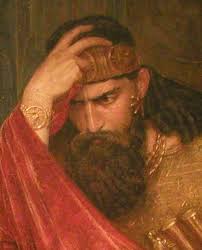
Chaplain Daily Touchpoint #306: Learning from a Bad Example

Bottom line up front: Learning from a Bad Example

Text: 1 Samuel 15

Context: Wicked King Saul Is Rejected by God

Overview: Wicked King Saul continued to reveal his true colors. God commanded Saul via the prophet Samuel to “devote to destruction all” that the Amalekites had. Saul was to lead Israel and not spare any of the wicked Amalekites. God was calling Israel’s king (Saul) to be a people set apart unto God, and for the people he represented (Israel) to be a light amongst the fellow nations. Would Saul succeed? Would Israel succeed? Would either be faithful to execute God’s word to them? That’s the issue.

We only get to v. 9 before we see Saul’s true colors: “But Saul and the people spared Agag and the best of the sheep and of the oxen and of the fattened calves and the lambs, and all that was good, and would not utterly destroy them.” And just like that, the Lord speaks again to Samuel, the prophet and truth-teller: “I regret that I have made Saul king, for he has turned back from following me and has not performed my commandments” (1 Sam.15:11a, ESV).

Saul had “turned back” from following God’s word. And the people who followed (like undiscerning sheep) wicked King Saul, were likewise being judged. That’s the key issue here—the turning back/turning away from God’s word. “To obey is better than sacrifice” (1 Sam. 15:22b, ESV). It doesn’t matter how many oxen, sheep, or rams we sacrifice if our heart is not one of obedience to the Lord, the Commander. We can get all puffed up with pride if we point to ourselves and say, “See how much I’ve done? See how much I’ve sacrificed? See how many successes I’ve accrued to my credit?” That is pride – plain and simple –and it is damning.

Learning from Saul’s Failures: We can learn from anyone if we’ll but pay attention. That is, we should learn, even from bad examples. Saul is an example of a failed leader. Saul’s favorite person in the world was Saul. He wasn’t out for the good of his people. He failed his nation. He failed in God’s eyes, too. God was going to seek a king after His own heart, a true shepherd. In the immediate context, that man was going to be David. In the greater sense, however, that Shepherd is the Lord Jesus. But for now, let us learn from Saul.

Slice-of-Life Story about Covering Down & Studying King Saul

Another chaplain was out of town, and so I was asked if I’d cover down on his lunch-hour Bible study. I absolutely welcomed the opportunity. The biblical texts the group has been going through surround Saul’s imprudence. Saul was definitely guilty of that.

No matter how many times I go through Scripture, I learn so much about leadership from studying Saul and David. Saul was, fundamentally, a judgment upon Israel for the nation’s lack of discernment and their sin.

1 Samuel 8:7 (ESV) reads,

And the Lord said to Samuel, “Obey the voice of the people in all that they say to you, for they have not rejected you, but they have rejected me from being king over them.”

There it is in overt terms. God tells His prophet Samuel that the people didn’t want God. Therefore, as a judgment of their rejection of God Himself, God tells His prophet to give the people the human king they desire, and to watch the destruction that flows from that choice.

Samuel, as is typical of prophets and truth-tellers, sees where things are headed, and he is grieved. In fact, Samuel pleaded with the Lord about wicked Saul.

One of the most important sections in the whole saga of Saul is in 1 Samuel 8. Samuel sees what’s coming. He knows Saul’s going to be disastrous:

But the thing displeased Samuel when they said, “Give us a king to judge us.” And Samuel prayed to the Lord. And the Lord said to Samuel, “Obey the voice of the people in all that they say to you, for they have not rejected you, but they have rejected me from being king over them. According to all the deeds that they have done, from the day I brought them up out of Egypt even to this day, forsaking me and serving other gods, so they are also doing to you. Now then, obey their voice; only you shall solemnly warn them and show them the ways of the king who shall reign over them.” (1 Sam 8:6-9, ESV)

Did you catch that introductory phrase? “But the thing displeased Samuel when they said, ‘Give us a king to judge us.'” That’s so important. Why? Because that’s exactly what Saul was: judgment. They as a nation had been imprudent and undiscerning, and now Saul was the embodiment of imprudence and obtuseness.

My fellow soldiers will be arriving soon. I will ask them questions:

  • What patterns do you see in Saul?
  • How should we learn from them?
  • Why do you think the people liked Saul initially?
  • What does that tell us about the importance of discernment when it comes to leadership?
  • In what sense was David a man after God’s own heart?
  • What traits do we see in David that were not in Saul, and vice versa?

Chaplain Daily Touchpoint #301: Costs of Choosing the Wrong Leaders?

Introduction: 1 Samuel 8 explains the crux of much of the Bible as a whole. It’s the historical record of how Israel demanded a king. And, well, they got one. But that king was not God. That king was wicked Saul.

Below are some ruminations on this profoundly important Old Testament event:

  • First, the baton was passed to the wrong person. Samuel had faithfully served as prophet (1 Sam 3:20) and judge, but he was now old (1 Sam 8:1) and his sons were not up to the task of Godly leadership. God says of Samuel’s sons that they “turned aside after gain” (1 Sam 8:3, ESV). They “perverted justice,” the text says (ibid.). Again, you see where this is headed. The people who should have been Godly weren’t. They were concerned about money, not the things of God.
  • Second, God gave the people their druthers as judgment. When the elders approached Samuel to demand a king “to judge us like all the nations,” God gave them what they asked for. To use a cliche, they got the leader they deserved. It grieved Samuel profoundly. Why? He saw what was coming. He knew Saul was going to destroy people. But God gave the people over: “Obey the voice of the people in all that they say to you, for they have not rejected you, but they have rejected me from being king over them” (1 Sam 8:7, ESV). Folks, if that doesn’t break your heart, I don’t know what will.
  • Third, God told the people up front via his truthteller, but the people were undiscerning, harrd-hearted, and refused to listen: “And in that day you will cry out because your king, whom you have chosen for yourselves, but the LORD will not answer you in that day” (1 Sam 8:18, ESV). In other words, God is saying through his truthtelling prophet Samuel, “See? I told you so.”

Takeaway: Do we think this pattern somehow skipped our days? Do we think, “That’s other people, not us! We’re smarter than those people.” Um, okay. Folks, Sauls are nothing new. They’re the result of sinful, blind, stubborn people demanding what makes them feel good rather than what’s true and good for them. And God gives people over at times as judgment. That’s not feel-good theology, but it is Bible 101.