Chaplain Daily Touchpoint #320: The Hour of Darkness

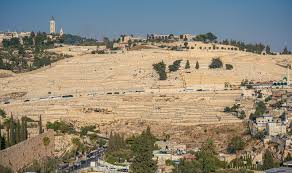
Introduction: No matter how many times I read it, it breaks my heart. It’s the passage about Jesus praying on the Mount of Olives and His betrayer Judas comes, kisses Him as a sign to the other conspirators, and Jesus is arrested. If one has a heart, this passage will break it.

This morning I was reading Luke’s account of these events (see Luke 22:39-53). It’s the last verse here upon which I focus in this piece. The last verse in Luke’s account reads like this: “When I [Jesus] was with you day after day in the temple, you did not lay hands on me. But this is your hour, and the power of darkness” (Luke 22:53, ESV).

The power of darkness. What interests me here is that Jesus, knowing all things, having told His disciples that He would be betrayed into the hands of sinners, having predicted His resurrection, still, amidst all of this, reminded them of what was unfolding in precise fulfillment of the Scriptures. Precise.

Right before Jesus says this, Luke records the following:

And being in agony he prayed more earnestly; and his sweat became like great drops of blood falling down to the ground. And when he rose from prayer, he came to the disciples and found them sleeping for sorrow, and he said to them, “Why are you sleeping? Rise and pray that you may not enter into temptation.”

While he was still speaking, there came a crowd, and the man called Judas, one of the twelve, was leading them. He drew near to Jesus to kiss him, but Jesus said to him, “Judas, would you betray the Son of Man with a kiss?” And when those who were around him saw what would follow, they said, “Lord, shall we strike with the sword?” And one of them struck the servant of the high priest and cut off his right ear. But Jesus said, “No more of this!” And he touched his ear and healed him. Then Jesus said to the chief priests and officers of the temple and elders, who had come out against him, “Have you come out as against a robber, with swords and clubs? (Luke 22:44-52, ESV)

It is all part of the plan. No detail is insignificant. Jesus’s prayers were evidenced via their resulting sweat being like blood. His disciples were sleeping, again. Then the crowd comes, and Judas’ role is playing out. Judas is responsible for his behavior, his betrayal, his damnation. Judas kisses the Lord Jesus. World history changes. The Holy One allows Himself to be arrested and mocked at the hands of wicked men. Holiness condescends to sin, allowing sin to run its course, as part of God judging it for the sake of His people.

It is, as Jesus says, your hour, “and the power of darkness.” But here’s the great encouragement, dear reader: A new hour was coming shortly, that even the power of darkness could not contain. You see, here’s what I mean: Light was coming, and the darkness cannot contain or overcome it.

Judas Iscariot, a Perennial

Ever been betrayed? Sure. Everyone knows a traitor. The most infamous traitor in history is Judas Iscariot. Judas betrayed Jesus. Thirty pieces of silver. That was the equivalent of four months’ wages for a laborer. Let that sink in. For the equivalent of 16 weeks’ pay, Judas betrayed Jesus. But the money was symptomatic of a deeper and deadlier issue. Judas had a pagan heart. Money was the visible exchange for the invisible transaction within Judas’ soul. It would not have mattered if the amount were a thousand times that much; the amount was immaterial. What was sold was a soul. Judases are perennials; they recur with each generation. There are many who profess genuine faith in the lordship of Christ but their deeds contradict their professions.

Yet God knows all. Jesus was, and is, God in the flesh. As such, he knows all. He knew who was to betray him. Matthew illustrated it by telling of Jesus’s betrayal by Judas and his (Jesus’s) subsequent arrest. As Judas knew where Jesus’ habitual place of prayer was, he (Judas) had orchestrated his scheme ahead of time. Listen to Matthew’s account: “Now the betrayer had given them a sign, saying, “The one I will kiss is the man; seize him.” And he came up to Jesus at once and said, “Greetings, Rabbi!” And he kissed him. Jesus said to him, “Friend, do what you came to do.” (Matthew 26:48-50a, ESV) Can’t you feel the drama? God incarnate is praying in Gethsemane and he knows that one of his own disciples is a devil. And when Judas approaches him (with a kiss!) Jesus, still knowing all, says, “Friend, do what you came to do.”

Yet Jesus allowed it all. In fact, he ordained it. John’s gospel further illustrates Judas’s treachery. When the story unfolds, Jesus had just washed the disciples’ feet, and he was about to give his true followers the great commandment recapitulation (John 13:34-35). John records that Jesus began to be “troubled in his spirit” about the encroaching betrayal, passion, and crucifixion:

After saying these things, Jesus was troubled in his spirit and testified, “Truly, truly, I say to you, one of you will betray me.” The disciples looked at one another, uncertain of whom he spoke. One of his disciples, whom Jesus loved, was reclining at table close to Jesus, so Simon Peter motioned to him to ask Jesus of whom he was speaking. So that disciple, leaning back against Jesus, said to him, “Lord, who is it?” Jesus answered, “It is he to whom I will give this morsel of bread when I have dipped it.” So when he had dipped the morsel, he gave it to Judas, the son of Simon Iscariot. Then after he had taken the morsel, Satan entered into him. Jesus said to him, “What you are going to do, do quickly.” Now no one at the table knew why he said this to him. Some thought that, because Judas had the moneybag, Jesus was telling him, “Buy what we need for the feast,” or that he should give something to the poor. So, after receiving the morsel of bread, he immediately went out. And it was night.” (John 13:21-30, ESV)

It’s crucial to understand what’s occurring. Jesus, knowing all, had just washed his disciples’ feet. Wash the feet of one’s betrayer? Yes. Exactly. What kind of love is this? Then some of the disciples are actually listening intently to Jesus and realize that God incarnate had just told them that there was a devil in the room. And though John’s gospel does not record the facial expressions of Jesus and Judas, can’t you envision them? Perhaps Jesus spoke gently but firmly to Judas when he (Jesus) said, “What you are going to do, do quickly.” Heartbreaking. What’s more, the imagery is vital to grasp. Verse 30 says “And it was night.” Yes, darkness (evil) had indeed descended. Evil had just broken bread with the Messiah. Judas was slithering his way to damnation.

My mother is a master of the soil. She can make flowers grow in almost any soil. She taught me about annuals and perennials when I was a boy. To this day, I love flowers and spring, and things in bloom invariably remind me of my mom. The first thing she taught me about perennials is that they recur; they come back year after year. And we’d do well to learn that traitors are a lot like that; they’re perennials. Thus, we are to be wise as serpents and yet gentle as doves (Matthew 10:16). “Many a man proclaims his own steadfast love, but a faithful man who can find?” (Proverbs 20:6, ESV) There was, and is, one who is faithful. In fact, he is called faithful and true (Revelation 19:11), and he even washed sinners’ dirty feet.