Chaplain Daily Touchpoint #317: Leadership Lessons via Tychicus

Introduction: I was concentrating once again upon some of the most profound verses ever penned in the New Testament, Paul’s last words in Ephesians 6. They were not Paul’s last words, mind you, but they were the last ones in this particular New Testament letter. You perhaps know of the passage. It’s where Paul describes man’s battle as primarily spiritual. And because man’s primary battle is spiritual (we’re not just molecules in motion or meat puppets, as the secularists would have us believe), the Christian man or woman to is to don, or put on, “the whole armor of God.”

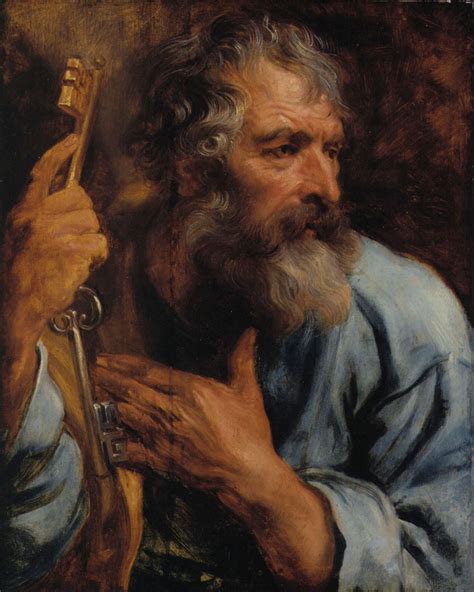
But what gripped me so powerfully in my studies today was the appearance–once again–of this man Tychicus. Here’s the way Paul ends this letter. Notice his commendation of Tychicus:

So that you also may know how I am and what I am doing, Tychicus the beloved brother and faithful minister in the Lord will tell you everything. I have sent him to you for this very purpose, that you may know how we are, and that he may encourage your hearts (Eph 6:21-22, ESV).

Setting: Remember where Paul was when he wrote this letter? Yes, once again he was incarcerated.

After penning this salvo about spiritual warfare (Eph 6:10-20), Paul commends Tychicus. Why?

Here are (4) leadership lessons we learn about Tychicus from here in Ephesians and other NT passages:

  • He was faithful (Eph 6:21; Col 4:7)
  • He encouraged the saints (Eph 6:22)
  • He suffered for the sake of the gospel (Acts 20:4)
  • He served the body rather than himself (2 Tim 4:12; Titus 3:12)

Questions:

  • Do we see this level of faithfulness in our day?
  • Do you think our generation of Christians will go down in church history as an age of faithful soldiers? If so, why? If not, why not?
  • Is our ministry characterized by our encouragement of the saints and equipping them for spiritual battles?
  • Do we teach how to suffer for the sake of the gospel, or do we perhaps proffer a sub-biblical message designed to keep money coming in so we can be comfortable, and none of the wrong people get offended?
  • Do we serve the body of saints? Do we deny ourselves for the sake of the sheep? Or do we design structures to feather our own nests?
  • Do we in many ways resemble New Testament believers like Paul’s friend Tychicus?

Chaplain Daily Touchpoint #316: Internals Before Externals

Introduction: Internals long before externals. Ever heard someone say, “I hate hypocrites!”? Of course. We all have. Maybe we’ve said it ourselves. There is something viscerally repulsive about hypocrisy. Spiritual hypocrisy may be the most distasteful. I think that’s why Satan loves it when so-called pastors or spiritual leaders fall. The enemy of truth goes, “See? I told you they were fakes. Just in it for money, fame, and power.” I remember how crestfallen I was when Ravi Zacharias was exposed. It hurt me deeply. I felt the same way again when Steve Lawson was exposed. I had read all the books of both men and had contributed financially to their ministries and even purchased their books to give to others I was trying to reach for Christ. But it all blew up in my face when the truth was exposed.

Connection to Scripture: In Luke 11, Jesus rebukes hypocrites to their faces.

Follow me in the text:

37 While Jesus was speaking, a Pharisee asked him to dine with him, so he went in and reclined at table. 38 The Pharisee was astonished to see that he did not first wash before dinner. 39 And the Lord said to him, “Now you Pharisees cleanse the outside of the cup and of the dish, but inside you are full of greed and wickedness. 40 You fools! Did not he who made the outside make the inside also? 41 But give as alms those things that are within, and behold, everything is clean for you” (Lk 11:37-41, ESV).

Encouragement/takeaway: In the above passage, the legalistic Pharisee purported to judge the Lord Jesus for not washing His hands before eating. (Just let that sink in: the Pharisee purported to judge God.) But Jesus gently rebuked the Pharisee by reminding him of a fundamental truth: God assesses our hearts long before He’s concerned with our handwashing. In other words, internals long before externals. If our heart is changed, the effects will show. Our theology will be made visible. But if we’re consumed with posturing and externals, that, too, is known to God. And there, too, our theology is made visible. May we have teachable spirits, hearts intent upon internal obedience and not concerned with appearances that fool neither God nor the discerning.

Chaplain Daily Touchpoint #315

Introduction: A couple of years ago, I made the mistake of watching all of a series on a streaming platform titled House of Cards. I write that it was a mistake because it messed with me spiritually. The themes in that show were so dark, so vile, that I literally felt sick to my stomach when viewing more than a few episodes. The acting was superb; the cinematography was top-notch; the storylines were riveting; all of that is accurate. But something happened inside my spirit and in my guts because of watching that show. I felt like I’d seen inside the belly of the beast. I felt like I’d seen behind the black curtains into the very bowels of hell and its denizens. I still think about that show, and what it portrayed about the lengths to which some evil people will go to get and maintain power. It sickened me then and it sickens me now. For some, their god is their belly, their appetites. In short, they are their own gods (Phil. 3:19).

Connection to Scripture: In Luke 11, Jesus was teaching about the Devil and unclean spirits. Listen to the words of Christ: “When the unclean spirit has gone out of a person, it passes through waterless places seeking rest, and finding none it says, ‘I will return to my house from which I came.’ 25 And when it comes, it finds the house swept and put in order. 26 Then it goes and brings seven other spirits more evil than itself, and they enter and dwell there. And the last state of that person is worse than the first” (Lk 11:24-26, ESV).

What’s going on here? In short, Satan is persistent; he hates the Father, Son, and Holy Spirit. He hates God. He hates God’s people, Christians. So, when the powers of hell are confronted, they must be vanquished entirely. They must be defeated. Fully. God’s light must vanquish the darkness. The spiritual lights must be turned on like a switch for the dark deeds to be exposed. That’s why House of Cards troubled me so deeply; darkness prevailed there. That’s why there was always a spirit of suspicion, narcissism, and jockeying for power. No one loved anyone but himself/herself.

Jesus says in John 3:19 (ESV), “And this is the judgment: the light has come into the world, and people loved the darkness rather than the light because their works were evil.”

Takeaway: Still now, years later, that show haunts me. Why? Because I so long for light and truth and beauty to prevail. I’m hard-wired to root for the righteous. I believe in truth, in the good, and the beautiful. But those categories only make sense because they are rooted in the God who is. Lord, may You be pleased to vanquish the darkness, shine the light of Your holiness on the myriad houses of cards using spiritual forces of darkness to blind the minds of countless souls. Bring glory to Yourself by exposing sin and exalting righteousness.

Chaplain Daily Touchpoint #314: The Good Portion

Intro: The works wheel. That’s what I call it. It’s the tendency that many folks have to think that they can work their way into God’s favor via their own labor and/or merits. But what the Lord desires is obedience to His revealed will.

It’s an easy trap to fall into, let us admit that. I cannot speak for others, but I was raised to work hard. As a boy, I was taught discipline and the value of labor. It started off with simple tasks appropriate to my age, and now that I’m much older, those lessons have followed me. I have a deep distaste for laziness. Biblically, we were designed to labor, not to coast. So, it is easy for me to get on the works wheel and think that I’m somehow pleasing God. It can be a sneaky spiritual virtue signal, if you will, where one points to himself/herself and says, “See what all I’ve done, Lord? See all my efforts?”

There is a short episode in Luke 10 of Martha and Mary that demonstrates what I’m exploring. Here’s the text:

38 Now as they went on their way, Jesus entered a village. And a woman named Martha welcomed him into her house. 39 And she had a sister called Mary, who sat at the Lord’s feet and listened to his teaching. 40 But Martha was distracted with much serving. And she went up to him and said, “Lord, do you not care that my sister has left me to serve alone? Tell her then to help me.” 41 But the Lord answered her, “Martha, Martha, you are anxious and troubled about many things, 42 but one thing is necessary. Mary has chosen the good portion, which will not be taken away from her.” (Lk 10:38-42, ESV)

Teaching: Did you catch Jesus’ rebuke? Wasn’t it unexpected? Martha was busy, busy, busy. Martha was a worker. She was getting after it. You’d think she’d be the one commended by the Lord Jesus, right? But the Lord rebuked Martha because she was “anxious and troubled about many things.” Martha’s sister, Mary, was the one to receive the commendation. Why? She was seated at the feet of the Lord Jesus. She was looking to Christ; Martha, on the other hand, had been looking at Martha, and at her own works.

Have you ever worked yourself to a frazzle for folks who didn’t appreciate it? Have you ever labored for what seemed like ungrateful people? Have you ever been a Martha, and the Lord had to teach you to trust Him rather than your own works? I cannot speak for others, but I certainly have that tendency. And it’s painful to learn (and re-learn) that we cannot make others see; we cannot make others care; we cannot work ourselves or anyone else into a state of grace. We are simply recipients of grace that comes from the hand of Christ. Mary sat at the feet of God, and she was commended. Martha was working herself into a state of anxiety and was rebuked. May God be pleased to rebuke us to alert us to the truth that He’s the source of any Godly change, not anything that we do or manufacture.

Chaplain Daily Touchpoint #311: The Alternatives (Lessons from Daniel)

Introduction: Daniel is one of the most debated books when it comes to its prophetic sections. There are some cryptic passages about which there’s no paucity of debate. But what is clear in the section I want to look at in this piece is Daniel 11:32-35. These four verses speak to a vital issue, namely, the alternatives facing a people. Follow me …

Text:

32 He shall seduce with flattery those who violate the covenant, but the people who know their God shall stand firm and take action. 33 And the wise among the people shall make many understand, though for some days they shall stumble by sword and flame, by captivity and plunder. 34 When they stumble, they shall receive a little help. And many shall join themselves to them with flattery, 35 and some of the wise shall stumble, so that they may be refined, purified, and made white, until the time of the end, for it still awaits the appointed time. (Dan 11:32-35, ESV)

Most scholars with which I’m familiar teach that the man referred to here is Antiochus IV Epiphanes in the 160s B.C. and the Maccabean revolt that resulted due to Antiochus’ destruction and profanation of the temple in Jerusalem.

First, what interests me here is how “the wise among the people” (v. 33) behaved. What does the text say about them? It says they “knew their God” and that they “[stood] firm” and “[took] action” (v. 32).

Second, the wise helped others understand because destruction was afoot (v. 33).

Third, a winnowing occurred as part of judgment (vv. 34-35). In other words, purification.

God was refining His people. He was separating wheat from chaff. He was using suffering to purify His people. He was teaching them.

Encouragement: The alternative was made plain, in other words. God’s people could either bow to the pagan forces and capitulate or they could stand firm in the Lord, and fight for truth and light. This is simple but not easy. Simple, I say, but not easy.

Chaplain Daily Touchpoint #310: The Matter of Separation vis-a-vis the Truth

The Issue: The Matter of Separation vis-à-vis the Truth

Background: For over a year now I have been teaching the saints from class. We are near the end now of Matthew’s gospel. This Sunday we will be in Matthew 26. This is where the chief priests and elders plot together to kill the Lord Christ. It is also the section in Matthew’s gospel where a woman anoints Jesus’ body with very expensive ointment she pours from her alabaster flask. And do you know what’s happening? A separation is occurring. A division between the spiritually hardened (the chief priests and elders) and the spiritually regenerate and tender (the woman with the flask of ointment) unfolds in real. Two types: those hostile to the truth vs. those who embrace the truth.

Jesus’ Words about the Woman:

10 But Jesus, aware of this, said to them, “Why do you trouble the woman? For she has done a beautiful thing to me. 11 For you always have the poor with you, but you will not always have me. 12 In pouring this ointment on my body, she has done it to prepare me for burial. 13 Truly, I say to you, wherever this gospel is proclaimed in the whole world, what she has done will also be told in memory of her” (Mt 26:10-13, ESV).

Teaching: In sum, Jesus was rebuking those who were more concerned with criticizing the woman than with embracing Him as the only Savior. They were more concerned with external appearances and finances. Meanwhile Jesus says this woman’s obedience will remain forever lauded wherever the gospel is proclaimed. How’s that for a commendation?

Encouragement: When your desire is to please the Lord, rest assured that separation will occur. Those whose longing is for the approval of man will resent you. But your obedience is known by the Lord Christ. Stay true, stay humble, and trust the Lord.

Chaplain Daily Touchpoint #309: (3) Profound Verses about Discernment

Introduction: There are three verses in Proverbs 9 that are utterly profound. Here they are:

7 Whoever corrects a scoffer gets himself abuse,
    and he who reproves a wicked man incurs injury.
Do not reprove a scoffer, or he will hate you;
    reprove a wise man, and he will love you.
Give instruction  to a wise man, and he will be still wiser;
    teach a righteous man, and he will increase in learning. (Pr 9:7-9, ESV)

How are they profound?

In at least (3) ways:

  • It is unwise to try and lead scoffers. They’ll just resent you for it. That’s what vv. 7-8a teach.
  • It is wise to try and lead the teachable, the wise, and the humble. That’s what v. 8 teaches.
  • It is wise to invest in those who are genuine; it is unwise to exhaust yourself upon the posers/impostors/foolish. That’s a summary of all three verses.

What’s Proverbs about as a whole? Wisdom.

Encouragement: There’s a stunning passage in John 6 where many folks walked away from the Lord Jesus, truth incarnate. Verse 66 of John 6 reads, “After this many of his disciples turned back and no longer walked with him” (Jn 6:66, ESV). That should break your heart, folks. They abandoned the Holy One, the truth-teller. They simply left. And yet that is what God used as part of His plan to redeem His people. We cannot miss that or we misread Scripture.

67 So Jesus said to the twelve, “Do you want to go away as well?” 68 Simon Peter answered him, “Lord, to whom shall we go? You have the words of eternal life, 69 and we have believed, and have come to know, that you are the Holy One of God.” 70 Jesus answered them, “Did I not choose you, the twelve? And yet one of you is a devil.” 71 He spoke of Judas the son of Simon Iscariot, for he, one of the twelve, was going to betray him.

So how is this encouragement, you ask? I think it’s this: We are told and shown up front in Scripture that truth divides. Most don’t want it; they in fact hate it. That’s why Jesus was treated the ways He was. When truth appears in history, we sinners have a tendency to crucify it. But truth won’t be silenced. It rises from the grave, you see. Why? Because God will not be mocked. Truth eventually is revealed. Let us teach those who desire it, and know up front what Solomon taught in Proverbs and what Christ Himself taught in the Gospels. Just be faithful, entrusting the results to God.

Chaplain Daily Touchpoint #308: Leadership Lessons

Introduction: In 1 Samuel 28 we read this episode of wicked King Saul first disguising himself to get his way. Second, wicked King Saul practices necromancy in this episode. He consults a medium and summons the dead. Third, we see wicked King Saul be again rejected by God due to his (Saul’s) disobedience and lack of integrity.

  • Disguises
  • Spiritual darkness
  • Divine rejection

First, “So Saul disguised himself and put on other garments and went, he and two men with him. And they came to the woman by night” (1 Sam 28:8a, ESV). Disguises. Masks. Saul’s wickedness is on full display.

Second, “And he [Saul] said, ‘Divine for me by a spirit and bring up for me whomever I shall name to you.’” (1 Sam 28:8b, ESV). That’s spiritual darkness on full display. Consulting a medium is strictly forbidden in Scripture (Lev 19:31; 20:6, 27; Dt 18:10-12; 1 Sam 15:23).

Third, the truth-teller and prophet of God again was the vessel through which God rejected wicked King Saul:

15 Then Samuel said to Saul, “Why have you disturbed me by bringing me up?” Saul answered, “I am in great distress, for the Philistines are warring against me, and God has turned away from me and answers me no more, either by prophets or by dreams. Therefore I have summoned you to tell me what I shall do.” 16 And Samuel said, “Why then do you ask me, since the Lord has turned from you and become your enemy? 17 The Lord has done to you as he spoke by me, for the Lord has torn the kingdom out of your hand and given it to your neighbor, David. 18 Because you did not obey the voice of the Lord and did not carry out his fierce wrath against Amalek, therefore the Lord has done this thing to you this day. 19 Moreover, the Lord will give Israel also with you into the hand of the Philistines, and tomorrow you and your sons shall be with me. The Lord will give the army of Israel also into the hand of the Philistines.” (1 Sam 28:15-19, ESV)

  • Disguises
  • Spiritual darkness
  • Divine rejection

Encouragement: What we see repeatedly with the wrong leader is narcissism and weakness of character. Saul was a man of disguises, of masks. He was a fraud. His kingship was characterized by darkness, secrecy, suspicion, envy, and insecurity. What he feared more than anything else was for the spiritual lights to shine in on his backroom deals. Finally, however, we see God remove him. God had his truth-teller Samuel who again served to teach wicked King Saul that he was a dead man walking.

How is this instructive for us? We are to be a people of discernment and not be deceived by the Sauls of the world. We’re to seek out leaders who care for the sheep rather than fleece the flock for their own comfort. We are to watch how our leaders respond to demands for transparency and for the light to be shone upon them. Lord, forgive us for falling for salesmen. Teach us to cultivate authentic shepherds. Equip us to understand the times in order that we know what to do. Raise up Godly shepherds for Your people.

Chaplain Daily Touchpoint #307: Biblical Reminders about Leadership

Introduction: It is perhaps a story from history with which you are familiar. It’s the story of David being anointed king. It’s found in 1 Samuel 16. But we dare not allow familiarity blind us to profound truths here, namely, that it was God who provided the king, and that it was the circumcised heart of a man (David) that God used to shepherd His people in distinction from the uncircumcised heart of a false shepherd (Saul) that wrought destruction upon the people.

Text from 1 Samuel:  

16 The Lord said to Samuel, “How long will you grieve over Saul, since I have rejected him from being king over Israel? Fill your horn with oil, and go. I will send you to Jesse the Bethlehemite, for I have provided for myself a king among his sons.” And Samuel said, “How can I go? If Saul hears it, he will kill me.” And the Lord said, “Take a heifer with you and say, ‘I have come to sacrifice to the Lord.’ And invite Jesse to the sacrifice, and I will show you what you shall do. And you shall anoint for me him whom I declare to you.” Samuel did what the Lord commanded and came to Bethlehem. The elders of the city came to meet him trembling and said, “Do you come peaceably?” And he said, “Peaceably; I have come to sacrifice to the Lord. Consecrate yourselves, and come with me to the sacrifice.” And he consecrated Jesse and his sons and invited them to the sacrifice.

When they came, he looked on Eliab and thought, “Surely the Lord’s anointed is before him.” But the Lord said to Samuel, “Do not look on his appearance or on the height of his stature, because I have rejected him. For the Lord sees not as man sees: man looks on the outward appearance, but the Lord looks on the heart.” Then Jesse called Abinadab and made him pass before Samuel. And he said, “Neither has the Lord chosen this one.” Then Jesse made Shammah pass by. And he said, “Neither has the Lord chosen this one.” 10 And Jesse made seven of his sons pass before Samuel. And Samuel said to Jesse, “The Lord has not chosen these.” 11 Then Samuel said to Jesse, “Are all your sons here?” And he said, “There remains yet the youngest,[a] but behold, he is keeping the sheep.” And Samuel said to Jesse, “Send and get him, for we will not sit down till he comes here.” 12 And he sent and brought him in. Now he was ruddy and had beautiful eyes and was handsome. And the Lord said, “Arise, anoint him, for this is he.” 13 Then Samuel took the horn of oil and anointed him in the midst of his brothers. And the Spirit of the Lord rushed upon David from that day forward. And Samuel rose up and went to Ramah.

Teaching: In the very first verse, we read this—that God provided for Himself a king. In other words, God was doing what man fails to do—be 100% faithful. Was David going to be 100% faithful? No, of course not. He would sin grievously against Uriah, with Bathsheba, in his failure to deal with Absalom, and on and on. But the point is that God was pointing the way to the pattern of how short we sinners fall. We fail. We demand Sauls. We get what we deserve in our choice of leaders. Therefore, God, being rich in mercy, provides for Himself the King. In the temporary and immediate sense here, that king was David. In the infinitely greater sense, that King is Jesus, the Christ.

Second, will you notice the command to discern? It comes in v. 7: But the Lord said to Samuel, “Do not look on his appearance or on the height of his stature, because I have rejected him. For the Lord sees not as man sees: man looks on the outward appearance, but the Lord looks on the heart.” I don’t know how that could be any clearer. Discern. Learn to discern. Learn to think deeply and not fall for salesmanship and empty suits. Why? Because what’s down in the well comes up in the bucket.

Encouragement: We fall short. Therefore, God satisfies what He demands—perfect obedience. David was a type and shadow of the greater David who was to come, the Lord Jesus. Second, we still must learn to discern. It is a commandment of God. It serves both our own good and God’s glory, two patterns that are inextricable.

Another Reason to Believe

Intro: I had a few hours of drive-time ahead of me. Several hours alone in my car. A friend from Sunday school had sent me a text message that said, in short, “Watch this. Important.”

After I labored to teach the saints from Matthew 25 this morning, I was once again on the road, headed out. Back to work.

The power of music: As is my custom, I had a few moments of unfiltered thanksgiving where I told the Lord what He already knew: “Thank you, Lord, for the opportunities You gave me yet again today … to love, to serve, to teach, and to be with Your saints. There’s nothing like it, nothing I love quite so much. I don’t deserve a seat at Your table. I’m well aware of this. Therefore, from the bottom of my being, thank You for mercy.”

Then, again, as is my custom, I put on my favorite driving tunes for the drive back to post. My go-to music includes the Allman Brothers Band, the Beatles, scores of tunes from Van Morrison, Cream, John Mayer, E.L.O, E.L.P, Rush, Zeppelin, more Beatles, the Atlanta Rhythm Section (ARS), the Eagles, Johnny Cash, Jackson Browne, George Jones, and more. But mostly, it’s the ABB.

Perhaps it’s because I spent most of the formative years of my life a stone’s throw from Macon and know the ABB’s zip code today as well as I knew it then. I still hate the heat and humidity and gnats, but in terms of music, the ABB’s best tunes pluck my soul’s strings like little other soulshine.

But back to reasons to believe… My friend Jim had texted me. As a former Roman Catholic steeped in reliquaries, he said, in sum, “Send this out.”

I listened to Jeremiah, the interviewed scholar, non-stop. He was/is clearly very bright and steeped in academia and history. I was hooked.

What’s the draw? Science, evidence, empiricism, blood samples, 3-D imaging, non-reproducibility, etc. It can all get technical, but Jeremiah (PhD from Oxford) kept it relatable.

Showing my cards: I don’t believe this is a clincher argument, to be sure. Most will not believe. We are told that up front in Scripture (John 3:18-36). But for those with integrity, with those who will truly follow the evidence, for those who say, “If You’re there, I’m here. And I’ll follow the truth!” then this is gold. Enjoy.

https://youtu.be/rKMQY49py4w?si=W08vly-42yL94a_X

Jim, thank you, brother.

Press on.

My goal is to see you both in the end zone and hear, “Welcome …”