
Bottom line up front: Faithfulness in the ‘small’ things is rewarded by God. In short, God sees all, not just what we sinners tend to think of as the big-ticket items.
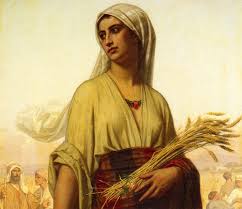
Historical context: Ruth continued to glean the field faithfully: “So she gleaned in the field until evening. Then she beat out what she had gleaned, and it was about an ephah of barley” (Ruth 2:17, ESV).The last verse of chapter two is crucial: “So she kept close to the young women of Boaz, gleaning until the end of the barley and wheat harvest. And she lived withher mother-in-law” (Ruth 2:23, ESV).
***In other words, Ruth demonstrated a pattern of consistent humility, hard work, loyalty, and trust. She was as good as her word. There was nothing secretive, hidden, or clandestine about Ruth. Everything about her was open to review. And the kinsman-redeemer Boaz was taking notice.
Ruth’s obedience: Naomi, Ruth’s mother-in-law, had instrutcted her (Ruth) in the proper protocol, namely, lie down beside Boaz at the proper time, and listen for instructions:
“But when he lies down, observed the place where he lies. Then go and uncover his feet and lied down, and he will tell you what to do” (Ruth 3:4-5, ESV).
I love Ruth’s words here: “All that you say I will do” (Ruth 3:5, ESV). In other words, Ruth faithfully discharged her duties. She kept the faith. She was finishing her course faithfully.
Boaz’s response: The kinsman-redeemer continued to take notice, and he would both show grace and marry this widow: “May you be blessed by the LORD, my daughter. You have made this last kindness greater than the first in that you have not gone after young men, whether poor or rich” (Ruth 3:10, ESV).
Boaz tells Ruth that he is indeed a redeemer. Just let that sink in. This story that began in famine, death, widowhood, lack, etc. is now turning to a story of harvest, life, marriage, and progeny.
This paragraph is so beautiful:
Ruth and Boaz Marry
13 So Boaz took Ruth, and she became his wife. And he went in to her, and the Lord gave her conception, and she bore a son. 14 Then the women said to Naomi, “Blessed be the Lord, who has not left you this day without a redeemer, and may his name be renowned in Israel! 15 He shall be to you a restorer of life and a nourisher of your old age, for your daughter-in-law who loves you, who is more to you than seven sons, has given birth to him.” 16 Then Naomi took the child and laid him on her lap and became his nurse. 17 And the women of the neighborhood gave him a name, saying, “A son has been born to Naomi.” They named him Obed. He was the father of Jesse, the father of David. (Ruth 4:13-17, ESV)
Encouragement: Naomi went from spiritual bitterness to sweetness. Ruth went from abandonment and widowhood to adoption and marriage. From childlessness to fertility. The line of the ultimate Redeemer (Christ) was continually unfolding through the likes of Boaz. What do we see through it all? We see God take notice of the small daily steps of obedience to the revealed will of God. We see God bless faithfulness in the end. We see God continue to unfold His covenant mercies to His people. Be encouraged, Christian pilgrim: God sees you and He loves you and He uses our sufferings to draw you to Himself.
 MIND & MATTERS