Introduction: I love the story of Mephibosheth. It’s really not so much about Mephibosheth as about the king who provided a seat at the royal table. Follow me . . .
Historical context: Wicked King Saul had several sons, Ish-bosheth and Jonathan, among others, but he also had a grandson, Mephibosheth. He was, per 2 Samuel 4, “crippled in his feet.” He “became lame,” Scripture says (2 Samuel 4:4). Cannot be a soldier like that, can you? Soldiers have to take care of their feet, especially in the days of the ancient Near East. Just like we soldiers today have to pack extra dry socks, and apply foot powder, etc. it’s an ancient, tried and true practice: take care of feet. If you don’t, you’ll lose.
What does this have to do with theology? What does this have to do with honor? Why the focus on the feet of Jonathan’s son, Mephibosheth? Because what can a lame grandson of your archenemy expect from the king? Nothing, right? That’s what you’d think.
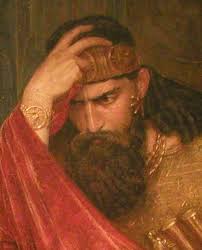
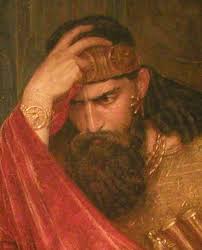
But here’s the thing; when it comes to a man of honor, it’s different. David was that man of honor. His star was on the rise not because he was inherently a good man, but because he was God’s man.
David was soon to commit horrible sins with Bathsheba, against Uriah, and more, but David would also pen Psalm 51, a pouring out of his soul in contrition and repentance before the Lord God.
David was a great sinner, but he was restored by the greater Savior, you see. And God used David to foreshadow the ultimate warrior-king, the Lord Jesus Christ.
Listen to how David, the king of Judah, promises to honor the grandson of David’s great enemy, Saul:
And David said, “Is there still anyone left of the house of Saul, that I may show him kindness for Jonathan’s sake?” Now there was a servant of the house of Saul whose name was Ziba, and they called him to David. And the king said to him, “Are you Ziba?” And he said, “I am your servant.” And the king said, “Is there not still someone of the house of Saul, that I may show the kindness of God to him?” Ziba said to the king, “There is still a son of Jonathan; he is crippled in his feet.” The king said to him, “Where is he?” And Ziba said to the king, “He is in the house of Machir the son of Ammiel, at Lo-debar.” Then King David sent and brought him from the house of Machir the son of Ammiel, at Lo-debar. And Mephibosheth the son of Jonathan, son of Saul, came to David and fell on his face and paid homage. And David said, “Mephibosheth!” And he answered, “Behold, I am your servant.” And David said to him, “Do not fear, for I will show you kindness for the sake of your father Jonathan, and I will restore to you all the land of Saul your father, and you shall eat at my table always.” (2 Samuel 9:1-7, ESV)
Encouragement/takeaway: “Love one another with brotherly affection. Outdo one another in showing honor” (Romans 12:10, ESV).
When I meditate on Mephibosheth, with the treatment he received by David, when David could have been spiteful towards him and made him a scapegoat, the lame man who had nothing to offer was granted a seat at the king’s table, you see, a picture of the gospel for all who see their neediness, their lameness, their absolute need of sovereign grace from the king. It was there then for Mephibosheth in his day. It is here now in our day. May the Lord grant ears to hear. May we see a rebirth of men of honor who understand the grace we’ve been shown in order that we might show it to others.
Here’s the YouTube video link, too: https://youtu.be/TyvuDSoEz0I

 were folks to tweet/post/blog about it, it just might. See the temptation? Here’s the issue for consideration: Are we not more connected digitally than ever in history, yet perhaps more lonely than ever in history? There’s a paradox in the fact that people have hundreds, or even thousands, of virtual friends but few, if any, actual friends. It’s now in the vernacular to call people “Facebook friends.” That is revealing. When is the last time we went to dinner with our Facebook friends? We may view posts and tweets, but I wonder if we are meaningfully connected to other people.
 We’re often connected to the Web but not to each other. So, what to do? The Web is not going away, I’d venture to say. Technology will increase rather than decrease, in its availability and speed. But might we pay a price? Might we be paying it already? It bears repeating: I hear from husbands, wives, and children repeatedly: “My wife/husband/son/daughter/friend won’t talk to me. Instead they play on their iPad or phone all the time.” Again, I’m not blind to how the logic cuts both ways. Here I am writing on a computer, posting it on the Web, and hoping others will be on the Web to read it and think about it. I see the paradox. However, just like the girls gathered near that bench this weekend up at the lake, I want genuine contact, not just virtual contact. The Digital Tower of Babel is just as idolatrous as the ziggurat in Genesis 11. In the Confessions, Augustine wrote, “Our hearts are restless until they can find rest in you [God].” That’s often quoted. But what’s less explained is the context out of which Augustine wrote. Despite being raised by a Christian mother, Augustine pursued a life of sexual lust and idolatry until Christ convicted him of his sin. It was only after being convicted of his sin that he understood his own Tower of Babel, wherein he was the god at the top. Because he excelled in academia, in rhetoric, law, languages, etc. his pride led to his downfall—a constant theme in literature and in life. Yet Augustine longed for true friendship, true rest, true connection—and this was millennia before the Web.
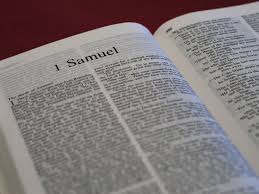 Scripture records one of history’s most moving tributes to friendship: “As soon as he [David] had finished speaking to Saul, the soul of Jonathan was knit to the soul of David, and Jonathan loved him as his own soul” (1 Sam 18:1 ESV). What you see in the subsequent pages is a story of true, rather than apparent (we’d say virtual in our day), friendship. Should we use technology to improve relationships? Yes. However, I am not confident that will occur until we scroll our feeds less, and love our neighbors more.
 MIND & MATTERS