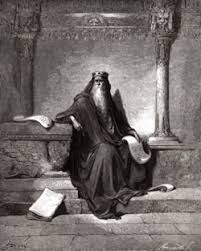
Introduction: If you have been a committed reader for many years, you discover the books have accumulated, and you end up having to either downsize the library (heresy!) or build new bookshelves (yes!), or perhaps continue to give books away to those you hope will read them. I’ve done each of these things over the course of years, but there’s one book within the Book of books, of which I never tire: Ecclesiastes.
Why Ecclesiastes? Well, in just twelve chapters, I discover again and again a mysterious comfort when my soul is troubled. Today, for example, I was ruminating over the last words of Ecclesiastes 9. The issue addressed here is wisdom amidst an environment of folly.
Here’s the passage:
I have also seen this example of wisdom under the sun, and it seemed great to me. There was a little city with few men in it, and a great king came against it and besieged it, building great siegeworks against it. But there was found in it a poor, wise man, and he by his wisdom delivered the city. Yet no one remembered that poor man. But I say that wisdom is better than might, though the poor man’s wisdom is despised and his words are not heard. The words of the wise heard in quiet are better than the shouting of a ruler among fools. Wisdom is better than weapons of war, but one sinner destroys much good (Eccl 9:13-18, ESV),
Admittedly there is a shade of resignation involved in the tone of the above passage. But the more I study this book, I think that’s central to a correct understanding of the book’s theme. Please don’t misunderstand. All the ‘vanity of vanities’ sections are to warn of the endless follies of secularism, hedonism, and idolatry. Those refrains are emphasized throughout the book, so that is central to a correct understanding of the book’s theme. By the way, Solomon states his theme overtly in the closing verses of the book: “The end of the matter; all has been heard. Fear God and keep his commandments, for this is the whole duty of man. For God will bring every deed into judgment, with every secret thing, whether good or evil” (Eccl 12:13-14, ESV).

What I am driving at here, however, is that Ecclesiastes reminds me that the spiritual battle is vastly too much for me. That is, the forces of good and evil are indeed cosmic in scale. That’s what Paul labored so much in Ephesians. In the words I quoted above from Ecclesiastes 9:13-18, I appreciate so much what the Scottish writer Robert Buchanan observed:
“War wounds, but wisdom heals. War and all its weapons belong to the bloody brood of him who was a murderer from the beginning; wisdom is the attribute and gift of him who came to bring peace on earth, good will to all, and glory to God in the highest.”
Takeaway: In other words, wisdom. That’s what Solomon, a man who went from hero to zero many times, teaches: wisdom. But the tinge of sadness, the limning resignation that surrounds Ecclesiastes like a border, remains. Wisdom entails a certain element of, as Vonnegut phrased it in one of his books, “and so it goes” concession. It’s a way of accepting that in this life, we must, if we are wise, accept our limitations. It is hubristic for us sinners to think we can make others wise; it’s hard enough to gain wisdom in our own lives. In sum, humility is called for. Even though wisdom is better than might, Solomon reminded us, the poor man’s wisdom is “despised and his words are not heard” (Eccl 9:16, ESV). Learning to live beautifully in a broken world marks a wise life.
 MIND & MATTERS