Amuse-(vb.) “To divert the attention, beguile, delude,” from Old French amuser “fool, tease, hoax, entrap; make fun of,” literally “cause to muse” (as a distraction), from
Discern-(vb.) “To perceive or recognize the difference or distinction between (two or more things);” also “distinguish (an object) with the eyes, see distinctly, behold;” also “perceive rationally, understand;” late 14c., from Old French discerner (13c.) “distinguish (between), separate” (by sifting), and directly from Latin discernere “to separate, set apart, divide, distribute; distinguish, perceive.”
Introduction: When I was a college kid, there was a popular grunge band named Nirvana. I never cared anything for their music, but I do remember a lyric from one of their songs some of my peers played often: “Here we are now; entertain us. I feel stupid and contagious. Here we are, now; entertain us.” Well, there you have it.
Connections to Depth: Over the last many months in teaching through Matthew’s Gospel to the saints, again and again I discover that Scripture is replete with the command for Christians to be a people of discernment. We are commanded to be a people of wisdom and depth. We are not to be children in our thinking. Here’s how Paul penned it: “Brothers, do not be children in your thinking. Be infants in evil, but in your thinking be mature” (1 Corinthians 14:20, ESV).
Samuel Johnson wrote that discernment is “the power to tell the good from the bad, the genuine from the counterfeit, and to prefer the good and the genuine to the bad and the counterfeit” (see Bowell’s Life of Johnson).
Remember when Paul wrote to the Christians at Philippi? Do you remember what he wrote? Here’s just a sample. Again, it’s about discernment:
And it is my prayer that your love may abound more and more, with knowledge and all discernment, so that you may approve what is excellent, and so be pure and blameless for the day of Christ, filled with the fruit of righteousness that comes through Jesus Christ, to the glory and praise of God (Philippians 1:9-11, ESV).
There’s a world of difference between amusement and discernment. The word amuse literally means “to not think.” A is the negative in Greek. And muse means “to think.”
As a publication of a few years back was titled, Let My People Think. To that, all I can say is, yes and amen.
Context: Just for the sake of candor, Ecclesiastes is probably my favorite book of Scripture. It is part of the Wisdom Literature of the Old Testament, so that is appealing to me. And it’s highly literary; that also appeals to me. Plus, it is penned by one who lived life to the max, and eventually found out the hard way that wisdom is found not in indulgence but in God. That, too, appeals to me.
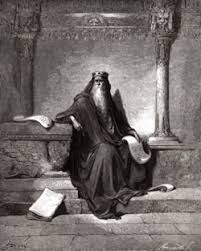
Solomon, for all his faults, was a man who laid it out bare. As I’m wont to say, he went from hero to zero (and back again) many times. But the context of the one verse I want to look at today concerns the conversion of R.C. Sproul, indubitably one of the 20th and 21st centuries’ greatest theological minds. R.C. said he was converted by God, and Ecclesiastes 11:3 was instrumental in that conversion.
Text: “If the clouds are full of fain, they empty themselves on the earth, and if a tree falls to the south or to the north, in the place where the tree falls, there it will lie” (Eccl 11:3, ESV).
Takeaway: One might scoff and mutter, “Really? That verse? Are you kidding me?” But slow down and think. What’s the book of Ecclesiastes about? Vanity of foolish pursuits vs. fulfillment in God. Wisdom vs. folly. Under the sun vs. under the Son. And so when Sproul’s friend confronted Sproul with Ecclesiastes 11:3, God used the word picture in that verse to quicken Sproul’s soul. He (Sproul) saw that if he continued to live a life of self-indulgence, it was just so much vanity and futility. He would be like that tree that fell in the forest of the cosmos–utterly insignificant. But if he understood that he was not just a random collocation of atoms, if he understood that he was created in the image of the sovereign God, suddenly everything made sense. And Sproul was converted, and he became a massive influence on his and subsequent generations.
Here’s the way one writer describes this event: “A fellow student of R.C. Sproul read this verse to Sproul while the latter was a freshman in college in September 1957. Sproul was immediately convicted, seeing himself as a dead tree, fallen and rotting on the ground. After a few hours of wrestling in prayer, seeking the mercy of God, R.C. Sproul was converted. He later confessed that he is likely the only person in church history to have been converted by this verse.”
Introduction: For many months now, I have been teaching through the Gospel of Matthew verse-by-verse. This coming Lord’s Day, we are in Matthew 22:23ff. This passage is where Sadducees and Pharisees continue to try to entrap and outmaneuver the Lord Jesus. Let that sink in. Outmaneuver God incarnate? Man’s hubris knows no limits.
The hostility of religious people who hated the Lord Jesus knew no limits either. This all precedes the “Seven Woes” Jesus pronounces in Matthew 24, a blistering divine rebuke of the Scribes and Pharisees. When I read these passages over and over, I shake my head at the image some professing Christians have of a Jesus who is meek and mild.
The historical record of the Christ is quite different. Jesus rebuked people to their faces by calling them snakes, vipers, whitewashed tombs, and hypocrites. He didn’t bow his head and say, “Let’s just pray about it.” He called out mendacity and false shepherds, and the lying world hated Him for it. But He was on the side of truth, because He was and is truth incarnate.
In Matthew 22:29 and following, Jesus told the Sadducees plainly, “you know neither the Scriptures nor the power of God.” Then in Matthew 22:46, the Apostle reminds us, “And no one was able to answer him [Jesus] a word, nor from that day did anyone dare to ask him any more questions.”
The Biblical Account: In other words, when truth dominates, every mouth is stopped. Truth means light–and light exposes the darkness (John 1:5; 3:19-21; Romans 3:19; Ephesians 5:13).
“The light shines in the darkness, and the darkness has not overcome it” (John 1:5, ESV).
“And this is the judgment: the light has come into the world, and people loved the darkness rather than the light because their works were evil. For everyone who does wicked things hates the light and does not come to the light, lest his works should be exposed. But whoever does what is true comes to the light, so that it may be clearly seen that his works have been carried out in God” (John 3:19-21 ESV).
“Now we know that whatever the law says it speaks to those who are under the law, so that every mouth may be stopped, and the whole world may be held accountable to God” (Romans 3:19, ESV).
“But when anything is exposed by the light, it becomes visible” (Ephesians 5:13, ESV).
Takeaways: It really comes down to something quite simple: Do we believe God? When I ruminate upon things, it is hard not to think that most people fear men rather than fearing God. And of course, God has spoken to this clearly: “The fear of man lays a snare, but whoever trusts in the LORD is safe” (Proverbs 29:25, ESV) and “For am I now seeking the approval of man, or of God? Or am I trying to please man? If I were still trying to please man, I would not be a servant of Christ” (Galatians 1:10, ESV).
Does anyone think that’s unclear? Should not believers love the light? Is that in fact not commanded by the Lord from Genesis to Revelation?
“This is the message we have heard from him and proclaim to you, that God is light, and in him is no darkness at all” (1 John 1:5, ESV). Light and truth. They’re metaphors from the very beginning of redemptive history to its consummation. Light and truth.
As I finalize my notes for teaching Sunday, that’s my prayer for God’s people. May we be known for light and truth. Anything less than that comes from not from God but from a quite different source.
Introduction: If you have been a committed reader for many years, you discover the books have accumulated, and you end up having to either downsize the library (heresy!) or build new bookshelves (yes!), or perhaps continue to give books away to those you hope will read them. I’ve done each of these things over the course of years, but there’s one book within the Book of books, of which I never tire: Ecclesiastes.
Why Ecclesiastes? Well, in just twelve chapters, I discover again and again a mysterious comfort when my soul is troubled. Today, for example, I was ruminating over the last words of Ecclesiastes 9. The issue addressed here is wisdom amidst an environment of folly.
Here’s the passage:
I have also seen this example of wisdom under the sun, and it seemed great to me. There was a little city with few men in it, and a great king came against it and besieged it, building great siegeworks against it. But there was found in it a poor, wise man, and he by his wisdom delivered the city. Yet no one remembered that poor man. But I say that wisdom is better than might, though the poor man’s wisdom is despised and his words are not heard. The words of the wise heard in quiet are better than the shouting of a ruler among fools. Wisdom is better than weapons of war, but one sinner destroys much good (Eccl 9:13-18, ESV),
Admittedly there is a shade of resignation involved in the tone of the above passage. But the more I study this book, I think that’s central to a correct understanding of the book’s theme. Please don’t misunderstand. All the ‘vanity of vanities’ sections are to warn of the endless follies of secularism, hedonism, and idolatry. Those refrains are emphasized throughout the book, so that is central to a correct understanding of the book’s theme. By the way, Solomon states his theme overtly in the closing verses of the book: “The end of the matter; all has been heard. Fear God and keep his commandments, for this is the whole duty of man. For God will bring every deed into judgment, with every secret thing, whether good or evil” (Eccl 12:13-14, ESV).
What I am driving at here, however, is that Ecclesiastes reminds me that the spiritual battle is vastly too much for me. That is, the forces of good and evil are indeed cosmic in scale. That’s what Paul labored so much in Ephesians. In the words I quoted above from Ecclesiastes 9:13-18, I appreciate so much what the Scottish writer Robert Buchanan observed:
“War wounds, but wisdom heals. War and all its weapons belong to the bloody brood of him who was a murderer from the beginning; wisdom is the attribute and gift of him who came to bring peace on earth, good will to all, and glory to God in the highest.”
Takeaway: In other words, wisdom. That’s what Solomon, a man who went from hero to zero many times, teaches: wisdom. But the tinge of sadness, the limning resignation that surrounds Ecclesiastes like a border, remains. Wisdom entails a certain element of, as Vonnegut phrased it in one of his books, “and so it goes” concession. It’s a way of accepting that in this life, we must, if we are wise, accept our limitations. It is hubristic for us sinners to think we can make others wise; it’s hard enough to gain wisdom in our own lives. In sum, humility is called for. Even though wisdom is better than might, Solomon reminded us, the poor man’s wisdom is “despised and his words are not heard” (Eccl 9:16, ESV). Learning to live beautifully in a broken world marks a wise life.
Introduction: I was with the saints from class recently, and one of them spoke up and called attention to something foundational about the teaching of the Lord Jesus. He, a saint in class, said, “He [Jesus] always went to motive, the motive of the people.”
Context: For over a year, I think, I have been teaching through the Gospel of Matthew. I read the Bible a couple of hours each day as normal regimen, but when I’m teaching through a particular book, I read, reread, and read again that particular book, especially, in addition to the daily regimen.
For many moons now, that book has been Matthew’s Gospel. And what the man from class was addressing was the increasing hostility that the Christ was experiencing at the hands of scoffing Pharisees, scribes, Sadducees, and others. They mocked; they tried to entrap and entangle Jesus, again and again, usually over some detail in Scripture. (Just let that sink in: you try to ‘entangle’ God the Son in theology? Um, okay; good luck with that.)
Text: Solomon wrote one of my favorite zingers in theology: “Commit your work to the LORD, and your plans will be established” (Pr 16:3, ESV). Know what that entails? The motive of the Christian must first be Godly; the Lord blesses Godly motives by way of fruitful ministry/output.
The commitment by the believer must first be to the Lord. It’s why Bach signed his musical pieces the way he did; it’s why C.S. Lewis wrote the way he did after he was converted; it’s why Flannery O’Connor was unflinching in her literary genius and her short story and novelistic portrayals of evil and hypocrisy. They’d all first committed to the Lord their giftedness. It wasn’t about them; it was about the truth of God. They understood their identity as servants of God.
Encouragement: The Lord sees. Do we believe that? I do. And it terrifies me. Why? Because I blow it–so often. I let my sin nature get the better of me. It’s possible I’m not alone. What if we labored to commit our best efforts first unto the Lord and His truth? Why? Because truth is inseparable from God, because God is truth and in Him is no darkness at all (1 John 1:5, ESV).
Bottom Line Up Front: Self-Sacrifice for the Truth: Love People Enough to Warn Them
Text: In Jeremiah 7, the great Old Testament prophet Jeremiah spoke the word of God to the people he loved:
7 The word that came to Jeremiah from the Lord: 2 “Stand in the gate of the Lord’s house, and proclaim there this word, and say, Hear the word of the Lord, all you men of Judah who enter these gates to worship the Lord. 3 Thus says the Lord of hosts, the God of Israel: Amend your ways and your deeds, and I will let you dwell in this place. 4 Do not trust in these deceptive words: ‘This is the temple of the Lord, the temple of the Lord, the temple of the Lord.’
5 “For if you truly amend your ways and your deeds, if you truly execute justice one with another, 6 if you do not oppress the sojourner, the fatherless, or the widow, or shed innocent blood in this place, and if you do not go after other gods to your own harm, 7 then I will let you dwell in this place, in the land that I gave of old to your fathers forever.
8 “Behold, you trust in deceptive words to no avail. (Jer 7:1-8, ESV)
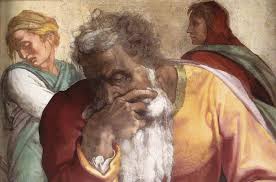
Encouragement/takeaway: Recently when teaching the saints, I was again struck by the consistent teaching of God in Scripture about the costs involved for being a person of truth. Jeremiah endured a staggeringly difficult prophetic ministry. But he was God’s man in his season. He was one of many in a long line of Godly men and women, who had counted the costs, and who took up the struggle, casting it all on the providence of God. Jeremiah loved his people enough to tell them the truth, to try and reach as many as God would enable him to reach, to say hard things but with a loving heart/motive; namely, their salvation and redemption. Jeremiah told the people not to trust in deceptive words. He preached that message again and again. And you’ll remember what happened; most ‘shot the messenger,’ if you will. Most didn’t want the truth. Instead, most put their heads in the sand, and divine judgment fell upon the nation. But Jeremiah was proven to be right, was ultimately preserved by God, and went down as one of the greatest of the prophets of God. Do we think our generation is smarter than Jeremiah’s? The question answers itself. There’s sacrifice involved in loving people enough to tell them the truth, and to do so lovingly.
Intro: I perused the morning headlines from my computer: Epstein this and Epstein that; a massive drug overdose in Baltimore, MD; Netanyahu resolved to keep attacks going; more and more money for Ukraine’s protracted defeat, etc.
It is clear that many leaders like nothing quite so much as the swamp, their own power, and the sowing of chaos. The orchestrated chaos ensues, tribalism is the predictable reaction, and the bureaucracy grows bigger and more sinister. If you just step back and take it all in, it is sickening.
Question: Always like this? That is, has it always been like this? Short answer: Since Genesis 3, it has been like this. Genesis 3 records the Fall of man. Rather than obeying God’s wisdom, Adam and Eve chose the serpent’s way. Instead of God defining good and evil, our federal head opted he knew better. The first Adam fell.
Results? God “drove out the man [Adam], . . . east of the garden of Eden . . . (Genesis 3:24, ESV). Banishment, that was the result. Adam (and all he represented) was banished east of Eden. If Genesis 3 were not clear enough, Moses is yet more explicit later: “The LORD saw that the wickedness of man was great in the earth, and that every intention of the thoughts of his heart was only evil continually” (Genesis 6:5, ESV). This is just one example of hundreds in Scriputure of what’s known in theology as man’s depravity, man’s fallenness.
Segue: This is why, dear reader, it is so disheartening when people who claim to be Christians act in ways contrary to the ways of God. They profess to be regenerate people, redeemed people, but their actions belie that profession. Christ told us that we would know trees by their fruit (Matthew 7:16-20; Luke 6:53-55). He wasn’t teaching a lesson related to dendrology; He was teaching what my precious-but-now-deceased grandmother would have expressed this way: “What’s down in the well comes up in the bucket.”
As a friend of mine reminded me recently, each day has its own trouble. As Christ Himself taught us in His Sermon on the Mount, “Therefore do not be anxious about tomorrow, for tomorrow will be anxious for itself. Sufficient for the day is its own trouble” (Matthew 6:34, ESV).
My enduring favorite book of Scripture remains Ecclesiastes. Admittedly, it is a highly literary and poetic book, and I tend to favor literary genres, not just chronologies or records of the numbers of tribes, etc. But Solomon, in the masterful book of Ecclesiastes, wrote the following:
What has been is what will be, and what has been done is what will be done, and there is nothing new under the sun. 10 Is there a thing of which it is said, “See, this is new”? It has been already in the ages before us. 11 There is no remembrance of former things, nor will there be any remembrance of later things yet to be among those who come after. (Ecclesiastes 1:9-11, ESV).
Prayer: Lord, I pray for Your true people. Open their eyes. Remove the scales. Likewise, purge the evil. Reveal it for what it is in all its lies and hypocrisy. Encourage Your saints, mighty resurrected King. Amen.
Introduction: Recently in teaching from Matthew’s Gospel account of Christ, one of the takeaways I labored to bring before the class was the beauty of brokenness. It’s a familiar theme to students of the Word, and I speak on this theme often. It’s not because I’m a one-trick pony; it is because I find that it is a consistent theme of Scripture. God emphasizes it throughout the Bible.
Case study: Even unbelievers may know at least a little something about the Apostle Paul, for example. But before he came to be renamed Paul, he was Saul of Tarsus. He was a brilliant man, a Pharisee, very zealous, but utterly lost spiritually. Here is just one example of how the Apostle Paul understood his spiritual life as divided upon this axis– before God saved him vs. after God saved him:
For am I now seeking the approval of man, or of God? Or am I trying to please man? If I were still trying to please man, I would not be a servant of Christ.
For I would have you know, brothers, that the gospel that was preached by me is not man’s gospel. For I did not receive it from any man, nor was I taught it, but I received it through a revelation of Jesus Christ. For you have heard of my former life in Judaism, how I persecuted the church of God violently and tried to destroy it. And I was advancing in Judaism beyond many of my own age among my people, so extremely zealous was I for the traditions of my fathers. But when he who had set me apart before I was born, and who called me by his grace, was pleased to reveal his Son to me, in order that I might preach him among the Gentiles, I did not immediately consult with anyone; nor did I go up to Jerusalem to those who were apostles before me, but I went away into Arabia, and returned again to Damascus.
Then after three years I went up to Jerusalem to visit Cephas and remained with him fifteen days. But I saw none of the other apostles except James the Lord’s brother. (In what I am writing to you, before God, I do not lie!) Then I went into the regions of Syria and Cilicia. And I was still unknown in person to the churches of Judea that are in Christ. They only were hearing it said, “He who used to persecute us is now preaching the faith he once tried to destroy.” And they glorified God because of me. (Galatians 1:10-24, ESV)
In plain terms: First, we can say that Paul saw that the default position of the insecure man is to labor to please man. That is, when one’s longing is to gain the approval of man instead of the approval of God, one reveals his true posture and focus of worship. It’s a play for popularity and power rather than a zeal for God or obedience to God. Paul admitted that used to be his method of operation. But God was gracious to Paul, and revealed to him his own insecurity and his own pride.
Second, we can say that God used Paul’s learning to benefit others; he labored in pouring himself out for others, as Christ did for His sheep. Paul labored to teach, preach, and write in such a way as to reach people: “To the weak I became weak, that I might win the weak. I have become all things to all people, that by all means I might save some,” Paul writes (1 Corinthians 9:22, ESV).
Third, we can say that God received the glory because of the faithfulness of the Apostle Paul. That’s what verse 24 means, that people “glorified God” because of Paul. In other words, faithfulness paid spiritual dividends.
Associated thoughts & observations: Psalm 51:17 reminds us, too, of the beauty of brokenness: “The sacrifices of God are a broken spirit; a broken and contrite heart, O God, you will not despise.” That will not gain you power and prestige in the eyes of men, but it’s what God blesses. Paul knew it. And the Lord Jesus knew it. He became the sacrifice for His people, you see.
It’s the same principle as you find throughout Scripture. In Jeremiah, for example, will we learn from this verse the beauty of brokenness:
“For after I had turned away, I relented,/and after I was instructed, I struck my thigh;/I was ashamed, and I was confounded,/because I bore the disgrace of my youth” (Jeremiah 31:19, ESV)
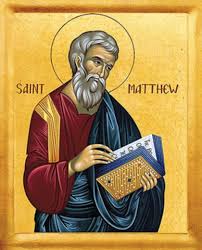
Encouragement/takeaway: I cannot speak for the experience of others in today’s world. But I can speak of what God has revealed in Scripture, and it is plain that for those men and women God delights in using, He breaks them. Just ask Job. And Joseph. And Saul the Pharisee>Paul the Apostle. Just ask the Apostle Peter, who suffered some very “rocky’ moments. Just ask Daniel and his three friends. Just ask David, a very fallen man, but the man God used for glorious purposes (eventually, people saw that Saul was a judgment on them for their sin). Just ask the Apostle Matthew. Just ask Doubting Thomas. Just ask Moses. Just look to the Lord Jesus Himself, who was despised and rejected, smitten by God, and afflicted (Isaiah 53: 3-4).
God creates beauty out of brokenness. God redeems, yes, but He does so via the crucible of suffering. Our duty is to trust the Lord, especially when it seems darkest. For even the darkness is overcome by the One who is light Himself.
Intro: One of the resources we have as Army chaplains I have found to be so helpful for one, single strength–its focus on specifics. A tendency some have in ministry is to try and cram vast amounts of theology, doctrine, church history, apologetics, evangelism, and discipleship into each effort. I have certainly erred many times in trying to cram too much, too soon, into places where my efforts were premature. The soil, to use Jesus’s own metaphor, first must be prepared by God’s Spirit; otherwise, we’re just wasting effort. In a passage on battling spiritual defeat, this resource took me to a passage in Revelation 20. If you’ll follow along, it may resonate with you, too.
Connection to Everyday Life: Have you ever been in a season where it seems Satan is winning? Have you ever felt frustrated because you see ostensibly good men and women resigning themselves to a spirit of defeatism? Have you ever looked around for Godly spiritual allies and instead found that most have just resigned themselves to go along to get along, as if they’ve said, “Oh well; this is just the way it’s got to be, I guess”? I have. I don’t like living in that sort of headspace. Everything in my being longs for good to win, for the truth to prevail over lies, for the light to expose and banish the darkness. But at times, it’s all too obvious that we live in a postlapsarian, fallen world.
The Biblical Account: Then I read Revelation 20:1-15 again. This is the passage where Satan is bound by God. Satan is bound, then cast into the pit of judgment. And then the righteous heralds, those who’d been beheaded and those who had labored in telling the truth, those who had remained faithful, etc. were brought back and restored before God and the world. Satan was defeated; the righteous were rewarded; and God sets things to rights.
Encouragement: To return to my opening description, the Apostle John was specific in his teaching here: God and righteousness ultimately prevail, and darkness is exposed. If you’ve ever been in a place where you’re tempted to think all is lost, that darkness wins, return to the Word. In short, think along these lines: Lord, You are the Sovereign One. No one else is. Not Satan, not the powers of hell, and not the schemes of man. Quicken my spirit with Your Spirit. For the Lord God almighty reigns. And God sees. Amen.
Question: Do we underestimate the spiritual forces at work among us?
Text: And Deborah said to Barak, “Up! For this is the day in which the LORD has given Sisera into your hand. Does not the LORD go out before you?” (Judges 4:14, ESV).
Context: The Book of Judges covers a largely dark set of time in Israel’s history (1300s B.C.) in which the nation fell away spiritually from the true and living God. They instead became like other nations, given over to pagan idolatry. But God sent judges (hence, the title of the book) to call Israel out of apostasy and rebellion and into obedience and divine favor. But very often most people refused to trust the Lord; instead, they pursued the vilest of behaviors, abandoning the Lord, persecuted the truth-tellers in their midst, and God eventually sent various judges to call them to spiritual sobriety.
The question that the prophetess and judge Deborah asked was rhetorical and immensely provocative: “Does not the LORD go out before you?” In other words, do you not understand and believe that spiritual forces are at work amidst us? Do you doubt God and His providence? Do you doubt that there are active spiritual forces of darkness that hate God and are actively trying to sabotage truth and righteousness?
The New Testament also has countless reminders of the reality of spiritual warfare: “For we do not wrestle against flesh and blood, but against the rulers, against the authorities, against the cosmic powers over this present darkness, against the spiritual forces of evil in the heavenly places” (Ephesians 6:12, ESV).
Encouragement/takeaway: This is not a spiritually neutral universe. As sentient and thinking creatures, we’re cast into a drama of good vs. evil, light vs. darkness, and God vs. Satan. Homo sapiens means just this: “man of thinking/thinking man.” That is why God calls His people again and again: “Come now, let us reason together, says the Lord: though your sins are like scarlet, they shall be as white as snow; though they are red like crimson, they shall become like wool” (Isaiah 1:18, ESV).












 MIND & MATTERS