Chaplain Daily Touchpoint #281: The Relentlessness of Evil

Bottom line up front: Relentlessness of Evil

Questions: Have you ever underestimated the power of evil? That is, have you ever had to say to yourself, perhaps after discovering the dark truths about someone/something, “I cannot believe it! There’s just no way. Surely, I am mistaken”? I have. From my lane as a chaplain and spiritual leader, it is deeply saddening to discover way too often that there are many wolves posing as sheep. But we are told in Scripture that this would be the case. We are also told what to do.

Texts:

“I know that after my departure fierce wolves will come in among you, not sparing the flock; and from among your own selves will arise men speaking twisted things, to draw away the disciples after them” (Acts 20:29-30, ESV).

That was the Apostle Paul speaking to the Ephesian elders. Paul knew this truth viscerally—in his guts. He knew that evil posers were inevitable. And Paul loved his people enough to try and equip them for the battles that were ahead. Paul saw what others did not, if you will; he could see where things were headed.

“Be sober-minded; be watchful. Your adversary the devil prowls around like a roaring lion, seeking someone to devour” (1 Peter 5:8, ESV). This second teaching of the same principle is not from the Apostle Paul but rather from the Apostle Peter. Peter, a man who so often in his early Christian life went from hero to zero, often on the same day/night. But in the end, Peter proved himself the real deal.

The very Apostle who had denied the Lord Jesus three times, this fallen but redeemed man, went on to write two magisterial epistles, and to preach some of the greatest sermons in the church’s history. And what is one of Peter’s recurring themes? It’s one of the same ones as Paul’s: don’t underestimate the relentlessness of evil. Peter uses the image of a roaring lion to teach us.

Encouragement/takeaway: One of my favorite trips my father took me on years ago when I was a graduate student was a trip to Kenya and Tanzania. We saw the lions hunt on safari. We saw them take down gazelles and zebras, and lick their bloody lips after swallowing steaming viscera. When you witness something like that, and you feel the heat, and you imbibe the smells, it literally gets into you; it teaches you.

That’s what Peter was driving at. Lions are kings of the jungle for a reason. They devour; they kill; they are relentless. And if you’re a Christian, don’t underestimate the powers of darkness, as they are leonine; they walk softly, but that’s because they’re prowling and forever on the hunt, seeking to devour.
Do We Underestimate the Power of Prayer?

There is an Austrailian historian and thinker from whom I continue to learn a great deal. His name is John Anderson. In the following video (less than 3 minutes long) he discusses how many Brits gathered for prayer during the WWII Battle of Dunkirk from late May to early June of 1940, and of how Christians assembled to pray for their troops amidst Germany’s seemingly formidable forces.

Questions:

How is this relevant for us? Well, it is so easy and tempting to give in to despair, if you have a certain theology. If you’re convinced that things are only going to get worse, your prayer life will evaporate. Why? Well, because you’ve convinced yourself that it’s all downhill, so why bother.

But is that view biblical?

Per Scripture, we are to pray because of who God is.

We tend to underestimate God and likewise underestimate the power of prayer. I have certainly been guilty of that.

Here are just some of the obvious reminders from Scripture about our duty to pray:

  • “pray without ceasing,” (1 Thess. 5:17, ESV)
  • And when you pray, you must not be like the hypocrites. For they love to stand and pray in the synagogues and at the street corners, that they may be seen by others. Truly, I say to you, they have received their reward. But when you pray, go into your room and shut the door and pray to your Father who is in secret. And your Father who sees in secret will reward you. And when you pray, do not heap up empty phrases as the Gentiles do, for they think that they will be heard for their many words. Do not be like them, for your Father knows what you need before you ask him. Pray then like this: “Our Father in heaven, hallowed be your name. Your kingdom come, your will be done on earth as it is in heaven. Give us this day our daily bread, and forgive us our debts,as we also have forgiven our debtors. And lead us not into temptation, but deliver us from evil. (Mt 6:5-13, ESV)
  • “The prayer of a righteous person has great power as it is working” (Jas. 5:16b, ESV).
  • “And whatever you ask in prayer, you will receive, if you have faith” (Mt 21:22, ESV)

Encouragement: Again, it’s just a 2.5 minute video, but it touches on how soldiers and civilians, believers from a across a land, gathered and prayed, and of what happened. Real history, real prayers, and the real God.

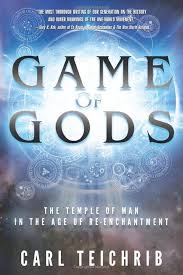
‘Game of Gods’ … Isn’t a Game; It’s a Game Changer

“As the Christian consensus fades into the shadows, the stage is set for a global sea change of unprecedented magnitude” (Patrick M. Wood, Technocracy Rising).

“Western civilization without Christianity is like a beef broth without beef” (Robert Wi. Keyserlingk, Unfinished History, p. 175).

Those two quotes are just a couple of references in Carl Teichrib’s spectacular tome, Game of Gods.

Teichrib’s thesis is that playing God is not a game at all, of course. It’s the heart of idolatry that was addressed in Genesis 3, again at the Tower of Babel, at Calvary, and by the Apostle Paul in Romans 1–just to name a few times.

The reason I thought it fitting to write on Teichrib’s book is because it catalogues man’s design to deny the Creator, man’s inveterate efforts to artificially design a Oneist cosmogony and anthropology.

It is truly a wonderful book that is terrifying in its truth about how far down the rabbit hole of Oneism we’ve burrowed.

Oneism, per its subject matter expert, Peter Jones, is “the worship of creation
where all is one when creation is worshipped and served as divine. In Oneism all distinctions
are eliminated and through enlightenment Oneism proclaims that man also is divine. Twoism is
defined as the worship of the divine Creator. All is two because we worship and serve the
eternal, personal Creator of all things. In Twoism God alone is divine and is distinct from His
creation; yet through His Son Jesus, God is in loving communion with His creation.”

So many folks are squirreling out over artificial intelligence. I think its downfall will be found in its root meaning–art and artifice. Its root meanings are “to craft” or “to put together.”

When we create, we work with existing material. And human pride makes it so easy to assume we’ve made the material. But we, too, are creatures, fashioned by the One who created all things but who Himself is uncreated.

We might look to Genesis 11 for a review and perspective. When we purport to put ourselves atop the Creator, ironies result–and they can be spectacular in their fallout. Why? Well, there is an Author who will not share His glory with another.

Chaplain Daily Touchpoint #279: Divine Battle Tactic

Bottom line up front: Divine Battle Tactic

Context: God had revealed to Israel’s leader, Joshua, that the future conquest of Jericho was already planned (Joshua 6:2); it would be conquered by the Lord via His servant. God commanded Joshua to be strong and courageous (Joshua 1:18). Would Joshua do it? Would he be faithful to God’s revealed will? It’s easy for us, thousands of years removed from the directives given by God to Joshua, to nod and smile, as if it were all no big deal. But it was a huge deal. The people of Canaan were vicious pagans, given over largely to deviance, child sacrifice, and abominations that you still find today in come countries. Anybody who thinks depravity was confined to 1400s Palestine needs to travel a bit and/or read actual history. These people were wicked, vile, and given over to the forces of darkness. Yet God was on the move through a remnant of believers.

God’s Divine Battle Tactic: You remember the plan, right? March around Jericho. Do it for (6) days, in fact. On day (7), march around the city (7) times and have the priests blow their trumpets and blast the ram’s horn and then shout (cf. Joshua 6:3-5). Huh? Really? You’ve got to be kidding. This is a battle tactic? Those are natural, doubting, sinful reactions. Why? Because they doubt God’s power to do things God’s way via obedience. The point was that God was and is the greater Joshua. Victory comes through the divine Warrior, the Lord Himself. The believer’s duty is the faithful discharge of his lawful orders.

Encouragement: Joshua and his people obeyed; the army marched and carried out the mission; the walls of Jericho fell. Rahab and her family were saved (Joshua 6:22-23), demonstrating God’s covenantal faithfulness and Rahab’s true faith in the Lord. I love the way Joshua 6 ends: “So the LORD was with Joshua, and his fame was in all the land” (Joshua 6:27, ESV).

The divine battle tactic hinges on that precept: the Lord is with His people; He is the sole 100% faithful covenant-keeper. There would be times when Joshua would doubt; there would be times Gideon would doubt; there would be times when Solomon would blow it, just like his father, David. There are times when all of us fall short; that is why we are taught again and again to look to the holy Commander and His divine battle tactics. “Some trust in chariots and some in horses, but we trust in the name of the Lord our God” (Psalm 20:7, ESV).

One on Either Side of the Cross

Nothing teaches quite like an image.

Think with me for a moment about very familiar terrain. Specifically, let’s think about Psalm 1 and then the two criminals crucified on either side of Jesus in Jerusalem on that Friday at Calvary (Luke 23:39-43).

You remember the contrast that runs through Psalm 1, right? It is the contrast between two types. The first type is the person characterized by pursuing God, and the path of righteousness, which leads to blessing. The second type is the person characterized by pursuing the wicked, ungodly things and ways, ways that bewitch and lead to ultimate judgment and condemnation.

Blessed is the man
    who walks not in the counsel of the wicked,
nor stands in the way of sinners,
    nor sits in the seat of scoffers
;
2 but his delight is in the law of the Lord,
    and on his law he meditates day and nigh
t.

He is like a tree
    planted by streams of water
that yields its fruit in its season,
    and its leaf does not wither.
In all that he does, he prospers
.
The wicked are not so,
    but are like chaff that the wind drives away.

Therefore the wicked will not stand in the judgment,
    nor sinners in the congregation of the righteous
;
for the Lord knows the way of the righteous,
    but the way of the wicked will perish
.

The imagery is so clear, as are the contrasts:

  • One eschews wickedness vs. One pursues wickedness
  • One is rooted in God vs. One scoffs at God
  • One is pictured as a tree of blessing vs. One is pictured as chaff, the cast-off part of wheat
  • One is ultimately blessed vs. One is ultimately condemned

Segue to the Crucifixion of God:

In Luke 23, a conversation is recorded. It is the conversation of two criminals, crucified on either side of Jesus. Both were guilty men. But one of them repented. One remained a scoffer and unbeliever. One was the picture of ultimate blessing; one was the picture of ultimate condemnation.

The Conversation:

39 One of the criminals who were hanged railed at him, saying, “Are you not the Christ? Save yourself and us!” But the other rebuked him, saying, “Do you not fear God, since you are under the same sentence of condemnation? 41 And we indeed justly, for we are receiving the due reward of our deeds; but this man has done nothing wrong.” 42 And he said, “Jesus, remember me when you come into your kingdom.” 43 And he said to him, “Truly, I say to you, today you will be with me in paradise.”

The Good News:

It’s not an image of how one man was good and one was bad. No; both men were bad. It’s the man in the middle that matters most. He was the lone good man who was made bad in order that we bad might be reckoned as good.

One criminal repented and believed and was thereby redeemed. The other criminal remained in disbelief and was, like the chaff from the picture in Psalm 1, cast away.

But everything hinged on the man in the middle. He’s the one with whom we must come to grips. That is why he matters most. That is what we need to think upon when we picture those on either side of the cross. We need to think upon the man in the middle.

God’s Handiwork

Illustration: Yesterday afternoon was beautiful and, as is my custom, I strapped on my backpack, laced up my hiking boots, and headed into the woods and up the hills to hike in order take in as much of nature’s beauty as I could before darkness fell. But it was tonight’s sky that was to be special for a lot of folks. Many took up their cameras, telescopes, and other optical equipment to capture a spectacle in the heavens. Why? Jupiter and Saturn appeared to do a heavenly hug in the firmament. Social media feeds were flooded with pictures people put up of the sight. I saw some people’s pictures that made me fall silent, they were so moving and beautiful. The orbits of Jupiter and Saturn coincided with the winter solstice in the Northern Hemisphere. The sky was as clear last night as I have seen in a long time, too; that added to the power of the whole spectacle.

Scripture: This morning when I was reading, I was reminded of how often the Bible speaks of the heavens:

And God said, “Let there be lights in the expanse of the heavens to separate the day from the night. And let them be for signs and for seasons, and for days and years, and let them be lights in the expanse of the heavens to give light upon the earth.” And it was so. And God made the two great lights—the greater light to rule the day and the lesser light to rule the night—and the stars. And God set them in the expanse of the heavens to give light on the earth, to rule over the day and over the night, and to separate the light from the darkness. And God saw that it was good (Genesis 1:14-18).

That was from Moses’ pen in Genesis. But King David wrote, too, of God’s creating the heavens and superintending them in the Bible’s poetry. Why? So that we would see how the heavens trumpet their Author:

“The heavens declare the glory of God, and the sky above proclaims his handiwork” (Psalm 19:1).

The temptation is to worship the creation rather than the Creator (Romans 1:25). I saw this last night. People who claim to be atheists found themselves marveling at the precision of the heavenly spectacle. They used scientifically crafted optical equipment to gaze upon a heavenly display of awe-inducing power, and yet they were oblivious to the fact that all of this design heralds the glory of the Designer (God). This is why the Bible reminds us:

“And beware lest you raise your eyes to heaven, and when you see the sun and the moon and the stars, all the host of heaven, you be drawn away and bow down to them and serve them, things that the LORD your God has allotted to all the peoples under the whole heaven(Deuteronomy 4:19).

Encouragement: As most of us will try to be with our loved ones over the next few days to enjoy Christmas and some holidays, I wonder if we will give thought to this:

“But when the fullness of time had come, God sent forth his Son, born of a woman, born under the law, to redeem those who were under the law, so that we might receive adoption as sons” (Galatians 4:4-5).

The planetary display this week was certainly moving, but it was not as important as the incarnation of God. You see, it was not random that the orbits of Jupiter and Saturn coincided, and that we know with precision when this is slated to happen again.

It was not random that God warned us that we sinners too often want to worship the creation rather than the Creator. It was not random or accidental that Jesus, the second Person of the triune God of the Bible, took on flesh in the incarnation “in the fullness of time,” as Paul wrote in Galatians 4.

No, dear readers, none of it was random or accidental, any more than your cameras, and iPhones, and telescopes were random or accidental. They bespeak of the One about whom the whole creation bears witness: “I am the Alpha and the Omega, the first and the last, the beginning and the end” (Revelation 22:13).

Merry Christmas.

Why Must You?

“Why must you bring Jesus into everything?” James asked.

“Sorry? What do you mean?” Sam responded.

“Why must you bring Jesus into everything? Why can’t things be just what they are . . . without any Jesus, just as you find them?” James said.

James’ starched white collar dug into the sunburned skin of his neck. He was shaved immaculately. His tie was knotted in a perfect Windsor.

“Why did you come to church today?” Sam asked.

“You wish to question me now, is that it?”

“I am trying to answer your question,” Sam said. “Truly.”

“My family has been members here for three generations. We began here in the early 1900s, when this was a little country church.”

“I see,” Sam said.

“It’s who we are. Tradition. My family. You’re just blind to our way.”

“Hmm.”

“Why do you do that? You didn’t answer my question.” James’ voice grew louder.

Sam watched muscles in James’ neck create spurs of taut skin that ran down from below red earlobes and disappeared behind the Windsor knot.

“Today is what many people call Easter, is that right?” Sam asked.

“Yes, of course,” James said, “but I don’t see what that has to do with anything.”

“What is it that Christians are remembering and celebrating?” Sam asked.

“Jesus’ resurrection.”

“Do you believe that?” Sam asked.

“Believe what … that Christians remember and celebrate that, or that the resurrection occurred?”

“Both are important. But the second issue is the main one,” Sam responded.

“Well, we’ve been coming on Easter for years, Sam. My family is rooted here.”

“I understand. But did the resurrection of Jesus occur?” Sam repeated.

“Look, Jesus was a good man. No doubt about that. He taught compassion, called out hypocrisy, and healed people of illnesses. He was a miracle worker, even. But to say that he came alive again after he died …”

“Why do you say Jesus was a good man, James?” Sam asked.

“Who can doubt that, Sam? He showed compassion to women. He preached about forgiveness. He called out Pharisees. And when the government officials and Jews came for him, he didn’t resist. He was good unlike anyone else. I cannot believe you would even ask that.”

“I agree. Jesus did all those things. But would a man who did all those good things be worthy of worship if he only died but did not physically resurrect?” Sam asked.

“Well, sure. That’s why we’re here, right? To worship, to say we follow his teachings.”

“That’s not why I’m here, James.” Sam said.

“Ah, so you don’t believe the resurrection either?”

“No, I believe the resurrection completely. If I didn’t I would not follow Jesus at all,” Sam said.

“But what about all the good stuff he did? What about his precepts? What about his telling us to love our neighbors?”

“Why would I love my neighbors, if Jesus didn’t resurrect? I don’t even like a lot of my neighbors. In fact, my closest neighbor, I’m pretty sure, is cheating on his wife,” Sam retorted. “I’m pretty sure I don’t love him. I think, quite honestly, he’s kind of a creep.” Sam said.

“I don’t know about you, Sam. I thought you were going to lecture me. But now it seems like you’re kind of hardhearted. Don’t you believe Jesus?”

“I do. I believe him completely. That’s where I think you and I differ. I believe I should love my neighbor who is cheating on his wife. And I believe I should love you, too, even when we disagree completely about the resurrection. And I believe that I should love my neighbor, you, and Jesus because of the resurrection,” Sam said. “If Jesus is still buried in Jerusalem, my options are about as meaningful as preferences of ice cream flavors,” Sam said.

“You believe it, then?” James asked. His eyes bore into Sam like nails.

“I do. But I believe it because it happened,” Sam said. “I have to deal with it. Otherwise, I’m a coward.”

James stood motionless. His earlobes were red and swollen above his shirt collar. Sam watched him as he tweaked his perfect Windsor knot.

“I’m going to join my family now, Sam.”

“Of course,” Sam said.

“James?”

“Yes?” James said, looking up.

“That’s why,” Sam said.

“That’s why what?”

“That’s why I must bring Jesus into everything,” Sam said. “Because he changes everything.”

James was already walking back to the foyer. He crossed it and entered the men’s room. He walked to the sink, lathered his hands with lemon-scented liquid soap, rinsed, and pulled three brown folded towels from the white dispenser mounted on the white wall. He readjusted his tie, shaping the knot into a perfectly symmetrical inverted triangle. He pulled the short end of his tie again for a tighter knot, and pushed his chin upward in front of the mirror to check for any hairs he could have missed on his neckline, but none showed. He appeared perfect and clean. He walked into the foyer again, careful to avoid Sam. Finding his family seated where they’d been for generations, he took his place.

                                                       (The end)


Post-truth: A Bridge to Folly

“Post-truth” is the 2016 word of the year, according to Oxford Dictionaries. Post means “after.” However, we are not to understand the post in post-truth in that sense. Rather post here is to be understood as indicating that social media and personal opinion carry more influence than facts. Stated another way, some people’s preferences influence them more than objective reality. Subjectivity trumps the objective/external.

The effects of pervasive social media are incalculable. No matter how loony one’s views are, there’s a website that’ll foster your opinions. People may gorge on the newsfeeds of their choice. Preoccupied with the instant, the traditional cannot compete.

Constant information (not wisdom, just information), injections of breaking news, and what’s “happening now” have dethroned the antiquated as monolithic. “Post-truth” indicates that “the establishment” (whatever that is) is tainted, that any meta-narrative is dead, and that our opinions are valid, simply by virtue of their existence. Objective reporting is gone with the wind, leaving tweets in the breeze. Why? Because thoughtful analysis does not get many “likes,” and research is whatever a Google search turns up.

But is this really so? Nothing quite concretizes ideas like literature. Matthew Arnold’s “Dover Beach,” written in the 1800s (you know, old poetry), what some term one of the first modern poems, highlights what “post-truth” leads to—namely, a continued departure from reason and wisdom, an embrace of folly. It ushers in something, but not progress. On the cusp of the modern era, Arnold wrote:


The Sea of Faith

Was once, too, at the full, and round earth’s shore

Lay like the folds of a bright girdle furl’d.

But now I only hear

Its melancholy, long, withdrawing roar,

Retreating, to the breath,

Of the night-wind, down the vast edge drear

And naked shingles of the world.


Where’s the bright future? The “naked shingles of the world” are scant fare if the soul hungers for answers.

Lamenting what he envisions as a bleak world ahead, the narrator ends the poem thus:


Ah, love, let us be true

To one another! For the world, which seems

To lie before us like a land of dreams,

So various, so beautiful, so new,

Hath really neither joy, nor love, nor light,

Nor certitude, nor peace, nor help for pain;

And we are here as on a darkling plain

Swept with confused alarms of struggle and flight,

Where ignorant armies clash by night.


Arnold was honest enough to admit that the best he could hope for was “be[ing] true to one another.” But why? And what does it mean to “be true” in a post-truth world? The “ignorant armies clash[ing] by night” are the result of jettisoning the author of life and of moral reasoning. When the creature purports to evict his maker, man’s folly is manifested, as is God’s judgment.

A degenerate culture is certainly post-truth, because it cannot appreciate the true, good, or beautiful. It forfeits the lens by which truth and falsehood are discerned. Beauty is discarded and dross is embraced. It exchanges truth for a lie and spirals into solipsism and despair.

If tweets are taken to be acumen, distraction wins. But facts are stubborn things, and just because post-truth garners much usage, objective truth nonetheless abides.

When Pilate summoned Jesus, he (Jesus) confronted Pilate with the fundamental issue: truth. Jesus said to Pilate: “For this purpose I was born and for this purpose I have come into the world—to bear witness to the truth. Everyone who is of the truth listens to my voice” (John 18:37b ESV)

Do you remember what Pilate did next? He mocked and walked out. He didn’t want truth, because he’d have to acknowledge himself as a sinner and Jesus as holy God incarnate. Rather than acknowledging God as the objective standard of truth, Pilate scoffed. When truth stood in front of him, Pilate hated it, and sought refuge in his own morality, where he purported to be the arbiter of right and wrong.

Pilate didn’t want truth. It was easier to let the mob rule. He played to the crowd. He had Jesus flogged, spat upon, crowned with thorns, crucified, and buried. But Jesus was not a post-truther.

Reality is like that. You can mock at it, deny it, and even murder it. But it rises again to meet you—even in your world of pretend post-truth.

Is that All?

There is danger in familiarity. This morning at church, the pastor taught from Mark 14. I suppose millions of people worldwide know the story of Mary, the sister of Martha and Lazarus, who anointeimgresd Jesus with her flask of oil. And Jesus paid her one of the highest compliments possible: “She has done what she could; she has anointed my body beforehand for burial. And truly, I say to you, wherever the gospel is proclaimed in the whole world, what she has done will be told in memory of her” (Mk 14:8-9 ESV). The pastor reminded us of several things. One precept, in particular, abides with me: Mary did all she could. And this convicted me about how superficially I can treat others, especially those with whom I’m familiar.

There is danger in familiarity. And nothing quite rouses me from the slumber of familiarity like the reality of death. Let me explain.

This morning in the Sunday school hour, the pastor stopped by the class I teach. He shared with our class that one of the elderly ladies in the church family had died in the early hours of that very morning. And as soon as he said her name, her face appeared in my mind’s eye.

We all have certain facial expressions, or nuances of demeanor, that mark us as unique. And this lady’s ways became almost palpable to me. But I grew more and more convicted. Why? Because I’d not spent quality time in conversation with her the last time I’d seen her at church. I was too familiar with our standard “meet and greet” time. Of course, I shook hands, and hugged, and engaged in small talk with some folks. But had I known that I’d not have another chance in this life to speak with this lady, I would have done things differently.

That is part of the danger of familiarity, at least for me. I grow accustomed. I develop a routine. The routine becomes superficial. I can atrophy as a human being. I don’t attend to my neighbor. Instead, I take her for granted. This is a danger of familiarity. We are easily habituated to feigned courtesy. Until death shakes us from our torpor.

As the church service progressed through its order, we sang and prayed and sang again. And then there was the “meet and greet” time that I have sometimes dreaded. (Like my grandfather, I’ve never excelled at small talk, so I can be ungainly at times, at least with this sort of thing.) But this morning was different. No, I didn’t suddenly become gregarious and go around backslapping and talking of the day’s news headlines. Instead, I stayed in my pew, and spoke at length with a dear couple in front of me. They talked of their many years living in southern California. The husband spoke of being a firefighter in San Diego. The wife spoke of her childhood in Colorado. They spoke of their children. I could see their eyes sparkle as they reminisced about certain events in their past. Why is all of this important? Because rather than going through the motions of caring, I did care. And they cared. We talked. We listened. We fellowshipped. I learned from listening to them, and by having watched their lives for years, that they know what it means to give all.

Like Mary, who anointed the Lord with her costly perfume, these saints in front of me have taught me (whether they know it or not) what it means to give all, to invest eternally. And so much of that investment comes, not by way of the extraordinary, but by way of the ordinary, by the familiar feel of another’s handshake, through the recurring scent of a woman’s favorite perfume, or the grin of an older wiser man, who says much in few words.

For Mary, the sister of Martha and Lazarus, she never became so accustomed to the Lord Jesus that she atrophied spiritually. She gave all. And now she’s remembered.

There is a danger in the familiar. And I think it’s failing to appreciate beauty that surrounds us. God’s providence is displayed, not just in the beautiful sunset or poem, but also in the saints on the pew in front of us.

Time Steals and Reveals

Live oak, river birch, red maple, and dogwood. Canada, Egypt, Kenya, Greece, Switzerland, Austria, Italy, and England. Blond, brown, and gray. No, this is not a quiz to see if you recognize patterns. But then again, it may be. Let me explain. It’s not about trees. It’s not about countries. It’s not about hair color. It’s about time.

I don’t remember a time when I didn’t love trees. Why is a mystery. I am convinced it has to do with their longevity, their endurance, and my enduring passion for literature. I can recall passages from the writing of Cormac McCarthy, John Steinbeck, Carson McCullers, Flannery O’Connor, Faulkner, Walker Percy, Shelby Foote, Dickens, Emily Bronte, and others where trees were delineated with such beauty that they (the trees) became characters. That is, trees became important in characters’ stories. Trees sometimes served as shade, rest, respite, and shelters from storms. Other times, they served as symbols of strength. Other times, they towered with religious significance. Jesus, the most crucial man in history, was nailed to a tree in Jerusalem. Thus, trees are not always just trees in literature.

But there’s more. There is a connection to the countries and colors listed above. I’ve planted at least one tree, but usually several trees, in each place my family and I have lived over the last almost twenty years. Why? To mark time’s passage. To plant tangible signposts of where we’ve been. To remind me not to squander my life and time.

But what of the countries and colors? Recently an old Army friend emailed me some pictures of us two decades ago. Several captured us atop mountains in Switzerland and Austria during a weekend ski trip. My hair (then) was blond. Later it turned brown. Now it’s gray. Other pictures showed us deployed in Bosnia in the 1990s. My hair (then) was blond. Later it turned brown. Now it’s gray. And I understood that time’s an incorrigible thief.

Then I thought of some of the places I’ve visited or lived: Kenya, Canada, England, Belgium, Germany, Hungary, Yugoslavia, Croatia, Italy, Czechoslovakia, France, Egypt, Greece, Afghanistan, Bosnia and Herzegovina, Kyrgyzstan, Switzerland, Austria, Indonesia, Hong Kong, etc. There are other places, of course, but I walked through them again in my mind and found myself grinning at memories from each place. And I understood that time’s an incorrigible thief. I’d spent time in these places and they’d shaped me.

Time’s an incorrigible thief. That’s part of why I plant trees on each place my family I reside. They remind me that time’s an incorrigible thief who will steal if we fail to sow, water, feed, tend, and treasure what’s most important. Time steals and yet reveals our treasure. I’m no longer blond, but gray, and (hopefully) wiser, rooted in working at that which endures.