“Back again so soon?” That’s what the attendant at the oil change station asked me as I sat in my truck with the window rolled down, waiting to have my truck tires rotated and engine oil changed. “Yes,” I replied. “Been a busy few days.” Indeed. Busyness as usual. Might I (and others) be so busy that we forfeit the most important things? In only a few days I’d amassed another 3,000 miles of road time, and was again back at the oil change station.
The apostle Paul wrote in the New Testament that Christians are to seek eternal things rather than spending our affections on temporariness: “For the things that are seen are transient, but the things that are unseen are eternal” (2 Corint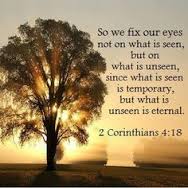 hians 4:18b ESV). So what are eternal things? What does Paul mean? The context is one wherein Paul contrasts the “light momentary affliction” (v.17) of physical sufferings to the eternal glory that awaits Christians. How much more encouraged and faithful, therefore, ought Christians to be in laboring for the truth.
Believers are not to “lose heart” (v.16) because we know that our labors (if not wasted upon the tyranny of the temporary and mere busyness), our fatigue, our weariness, and even our exhaustion that result, are worth it. In fact, to spend oneself for the sake of the truth should usher in sweet rest. “Sweet is the sleep of a laborer” (Ecclesiastes 5:12a ESV).
Moreover Jesus taught how we’re to expend our energies on matters of substance. We’re to use our minds for things that matter eternally. Frittering away our time on the temporary is sinful.
Too much is at stake: “Therefore do not be anxious, saying, ‘What shall we eat?’ or ‘What shall we drink?’ or ‘What shall we wear?’ For the Gentiles seek after all these things, and your heavenly Father knows that you need them all. But seek first the kingdom of God and his righteousness, and all these things will be added to you. Therefore do not be anxious about tomorrow, for tomorrow will be anxious for itself. Sufficient for the day is its own trouble.” (Matthew 6:31- 34 ESV)
Indeed. Sufficient is any day’s trouble. I suspect you’re like I in that you tend to worry about things, at least at times. I have to take breaks from the media deluge. I’m weary of hearing of Hillary’s decades of lies and of Donald’s boasts. I’m weary of hearing how secular government continues to grow and of how individual responsibility and freedom proportionately shrink. I’m weary of hearing of Islam’s continuous bloody conquests across nations. I’m weary of people assuming just because someone’s exceptional in one area (movie acting, e.g.) that he is necessarily qualified to speak intelligently about philosophy, theology, history, or literature.
No one who knows me would ask me to do algebra, for good reason. However, I might be somewhat more helpful if you wished to discuss the 20th century novel or Charles Dickens’ contributions to the world’s greatest literary characters. In other words, it’s important to know where one fits, and where one’s knowledge extends/does not extend.
“Being busy” is often a near neighbor to waste. John Piper’s Don’t Waste Your Life is vastly popular with good reason. One of the great lines from American writer Henry David Thoreau’s Walden expresses what I’m after here: “I went to the woods because I wished to live deliberately, to front only the essential facts of life, and see if I could not learn what it had to teach, and not, when I came to die, discover that I had not lived.”
I disagree with Thoreau on several things, but on that principle, we would’ve agreed, and could’ve shared his simple cabin in Concord, Massachusetts any day.
 f only we had godly leaders. If only our side was in power. If only we had leaders who followed the Constitution. If only. Are you tempted to think and/or mutter thoughts like these? I am, but I hope that I’m learning better—and not from earning more degrees or anything like that. I’m learning that leadership begins at home. We are quick to expect more of our leaders than we do of ourselves. In 62-63 A.D. the apostle Peter wrote to Christians enduring persecution in the 1st century, encouraging them with this truth: a godly life is the best example to an ungodly world, but that is only possible if God changes our hearts/wills from the inside. External political systems cannot reform the idolatrous heart. “For this is the will of God, that by doing good you should put to silence the ignorance of foolish people. Live as people who are free, not using your freedom as a cover-up for evil, but living as servants of God. Honor everyone. Love the brotherhood. Fear God. Honor the emperor.” (1 Peter 2:15-17, ESV)
 my hours are taken up in study and preparation. Contrary to some people’s experiences, sustained research and study are not burdens to me; I emerge from those disciplines reinvigorated. Recently I was requested to speak at a Bible study to military personnel and Department of Defense civilians. I’d been studying in Psalm 67, so I thought that would be a sound passage from which to teach. It was not just because that is where I’d been in some of my recent studies. It was more than that. I consistently see the longing for encouragement that we all have.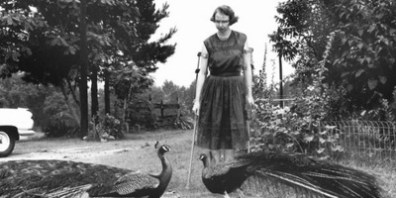
 e story, it’s a simple plot: A grandmother, the protagonist, persuades her only son, Bailey, to take her along on a family vacation Bailey and his family have planned to FL. The grandmother, a complaining prig and gossip, would rather go to east TN, but she acquiesces to the FL plan. Referencing the newspaper, the grandmother alerts her son (Bailey) that an escaped convict called the Misfit, is on the loose:



 MIND & MATTERS