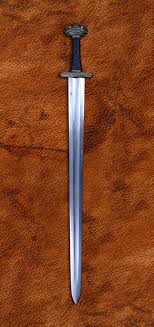
This evening after a supper with my bride, I sat down in my library to read and study. I was in Joshua. The passage I focus upon herein is found in Joshua 5:
13 When Joshua was by Jericho, he lifted up his eyes and looked, and behold, a man was standing before him with his drawn sword in his hand. And Joshua went to him and said to him, “Are you for us, or for our adversaries?” 14 And he said, “No; but I am the commander of the army of the Lord. Now I have come.” And Joshua fell on his face to the earth and worshiped[c] and said to him, “What does my lord say to his servant?” 15 And the commander of the Lord’s army said to Joshua, “Take off your sandals from your feet, for the place where you are standing is holy.” And Joshua did so. (Joshua 5:13-15)
Context, Context, Context: Of the 24 chapters in Joshua, this is chapter 5. This is a subsection of the book of Joshua that recounts Joshua leading Israel and crossing into the land promised to them by the Lord. As in any conquest, one is sure to meet friends and foes. The issue? How was Joshua to know which was which? Who was a friend and who was a foe?
When you examine the story, you discover that this event precedes the Fall of Jericho. But before the Lord gives Jericho into the hands of God’s people, the leader (Joshua) is confronted. He is confronted by a man standing before him and that man stood “with his drawn sword in his hand” (v. 13). That’s a posture for battle, for warfare, for blood.
And what does Joshua do? He asks the man a question: “Are you for us, or four our adversaries?” (v. 13). In other words, Joshua wants to know if the armed man is on God’s side or on the side of God’s enemies. And the response Joshua received could be viewed as cryptic: “No; but I am the commander of the army of the LORD. Now I have come” (v. 14).
That “No” the man answered was emphatic. He was revealing to Joshua that he was bigger than Joshua, Israel, and the enemy pagans into whose territory Joshua was leading God’s people. Now, the text says, the man was here. Not later, but now. At the right time. In the fullness of time.
Teaching: After studying this passage, and Scripture as a whole, for years now, it is my belief that this event was a Christophany, an event of the preincarnate Christ appearing in the Old Testament. God is omnipresent, of course. There is no place God is not. However, God makes special entrances at times of particular importance in salvation history.
When Joshua was about to lead his people into Jericho, it was an important time in salvation history. Why? Because God was continuing to reveal his covenantal promises to his people, that he would never leave them or forsake them.
Encouragement: I do not know where you are spiritually today. But this is one more example in Scripture of God demonstrating in real space-time history that he is in the midst of his people. Our job is to do as Joshua did–fall on our faces before the Lord. Why? Because he wields a drawn sword, and victory belongs to the Lord of hosts.
Jericho would be given to God’s people. God’s covenantal promises to his people would continue. And so should believers’ faith in the God who cannot lie.

 MIND & MATTERS