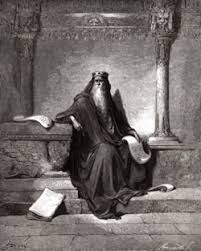
Chaplain Daily Touchpoint #345: Wisdom from Ecclesiastes, the Gospel, and a Beatles Song

Introduction: I was camped out in Ecclesiastes 9. Solomon writes the following:

I have also seen this example of wisdom under the sun, and it seemed great to me. There was a little city with few men in it, and a great king came against it and besieged it, building great siegeworks against it. But there was found in it a poor, wise man, and he by his wisdom delivered the city. Yet no one remembered that poor man. But I say that wisdom is better than might, though the poor man’s wisdom is despised and his words are not heard.

The words of the wise heard in quiet are better than the shouting of a ruler among fools. Wisdom is better than weapons of war, but one sinner destroys much good (Eccl 9:13-17).

Observations: We observe several fundamental images in Solomon’s words:

  • a vulnerable city
  • a powerful and devouring king
  • a wise man whose wisdom is used for deliverance
  • the abandonment of wisdom
  • the persistence of fools depsite the offer of wisdom

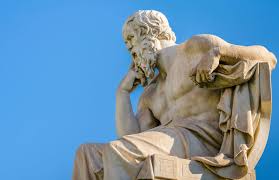
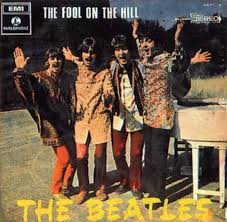
It reminded me of “The Fool On the Hill,” one of my favorites ditties from the Beatles.

Day after day, alone on a hill
The man with the foolish grin is keeping perfectly still
But nobody wants to know him, they can see that he’s just a fool

And he never gives an answer


But the fool on the hill sees the sun going down
And the eyes in his head see the world spinning around


Well on the way, head in a cloud
The man of a thousand voices talking perfectly loud
But nobody ever hears him or the sound he appears to make
And he never seems to notice


But the fool on the hill sees the sun going down

And the eyes in his head see the world spinning ’round
And nobody seems to like him, they can tell what he wants to do
And he never shows his feelings


But the fool on the hill sees the sun going down
And the eyes in his head see the world spinning ’round (oh oh oh)
‘Round and ’round and ’round and ’round and ’round


And he never listens to them, he knows that they’re the fools
They don’t like him
The fool on the hill sees the sun going down
And the eyes in his head see the world spinning ’round

I went back and watched the video of the Fab Four and Paul singing this beautiful piano-laden melody with Paul grinning his impish little grin into the camera’s eye. So clever, wise even–how much wisdom is sown in a ditty for all who will hear.

Scripture’s Connective Tissue: I went back and again read Solomon’s words in the verses above from Ecclesiastes 9. The lessons were as clear as those from McCartney in “The Fool On the Hill,” namely, that wisdom is good but it is often suppressed, even when God has sent his truth-tellers into our midst.

The text says in verse 16 that “the poor man’s wisdom is despised and his words are not heard.” He’s treated like the subject in “The Fool on the Hill.”

In Matthew 12:42, Jesus said, “The queen of the South will rise up at the judgment with this generation and condemn it, for she came from the ends of the earth to hear the wisdom of Solomon, and behold, something greater than Solomon is here.”

The wisdom, he said, was God’s wisdom. Jesus was delivering God’s wisdom. It was superior to Solomon’s wisdom or any man’s wisdom. Why? Because it was God’s wisdom, God’s revelation.

And if that’s not clear enough, it’s emphasized again in the letters. Paul writes, “And because of him[Christ] you are in Christ Jesus, who became to us wisdom from God, righteousness and sanctification and redemption,” (1 Cor 1:30).

Takeaway: The fool on the hill in the Beatles tune saw the lay of the land, but few people listened. Solomon taught the same thing in Ecclesiastes, namely, that the wise man is occasionally consulted but, more often than not, discarded, so that the real agenda can continue, an agenda shot through with folly. And Christ and Paul taught the same thing, too, that Christ is the wisdom of God, and that if we are wise, we are wise only insofar as we follow him.

Chaplain Daily Touchpoint #320: Hearing Wisdom?

Bottom Line Up Front: Hearing Wisdom

Introduction: Remember how King David longed to build a house for God (2 Samuel 7)? God allowed David to do many mighty feats but building the temple would be a feat reserved for David’s son through Bathsheba, Solomon. God granted Solomon more than he could have imagined: “And God gave Solomon wisdom and understanding beyond measure, and breadth of mind like the sand on the seashore, so that Solomon’s wisdom surpassed the wisdom of all the people of the east and all the wisdom of Egypt” (1 Kings 4:29-30). And in 1 Kings 5-6, Solomon would indeed contract the best builders of his time to erect a temple for God. It wasn’t that God could be ‘contained’ inside anything constructed; rather it was to symbolize God’s presence among His people. Just as the tabernacle was central in Moses’ day, the Solomon’s temple was in his generations, as a way to symbolize God dwelling amidst His people.

But what so fascinates me in 1 Kings 4, however, is not the groundwork for the building of Solomon’s temple, but how the writer emphasizes the posture of the people to wisdom. In just the last six verses of 1 Kings 4, the writer emphasizes Solomon’s wisdom, understanding being “beyond measure” (v. 29), that his mind was like the “sand on the seashore” (v. 29), that his wisdom “surpassed the wisdom of all the people of the east and all the wisdom of Egypt” (v. 30), that he “spoke 3,000 proverbs” (v. 32), that he even had wisdom regarding agriculture, horticulture, ornithology, sea creatures, and dendrology (vv. 32-34).

Again and again, the writer emphasizes Solomon’s staggering wisdom. But here’s the kicker: the people recognized that and sought him out. They weren’t misled by the pablum of mere babblers. They had enough discernment to distinguish talking heads from the fountain of wisdom.

Don’t Miss the Teaching: “And people of all nations came to hear the wisdom of Solomon, and from all the kings of the earth, who had heard of his wisdom” (1 Kings 4:34).

Encouragement/takeaway: There’s no lack of entertainers out there—in Solomon’s day or in our day. But there’s a world of difference between distraction and wisdom. May God’s people be those of discernment and wisdom. Blateration is one thing; wisdom is something altogether different.

Chaplain Daily Touchpoint #319: Solomon’s Prayer for Godly Discernment

Bottom line up front: Solomon’s Prayer for Godly Discernment

Context: It was the 900s B.C. King David had died. His son Solomon was now king in the land. But he was young still and unprepared to lead in the way God would have him lead. There was already strife in the kingdom. Adonijah, e.g., tried to marry Abishag in order to usurp the throne. But Solomon had the wherewithal to at least prevent that (cf. 1 Kings 2). But the issue facing young Solomon at this point was his need of Godly wisdom. Could he just gin it up like one might whip up a quick meal? Was there a theological microwave he could employ in order to be ready to rule in 90 seconds. No, of course not. He needed Godly wisdom; he needed discernment. Where does that come from?

Solomon’s Disposition and Solomon’s Prayer:

And now, O Lord my God, you have made your servant king in place of David my father, although I am but a little child. I do not know how to go out or come in. And your servant is in the midst of your people whom you have chosen, a great people, too many to be numbered or counted for multitude. Give your servant therefore an understanding mind to govern your people, that I may discern between good and evil, for who is able to govern this your great people? (1 Kings 3:7-9, ESV)

God’s Response: “It pleased the Lord that Solomon had asked this” (1 Kings 3:10, ESV).

Encouragement/takeaway: For a long time now, I have been fascinated by the life of Solomon. Many times, he went from hero to zero, and back again. But on this occasion, he hit bull’s-eye, center mass, perfectly. He knew he needed Godly wisdom. And he had the self-awareness and humility to seek it out from its source: God’s word. And God granted Solomon discernment and wisdom in order that he might “discern between good and evil.” May we, at least in this regard, emulate Solomon’s prayer for wisdom, for discernment.

Chaplain Daily Touchpoint #309: (3) Profound Verses about Discernment

Introduction: There are three verses in Proverbs 9 that are utterly profound. Here they are:

7 Whoever corrects a scoffer gets himself abuse,
    and he who reproves a wicked man incurs injury.
Do not reprove a scoffer, or he will hate you;
    reprove a wise man, and he will love you.
Give instruction  to a wise man, and he will be still wiser;
    teach a righteous man, and he will increase in learning. (Pr 9:7-9, ESV)

How are they profound?

In at least (3) ways:

  • It is unwise to try and lead scoffers. They’ll just resent you for it. That’s what vv. 7-8a teach.
  • It is wise to try and lead the teachable, the wise, and the humble. That’s what v. 8 teaches.
  • It is wise to invest in those who are genuine; it is unwise to exhaust yourself upon the posers/impostors/foolish. That’s a summary of all three verses.

What’s Proverbs about as a whole? Wisdom.

Encouragement: There’s a stunning passage in John 6 where many folks walked away from the Lord Jesus, truth incarnate. Verse 66 of John 6 reads, “After this many of his disciples turned back and no longer walked with him” (Jn 6:66, ESV). That should break your heart, folks. They abandoned the Holy One, the truth-teller. They simply left. And yet that is what God used as part of His plan to redeem His people. We cannot miss that or we misread Scripture.

67 So Jesus said to the twelve, “Do you want to go away as well?” 68 Simon Peter answered him, “Lord, to whom shall we go? You have the words of eternal life, 69 and we have believed, and have come to know, that you are the Holy One of God.” 70 Jesus answered them, “Did I not choose you, the twelve? And yet one of you is a devil.” 71 He spoke of Judas the son of Simon Iscariot, for he, one of the twelve, was going to betray him.

So how is this encouragement, you ask? I think it’s this: We are told and shown up front in Scripture that truth divides. Most don’t want it; they in fact hate it. That’s why Jesus was treated the ways He was. When truth appears in history, we sinners have a tendency to crucify it. But truth won’t be silenced. It rises from the grave, you see. Why? Because God will not be mocked. Truth eventually is revealed. Let us teach those who desire it, and know up front what Solomon taught in Proverbs and what Christ Himself taught in the Gospels. Just be faithful, entrusting the results to God.

Chaplain Daily Touchpoint #289: Solomonic Wisdom

Introduction: If you have been a committed reader for many years, you discover the books have accumulated, and you end up having to either downsize the library (heresy!) or build new bookshelves (yes!), or perhaps continue to give books away to those you hope will read them. I’ve done each of these things over the course of years, but there’s one book within the Book of books, of which I never tire: Ecclesiastes.

Why Ecclesiastes? Well, in just twelve chapters, I discover again and again a mysterious comfort when my soul is troubled. Today, for example, I was ruminating over the last words of Ecclesiastes 9. The issue addressed here is wisdom amidst an environment of folly.

Here’s the passage:

I have also seen this example of wisdom under the sun, and it seemed great to me. There was a little city with few men in it, and a great king came against it and besieged it, building great siegeworks against it. But there was found in it a poor, wise man, and he by his wisdom delivered the city. Yet no one remembered that poor man. But I say that wisdom is better than might, though the poor man’s wisdom is despised and his words are not heard. The words of the wise heard in quiet are better than the shouting of a ruler among fools. Wisdom is better than weapons of war, but one sinner destroys much good (Eccl 9:13-18, ESV),

Admittedly there is a shade of resignation involved in the tone of the above passage. But the more I study this book, I think that’s central to a correct understanding of the book’s theme. Please don’t misunderstand. All the ‘vanity of vanities’ sections are to warn of the endless follies of secularism, hedonism, and idolatry. Those refrains are emphasized throughout the book, so that is central to a correct understanding of the book’s theme. By the way, Solomon states his theme overtly in the closing verses of the book: “The end of the matter; all has been heard. Fear God and keep his commandments, for this is the whole duty of man. For God will bring every deed into judgment, with every secret thing, whether good or evil” (Eccl 12:13-14, ESV).

What I am driving at here, however, is that Ecclesiastes reminds me that the spiritual battle is vastly too much for me. That is, the forces of good and evil are indeed cosmic in scale. That’s what Paul labored so much in Ephesians. In the words I quoted above from Ecclesiastes 9:13-18, I appreciate so much what the Scottish writer Robert Buchanan observed:

“War wounds, but wisdom heals. War and all its weapons belong to the bloody brood of him who was a murderer from the beginning; wisdom is the attribute and gift of him who came to bring peace on earth, good will to all, and glory to God in the highest.”

Takeaway: In other words, wisdom. That’s what Solomon, a man who went from hero to zero many times, teaches: wisdom. But the tinge of sadness, the limning resignation that surrounds Ecclesiastes like a border, remains. Wisdom entails a certain element of, as Vonnegut phrased it in one of his books, “and so it goes” concession. It’s a way of accepting that in this life, we must, if we are wise, accept our limitations. It is hubristic for us sinners to think we can make others wise; it’s hard enough to gain wisdom in our own lives. In sum, humility is called for. Even though wisdom is better than might, Solomon reminded us, the poor man’s wisdom is “despised and his words are not heard” (Eccl 9:16, ESV). Learning to live beautifully in a broken world marks a wise life.