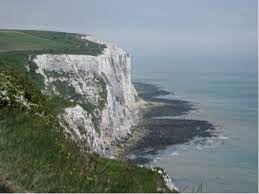
In the poem “Dover Beach” by Matthew Arnold, it ends with haunting lines about how ignorance and the jettisoning of wisdom are omens of a growing spiritual darkness:
. . . The world, which seems/To lie before us like a land of dreams,/So various, so beautiful, so new,/Hath really neither joy, nor love, nor light,/And we are here as on a darkling plain/Swept with confused alarms of struggle and flight,/Where ignorant armies clash by night.
“[O]n a darkling plain” is filled with foreboding. “[C]onfused alarms of struggle and flight” portends melee and cultural chaos. And “ignorant armies clash[ing] by night” is imagery of darkness and violence.
The poem reminds me of Cormac McCarthy’s The Road, a novel often described as post-apocalyptic. I wrote my PhD dissertation on McCarthy’s biblical paradigm of anthropology as evidenced in his fiction because I think that McCarthy demonstrated in his works a hope that is rooted in the gospel. It is the hope of redemption and restoration. It is rooted in how redemption comes from outside of us through Christianity.
When you and I see a civilization being ripped apart at the seams the picture is like what Matthew Arnold describes—confused alarms of struggle, ignorant armies clashing, and a darkness that increasingly seems to overwhelm efforts at sanity, goodness, truth, and beauty.
But Christianity hinges on the fact that when the world system thinks it has killed the good news, Jesus rises from the grave. When the nations rage, scheme, and mock the holy, the Son makes the nations his heritage and the earth his footstool. When the accuser of the brethren takes captive the foolish, Christ crushes the head of the serpent. Just when all seems lost, behold, God’s truth abideth still and makes all things new.
 MIND & MATTERS
I struggle with loving someone who hates me and wants to kill me
LikeLike