It is odd the way it happened. I was tired from writing, rewriting, and editing a paper on human development. It is one of the papers I am revising as part of professional development. I quite enjoy research and am a voracious reader, so it was not the work that was wearing me down. I was rather spiritually worn down by the content I again and again discovered when reading academic books that viewed human personality via a clinical lens. Something, I thought to myself, is lost via that approach.
So I pulled my chair back from the desk on which my computer sat. I walked over to a stack of books I keep by my reading chair. I took up a biography of Charles Dickens I’m currently reading. It is superb. But I am admittedly biased; I adore Dickens’ novels.
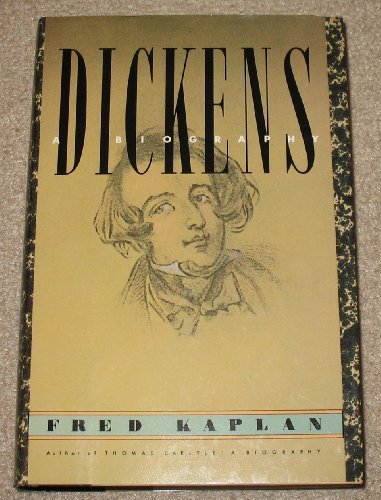
I am about halfway through this long bio of Dickens. And I was reading of Dickens’ fascination with death. It was a theme that occupied much of Dickens’ literary world. The death of children especially grieved Dickens. And then Kaplan wrote of Dickens’ views regarding death:
Even in Paris, the wages of sin were death, death inexplicable, nontheological, a fact that from childhood on he had had as an obsessive part of his imagination and consciousness. To look at a corpse was to look at the ultimate, most threatening mystery, the body without spirit, the flesh without animating life, turned into meat for carrion, into the infant corpses in Rochester that had seemed to him as a child like pigs’ feet set out in a butcher shop, into the dead river-eaten bodies of suicides fished out of the Thames, into the victims of the devil-rat, Chips, into the corpses preserved by the cold at the great St. Bernard Convent, into the row of dead sibling infants represented for Pip by the small tombstones in the graveyard in Kent. (214-15)
The other view, of course, is the Christian one. In that one, death is not a cessation of consciousness where material becomes worm food. No; in Scripture, we see a vastly different worldview. At physical death, “the souls of believers are at their death made perfect in holiness, and do immediately pass into glory; and their bodies, being still united in Christ, do rest in their graves, till the resurrection” (WSC, A.37).
The way Paul phrases it in his second letter to the Corinthian believers is, “So we are always of good courage. We know that while we are at home in the body we are away from the Lord. Yes, we are of good courage, and we would rather be away from the body and at home with the Lord” (2 Cor 5:6, 8).
The biblical view of human development is so beautifully different from secular clinical views of people and of death. In the gospel, there is hope.
In secularism, there is insignificance and silence. As John Lennon wrote, “no hell below us, above us only sky.” We’re all ‘nowhere men/women’ in that worldview.
As I wrote above, I adore Dickens’ stories. I resonate with his hatred of the enemy, death. But my fear is that he did not go far enough in his thinking. He didn’t come to see that death is swallowed up in victory for all those who are in Christ.
In the biblical storyline, the reason believers have hope is because the Creator Himself laid down His life for His people, submitted to an ignominious death via crucifixion on a Friday in Jerusalem, Israel, but who took His life up again three days later by walking out of a guarded tomb (Why guard the tomb of a corpse, by the way, unless you knew that the corpse had power over death, hell, and the grave?).
These are two very different ways of viewing death–the secular one and the Christian one. The first leads to no ultimate answers. You’re here and then you’re gone. No significance. No objective meaning.
But in the Christian view, you have ultimate answers. You’re here, your actions matter; you are signficant. You have objective meaning. And when physical death takes the Christian, believers will see Him who overcame sin, banishment, and the curse on their behalf.
And now I get to return to editing this paper on human development, but it is with a renewed spirit. It is almost as if even my beloved Charles Dickens’ anthropology was used to remind me of what I know to be true: Death, where is your victory? Death, where is your sting? 1 Corinthians 15 is there; it abideth still. And it is beyond good news.
 MIND & MATTERS
I haven’t read Malcolm Muggeridge’s “Confessions of a Twentieth-Century Pilgrim” since 1989. Just read it again over the last few days. The final chapter is “The Prospect of Death”. He finally understood that death was not the end. ”I have loved life and now I love death as its natural termination . . .” I believe he understood and was looking to be with Christ.
James
LikeLiked by 1 person
I agree 100%.
LikeLike