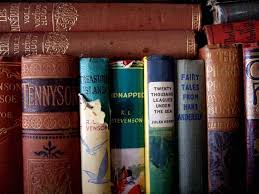
For many years now, I have taught literature. It is part of who I am, I suppose. I discovered a passion for reading when a teenager and that passion is unabated. I do not truck with much popular-level reading, like that which you’ll find in airport kiosks or on the tables at your town’s chain bookstores. I love the classics–most of them anyway. There are a few books considered classics that I just cannot seem to enjoy. There are some Austen books that put me to sleep. Give me Dickens and Hardy over Austen, any day.
But this is about Artificial Intelligence, not about my literary interests. Here are a few questions I’m thinking through:
- Is AI to be welcomed in when it comes to literary analysis?
- That is, is ‘close reading’ even possible if AI becomes the de facto medium for students’ literary analyses?
- What happens to students’ intellectual development if and when they rely on AI to ‘do the reading’ for them?
- Is it possible to inculcate critical thinking skills when AI is prevalent?
I was grading papers today and, after reading six or seven essays from my college kids, I discovered a pattern–almost the exact same lingo, quotes from short stories, and conclusions. Some overlap is understandable, of course. But when the pattern repeats again and again, “Houston, we have a problem.”
I concede that we should aim to learn the history of the best commentaries on the classics. I mean, if one’s reading is so ‘out there’ that it’s unhitched from the wisdom of the past, there may be good reason to be suspicious.
But what I’m seeing is just the opposite in today’s culture of AI, especially when it comes to my lane of the classics. The responses to questions I pose to students in literature classes grow more and more similar. It’s likely due to their almost complete reliance upon AI engines of their choice.
For those of us who love great literature, this is a dark cloud. It portends ominously over lands that should ideally be filled with critical thinkers. But when auto-generated responses, divorced from close personal reading, are the medium students rely upon, I cannot be confident that much learning at all is actually occurring. Just my thoughts.
 MIND & MATTERS
Don’t be hatin’ on Austen now…them’s fightin’ words!
However, I agree with your other words about AI. The seminary classes I am taking actually require us to use AI in some of our assignments, and that sets me on edge. I do not want to rely on AI–I want to learn for myself! But the insistence is there, so I comply, but not happily. I think AI has a place, but it is not at this level of academia. All some students are truly learning these days is how to ask AI the right questions and how to hide the fact that they used AI from their professors/teachers. AI should be for AFTER you learn the standard way of doing things academically. I believe when one has earned their degree(s), they may choose to use AI to streamline processes. I’m just old-fashioned that way.
LikeLiked by 2 people
Thank God for “the old-fashioned ways” like stew the way mom used to make. How can we teach our children to think for themselves? Like my mom said when I made a grammatical error “What am I sending you to school for?”. I am so thankful for you paragons of virtue who encourage me to get into God’s Word (for myself). I look forward to hearing what God gives to Johnny for us tomorrow. Also, Ann, thank you for your comment.
Henry
LikeLike