Brewster, Birds, & Bones

A cloudy mist-filled day in our area, but Brewster and I took in a bit of time for the woods and the creeks.

He discovered more deer skeletons.

We have found over the years that certain areas seem to be preferred for their last moments. Maybe it has something to do with thirst, as the areas are invariably close to running water.

And my friend Jim is seeing some of his beloved birds come near already and we’re still only in February. But I’m already seeing blooms on some of the flowering trees and grasses are appearing with new green blades, too.

On Sylvia Plath’s The Bell Jar

When I read Plath’s The Bell Jar as a student in college decades ago, I knew little of the author’s biography.

Having studied her background now and her brief life, her reading regimen, and her lifetime of writing, I now have a fuller, deeper appreciation for her writing and her soul’s anguish. It is unfortunate, in my view, that her suicide overshadows her literary contributions. I know of few people who can speak intelligently about Plath’s poems and prose, but of several who bloviate about her suicide. That is indeed depressing to those of us who appreciate Plath’s gifts to the world that came by way of her pen.

I completed reading The Bell Jar again this week, and it details the shock therapy her stand-in protagonist endured, the misunderstandings she endured, her ambitions, her isolation, and the respite she found in logotheraphy. For Plath, her only salvation came via literature, poetry in particular.

She penned many caustic rebukes, especially towards Roman Catholicism’s system, and she was not much kinder to some Protestant abuses she saw and endured via some professing adherents. Some of her black humor in The Bell Jar is seen here:

“Of course, I didn’t believe in life after death or the virgin birth or the Inquisition or the infallibility of that little monkey-faced Pope or anything, but I didn’t have to let the priest see this, I could just concentrate on my sin, and he would help me repent” (164).

There are many examples of Esther (the main character in the novel) calling out false systems and of religious hypocrisy in the novel, all of course as the protagonist’s reasons for wanting to end her life. She’s literally sick of the lies and comes to view death as preferable. Sadly, the protagonist’s struggles and laments were carried to fruition in Plath’s own life just a few months after her novel was published.

Life imitated art in tragic form.

It is not uncommon today to hear so much about mental health. Well, we might do worse than reading and grappling with the writing of Sylvia Plath, both for her literary importance and for the light her literary corpus may shed upon spiritual, psychological, and emotional spectres that haunt not a small number of people.

Feathered Friends

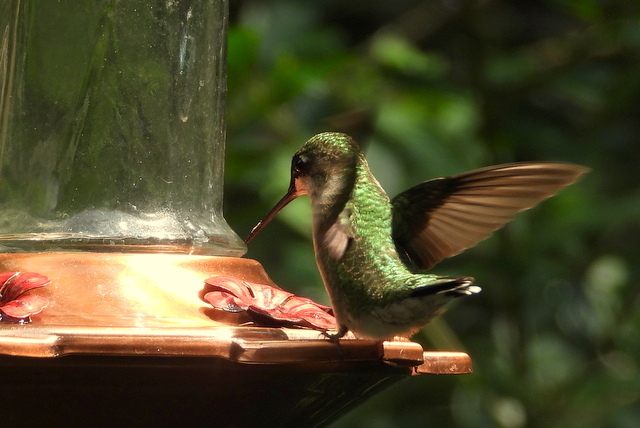
Today is a federal holiday and I am off from work, and my friend of encouragement, Jim, shared some of his photos of his beloved birds.

They remind him of the goodness of God, of the providence of God, of the artistry and craftsmanship of God, and I could not agree more.

The birds, the daffodils, and more showcase the coming of spring and the author and restorer of life that superintends creation.

Hope you enjoy. (Thanks, Jim, for sharing.)

Sensing the Demonic

This morning I stopped by the shoppette for a cup of coffee. Normally I park as far as possible from the store in order to walk more. Plus, I labor to avoid door dings from other drivers and/or passengers who don’t mind opening their doors into other people’s. But the shoppette had almost all open parking spaces in front of the store, and so I took the space adjacent to the handicapped spot, as I figured no one would park there for the ninety seconds or so it would take me to get a cup of coffee.

When I went to the coffee section, I poured my black coffee and snapped the plastic lid over the lip of the cup, and walked to the register. The friendly lady who works the mornings there said, “Good morning, Chaplain,” as she always does when I stop in for a coffee.

I was paying when a very muscular man, dressed in a ball cap, flip flops, shorts, and a t-shirt came through the door, expelling a large breath as if exasperated. I had to take a step closer to the counter to avoid being shoved by him. He plunged his arms into the coolers and came out with a case of Monster drinks, the ones with the lime green writing on the black cans. When he came to the line to pay, my skin literally crawled. I know this may sound crazy to some, but I sensed being in the presence of the demonic. My guts seemed to turn inward in visceral retreat. I knew spiritual warfare was occurring.

As I finished paying for my coffee, the sweet lady behind her register looked at me and nodded as if she, too, shared an understanding with me of what was occurring in that moment. I nodded at her and said, “Thank you. Have a good day.”

“Have a good day, Chaplain,” she said. And we both heard the man behind me muttering to himself as if I was taking too long to pay for my coffee. I must’ve been at the counter for thirty or forty seconds.

When I walked out to my car, the man with the Monster drinks had parked his black F-250 pickup truck in the handicapped spot, and so closely to my car that I had to squeeze into my door like a rodent entering a wedge. Why would a young muscular man, in t-shirt, flip flops, ball cap, and shorts, driving a jacked-up black F-250, park in the handicapped spot?

But I finally got in my car and could still feel the presence of evil. I buckled my seat belt, put my coffee in the center cup holder, and pulled towards the road in order to go on to the morning’s duties. As I waited to turn onto the highway, the man with the Monster drinks pulled beside me and the other cars, and shot onto the highway, the sounds of his truck exhaust ricocheting across the morning air.

I cannot prove it empirically, I concede that, but I know in my bones that spiritual warfare occurred in that shoppette this morning. It was as real as the coffee I sipped later on and as emblazoned on my guts as those demonic lime green emblems on those dark energy drinks.

Evening with Willie Morris, Skip the Dog, & Spit McGee

If you adored The Andy Griffith Show, skipping stones across the pond, placing pennies on the railroad tracks, and have ever been frog giggin’, Willie Morris is probably your type of writer, too.

I am reading his Good Old Boy and My Dog Skip this week, and when I went for a stroll in the gloaming, the sunset burned in majestic bronze, and I came across two mature does in the river bottom just when it was growing dark enough, and they did not even dart into cover when I approached.

When you read a master of capturing simple pleasures, especially ones that bring your formative years back to you in burning and joyous remembrance, it’s a good day.

Thanks, Willie, for bringing it all back.

An Enduring Dozen

Recently I came across a former peer of mine who’d written on books that mean a great deal to him, so I thought I’d share a glimpse at 12 books that mean a great deal to me and speculate at perhaps why each has a hold on me.

These books and/or collections I return to. I’ve bought multiple copies over the years. They’re marked up, the way, say, one’s Bibles might be worn from writing and years of reading from them.

If you have books that continue to move you, would you let me know what they are? They may deserve a similar place in my literary affections.

Here’s an enduring dozen for me:

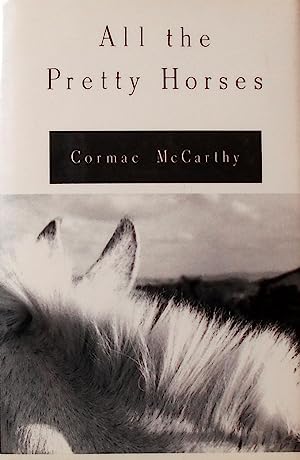
Cormac McCarthy’s Blood Meridian. By far the most violent book I’ve ever read, it explores McCarthy’s enduring themes about God, evil, judgment, and man’s capacity for both unspeakable evil and goodness.

The Collected Works of Flannery O’Connor. I have read O’Connor so much that it is difficult say anything about her that has not already been well said. But for any unfamiliar with her genius, she excelled in making sin so blatant, so egregious, so horrific, that the reader has to deal with it. Why? As she wrote and said many times, because we as a species are deaf and blind, and so only the grotesque is sufficient to jar us from our spiritual and intellectual stupor.

The Collected Short Stories of Ernest Hemingway. War, men and women, shell shock/PTSD/numbness, God, endurance, cruelty, booze, friendship, honor vs. dishonor, courage, etc. Hemingway touched on it all. Though often a monster in his personal life, his stories are unbeatable in terms of the pathos they call us into.

Melville’s Moby-Dick. Melville’s mind, like his themes, was a Pacific. It’s all here: God, theodicy, friendship, monomania, violence, love, meaning, strife vs. repose, and countless more. A lifetime of learning.

McCarthy’s The Road. Each time I read this novel, I know that I will weep. That is not, of course, why I return. But this book has among the most beautiful and heart-rending language, scenes, understatement, and pathos I’ve ever found in the world’s best literature. McCarthy’s recurring themes are here, too, but the love between the father and the son, and what McCarthy is driving at, is unparalleled.

Faulkner’s The Sound and the Fury. When I read it as an English major for the first time several decades ago, I was simply overwhelmed. But if you return again and again, you’ll begin to see what he was up to. A-chronological time; interior monologues; Bergsonian plays upon time and consciousness; multiple narrative points of view; stream of consciousness, and more. Faulkner broke the mold over and over again, and we are indebted to him for his courage and artistry.

McCarthy’s The Crossing. Part II of The Border Trilogy, The Crossing is definitely a novel of ideas, but–again–it’s McCarthy’s gift of language, of landscape writing, and the cogitations of his characters that enrapture. Not a fast read but a deep read.

Eudora Welty’s Complete Stories. Welty is a master of the short story, and especially of irony, dialogue, and understatement. She exhibits the mind of a scholar and the finesse of a linguisitic savante. No detail escapes her attention.

The Collected Complete Works of Hawthorne. King of the Dark Romantics, Hawthorne’s characters don’t leave you. Hester Prynne, Chillingsworth, Dr. Heidegger, Young Goodman Brown, and on and on.

Faulkner again. Absalom, Absalom! Not for the tepid, but here is Faulkner at his zenith. With the longest sentence in a novel (I don’t think it’s been beaten, but I may be mistaken), with Quentin Compson, and Thomas Sutpen, and the cast of Yoknapatawpha County legends, this is Faulkner’s literary genius on display. With biblical allusions and Greek references sufficient for countless theses and dissertations, it’s all here. (Bring your dictionary.)

Porter’s stories. Specifically, The Collected Stories of Katherine Anne Porter. A troubled but beautiful soul and linguistic magician, Porter will make you continually ask, “What’s really real?”

And this’ll be no surprise to folks who know me well, but it’s Dickens. Great Expectations holds a place in my heart unlike almost any other piece of literary fiction. I love his other tops like David Copperfield and A Tale of Two Cities and Bleak House, etc. but GE still grips me like no other.

The Little Things (Aren’t) Little

One of the traits I inherited from my mom is a tender heart. When something/someone grips my heart, I’m not a good bluffer. If I love something/someone, there’s no hiding it. It shines through. So with that as a warning, read on if you track with slice-of-life stories about appreciating the small things.

Most of you know that I’m in the military. I spend my weeks away from my family. I’m a geo-bachelor, as the saying goes. So I only see my wife and children a day, perhaps a day and a half a week. So those few hours are precious to me.

As I drove home Saturday, it was a cool misty morning. The rain fell gently on my car’s windshield from a leaden sky for the three-hour drive north to home. When I arrived, my son was at his job, and my wife was busy about the house. She had baked homemade bread and I was eager to try some.

I played with the dogs, as is my custom. And our cat (much sweeter on my wife and son than on me) eventually wanted some affection, too. But I make no apologies about being a dog person. I really wouldn’t want to imagine life without dogs (but my wife would welcome dogs that don’t shed!).

Anyway, as the afternoon wore on, we went to pick up our son when he got off from work and went to a Mexican restaurant we frequent near our home. After that, we all wanted something sweet, so we stopped by the store for some Snickers ice cream bars, quite possibly a dessert from the angelic realm.

That evening my wife and I took in a movie with Paul Newman and Jude Law that we both enjoyed. And Sunday morning, we rose to prepare for Sunday school and corporate worship with our church family.

In Sunday school, our class is going through the book of Esther. Today we covered the climax of the historical narrative, where wicked Haman received his justice. He was hanged on the gallows he’d had erected for (he thought) Mordecai. But God had other plans. Haman’s evil was thwarted. Esther received favor as intercessor before King Ahasuerus/Xerxes, Mordecai was lauded for his obedience and courage, and Haman was executed.

Our Sunday school class rejoiced in seeing God superintend history. We talked of how God opens the scroll, as it were, like Ahasuerus opened the chronicles and had them read. The good done with seemingly no notice before was suddenly accounted for, and benediction came to Mordecai, Esther, and ultimately the Jewish people in Persia. Good came from evil. Evil was used as part of God’s good sovereign plan. Purim was instituted and we saw the sovereignty of God in and over history.

I engaged in deep conversations with the saints from class and from church. We sang, we prayed, we sat under the heralding of the gospel for our souls. And later the pastor taught from 2 Timothy, one of Paul’s salvos in the pastoral epistles, about keeping the main thing the main thing, and not quarreling about adiaphora.

After church, we went to our favorite Italian place for pizza and wings. We had a wonderful new waitress (we go there so often, we know who is new.) I left her a generous tip. She worked very hard, and the place was packed with customers. Not an easy job, if you ask me. Some customers can be less than ideal.

When we got back home, we were all stuffed. I played with the dogs again, and my wife, though, (and here’s where it’s the sentimental slice-of-life part I mentioned above), she never even changed out of her church clothes. She went right to the kitchen. She wrapped the bread she had baked for me. She made a breakfast casserole for me and told me how long to bake it when I got back to post. She boxed up some chicken parmesan for me to eat on through the week. She even put in the leftover fajitas from Saturday in a cooler for me. She helped me load the car and came down to the basement with me as I prepared to hit the road for another week of military life.

I drove the three hours back to post. I watched the sun set over post as I entered the gate and drove to my little apartment.

And when I walked in my place and unloaded the cooler and reflected on my brief time with my loved ones, I realized once again that it’s the little things that aren’t little at all. It’s that steady, faithful, committed love that sees us through. She’s so much like her dad. They’re the most organized people I’ve ever met. There’s a drawer or folder or box for everything. Like her parents, she’s faithful. She presses on in the daily grind, and puts up with her sinful and so-often-absent husband. She puts up with my book-buying regimen. And she still lets me snuggle up beside her and kiss her.

Now that I’m back in my little apartment away from the family, it is quiet. And a loneliness hits me because I miss those I love. But I look around me, and I see the bread she made, the coolers she packed, and her hairs are on my shirt (and I love it).

See? I told you it was a sentimental story.

My takeaway? The small things aren’t small. They reveal what’s inside.

I have a book where I record the most meaningful phrases/proverbs/folk wisdom I’ve heard in my years. And those who know me have probably heard me say this one a lot: “What’s down in the well comes up in the bucket.”

When I look at the little glasses of grace that I’m able to drink, so to speak, I pray that I never outgrow saying, Thank you, Lord, for who you are and for those you have given me. I do not deserve them. But I thank you for them.