Text: “But as he [Joseph] considered these things, behold, an angel of the Lord appeared to him in a dream, saying, “Joseph, son of David, do not fear to take Mary as your wife, for that which is conceived in her is from the Holy Spirit” (Matthew 1:20 ESV).
Why it matters: Why does understanding the accuracy of Jesus’ incarnation matter? Why does Matthew write of Holy Spirit overshadowing Mary? Why does he labor the fact that Joseph and Mary had not consummated their engagement and future marriage? Because it goes to the very heart of Jesus as the Christ. Christ simply means “Anointed One” or “Messiah.” Jesus took on flesh, but his incarnation was by way of God, not by Joseph. In other words, the human bloodline of sin was broken by divine fiat. This is fundamental to an accurate understanding of Christianity.
Remembering an old deacon’s prayers: When I was courting my wife and attending her church, I was brought into the fold by that congregation in a way I have ever since tried to emulate. That church body knew how to love folks, and they did it. I have never forgotten how I was loved there and I have tried to replicate that in my ministry now in our church. There was an old deacon at my wife’s home church who, when he prayed, always said much the same thing. It went something like this: “Lord Jesus, we come to you in thanksgiving for doing what we could never do for ourselves. By breaking the sin chain of Adam, we now have access to God …”
Folks, that was by a country man who never had a college education, but he had bull’s-eye theology when it came to Christology. He understood that God the Son’s conception via the Holy Spirit was the last Adam (Jesus) coming to do what the first Adam in Genesis failed to do—namely, obey perfectly the will of God. The gospel hinges on the perfect substitutionary atonement and righteousness of the God-man, Jesus, the Christ. He is the anointed one. He is the messiah.
This is why Matthew 1:20 is fundamental. This is why Christmas is to be celebrated. It’s because God has come to reclaim a cosmos that is now east of Eden due to the fall of man in Genesis 3. Christ has come “to his make his blessings flow, far as the curse is found,” as Watts penned. This is why Joseph was told that the Son in Mary’s womb was from the Holy Spirit–to show him (Joseph), to show the world, that God was keeping his covenantal promise to crush the head of the serpent by way of the seed of the woman, and that seed was Christ. Merry Christmas.
Introduction: I tend very much to avoid what I call “calendar theology” discussions. Why? Well, some folks can become rather heated and emotional regarding what they believe about when such-and-such will occur, and even about what has already occurred, and about ‘what’s next’ to unfold, etc. I am old enough to have witnessed countless prophecies of so-and-so being the antichrist, and about such-and-such being the mark of the beast. As just one example, I remember Harold Camping’s numerous predictions. Well, Harold has come and gone, of course, but his ilk has been replaced by more of the same. It’s a cottage industry in a way; it seems some in each generation are convinced their generation is special, that theirs is the one, that signs and wonders are there for the astute, and they can hear Gabriel licking his lips as he prepares to announce the next great event.
There are so-called Bible teachers and pastors who make a lucrative living off beating the calendar theology drum. Book after book is churned out about empires, about political figures, about the whore of Babylon, about personalities of the day, whether they be Barrack Hussein Obama, the various popes of Roman Catholicism, Bill Gates, Hillary Rodham Clinton, Elon Musk, et al. The list goes on. Some in each generation latch on, saying, “Yes, this is it.” Somehow passages from Ezekiel, Daniel, and Revelation find fulfillment in each generation’s calendar theologians.
Examples from 2 Thessalonians:
Even around A.D. 51 the apostle Paul was having to address calendar theology while the New Testament was still being written. Why? Because there was a lot of emotion, some persecution of Christians, and a falling away of many who professed to be believers but were revealed not to be. The first eleven verses of 2 Thessalonians 2 are clear in why Paul was so concerned for the recipients of his epistle. Folks were easily alarmed and often discouraged because their attention was fixed more upon political events than upon the gospel and the Lord Christ:
Now concerning the coming of our Lord Jesus Christ and our being gathered together to him, we ask you, brothers, not to be quickly shaken in mind or alarmed, either by a spirit or a spoken word, or a letter seeming to be from us, to the effect that the day of the Lord has come. Let no one deceive you in any way. For that day will not come, unless the rebellion comes first, and the man of lawlessness is revealed, the son of destruction, who opposes and exalts himself against every so-called god or object of worship, so that he takes his seat in the temple of God, proclaiming himself to be God. Do you not remember that when I was still with you I told you these things? And you know what is restraining him now so that he may be revealed in his time. For the mystery of lawlessness is already at work. Only he who now restrains it will do so until he is out of the way. And then the lawless one will be revealed, whom the Lord Jesus will kill with the breath of his mouth and bring to nothing by the appearance of his coming. The coming of the lawless one is by the activity of Satan with all power and false signs and wonders, and with all wicked deception for those who are perishing, because they refused to love the truth and so be saved. Therefore God sends them a strong delusion, so that they may believe what is false, in order that all may be condemned who did not believe the truth but had pleasure in unrighteousness (2 Th 2:1-11 ESV).
Paul loved the people. So he encouraged them. How did Paul do that? Listen to his very next paragraph to them: “So then brothers, stand firm and hold to the traditions that you were taught by us, either by our spoken word or by our letter” (2 Th 2:15 ESV). Stand firm.
Examples from Ephesians:
It’s the same verb phrase he uses repeatedly in the New Testament:
“Put on the whole armor of God that you may be able to stand against the schemes of the devil” (Eph 6:11 ESV)
“Therefore take up the whole armor of God, that you may be able to withstand in the evil day” (Eph 6:13a ESV)
” . . . and having done all to stand firm” (Eph 6:13b ESV).
“Stand therefore . . .” (Eph 6:14a ESV).
And on and on it goes.
The apostle John gives the same reminder in Revelation after Christ reveals what must take place prior to Christ’s second coming in judgment:
I, John, your brother and partner in the tribulation and the kingdom and the patient endurance that are in Jesus, was on the island called Patmos on account of the word of God and the testimony of Jesus. I was in the Spirit on the Lord’s day, and I heard behind me a loud voice like a trumpet saying, “Write what you see in a book and send it to the seven churches, to Ephesus and to Smyrna and to Pergamum and to Thyatira and to Sardis and to Philadelphia and to Laodicea. (Rev 1:9-11 ESV)
John writes that he was enduring persecution during a time of tribulation on Patmos for the sake of the gospel. The pattern seems so overt to me. Persecution is part and parcel of faithful Christian witness. Believers are not given a pass and removed from hardship. Try to sell the lies of the false prosperity gospel to Paul, or John, or Thomas, or Peter, or James, or Jeremiah, or David, or Hezekiah, or Josiah, or Moses, or Joseph, or Abraham, or Noah. Do you perhaps see a pattern?
Encouragement: David penned in Psalm 37:5, “Commit your way to the LORD; trust in him, and he will act.” And in verse 7, he reminds us of how to endure hardships: “Be still before the LORD and wait patiently for him; fret not yourself over the one who prospers in his way, over the man who carries out evil devices!”
The world has been in travail since Genesis 3 and the fall, dear ones. God controls his calendar. Let us just be faithful daily, standing firm in the faith that conquers, tearing down strongholds of Satan, edifying the saints, and heralding the good news of the message that saves because it’s dressed in the robes of the God-man who walked out of his guarded grave.
Introduction: Ever seen the film The Pianist? It’s a film from c. 2002. Adrien Brody plays the protagonist. It centers around Jews from Poland (Warsaw in particular) being ostracized, abandoned by the masses, rounded up, put in ghettos, then put on cattle cars and trains, then put behind fences, then put in camps, and then put in ovens. I have walked many of the places the film portrayed–places in Poland, Hungary, Austria, Germany, etc. And when I saw just this week in America how university presidents (University of Pennsylvania, Harvard, MIT, and more) are unwilling to condemn antisemitism, and are more concerned about retaining their labels, positions, and paychecks, it struck me that the late 1930s and 1940s are back. Once again academia is complicit in propagating evil. Propagating, as in propagandizing. Breeding, spreading. That’s what they’re doing.
The Pianist explores, among other notable themes, the power of commitment to the beautiful and true as means of redemption. Brody’s character is the pianist, a Polish Jew (Szpilman), a piano savant. Szpilman and his family are, like thousands of other Jews, scapegoated and rounded up for extermination by the conquering military thugs. And the masses of people go along. Why? Well, not their problem, you see. It’s “those people,” of course. It’ll not happen to us.
Connection to Today: And yet here we are. Again. Ignorant (or worse) taxpayers send their naive urchins to the indoctrination camps of Harvard, University of PA, MIT (and countless other camps of ‘women’s/gender/black/gay/trans/DEI studies’ programs), and then are surprised when the kiddos graduate as propagandists with sophomoric attitudes replete with the wisdom of teenagers who just learned to drive a manual transmission.
Reality Check: In Scripture God raised up a mighty and true prophet in the Old Testament named Jeremiah. The following words are from his book:
The wise men shall be put to shame; they shall be dismayed and taken; behold, they have rejected the word of the Lord, so what wisdom is in them? Therefore I will give their wives to others and their fields to conquerors, because from the least to the greatest everyone is greedy for unjust gain; from prophet to priest, everyone deals falsely. They have healed the wound of my people lightly, saying, ‘Peace, peace,’ when there is no peace. (Jeremiah 8:9-11 ESV)
Question: See it there? Greed for unjust gain (in short, corruption/the swamp/the wicked human heart) traffics in dealing falsely and healing lightly. In other words, in not healing at all, but only in spouting bromides about peace in our time.
The thing about history is that it is drenched in blood. Ideas have consequences. But most folks don’t tend to learn until Hamas shows up at your door. Not sure if you’ve been paying attention, but the workers of iniquity don’t ask permission for your wives and daughters; that’s kind of the way evil works. Evildoers are not confused about their pronouns or safe spaces or diversity, equity, and inclusion.
So, while the West TikToks its ways into further imbecility, and pays for the indoctrination of their progeny, and lights up the White House in rainbow colors, the serpent of old coils ever tighter around the necks of a civilization of Neville Chamberlains. “Peace, peace,” spout the soft, as the serpents scale the walls in scaled and cold celebration.
But What If … But what if we had some committed Szpilmans who refused, who used their gifts for beauty and truth to stand for the good, true, and beautiful? One man (yes, Szpilman was a real man, not just a character). God used Jeremiah in the Old Testament. God used Daniel in Iraq (Babylon). God used Jonah in Nineveh. God used Szpilman in Poland. What if Proverbs 16:3 was actually lived out by Christians?
Main Idea: Clarity of Thought Comes via Grasping Alternatives
Introduction: One of my favorite professors in college and grad school was Dr. Higgins. He had the reputation of having read more than any other professor in the English Department. He had glasses with Coke bottle-thick lenses, and he was ready to discuss almost any worthy book with those who shared his love of literature. One of the things that won me over to his way of teaching is that he would write a vertical line down the middle of the board. On the left side of the line, he would write “Vision of Chaos.” On the right side of the line, he would write “Vision of Order.” Then under each heading, he would list examples of what we were discussing. For example, if we were talking about 19th-20th century literary pieces casting a vision of existential despair vs. pieces casting a vision of order, hope, and redemption, he would list some. It would look something like this:
Vision of Chaos:
vs.
Vision of Order:
The Stranger (Camus)
vs.
The Moviegoer (Percy)
Nausea (Sartre)
vs.
Crime and Punishment (Dostoyevsky)
“A Clean, Well-Lighted Place” (Hemingway)
vs.
Orthodoxy (Chesterton)
Dr. Higgins was a masterful teacher because he clarified alternatives. He showed us the necessity of thinking clearly, of seeing things as either/or. You could call it, “the beauty of the binary.” Man or woman; boy or girl; hot or wet; strong or weak; fast or slow, etc. Nothing teaches quite like grasping alternatives clearly.
Wisdom from the Word: One of the magisterial passages of Scripture is Isaiah 45. Verses 18-19 are to me profound in their clarification of alternatives. Listen to what God says through his prophet Isaiah:
For thus says the Lord, who created the heavens (he is God!), who formed the earth and made it (he established it; he did not create it empty, he formed it to be inhabited!): “I am the Lord, and there is no other. I did not speak in secret, in a land of darkness; I did not say to the offspring of Jacob, ‘Seek me in vain.’ I the Lord speak the truth; I declare what is right. (Isaiah 45:18-19, ESV)
See the alternatives God clarifies? God exists. He is a God of order. His creation, therefore, is orderly. It bears the marks of intricate design because God is the supreme Designer. And man is intellectually designed by the sovereign wise God to behold creation. Why? Because it attests to the majesty of its author, God. Not only does God do this, but He is also the God of truth and of what is right. All of that theology is right there in just these two verses.
See the alternative? Either man is a cosmic accident, so much brain fizz, no more valuable that pond scum or desert sand, or he is created in the image of the good and wise God, and man can behold his Creator by virtue of natural revelation (nature), by conscience, and by special revelation (Scripture).
That’s what Dr. Higgins used to do so well. He showed us the alternatives in worldviews. Either this or that. Either chaos or order.
Encouragement: One of the unique beauties of Christianity is that it reveals why we are drawn to beauty. We vacation on cruises, and take photos with our loved ones with stunning sunsets and sunrises, or we photo beaches or mountaintops or trees and flowers and our children … why? Because beautiful things bear witness to God who is beauty Himself. And this God is the God who speaks, who loves, who redeems, and who calls all who will come to behold Him who is all-wise, all-sufficient, and altogether lovely.
Introduction: Recently I have been reading the New Testament epistle of Jude. It’s a tiny little book in the canon of 66 books of Scripture. It comes just before the book of Revelation, and it is packed with divine marching orders. I call them the 3 W’s: wisdom, warning, and work.
Three Needs: Can we all agree that the world could use some wisdom about now? Some days when you read the news and study the trajectory of Western culture, it would be rather easy to admit that we seem to have lost our way, to concede that our age is one characterized by folly rather than wisdom. When you step back and study the history of thought, you see cultures rise and fall; you see eras of discovery and innovation, but also eras of moral decline and civilizational collapse. Think, for example, of the Renaissance. It was a time where man rediscovered the classics of antiquity wherein he went ad fontes (back to the sources) in literature, theater, and the arts. In earning degrees in English, we read Shakespeare, Dante, Cervantes, Luther, Chaucer, and countless other seminal writers because what has been termed the Great Conversation continues through the ages by the sharpest minds and sharpest pens. This has been perhaps the greatest reason for studying and the Classics. We read and study Shakespeare, Dante, Cervantes, etc. because their works explore the human condition profoundly.
In my years in Europe, when I visited the various locations and viewed works of Michelangelo, for example, I (like the others with me) felt both great humility and great respect. Why? Because when you stand under his paintings or you gaze upon the sculptures, you realize that you’re in the presence of genius. You realize that he saw and understood things in ways that transcended his lifespan. He grasped life’s mysteries in ways very few people ever will, and he shaped, carved, invented, painted, and wrote with a mind, hands, and imagination that reflected God’s ways.
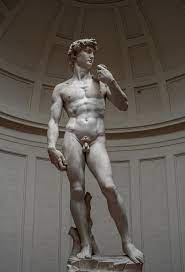
When I saw the sculpture of Michelangelo’s David the first time in Italy, it changed my life. Is that melodrama? No, it was the power of art to move the mind and soul. It was hours of my life whereby the pathos of art stirred the mind and imagination in ways that bridged souls across centuries. It connected worldviews about God and man, about the Creator and us creatures. But where are the Michangelos of today? Where are the Bachs in music? Where is the Shakespeare or Cervantes of today? Instead, we have TikTok and memes.
Connections to Jude (his 3 W’s): Jude was the half-brother of the Lord Jesus. He was initially a skeptic of Christ’s claims, but he (Jude) eventually became a passionate defender of the Christian faith. That’s what his letter is about in many ways–apologetics, offering a reasoned defense of the Christian worldview. Jude warns believers: “Beloved, although I was very eager to write you about our common salvation, I found it necessary to write appealing to you to contend for the faith that was once for all delivered to the saints. For certain people have crept in unnoticed who long ago were designated for this condemnation, ungodly people, who pervert the grace of our God into sensuality and deny our only Master and Lord, Jesus Christ” (Jude 3-5, ESV). He warns us to be discerning. Why? Because there be creepers about! The imagery is crystal-clear: watch out for the snakes. In short, we have been warned.
Second, Jude tells believers to work at it. “Contend” is the term he uses. In Greek, it’s the verb for “to agonize” or “to wrestle” (αγωνίζομαι). Again, the imagery is not a mystery: wrestle, labor, strive, articulate, herald, and defend the truth. Don’t be lazy; work.
Third, Jude calls us to wisdom: “But you, beloved, building yourselves up in your most holy faith and praying in the Holy Spirit, keep yourselves in the love of God, waiting for the mercy of our Lord Jesus Christ that leads to eternal life. And have mercy on those who doubt; save others by snatching them out of the fire; to others show mercy with fear, hating even the garment stained by the flesh” (Jude 20-23, ESV).
Jude calls believers to build themselves up, but he tells us how: via the Scriptures. Through the revealed Word of God. By way of biblical prayer. By loving the brethren. By showing mercy while simultaneously being a prophetic voice to those we can influence. It’s all right there in those three verses.
Encouragement: Though very short (just 25 verses), Jude is pure gold. 3 W’s: warning, work, and wisdom. All worthwhile things require labor, we all know that. But if we are in the Lord’s army, may we be known for godly wisdom, for heeding the warnings we’ve been given about the cosmic spiritual battle, and work the fields we have before us, as our days are numbered.
Introduction: This past Sunday after being with our Sunday school class and church and enjoying a meal of Asian food, I was driving south again to return to post for the upcoming work week. Because I-285 West remains a pothole-ridden perimeter of mayhem and death around Atlanta, I decided to drive through the city and take my chances with traffic in one of America’s traffic circles of hell. I have lived in GA much of my life, and I have driven ATL’s roads and interstates for over four decades. But just when you think, “The traffic cannot get any worse,” well, God laughs in your face. But my focus here is not on ATL’s traffic, but on what grieved me as I rounded what we call Grady Curve.
As you pass GA Tech and the Varsity from the north and enter midtown and then downtown, the overpasses near the GA capitol provide some cover from the elements. Under the bridges, what I saw reminded me of concerts I attended in my youth. There were rows and rows of tents and shelters erected on the grassy inclines underneath the bridges. Homeless people squatted all along the I-75/85 highways running through the heart of the city, just feet away from the interstate. Plastic bottles filled with colored liquid and soiled paper littered the area, like a scene from Cormac McCarthy’s The Road. Silver shopping carts (buggies) stuffed with sleeping bags, coats, and plastic bags dotted the worn clay and grass hillside. Men and women squatted on their haunches, reminding me of some of my times abroad on military assignments, and seeing how the Afghans would squat in Kabul and Bagram, usually smoking hashish from hookah pipes, gathered around the sprawling hoses like worshipers around a fogging Medusa.
Scripture: Even while driving, you could register drivers’ thoughts as we drove through the city, passing the men and women crouched among their filth on the hillside. Some drivers may’ve scoffed at what they saw, convinced that the homeless wanted to be homeless. No accountability was their idol. And charity was easily available. Others were perhaps less cerebral about the sight and felt that taxpayers should hand more money to organizations ostensibly aimed at mitigating such realities. For me, I was grieved. Why? Because Scripture and history are both clear: “For you always have the poor with you . . .” (Mt 26:11a, ESV). As I drove towards post, signs were replete: “HELP WANTED.” “NOW HIRING.” “APPLY INSIDE/$15 per hour starting wage.”
Personal Experience: When I was a ninth-grade student in high school in the little town where I spent much of my youth, I was in a pep rally during sixth period with the rest of the school’s student body. Suddenly, I was paged to the principal’s office. You can imagine my emotions, I’m sure, if you were ever a normal 15-year-old boy, but as I walked to the principal’s office, I was running through my mind, “What have I done? Why am I being called to the principal’s office? What in the world?”
When I entered the principal’s office, not only was the principal there, but so was the sheriff of our little county. He was also my neighbor, and his sons were some of my buddies growing up. We rode bikes and go-carts and fished together for years and years. Anyway, the sheriff looked at me and said, “Jon, let’s take a ride.” So, I, more terrified than ever, got in the patrol car and he drove us out to my house. When we got there, there were firetrucks and emergency vehicles there, as well as vehicles from the neighborhood. Our home had burned down. A wire had shorted, and an electrical fire had burned the whole thing down, nearly to the foundation. It was a total loss.
We went from being comfortable in everyday life to literally having nothing but what we had on. My family fought with the insurance company. It was the age-old stereotype of the dirty insurance guy apparently not wanting to indemnify the policyholders. It got ugly. Anyway, it was humbling. We struggled for a bit. But we rebuilt. On the same space. We worked at it. We didn’t quit and resign ourselves to homelessness. There was never such a thought. But it was not easy.
Wisdom from the Word: Each time I see a homeless person, or an encampment of homeless people, or I see the girl standing in front of the Walmart near post wearing Nike tennis shoes and texting on her cell phone, but holding a placard with abbreviated grammar that reads, “Help. Need $. Veteran. Thx. God bless,” I grieve. Why?
Because we have always had and will have the poor with us. And the reasons are many. Who knows if there’s any truth to her presentation?
Some people are probably that way because of circumstances beyond their control; some are there due to their own indolence; others are there because they are mentally ill; still others are there because they’re fleeing something even worse. The reasons are manifold.
But when I read passages like, “For there will never cease to be poor in the land. Therefore I command you, “You shall open wide your hand to your brother, to the needy and to the poor, in your land” (Dt 15:11, ESV), at least two things are clear: 1) the poor (and homeless) are nothing new, and 2) we are to be wise as serpents and innocent as doves regarding human nature (Mt 10:16).
Introduction: When I was a new military chaplain and still finding my niche of ministering to soldiers and their families, I was at a chaplain’s training event one time and I heard a fellow chaplain address us in the audience by saying he was going to teach on “the greatest sermon ever ignored.” That phrase arrested me. What could he have possibly been referencing, I asked myself. Turns out he was referencing Jesus’ Sermon on the Mount. It is, to be sure, one of the most-cited, quoted, more often misquoted, and decontextualized series of words in the world. The Sermon on the Mount could arguably be the most foundational piece of writing the world has ever been given. The words are that powerful, that enduring, and that transformative. So when the other chaplain began his homily, and I had my copy of Scripture open to Matthew 5-7, I was intrigued by what he was going to say.
The words of that chaplain I have long forgotten but the words of the Sermon on the Mount have only grown in their influence. Several observations from just a surface level reading of the text follow in this post. After those observations in forthcoming posts, I offer some more thoughful observations. After those, I will ask some questions on which believers might ponder. And finally, I invite skeptics and non-believers to interact with some questions.
Surface Level Observations:
I’m always struck by how Matthew portrays the Lord Jesus at the beginning: “Seeing the crowds, he went up on the mountain, and when he sat down, his disciples came to him” (Mt 5:1, ESV). What strikes me is that Jesus came to sinners. He saw the crowds. His mission was the rescuing of sinners. So, his vision, his outlook, his mission was to bear witness to the truth about all things as the Word (logos) incarnate. And Matthew calls our attention to the fact that Jesus himself sat down and taught.
Secondly, we see in verses 2-11, nine times Jesus teaches upon blessing. That is, what does it mean to be blessed, truly blessed? Does it hinge upon social status, upon wealth, upon health, upon power? Was Jesus peddling the health and wealth prosperity false gospels in the vein of Smilin’ Joel Osteen, Joyce Meyer, and the Trinity Broadcasting Network shills? No. The exact opposite. Jesus’ teaching hinged on spiritual forces at work in the world. Jesus went to the heart of the issue: what we delight in. It had, in short, to do with who and what we worship. Where is our heart of hearts? To use the language of Jonathan Edwards, where are our affections?
Idolatry is both the most obvious and most subtle of realities. It is not hard to see what we sinners idolize. We spend our time and resources pursuing almost everything except truth and redemption. I remember listening to George Carlin’s piercing satire of “more stuff” in his comedy. We get “more stuff” so that we can be happy and ‘blessed’ but then we need more space for “more stuff.” He gave the wonderful illustration of passing an RV on the highway, pulling a car behind the RV, and on both the RV and the car was, you guessed it, “more stuff.” We have to be careful here and not push the logic too far, of course. Jesus does not command his people to abandon the world or all of its offerings and seal themselves off from the world, but rather to go to the world with truth. Why? In order that some will hear and be saved.
The blessing comes not by giving in to the desires of the flesh and the desires of the eyes and pride of life (1 Jn 2:16) but by delighting in the ways of God (Ps 1). David pictures the blessing of God this way in poetry:
He is like a tree/planted by streams of water/that yields its fruit in its season,/and its leaf does not wither./In all that he does, he prospers./The wicked are not so,/but are like chaff that the wind drives away (Ps 1:3-4, ESV).
And in the Mt 5:2-12, the question of how blessing comes and where it is found is psychological depth unlike anything you’ll find in Jung, Freud, or Erikson. Jesus, you see, got to the core of humanity by turning our gaze right back upon the fountainhead of where we will look for answers. Will we replay Genesis 3 all over again by believing the serpent? Will we demand to be as gods and purport to know best, or will we live by the words of God and receive ultimate benediction?
See, Matthew 4 comes before Matthew 5 for a reason–namely, to show us that Jesus succeeds where we fail. He endured the temptations of Satan and passed the many tests. We don’t. Adam didn’t, Eve didn’t. But Jesus did. Ergo, in order to be salt and light to the world, we must be “in Christ.”
Encouragement: Will we ever live up to the standards of the Sermon on the Mount in this life? No. Jesus was not a progressive. He was quite aware of human depravity. The Tower of Babel was an object lesson and historical reality that makes that quite clear. But just when you slow down and focus on the profundity of what God was and is doing in the person and work of Christ, you see that Christ came to us sinners. He taught them and us. He sat among sinners. He loved them. He satisfied the obedience that God commands for holiness. And we have his words of how blessing and blessedness come to all who are in Christ through the power of the gospel. It’s God’s work on behalf of sinners. Its genesis and apotheosis are God, and from God flow rivers of benediction.
Introduction: Have you ever wanted to express thankfulness/gratitude to an individual or body of people, but struggled to find the right word or turn of phrase that captured your heart? Have you ever been so moved by another’s love, or others’ (plural) demonstrated love that you thought the phrase ‘Thank you’ was woefully insufficient and weak? If so, this anecdote may be for you. So, read on.
Context: This past week, my wife’s cell phone was hacked. The hackers (yes, it was a team) contacted our cell phone carrier and had our cell coverage cancelled over (in the worst of ironies, over the phone). The cell phone company did not contact us (I mean, how could they? Our cell phones were cancelled by the hackers.)
So, right out of the gate, our means of communication was sabotaged. I could not text my family, email my family from my phone, call my family from my phone. Nothing. To say that I was ‘battling the flesh and the old sinful nature’ is to merit British understatement. If harboring murder in one’s heart is sufficient to merit eternal damnation, I’ve no hope. I was beyond angry. Yet, there’s more. Much more.
First, our phone coverage and all messaging means via phone were cancelled by the nefarious Grimm duo. Second, the nerfarious Grimm duo swiped my checking and savings accounts, as well as my son’s accounts, and went on a shopping spree. Finally, my banks caught on and said, “Wait, Jon and CJ don’t shop like this. Maybe we should take a look . . .” Um, yes, please. And thank you.
Not only were our phones cancelled by the nefarious Grimms, but my liquid assets were stolen, and the nefarious Grimms went retailing during for their merry holiday season.
So my wife had to drive three hours north to one of the bank locations and try to explain all this. Meanwhile, I have had zip, zero, nada communication from my wife or children about what is going on. Why? Because our commo had been cut by the nefarious Grimms! But back to the story.
So, I was at my military installation doing my job and thinking to myself, “It’s quite strange I cannot reach my wife or kiddos via any of the customary means.” Finally, I told my chain of command basically, “Sir, I need to go. Something’s going on.” So I drove three hours north to my home of record. And what did I discover? My wife was not even there! How I did not morph into the Yosemite Sam character, I have no idea. Smoke was surely billowing from my ears and my prayer life was essentially, “Lord, please, just this once. Let me usher in bodies in Jesus’ name. I promise mission success. Just label it ‘accelerated existential evangelism’ via a .45 caliber and a smile. I’m your man.”
My son fills me in: “Dad, someone hacked Mom. They got your/our money. Mom’s at the bank. We don’t have phones that work. Mom’s working it. Just relax. There’s nothing we can do but wait.”
Okay, I wish I could say that taking wisdom from a 16-year-old boy was easy, and that I was super-sanctified, and heeded his counsel with calm and winsomeness. Again, epic failure on my part.
I exhibited the sharp-tongue that is my curse, an instrument that should be used primarily for encouraging the saints and building up the body, and it turned into a rudder for a vitriolic screed as I (mostly to myself) unleashed a polysyllabic tirade that would have made sailors search for the dictionary.
Long story short, eventually my wife returned from TN. She collapsed into my arms and wept. I apologized to my son for hollering at him (as if any of this were his fault!). I earned a new respect for my wife’s resolve and worldly wisdom in dealing with things at which I am horrible like 1-800-No-One-Cares numbers, math, bankish people, “Please hold, sir; your call is very important to us, sir. Here’s some elevator muzak no one likes but Kenny G,” etc. Yes, I blew it. Team Nefarious Grimm’s evil had worked. They’d stolen my money, turned off my communication, made me blow up at my son, caused me to flee home to find my wife gone to another state, and me with no means of reaching her.
But Here Is the Good News, and the Reason for the Title of This Anecdote: If you have even a smidgen of Greek, you know the types of love in the Greek tongue. Even the neophyte knows eros, philia, storge, and agape. They denote physical, brotherly, familial, and selfless love respectively.
Well, it’s easy to give a Greek lesson on types of love in koine Greek, but it’s quite another to be humbled by being the beneficiary of agape love. Again, here’s how the story continued. (I learn best via stories, so indulge me.)
Our Sunday school class found out about what happened. They didn’t just talk about being the Christian church; they didn’t just pray about it and sit on their hands; they didn’t gossip about it. No, they went into action. They purchased gift cards, gas cards, cards for groceries, shook my hand and pressed cash into my hands, and on and on. They embodied what it means to “love the brethren” and to “care for the saints.”
I cannot speak for others, but I will say this: When you are on the receiving end of the kindness of others, it humbles you. Why? Because you have nothing to give back, nothing with which to repay. You have nothing except tears of gratitude for those who ministered to you in your time of need. You have nothing but love for the ransomed body of people who didn’t just say, but who did.
You can sit in Greek classes and conjugate and learn case endings and preach sermons peppered with Greek, even, and there is value in all of that. But when you are touched by the redeemed, you re-learn how weak, how vulnerable, how needy we are in a much greater sense. And you rediscover what it means that we are loved at all. And it makes your heart full, and your eyes water, and you just want to say in the plainest way possible: Thank you. From the bottom of my heart, thank you.
Two Texts:First, in Ecclesiastes 4, Solomon writes these words: “Two are better than one, because they have a good reward for their toil. For it they fall, one will lift up his fellow. But woe to him who is alone when he falls and has not another to lift him up! Again, if two lie together, they keep warm, but how can one keep warm alone? And though a man might prevail against one who is alone, two will withstand him—a threefold cord is not quickly broken” (Eccl 4:9-12, ESV).
Second, and again it’s from the pen of Solomon: “Iron sharpens iron, and one man sharpens another” (Pr 27:17, ESV).
A Personal Anecdote: When I was stationed in Vilseck, Germany as a scout, we used to do many of our field training exercises and field problems in Hohenfels. In January and February, I spent many, many frigid nights on observation posts and/or doing reconnaissance missions where I could not feel my fingers and toes due to the freezing temps. I like the cold, but there’s a limit to my fondness for cold when temps drop below a certain point and the winds slice you in half.
Anyway, I remember one series of nights when it was so cold that a buddy of mine and I lost all sense of shame, and we spooned each other’s body heat inside our ponchos like newlyweds to keep from freezing to death. It’s funny now, upon reflection and the passage of time, but at the time, we did it out of love for one another and for our own self-preservation.
It’s a picture of how teamwork makes us all better.
Encouragement: I have been blessed the last couple of years by being able to work for leadership that knows how to build a cohesive team. It’s about taking care of people. And when our people know that our leaders have our best interests at heart, the teamwork generated is remarkable. May we be known for our building, fostering, and replicating wise and effective teams.







 MIND & MATTERS