More Cyber ‘Glitches’: Delayed in Seattle

“Your flight was cancelled. Our apologies. Delta.”

That was the email I received. Then, when I got to the airport, returned my rental car, and tried to figure out what to do, it got even more interesting. My flight was truly cancelled. Not delayed. Just completely cancelled. Well, this was becoming more fun by the minute. My checked luggage was ostensibly going to Atlanta, but how would it or I arrive back at post?

I pulled out my laptop and tried to see if the ‘news’ sites could bring any clarity or help. As close as they came was to write that Microsoft/CrowdStrike were responsible. Okay, but what price will Microsoft/CrowdStrike pay for cancelled flights, delayed flights, lost luggage, sleeplessness, rental car expenses, Ubers, etc? I’m guessing $0.

I went to a coffee kiosk, purchased a black coffee and sandwich, and sat down. Breathe. Again. Breathe.

I finished my items, and knew I needed to find a bookstore. Fortunately, Seattle’s airport had a decent bookstore with a Classics section. I found a volume containing Hemingway’s debut novel as well as a few of his short stories. I have now read almost the entire thing through as I try to grin through this lovely adventure courtesy of Microsoft/CrowdStrike, and see when exactly I might return to post.
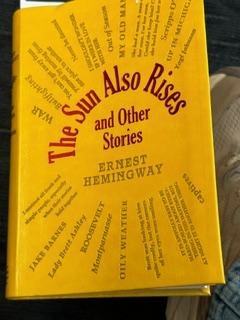
For now, though, I am finishing up the wonderfully sad story of Jake Barnes, Brett Ashley, and the lost generation. How fitting: lost. Kind of like the wisdom of this current situation.

Perspective

“In his hand are the depths of the earth; the heights of the mountains are his also. The sea is his, for he made it, and his hands formed the dry land” (Psalm 95:4-5 ESV).

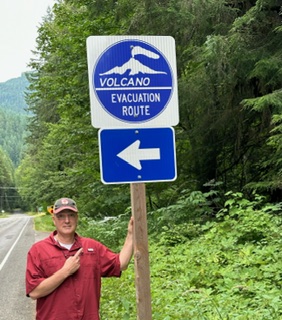
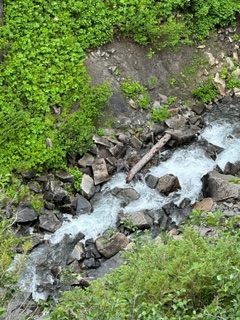
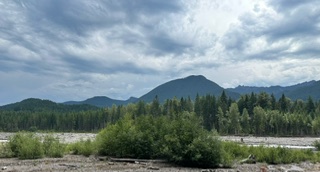
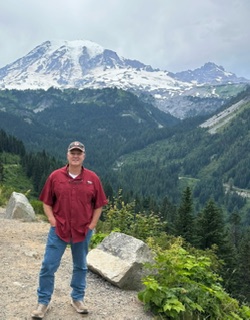
Pictures from Washington (Pt. 2/2)

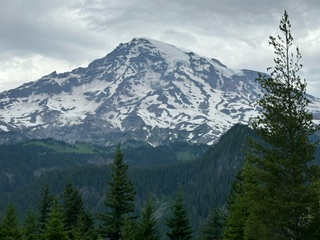
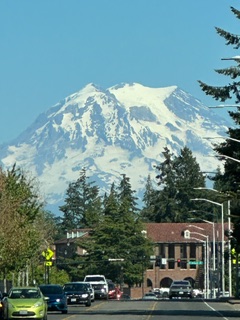
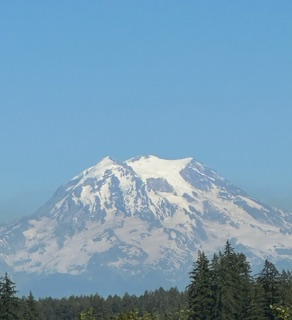
“Of all the fire mountains which, like beacons, once blazed along the Pacific Coast, Mount Rainier is the noblest” (John Muir, 1901).

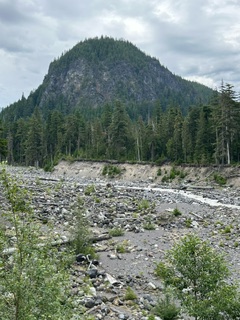
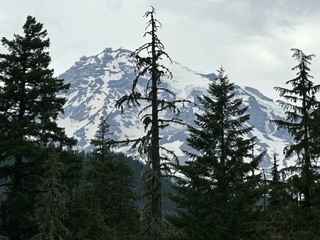
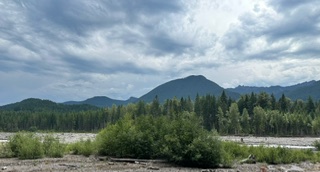
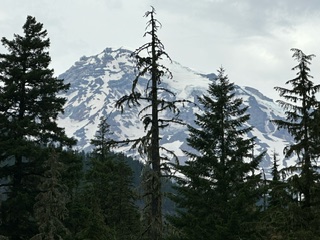
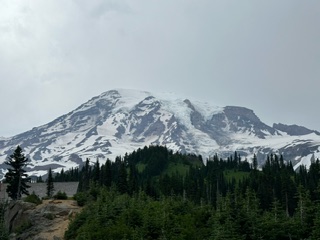
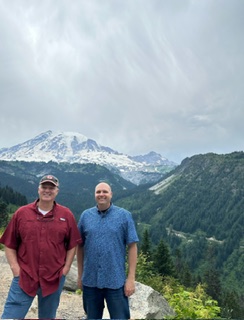
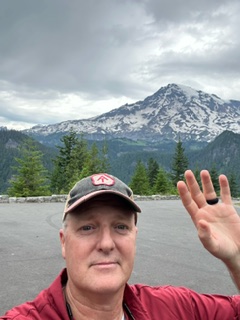
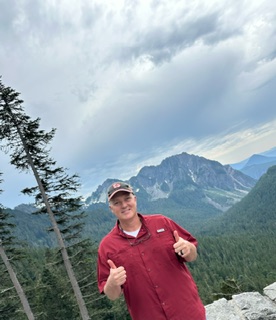
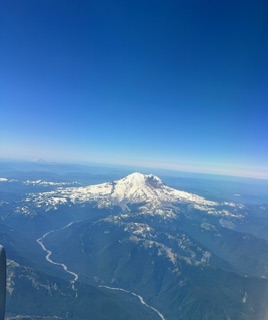
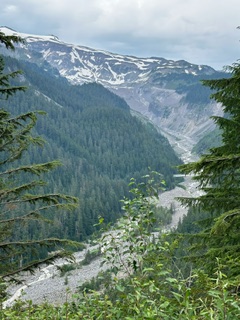
Mt. Rainier and surrounding areas. In a word, spectacular:

Thankful for the afternoon to hang with a few peers from the Army and Air Force and explore the Seattle/Tacoma/Mt. Rainier area. Great views, good food, and solid fellowship. My cup is full.

Pictures from Washington (Pt. 1)

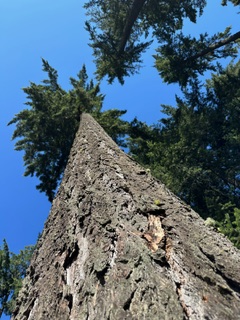
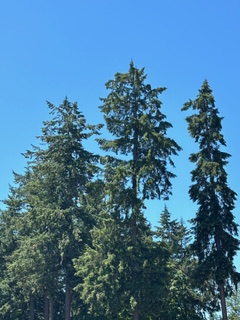
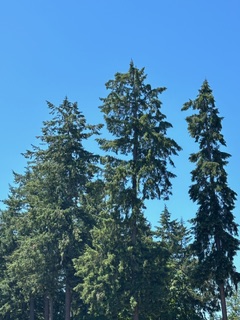
Am grateful to be able to train with fellow chaplains out West. Mt. Rainier towers over us with its rugged rocky snowy presence. The meadows below burst summertime colors like something out of an e.e. cummings poem. The Ponderosa pines stand majestic and straight with bark so large its layers appear like vertical rivers.

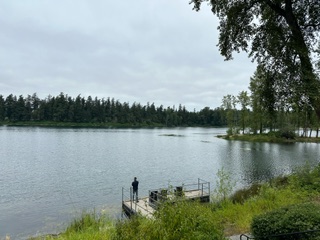
Was able to read some Flannery O’Connor stories during lunch break by a lake where soldiers and families can relish the joys of creation.

Enjoyed a great steak dinner tonight with peers who have similar callings in ministry. Thankful for these guys and for the opportunities we have to reach those who might not otherwise hear the gospel.

On the way to the track, this is the view (not too shabby):

On the flight in:

When I was walking last evening, this was a view from near the aviation unit:

I am in love with the trees out here:

Am headed to hike part of Mt. Rainier some tomorrow with buddies after class. More pictures to come.

O’Connor’s Ruthlessness

On a flight out West I had opportunity to again dare to immerse my soul in the gut-wrenching blood sacrifices that pierce O’Connor’s masterful short stories.

For much of my time, I focused relentlessly upon “Greenleaf,” a situationally ironic surname if ever there was one. Mrs. May, the protagonist, has a low view of most everyone outside of herself and her imagined importance. She looks down upon Mrs. Greenleaf, who prays and prostrates herself on the dirt out in the woods, petitioning the heavens over her own sinful condition, and she pleads for God’s wrath to pass her by.

But not Mrs. May. She’s got it all together. Or so she thinks.

Until a blood sacrifice occurs; until she is pierced by the bull; until she’s bloodied and broken. Then, in the unbearable light, she understands what she’s hated and resisted all along.

*I do not know how one reads O’Connor without coming away in spiritual sackcloth and ashes; she’s that biblical and piercing.

What Story Are We Living?

BLUF: The centrality of knowing one’s ‘ultimate’.

Illustration: Recently I read a book by James K.A. Smith entitled You Are What You Love. In it, Smith penned more than a few zingers, one of which follows: “I cannot answer the question, ‘What ought I to do?’ unless I first answer the question, ‘Of which story am I a part?’” (p. 89).

Connection to Daily Life: Today is a milestone in the military unit I am blessed to serve as chaplain. A great deal of ceremony and speeches will occur; VIPs and dignitaries will be present; cameras will be rolling; and a new chapter of one part of the Army’s continued importance will have its first pages written. It is exciting to be part of it, and to celebrate the achievements and hard work of these men and women. But here’s the thing. It would not have happened without focus and determination. The centrality of knowing one’s ultimate provides the range fans—the left and right limits, if you will—of one’s mission.

Why do we do what we do? Why does anyone do what he/she does? Because each of us is living a narrative—a story—wherein our love has an object. For some, the object of that love is self; for others, it’s recognition; for some, it is stability and structure; for some, it is the glory of God and faithfulness. But each of us is living out a story based upon our ultimate.

Encouragement: When we come to answer honestly the question, ‘Of which story am I a part?’ we can begin to orient ourselves to true north, the unmoving point of reference, whose Word is truth because he is truth himself (John 14:6).

Soldiers’ Stories, Beautiful Women, & Aesthetics

While teaching college undergraduates English literature and writing, I discovered the literary works of Mark Helprin. I owe a debt of gratitude to Hillsdale College. Their English and History professors continue to bless me.

If you love language–especially beautiful language–or if you have ever lost yourself in a Thomas Hardy novel on a rainy Saturday, or read Hemingway’s stories through the night, or wandered your own imaginary heath with Cathy and Heathcliff, or felt P. Caputo or Tim O’Brien in your reading boot soles, Helprin’s words may reach you.

Making a Difference

BLUF: Seemingly ‘small,’ steady steps in the right direction pay dividends.

In a book I read recently, the authors shared the following story:

Charles Francis Adams, nineteenth-century political figure and diplomat, kept a diary. One day he entered, “Went fishing with my son today—a day wasted.” His son, Brook Adams, also kept a diary that is still in existence. On the same day he made this entry: “Went fishing with my father—the most wonderful day of my life!” (Making Sense of Your World, W. Gary Phillips, William E. Brown, John Stonestreet, p. 234).

There are few things I enjoy more than fishing (okay, catching), but you get the idea. So, this illustration hits home with me. When I reflect upon my fondest memories of boyhood, many of them involve time with my stepfather and fishing together. We’ve caught hundreds together. He taught me from my earliest cane poles, then on to Zebco-33 reels, then on to open face/spinning reels, then on to bait casters, etc. I’m sure he grew frustrated with me more than a few times when I was a little fellow, and he’d have to help me. But I’d give anything to recapture those times. On the ponds, rivers, and lakes, it was heaven to me. He probably had no idea how much all those times would shape me for life.

Encouragement:  If you are battling discouragement or think and feel that your efforts are for naught, remember the diary entry from the son in the opening illustration. You are making a difference; let’s just aim for it to be a good and wise difference.

Zinger from Thomas Sowell

Some time ago I read By What Standard? The men whose writings comprise the book are warriors for truth. I have had some of them as professors, and they are as solid in person as they are on the page.

One of the zingers from this book still sticks with me.

It is from Thomas Sowell: “When you want to help people, you tell them the truth. When you want to help yourself, you tell them what they want to hear.”

Now, that’s a sermon we need to hear and heed.

Why I Still Love Reading Pat Conroy

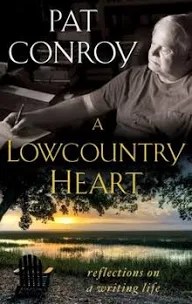
Conroy’s early books were my threshold into a lifetime of voracious reading. Here’s one example from one of his last works of why he’ll always remain special to me:


Here’s what I know: If a story is not told, it’s the silence around that untold story that ends up killing people. The story can open a secret up to the light (Pat Conroy, A Lowcountry Heart, p. 238).