“There is no peace,” says the LORD, “for the wicked” (Isaiah 48:22 ESV) What… no peace? But why? In recent years, Americans were promised hope and change. We even heard of a “fundamental transformation of America.” How are you enjoying the changes and fundamental transformations? Do you hope for more of the same? Is it working out?
Do we have “peace in our time”? Do websites blaze headlines of peace? Racism has ended. All lives matter (even babies’ lives still in the womb), right? All worldviews are equal, right? We can, as the sentimental bumper stickers tout, coexist, right? No peace for the wicked.
In the 19th century, liberal heterodox theologian Adolf von Harnack wrote of the universal fatherhood of God and the brotherhood of man. He died in 1930. I wonder how he’d rate the 85 years of man’s brotherhood since he died. By every history book I’ve read on the last 3,000 years, the 20th century was the bloodiest since the genesis of written history. No peace for the wicked.
And yet Christ came for the ungodly. “For while we were still weak, at the right time Christ died for the ungodly” (Rom 5:6). He came for those with ears to hear the gospel of…peace. 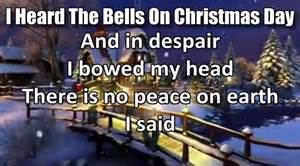
I was reading through lyrics to Longfellow’s “I Heard the Bells on Christmas Day” which read:
I Heard the Bells on Christmas Day/Their old familiar carols play,/And wild and sweet the words repeat/Of peace on earth, good will to men.
I grew up amidst the singing of this song each Christmas season but never thought through the words. Introverted as I was, especially as an adolescent, I loved my family deeply but saw through the rubber band smiles we all flashed during the holiday gatherings. We acted as if we were this joyful all the time. But we all knew otherwise. I didn’t want to state the obvious because it might shatter the facades.
My mother had a beautiful voice and we were never far from a song. Each year, we gathered at my grandparents’ home in middle GA Christmas afternoons, Granddaddy would have Mom lead us all in singing Christmas carols before opening some gifts we’d placed under the Christmas tree in the living room. The refrain that ran through yuletide carols? Peace. For a brief moment of time, we sang and fellowshipped with one another, and we broke bread around the table, and it seemed as if there were peace outside. But there wasn’t. And there isn’t.
Longfellow’s poem acknowledges the same truth:
And in despair I bowed my head:/”There is no peace on earth,” I said,/“For hate is strong and mocks the song/Of peace on earth, good will to men.”
Do we dare to be honest? There never will be true peace until we wicked are reconciled to God and each other through Christ. Because our sin justly merits God’s wrath, we’re naturally at enmity with God. But for those who are redeemed via repentance and faith in Christ alone, their status is forever changed. “But God, being rich in mercy, because of the great love with which he loved us, even when we were dead in our trespasses, made us alive together with Christ” (Eph 2:5). The result? Peace. Supernatural, not natural, peace. “Therefore, since we have been justified by faith, we have peace with God through our Lord Jesus Christ” (Rom 5:1).
If we celebrate Christmas this year, will we have the intellectual integrity to acknowledge the historical record of Jesus–the Christ? Secularists want to rename Christmas trees “holiday trees.” Secularists have renamed Christmas holidays “Winter break.” Secularists have renamed Easter holidays “Spring break.” These are symptoms of humanistic efforts to establish peace on earth. And they fail—always.
Secular and humanistic worldviews want the redeemed to be quiet and to go away nicely. Wouldn’t it be nicer for the redeemed to be like tasteless salt—harmless, ineffective, irrelevant, and good to trample underfoot? That poses no threat to secularists’ political power. Yet Christ calls those who are His to something very different—namely, to proclaim this message: “For our sake he [God the Father] made him [God the Son/Jesus] to be sin who knew no sin, so that in him [Jesus] we might become the righteousness of God” (2 Cor 5:21). The result? Peace.
It’s not Christians who are renaming history in efforts to erase people’s history. Secularists are doing that…with vitriol and through gritted teeth. What does that tell you about the “peace” they talk about?
What if, instead, some people had ears receptive to the good news of Christ the Lord, about God incarnate in Jesus? That would be cause for celebration, such that even the stones might be made to shout, would it not?
“The fear of the LORD is the beginning of knowledge; fools despise wisdom and instruction” (Pr 1:7). Instead of trying to remove any vestiges of Christ, the gospel, Christianity, or holy days (now holidays), might we dare to recognize and even proclaim truth?
Peace is possible, but not through any means except Christ’s work. Secularism won’t do it; manmade treaties won’t do it; acquiescence won’t do it; pietism won’t do it.
Longfellow’s poem ends with these lines:
Then pealed the bells more loud and deep:
“God is not dead, nor doth he sleep;
The wrong shall fail, the right prevail,
With peace on earth, good will to men.”
Till, ringing singing, on its way,
The world revolved from night to day,
A voice, a chime, a chant sublime,
Of peace on earth, good will to men!
Cowards abound and fair-weather prophets have larger crowds, but truth is worth it.
Merry Christmas.
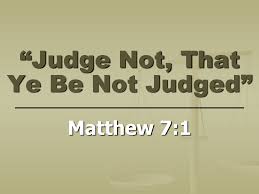 now next to nothing of Scripture spew this verse as a quip aimed to terminate discussion. We rarely hear this verse taught in context. What usually happens is instead a person is failing to make a cogent and/or coherent argument for his position. He does not want to offend or seem hateful. He wants to be tolerant of even the most inane people or ideas. He wants to be loving and respectful. And this one verse surfaces like a reflex. It is viewed as a way of assuaging one’s own conscience and mollifying those with whom you disagree. It is used as a kinder and gentler way of saying, “Well, I wouldn’t live my life that way, but it’s not really for me to say the other person is wrong.”
 s to the ground, most of the chairs on the rostrum were vacant. Most people did not know or care of this man’s passing. As I read Scripture, prayed, and consoled a couple of his friends, I had an overwhelming sense that there were multiple deaths at hand. We were not just marking the
 passing of another veteran’s life. I was witnessing in microcosm a culture that chooses to forget what is praiseworthy. What/whom one generation fails to honor, thenext generation will forget altogether.
 my hours are taken up in study and preparation. Contrary to some people’s experiences, sustained research and study are not burdens to me; I emerge from those disciplines reinvigorated. Recently I was requested to speak at a Bible study to military personnel and Department of Defense civilians. I’d been studying in Psalm 67, so I thought that would be a sound passage from which to teach. It was not just because that is where I’d been in some of my recent studies. It was more than that. I consistently see the longing for encouragement that we all have.
 were folks to tweet/post/blog about it, it just might. See the temptation? Here’s the issue for consideration: Are we not more connected digitally than ever in history, yet perhaps more lonely than ever in history? There’s a paradox in the fact that people have hundreds, or even thousands, of virtual friends but few, if any, actual friends. It’s now in the vernacular to call people “Facebook friends.” That is revealing. When is the last time we went to dinner with our Facebook friends? We may view posts and tweets, but I wonder if we are meaningfully connected to other people.
 We’re often connected to the Web but not to each other. So, what to do? The Web is not going away, I’d venture to say. Technology will increase rather than decrease, in its availability and speed. But might we pay a price? Might we be paying it already? It bears repeating: I hear from husbands, wives, and children repeatedly: “My wife/husband/son/daughter/friend won’t talk to me. Instead they play on their iPad or phone all the time.” Again, I’m not blind to how the logic cuts both ways. Here I am writing on a computer, posting it on the Web, and hoping others will be on the Web to read it and think about it. I see the paradox. However, just like the girls gathered near that bench this weekend up at the lake, I want genuine contact, not just virtual contact. The Digital Tower of Babel is just as idolatrous as the ziggurat in Genesis 11. In the Confessions, Augustine wrote, “Our hearts are restless until they can find rest in you [God].” That’s often quoted. But what’s less explained is the context out of which Augustine wrote. Despite being raised by a Christian mother, Augustine pursued a life of sexual lust and idolatry until Christ convicted him of his sin. It was only after being convicted of his sin that he understood his own Tower of Babel, wherein he was the god at the top. Because he excelled in academia, in rhetoric, law, languages, etc. his pride led to his downfall—a constant theme in literature and in life. Yet Augustine longed for true friendship, true rest, true connection—and this was millennia before the Web.
 Scripture records one of history’s most moving tributes to friendship: “As soon as he [David] had finished speaking to Saul, the soul of Jonathan was knit to the soul of David, and Jonathan loved him as his own soul” (1 Sam 18:1 ESV). What you see in the subsequent pages is a story of true, rather than apparent (we’d say virtual in our day), friendship. Should we use technology to improve relationships? Yes. However, I am not confident that will occur until we scroll our feeds less, and love our neighbors more.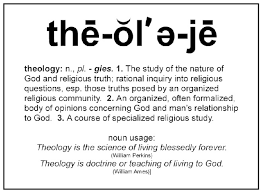
 eaders to examine their own assumptions in their search for truth. I’ve read scores of books on Christian apologetics, but what I appreciate about this book is its forthrightness and accessibility for lay persons. I use it as a gift for others whom I believe will actually read it.
 MIND & MATTERS