In Praise of the Aged & Godly Wisdom

“Wisdom is with the aged, and understanding in length of days” (Job 12:12, ESV).

“Do not move the ancient landmark that your fathers have set” (Proverbs 22:28, ESV).

Introduction: For as long as I have been a student of Scripture, I have tracked with Solomon. I can hear the exclamations already: “What?!! A man with multiple wives, and cocubines! A man given over to seasons of sin!” Yes, exactly.

The point, of course, is not about concubinage or polygamy, but about the human condition and Solomon’s (and our, and my) need of the Savior. Solomon was a great man and simultaneously a great sinner. And through my studies, I have come to believe he is numbered among the elect. He was redeemed by the person and work of Christ.

Segue: So many lessons are found in Solomon’s life and in those who ignored his life’s lessons. For example, in 2 Chronicles we read of how rulers of other nations came to visit Solomon, to grasp his majesty and rule, but also simply to marvel:

The Queen of Sheba

Now when the queen of Sheba heard of the fame of Solomon, she came to Jerusalem to test him with hard questions, having a very great retinue and camels bearing spices and very much gold and precious stones. And when she came to Solomon, she told him all that was on her mind. And Solomon answered all her questions. There was nothing hidden from Solomon that he could not explain to her. And when the queen of Sheba had seen the wisdom of Solomon, the house that he had built, the food of his table, the seating of his officials, and the attendance of his servants, and their clothing, his cupbearers, and their clothing, and his burnt offerings that he offered at the house of the Lord, there was no more breath in her.

And she said to the king, “The report was true that I heard in my own land of your words and of your wisdom, but I did not believe the reports until I came and my own eyes had seen it. And behold, half the greatness of your wisdom was not told me; you surpass the report that I heard. Happy are your wives! Happy are these your servants, who continually stand before you and hear your wisdom! Blessed be the Lord your God, who has delighted in you and set you on his throne as king for the Lord your God! Because your God loved Israel and would establish them forever, he has made you king over them, that you may execute justice and righteousness.” Then she gave the king 120 talents of gold, and a very great quantity of spices, and precious stones. There were no spices such as those that the queen of Sheba gave to King Solomon.

10 Moreover, the servants of Hiram and the servants of Solomon, who brought gold from Ophir, brought algum wood and precious stones. 11 And the king made from the algum wood supports for the house of the Lord and for the king’s house, lyres also and harps for the singers. There never was seen the like of them before in the land of Judah.

12 And King Solomon gave to the queen of Sheba all that she desired, whatever she asked besides what she had brought to the king. So she turned and went back to her own land with her servants. (2 Chronicles 9:1-12, ESV)

Teaching: Sheba’s queen got it, but Solomon’s son, Rehoboam, didn’t. He was the textbook example of a stubborn unteachable young man. He thought himself smarter than history and his elders. And he led the people into destruction.

13 And the king answered them harshly; and forsaking the counsel of the old men, 14 King Rehoboam spoke to them according to the counsel of the young men, saying, “My father made your yoke heavy, but I will add to it. My father disciplined you with whips, but I will discipline you with scorpions.” 15 So the king did not listen to the people, for it was a turn of affairs brought about by God that the Lord might fulfill his word, which he spoke by Ahijah the Shilonite to Jeroboam the son of Nebat.(2 Chronicles 10:13-15, ESV)

Rehoboam forsook the counsel of the old men. That’s crucial to understand and to learn from.

Takeaway: I am of an age where I can see the hubris often associated with youth and inexperience. My nature is to overwork rather than underwork. I’ve never been accused of laziness in my vocation. I love work; it’s what God commands. But I also have learned what Solomon taught (among other things), namely, that youthful impetuousness is oft-linked with destruction. Pray for the youngish and ambitious who are prematurely installed in positions of leadership. Rehoboams are not new. More would know that if we learned from history.

No Shame In It

Bottom Line Up Front: The Beauty of Brokenness

Questions: Have you ever experienced forgiveness? Have you ever felt that exhalation from your diaphragm when you knew that all was now going to be okay because of the power of being forgiven? Perhaps it was being forgiven by someone you loved, a friend, a family member, or perhaps even God himself. Here’s what I mean …

Scripture: The Parable of the Prodigal Son is indubitably one of the most well-known passages of Scripture, but here it is again, just in case:

The Parable of the Prodigal Son:

11 And he said, “There was a man who had two sons. 12 And the younger of them said to his father, ‘Father, give me the share of property that is coming to me.’ And he divided his property between them. 13 Not many days later, the younger son gathered all he had and took a journey into a far country, and there he squandered his property in reckless living. 14 And when he had spent everything, a severe famine arose in that country, and he began to be in need. 15 So he went and hired himself out to[b] one of the citizens of that country, who sent him into his fields to feed pigs. 16 And he was longing to be fed with the pods that the pigs ate, and no one gave him anything.

17 “But when he came to himself, he said, ‘How many of my father’s hired servants have more than enough bread, but I perish here with hunger! 18 I will arise and go to my father, and I will say to him, “Father, I have sinned against heaven and before you. 19 I am no longer worthy to be called your son. Treat me as one of your hired servants.”’ 20 And he arose and came to his father. But while he was still a long way off, his father saw him and felt compassion, and ran and embraced him and kissed him. 21 And the son said to him, ‘Father, I have sinned against heaven and before you. I am no longer worthy to be called your son.’ 22 But the father said to his servants, ‘Bring quickly the best robe, and put it on him, and put a ring on his hand, and shoes on his feet. 23 And bring the fattened calf and kill it, and let us eat and celebrate. 24 For this my son was dead, and is alive again; he was lost, and is found.’ And they began to celebrate.

25 “Now his older son was in the field, and as he came and drew near to the house, he heard music and dancing. 26 And he called one of the servants and asked what these things meant. 27 And he said to him, ‘Your brother has come, and your father has killed the fattened calf, because he has received him back safe and sound.’ 28 But he was angry and refused to go in. His father came out and entreated him, 29 but he answered his father, ‘Look, these many years I have served you, and I never disobeyed your command, yet you never gave me a young goat, that I might celebrate with my friends. 30 But when this son of yours came, who has devoured your property with prostitutes, you killed the fattened calf for him!’ 31 And he said to him, ‘Son, you are always with me, and all that is mine is yours. 32 It was fitting to celebrate and be glad, for this your brother was dead, and is alive; he was lost, and is found.’”

Heart of the Issue: Verse 18 is crucial. That’s the turning point. The younger son finally came to himself. He finally saw the folly of his ways. He finally repented. He admitted his folly. And the result? His father abundantly pardoned him, forgave him, welcomed him, and rejoiced over his son. Folks, this pictures what God does for all who repent and believe the gospel. This is the unspeakable beauty of brokenness: God does not leave you broken. He restores, redeems, and makes you whole. And he calls you his own.

Chaplain Daily Touchpoint (23 JAN 2025): God’s Persistence Is Our Hope

Bottom Line Up Front: God’s Persistence Is Our Hope

Context & Scripture: There’s a latent danger in familiarity. “Guests, like fish, begin to smell after three days,” Franklin quipped. But when it comes to one’s standing before God, it has to do with being so familiar with something that we have suppressed the significance of its power. You’ll remember the Parable of the Lost Sheep, right? Here it is, just in case:

The Parable of the Lost Sheep

15 Now the tax collectors and sinners were all drawing near to hear him. 2 And the Pharisees and the scribes grumbled, saying, “This man receives sinners and eats with them.”

3 So he told them this parable: 4 “What man of you, having a hundred sheep, if he has lost one of them, does not leave the ninety-nine in the open country, and go after the one that is lost, until he finds it? 5 And when he has found it, he lays it on his shoulders, rejoicing. 6 And when he comes home, he calls together his friends and his neighbors, saying to them, ‘Rejoice with me, for I have found my sheep that was lost.’ 7 Just so, I tell you, there will be more joy in heaven over one sinner who repents than over ninety-nine righteous persons who need no repentance” (Lk 15:1-7, ESV).

Teaching: Did you notice who came near to Jesus here? The tax collectors. Guess how popular Jewish tax collectors were to their fellow Jews in Roman-occupied Israel? Exactly. Who else came? Sinners. Guess how laudatory it was to be labeled a ‘sinner,’ esp. by religious arrogant elites like the Pharisees? Exactly.

But then Jesus makes it even more overt, this teaching. What does the good shepherd do? He pursues the lost sheep. He persists in it. Why? Because he loves them. And the end result? Restoration. Rejoicing. Redemption. The key thing is to understand that we’re—by default—lost sheep, prone to wander, prone to error, lost in sin. Yet God persists. He knows his sheep, and even calls them by name.

Reflections Upon the Novel ‘James’ by Percival Everett

This past Christmas, my daughter and son-in-law fed my reading life. One of the volumes I received from them was Everett’s James. It is a heartbreaking, deeply human continuation of Huck Finn, but told from Jim’s perspective.

Jim was the slave, you’ll remember from Huck Finn, as he and Huck fled on the raft, and down the river, towards the possibility of freedom.

But in this volume, the narrative is told from the perspective of Jim–and the human connections, the human betrayals, and the human predicament are explored with mastery. Highly recommended.

Literary Gem for 21 JAN 2025

While reading the stories in Anderson’s Winesburg, Ohio I came across this sagacious gem: “Only the few know the sweetness of the twisted apples” (Anderson, “Paper Pills,” 14).

A latecomer to Anderson’s short stories, I find many of them are gems insofar as they shine light upon blanketed sadness. His characters are deep, though often invisible, amidst busyness.

Important stories for those who might pay attention.

They remind me of many of John Prine’s songs and lyrics, especially “Hello in There.”

Chaplain Daily Touchpoint (22 JAN 2025): Is Everyone God’s Child?

BLUF: Beauty of the Narrow Way

Issue: Ever heard someone say, “Well, we’re all God’s children”? I have. Multiple times. But what does that mean, exactly? And is it true? Is your favorite career politician God’s child? Is the murderer of Laken Riley God’s child? Is your greatest enemy God’s child? See, a wise person should ask questions like these so that people will think and not just emote and repeat drivel.

Look to Scripture: In the Gospel of Luke, there’s a very interesting conversation a person has with Christ about this very issue. It is found in Luke 13:22-30:

22 He went on his way through towns and villages, teaching and journeying toward Jerusalem. 23 And someone said to him, “Lord, will those who are saved be few?” And he said to them, 24 “Strive to enter through the narrow door. For many, I tell you, will seek to enter and will not be able. 25 When once the master of the house has risen and shut the door, and you begin to stand outside and to knock at the door, saying, ‘Lord, open to us,’ then he will answer you, ‘I do not know where you come from.’ 26 Then you will begin to say, ‘We ate and drank in your presence, and you taught in our streets.’ 27 But he will say, ‘I tell you, I do not know where you come from. Depart from me, all you workers of evil!’ 28 In that place there will be weeping and gnashing of teeth, when you see Abraham and Isaac and Jacob and all the prophets in the kingdom of God but you yourselves cast out. 29 And people will come from east and west, and from north and south, and recline at table in the kingdom of God. 30 And behold, some are last who will be first, and some are first who will be last.” (Luke 13:22-30, ESV)

The person asks, “Will those who are saved be few?” and Christ teaches him plainly that being a follower of Christ is costly. He’s teaching the questioner to ask himself/herself, “Have you come through the narrow way?” It requires entering the narrow door rather than going along the broad way. Christ’s message contradicts the lazy drivel we often hear about everyone being God’s child. If everyone were God’s child, evangelism would be unnecessary. Christian missions would be unnecessary. Calls to follow Christ/calls to salvation in Christ alone would be unnecessary. The Christian church as a body of redeemed believers would be unnecessary.

Encouragement: Scripture tells us that God the Holy Spirit indwells believers. Here’s the way Paul phrases it in Romans: “The Spirit himself bears witness with our spirit that we are children of God, and if children, then heirs—heirs of God and fellow heirs with Christ, provided we suffer with him in order that we may also be glorified with him” (Rom 8:16-17, ESV).

Chaplain Daily Touchpoint (21 JAN 2025): A Mark of the Servant-Leader

Question: What percentage of leaders in your life pray biblically? Your initial reaction may not be far off. How different that is from David in Scripture. Here’s what I mean …

Example of a Godly Servant-Leader (David) in Scripture: First, I can anticipate objections. “But David . . .” stuff. He was an adulterer; he took a census prematurely; he orchestrated a murder; he fathered a child with the wife of one of his commanders. Yes, I know. That’s the not the point here. The point here is that David went back to the Lord in repentance and faith. He sought God’s restoration. He implored God for forgiveness. He kept short accounts with God. To use an expression I heard growing up when folks thought a little too highly of themsevles, Momo would say, “Rooster, So and so has gotten too big for his britches; just watch out, now.” And sure enough, the fall would come.

When Satan incited David to number Israel, God was displeased. But it’s always instructive to me how David responded:

But God was displeased with this thing, and he struck Israel. 8 And David said to God, “I have sinned greatly in that I have done this thing. But now, please take away the iniquity of your servant, for I have acted very foolishly.” (1 Chronicles 21:7-8, ESV)

David knew he had messed up. So he did the wise thing: he returned to God in repentance.

And in verse 17, it’s so clear what I’m driving at:

And David said to God, “Was it not I who gave command to number the people? It is I who have sinned and done great evil. But these sheep, what have they done? Please let your hand, O Lord my God, be against me and against my father’s house. But do not let the plague be on your people.” (1 Chronicles 11:17, ESV)

David owned it, and God forgave and restored him. How? By the work of the Greater David. By the King of kings and Lord of lords, by the One who gave his life for his sheep.

Missing Dr. C.

Today as I returned to my work location, I unpacked my gear and sat down to read for a bit and to gather my thoughts. I called my wife, told her I loved her and already missed her presence, and reflected upon the last day or so I had with my wife, son, saints from class, and fellowship with friends. I was so grateful for the sweet times I had had recently but now lonely because they were now in the past. I wanted to, in the fitting words of Jim Croce’s song, save time in a bottle.

But I was in my reading chair now, hundreds of miles away from my bride and my library, and my kids, and I was in Psalm 19. It is one of those Psalms I do not have to have my Bibles to read, because I had it memorized years ago. Here’s how this relates to Dr. C.

Dr. C. was one of my professors in my seminary years. But he was more than a professor; he was a mentor. He and I hit it off from the first day he stood to give his lectures. He was not caught up in himself. He just loved the Lord, loved teaching, and loved ministry. He was what I aim to be–just a vessel that God uses to connect profound truths of redemption via skillsets God himself provides. So simple but so rare. But Dr. C. did that.

He loved. He was wicked smart, no doubt about that. I would not want to compare test scores with Dr. C., that’s for certain. But he was not caught up in that. He was in it as a vessel of God–a vessel to be poured out.

But I had my Bible open nonetheless to Psalm 19. And it’s the same Bible I’ve had for years, one I’ve spent a lot of ink in and jotted down sermon notes, and book titles, and illustrations, and references to my heroes of church history, and Dr. C.’s impact was all over it.

I thought back to how he made us introduce ourselves to our fellow classmates in the class. Another guy and I shrank in horror, because we were the off-the-chain introverts. The irony, however, is that Keith is today one of my closest friends. We both dreaded having to talk to the class, but when we were forced to by Dr. C., he (Keith) and I found we were, like Forrest and Jenny, peas and carrots. We hit it off and found that we were brothers in the Lord; we connected then (and now) in ways God orchestrates via servants like Dr. C.

So as I sit in my reading chair, Dr. C., I know you’re now with the Lord, but this very worn Bible has your imprints all over it, because you had us memorize it all those years ago, and write it down verbatim for a test grade. Why? To be mean? No. But to teach us to get the Word into our very bones.

Like so many things you taught me, Dr. C., I am grateful. You were the professor I aim to be like, but in my own areas of interest and with my (very different from your) giftings. I miss you deeply, but you served us so well, and I know you have come into your reward.

To the choirmaster. A Psalm of David.

19 The heavens declare the glory of God,
    and the sky above proclaims his handiwork.
Day to day pours out speech,
    and night to night reveals knowledge.
There is no speech, nor are there words,
    whose voice is not heard.
Their voice goes out through all the earth,
    and their words to the end of the world.
In them he has set a tent for the sun,
    which comes out like a bridegroom leaving his chamber,
    and, like a strong man, runs its course with joy.
Its rising is from the end of the heavens,
    and its circuit to the end of them,
    and there is nothing hidden from its heat.

The law of the Lord is perfect,
    reviving the soul;
the testimony of the Lord is sure,
    making wise the simple;
the precepts of the Lord are right,
    rejoicing the heart;
the commandment of the Lord is pure,
    enlightening the eyes;
the fear of the Lord is clean,
    enduring forever;
the rules of the Lord are true,
    and righteous altogether.
10 More to be desired are they than gold,
    even much fine gold;
sweeter also than honey
    and drippings of the honeycomb.
11 Moreover, by them is your servant warned;
    in keeping them there is great reward.

12 Who can discern his errors?
    Declare me innocent from hidden faults.
13 Keep back your servant also from presumptuous sins;
    let them not have dominion over me!
Then I shall be blameless,
    and innocent of great transgression.

14 Let the words of my mouth and the meditation of my heart
    be acceptable in your sight,
    O Lord, my rock and my redeemer. (Psalm 19, ESV)

From the Reading List: Some Volumes from January 2025

As is typical of scores of years now I have a significant reading regimen as part of ministry, professional development, and teaching, but mostly out of passion for the discipline of reading. Here are some of the volumes I am still in as of Janauary 2025:

  1. Winesburg, Ohio (Anderson)
  2. The Collected Short Stories of Shirley Jackson (Shirley Jackson)
  3. Dubliners (Joyce)
  4. The Greatest Short Stories of Anton Chekhov (Chekhov)
  5. A Wilderness Station: Selected Stories, 1969-1994 (Alice Munro)
  6. The Complete Short Stories of Thomas Wolfe (Wolfe)
  7. Great Short Stories of the Masters (Ed., Charles Neider)

The styles of the authors really could not be more different. Though all are short story masters, Anderson wrote with a laconic understated style, whereas Joyce was showy. Munro and Jackson are masters of character and psychology, while Wolfe was a wordsmith in love with the rhapsodies of the English language and the passions of being a young man. Chekhov is in a league all his own, he was so insightful. But taken together, it’s just a delight to traffic in the works of these masters of the short story form.

Grateful to be able to teach courses on the short story genre I so enjoy. Hopefully the courses will be used to encourage deeper and better reading by students and others, and to inculcate better writing–a craft that has suffered for decades due to the dumbing down of education.

Tolle lege.

Seeing Further: Grateful for Warriors for the Truth

Isaac Newton is reputed to have uttered, “If I have seen further, it is by standing on the shoulder of giants.” That was a humble and wise statement from a genius. He knew that even he needed to be grateful.

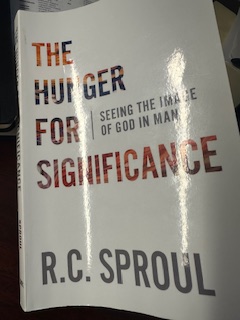
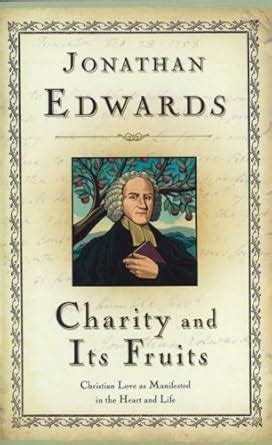
The portrait above is of one of my heroes, Jonathan Edwards. I read a great deal of church history, but no one quite hits my intellectual and spiritual bells like Edwards does, except perhaps R.C. Sproul. Both men were brilliant and consumed by the greatness of God.

As I sit tonight with Bibles on my lap and all around my feet, with volumes of church history’s best minds at my side, I am absorbed in the text from Matthew 14:22-36 that others and I will explore Sunday in class.

Grateful for the lineage of faithful stewards of the faith. We have so many to whom we owe gratitude and honor–deep men and women of the Book of all books.

I’m reading John Gill, Calvin, Ryle, Spurgeon, Charles Simeon, Matthew Henry, and of course, Jonathan Edwards–all of whom wrote masterfully on Scripture.

My cup is full.