Missing

As I pulled the brass door handles at the bookstore toward me, and followed the green carpet worn smooth by soles, tob6j6nqqwk-kgrhqmokiceyvlzcryrbmegfhwg-_35 the cafe, and the smellscapes filled the room, I said, “A medium house coffee and medium hot chocolate, please,” and reached for my wallet to pay.

The cashier canted her head to the left and wore a quizzical look, but she slid the steaming cups towards me, and took my debit card.

I thanked her and turned to hand the hot chocolate to where you’d be, with your smile at another cup of hot chocolate.

“Sir, is the hot chocolate for someone with you?” the cashier asked.

“Thank you,” I said, “yes, um, thank you.”

I flushed at how I must’ve appeared to the girl behind the counter–a man ordering a coffee for himself, and a hot chocolate for someone the cashier didn’t see.

But I was sure I’d press the warm cup into your hand, and see you smile, and reach my fingers to your free hand and bring our hands to my lips to kiss, and peruse shelves of my favorite writers, and relearn what Wallace Stevens’ line that “being there together is enough” means.

But the cashier was kind, and only smiled at me, as I discovered what we both missed: you.

The Great Reversal

“Silent before the scene.” That is the phrase from the song this morning still echoing in my mind. Sung by the choir and musicians this morning at church, the theology of that phrase stabbed me, and taught me.

The phrase pierced me. Why? It’s because when I, a sinner, come to see myself in the light of God’s holiness, my words fail. I am undone. As the writer of Hebrews expresses it, I am “naked and exposed to the eyes of him to whom we must give account” (Hebrews 4:13 ESV).

I am “silent before the scene” of God’s justice as it was meted out upon God the Son, Jesus. The horror of the only holy one taking on the sin of others—becoming sin—defies my sufficient description. The more I study and grasp the meaning of the cross of Christ, the more I find my words insufficient. I fall “silent before the scene.”

However, this silence is temporary for the redeemed. Let me summarize a conversation I had with a fellow minister this week. He is a music and worship leader, a minister of the gospel. He has so much talent, he’s hard not to envy. He sings beautifully, plays multiple instruments, encourages, teaches, etc. He’s one of those men I love for the light he brings into my messy darkness.

We were speaking of ministry, some common joys and some common struggles. But then he said something that relates to this idea of being “silent before the scene.” “Talkers,” he said, “will be out of work in redemption, but singers won’t.” He was teaching me of how voiced songs are inherent to redemption.

He said it as if it were fundamental–that singing praises to God because of his redemptive work will be ceaseless. Whereas my writing about redemption will cease, voices of praise for redemption will go on and on.

Falling “silent before the scene” of God’s justice is temporary for the redeemed. Moreover, I relearned why Jesus said in Luke 19:40, “I tell you, if these were silent, the very stones would cry out.” Who are  the “these”? Christians. They’re the redeemed.

What will the redeemed do? They’ll not be silent. They’ll not be “silent before the scene” forever. They’ll sing; they’ll praise. And if they don’t, the very creation will erupt in chorus to its Maker.

For those of us who love the written word, who bathe in the beauty of well-crafted words, we need to confess something: there is a great reversal wrought from heaven; therefore, let us fall “silent before the scene” of God’s works, yes, but then let us join in singing the incarnate conquering word of redemption.

Alone Together


imgres.jpg

“May I talk with you a minute?” the young man asked.

“Of course,”  the older man said. “What’s on your mind?”

“It’s about Sara. You remember, right? If she calls it off, I’m leaving the military, and moving back out west. I’ve no reason to stay here, being from Nevada.”

“Really?” the older man asked. “You mean you’d leave your unit here, these guys, your job, and pack it up…just like that? Is it that serious?”

“Yes it is,” the young man said. “You see, I’m not from here. I’m from out west. I came here, really, for her. I joined the military because her father was a vet, and retired out here. And because my father and grandfather served, and they’re here now. . . retired, too. I felt like I had to move when I was with her. But now, all I want to do, you know, if it’s over, is to leave.”

“I see,” the older man said. “Did she say it was over?”

“Well, no, but she said that we needed time to be apart.” He emphasized be apart by signaling quotation marks with his index and middle fingers on both hands above his shoulders when he spoke.

“I see,” the older man said. “Have you thought about this? Do you have other friends that you talk to, and share your life with?”

“Well, you see,” the younger man said, “we’ve been best friends for years. We share everything. She came up…well…like I did…hard…not much structure…and we’ve always promised to fight for us, you know? We didn’t want to be like what we came from.”

“Gotcha,” the older man said. “What makes you think it may be over?” he asked. The younger man never answered the question directly.

“So neither of you wanted to be like what you came from, right?” the older man asked. “Right,” the younger man said quickly.

“And you’re ready to return to where you came from, if she says it’s over, right?” “Right,” the younger man said.

“And because you feel betrayed by her, if she’s willing to call the whole relationship off, or even be apart, as she says, that’s enough handwriting on the wall for you to pack it in. Is that right?”

“Exactly,” the younger man said.

“Well, may I ask you another question?”

“Sure,” he said.

“Well,” the older man asked, “what do you do to decompress, to blow off steam? Drink? Run? What is it for you?”

“I ride my bike,” the younger man said. “It tops out at 160 mph. North Georgia’s great for riding.”

“That sounds exciting.” The older man felt that he sounded ancient to this young man who rode his motorcycle 160 mph, while the older man’s idea of decompressing was drinking black coffee and reading Dickens.

“What is it about your bike that does it for you?” the older man asked.

“Well, I can be with my riding buddies but still be alone. I’m not a crowd person. I’m not very good with people. And she always got that about me. She’s the people person. I just love her, and I love riding, but I’m not much into the crowd thing,” he said. “I just want to be with her, and it be us, you know? Does that make sense?”

“Yes,” the older man said. “It makes sense. But may we agree that you’ll take a knee for a day or two, and give her time, so you can be apart to evaluate the place of your relationship to each other? Is it all worth at least some time to slow down and think a bit, at least before you’re ready to ride to Nevada?” the older man asked.

“Yes, I can do that,” the younger man said.

The older man changed the topic to the young man’s interests, and spoke of motorcycles, running, and adrenaline life.

The younger man seemed better. He stood up from his chair, extended his hand to shake with the older man, and smiled. “Thanks,” said the younger man. “It’s good to talk to someone.”

As the younger man exited the room, and returned to his world, the older man thought how each man is alone in his own way, but how being alone together is the thing. There are levels of closeness, he thought, wherein we open the windows of our tender paranoid hearts, and look for shapes to fill them with color and warmth, or with the fragrance of knowing and being known, and yet. And yet, the older man thought.

Arrested

image

He simply appeared in the road. I’d just rounded the curve of the running trail. Up ahead about fifty meters, the running trail rejoined the asphalt road that led back to post. But the sight of him took my breath. I felt arrested by a drama I’d not scripted.

His coat was perfect camouflage, the colors of the oak woods from which he’d come. The main beams of his rack were flawless khaki-white, proud and upright. The grain lines of his antlers reminded me of cedar boards my stepfather and I had built with when I was a child.

I felt my heart race, and I was helpless to slow it. I was caught in a fleeting drama, precious because I knew it could not last. I’d stopped—no, frozen—in my steps. I tried to slow my breathing so that he would not bolt into the woods. He, too, froze. His black eyes had a quality of fury and mystery that engendered wonder.

I’ve spent years hunting for such a buck. I’ve killed bigger ones, but this moment—these seconds of rapt mystery, wherein the wild and beautiful jolted me from the mundane, quickened me. Into what? Recognition.

What would a skeptic say—that this is just a chance occurrence, of no significance, a random event devoid of overarching meaning?

But I did not think that—not when it happened, or even now. Instead, I think heaven discharges intimations of the artist, the artist who ordains our steps and arrests them, with sights that make some tremble with mystery.

The Ones to Watch

He is not the most popular. She is not the most recognized. He is not the handsomest. She’s not in the limelight. However, each is invaluable. Who are these people? What sets them apart? They’re the servant-leaders. They are the overlooked catalysts of success and missimgresion accomplishment.

Recently the military unit of which I’m a part trained at Ft. Stewart for a few days. Our mission? Individual weapons qualification (IWQ). We spent several days and nights on ranges practicing marksmanship skills. I love anything to do with guns and ammo, so I relished the training with my fellow soldiers.

As with any skill set, soldiers vary in their levels of proficiency. Some infantry soldiers zeroed their weapons with just 6-9 rounds, then moved down to the qualification range. There they qualified as marksmen, sharpshooters, or experts.

However, some soldiers floundered. And that’s when I witnessed the emergence of the servant-leaders. A divide occurred. A handful of soldiers struggled with fundamentals of marksmanship: sight picture alignment, breathing, trigger squeeze, etc. Some soldiers scoffed at the struggles of their fellow soldiers, as ways of congratulating themselves. Yet other soldiers, non-commissioned officers, and officers, took a different approach. Rather than accentuating the struggles of their fellow soldiers, they mentored them. They served them in order that they (the struggling shooters) would learn and improve.

The servant-leaders got down in the dirt with the soldiers who were struggling. In the prone position, they talked them through the fundamentals of effective marksmanship. For most soldiers, their shooting improved. Nearly all qualified.

At the end of the days of training, these servant-leaders did not receive accolades. They garnered no public praise. Yet the fighting force of soldiers is now stronger. Why? It’s due in large measure to these overlooked catalysts of success and mission accomplishment. Who are the ones to watch? It’s often those men and women who speak softly but serve valiantly, the servant-leaders.


Robin’s Birdsong

“Good mornin’, hon. What can I get you to drink?” “Water, please ma’am.” I liked her right away. According to her nametag, her name was Robin. I adjusted my chair underneath me. I slid closer to the countertop and looked around at the staff and other customers at the Waffle House.3dk7p3pxcbaf5atplkzmoo2mu8vq0vdwpol6rkdzygrsu6wtrltbidnbydm2jft9ko9l8y7kbemluwe5lkqfjslkon9q9ibxvsnjzi92tt0xhtaqyo86ptxezwp5122unx1n8byrtjgn7gjigaaaaasuvork5cyii

Robin was different. She was about sixty-five years old, with dark eyes, eyes dark as marbles. Silver streaks ran through her hair.

I ordered a Grand Slam breakfast with fried eggs, sausage, hash browns, and dry raisin toast. Robin approached with a waffle before the rest of the meal and said, “I’m sorry it’s taking so long. But would you mind if I just brought your waffle while we’re waiting on the rest?”

“Yes, ma’am. Fine. That works. Thank you,” I said.

Robin was obviously embarrassed at how long my meal was taking to be prepared. The cooks were more interested in cawing to one another than working, it seemed.

The other staff persons were  men and women between the ages of eighteen and thirty. A jukebox blared Kool and the Gang’s “Get Down on It.”

The other employees lined the countertops like crows. Without making eye contact, the staff communicated with one another—about customers’ orders, and gossip that (presumably) only they knew about.

As I continued to wait for my breakfast to be prepared, I watched the staff. Their lips mouthed the lyrics to the Kool and the Gang song. Some even rolled their hips during the chorus.

And there was Robin. She grimaced at the volume of the music. She returned to where I sat, at least two or three more times. “I’m sorry, sir. I don’t know what’s taking so long,” she said.

She began writing on the yellow pad she carried in her apron. She handed it to me and said, “Sir, I’m only charging you for an egg breakfast, since you’ve had to wait so long.” She colored with embarrassment. She just didn’t fit in with the others. She was older. She didn’t like loud music. She didn’t participate in the gossip amongst the other employees.

The other employees got louder, cawing at one another, feeding upon one another’s volume and laughter. Were they laughing at Robin, I wondered.

When my meal arrived, I’d already finished the waffle Robin had brought earlier. I left off checking emails on my phone, to which I’d turned to keep from growing angry at the wait.

Finally the remainder of the meal arrived and I finished it quickly. Then I looked at my ticket: $3.00. Sweet Robin.

I stepped up to the register to pay with my debit card. I tipped Robin another three dollars. She deserved it. She was being murdered bit by bit, but she quietly sang her birdsong in her own way. Perhaps her middle name was Grace.

We All Lose Now

A land of boors. Some words sound like their meaning. Boorish means rude or coarse. A boor is an uncouth, unmannered person, one characterized by rudeness. If the current nominees for presimgresident of the U.S. teach us anything, it is that we’ve become a land of boors. The nation has nominated boors. Why? Because they’re like the electorate–rude, coarse, expert at trying to excuse their sinful nature.

I remember hearing a lecture by Ravi Zacharias wherein he taught on man’s incorrigible attempts to rationalize his sin. Ravi gave this example of man’s fallen nature: after Bill Clinton repeatedly denied having “sexual relations” with Monica Lewinsky, the world took notice. Media ratings soared. But when the semen-stained garment was produced, and Clinton was caught lying again, his popularity rose. Let that sink in. He became more popular. A land of boors lauded a liar, an adulterer, a man debauched.

The nation lauded a president of the U.S. for betrayal. He had betrayed his marriage vows, betrayed truth, and betrayed every semblance of honor. The White House became little different than Animal House.

Now the blood in Benghazi cries out from the ground. The blood of 60,000,000 aborted fetuses makes Macbeth’s and Lady Macbeth’s bloodstained hands seem white in comparison, and yet Hillary cheers for unrestricted access to murder children in the womb. Thousands upon thousands of emails are hidden and destroyed. Yet the Left’s nominee drones platitudes about “togetherness,” while in the next breath she pits people into groups of “deplorables,” of rich vs. poor, of straight vs. gay, of black vs. white, etc. A land of boors where crassness is king.

And surely Donald’s slated to become the emoji of the boor. Philandering, a filthy mouth, and lack of repentance. When you see a man seemingly incapable of repenting, you know that moral character has been abdicated and imperious boorishness has been crowned king in its place.

Welcome to 2016 America, where crass is king, the boorish win, and we all lose now.


Deep within the Birches

“Come on, Dad, let’s build a fort!”

“Okay, bud, let’s do it.” And we left the house, unsure but eager for what we were embarking upon.

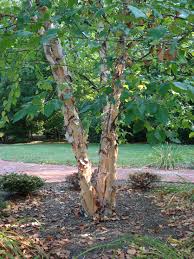
The back yard has mature pines, a fruit tree, red tip shrubs more than ten feet tall along thimgrese fence, and river birches. It’s September and the birches’ fallen bark coats the corner of the back yard in khaki scrolls that crunch under our shoe soles.

We trimmed low lying limbs from some of the trees, shaved them to where we could fashion them into the thick red tip that was to serve as our little camouflage fort. We raked fallen leaves and pinecones from the earth’s floor. We fitted small branches within larger limbs, fashioning more from energy than from thought.

As I watched my son cut limbs with his machete, and saw him carve notches in twigs with his new knife, he was utterly engaged and content. In his mind, he was erecting a fortress, a boyhood castle from which he’d rule his kingdom.

And as I watched, and crouched beneath the limbs with him, and crawled into our growing fort, pulling honeysuckle vines and briars from the fence line, the incalculable weight of grief reached for my heart. I longed for nothing so much as to always see boys so happy.

“Could Small Things be Messengers?”

                    The Light that was There

August’s sun casts furrows of light upon the grass

Painting the lawn in tines of gold

Raking slumber, like fallen leaves, from my worldliness

Turning my soul to see the light that was there

To that which I was too busy to see.


                                 Glimpses

 Fall’s when God frames earth gold and red

And creatures may behold heaven’s art upon every bough.


                                  Reflection

 Had I known what it would mean later

As I peeled shale and limestone pebbles

From the pond’s edge as a boy and

Fitted them between thumb and forefinger and

Flung them sidearm skipping across the water’s surface

I’d have thrown more and stayed longer.


One’s Tackle

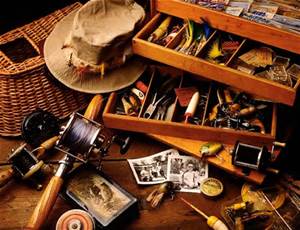
“Dad, teach me to use a bait caster.” So began school upon the water yesterday. My family loves spring. For my wife, she loves the warmth of the sun and the long days of light. And I love to see her skin turn bronze and leave winter’s white behind. Our daughter loves spring, too. Like her mom, she tans easily; her skin and hair respond to the sun quickly, and her youth reflects the th-1energy of spring and sun. As a child, she was often bronze for more than six months each year, always long-legged, thin, and lithe– usually not far removed from a soccer ball. For our son, however, he treasures spring for fishing. He’s eight for only one more month and, I thought until yesterday, too young to use a bait caster reel. So I thought. “Dad, teach me to use a bait caster,” he repeated from the front of the Jon boat. In efforts to delay him, I used the list of parental excuses. “Son, a bait caster’s not like an open-face reel; it’s easier to get backlashes. What’s more, bait casters are more complicated. You have to be mindful of your lure and the wind. You have to focus on the vibrations in your line.” (I thought that was sure to dissuade him.) Alas, he’s like his mother: persistent. But he remained undeterred. After several minutes, I relented. “Okay,” I said, “here you go. You try it.”

There are few things I relish as much as fishing. Almost all of my fondest memories involve being near water. My formative years as a child and adolescentht were in middle GA, and on my family’s property were/are three ponds. Two are stocked with bream, largemouth bass, channel catfish, and crappie. The third and smallest pond served as my grandfather’s pond, and it consisted mostly of channel and speckled catfish. I remember his driving his 1967 Ford short-bed pickup truck down to the water’s edge in the evenings with his buckets of floating catfish food in the bed. He’d pull down to the pond, and even before he got out of his truck, the fish churned the water in anticipation. The whiskers of the catfish slashed the top of the water and their shiny gray-green sleekness thrilled us grandchildren as we watched Granddaddy feed his fish. He was not a man given to shows of affection, and he’d not comment upon how we watched him and the fish, and made memories, but those times shaped me, as water shapes stone. I was a tender boy, and I knew those times were special, but now those memories buoy my soul.

I’m in my forties now, and my son was in the front of our little boat yesterday, and he asked me to teach him how to fish with one of my bait casters. And I did. And I continue to learn and relearn how depths of meaning emerge from simple things. As I watched him, the sun’s gold lit our little time upon the water, and he squinted each time I let the prow swing too far west and the evening sun caused him to say, “Come on, Dad; I can’t see. Can you turn the boat around?” The blue herons on the pond’s edge eyed us and the white egrets stood statuesque until they snapped fish up from below. The day’s last moorhens and red-winged blackbirds sang of dusk’s approach.

I do not remember how old I was when I made a small effort to show my stepfather how important he was/is to me–especially for all the times he took me fishing; for all those times I got my bait caster tangled up, or when I cast too far, and he had to retrieve my lure from a branch overhanging the pond’s edge. But I remember purchasing a small book for him once titled The Compleat Angler by Izaak Walton. I didn’t fully understand or appreciate that book then, but as I learn and relearn how depths of meaning emerge from simple things, I see how time angles for us all, and how so much depends upon our tackle. I am thankful.