A Story of Veterans Day 2022

Today has almost come and gone, another Veterans Day, a national holiday in America and in many Western nations. For example, in England it is called Remembrance Day. In Australia and Canada, it is also known as Remembrance Day.

Today I offered an invocation and benediction at a Veterans Day ceremony near where my family and I live.

Nothing encourages me quite like looking out at audiences with veterans from all branches of the U.S. military. They’re almost all men with gray hair or perhaps no hair. Many of them have beards or goatees. Those are invariably gray or white in color, too.

Some of the vets wear lapel pins advertising the branch of service in which they served. Still others wear pins calling attention to the schools from which they graduated or of which they were a part: Sappers, Submariners, Aviation, Seabees, Recon, etc.

Today as I listened to the guest speaker, I surveyed the faces of the crowd. But I found myself paying close attention to the children and students. They were mostly from a school for the arts in our area, and their level of talent was impressive. The girls were dressed in uniforms from the eras of some of the wars of the 20th and 21st century: WWI, WWII, Korea, Vietnam, the Gulf War, Afghanistan, and Iraq. Mostly they were dressed like the Andrews Sisters when they sang “Boogie Woogie Bugle Boy” and other staple songs of that era.

When I was walking to the stage to take my seat until the ceremony began, a girl tugged at my uniform. “Sir,” she said, and handed me the bulletin below she had made.

“Thank you,” I said, and felt the insufficiency of my statement. Amazing the pathos that comes by way of a child handing you a bulletin she has made. The power of a child writing in markers and pasting stars onto paper and handing it to me as she looks up at my eyes seems to drawf any number of speeches I hear.

I offered my prayers, thanked the veterans–past, present, and (hopefully) future– and took my seat again. But still I found myself listening to the kids. Something was perhaps different, I thought. They seemed to have a bit of understanding of history, of why we have fought wars. They cited some historical realities. And the speaker named names in his speech and he clarified that good and evil are actual things, and that good and evil are played out on the battlefields of ideas and in our daily lives.

The kids seemed to get it, I thought to myself. And my heart leapt for joy at the thought that, instead of being brainwashed into hatred of America; instead of being “woke” and trained to respond that white people are evil and that men are “birthing persons” and that people are to be divided by skin color and sexual proclivities, etc., these kids seemed to be waking up to the idiocy of all that tripe and to see that all that rubbish is fit only for fools.

If current statistics are to be believed, less than 1% of Americans serve America by becoming Soldiers, Sailors, Airmen, Marines, or Coast Guardsmen. And the trend currently is that it will be even less than 1%, a fraction of that, for the forseeable future. Why? Because ideas have consequences. If you raise your children to erase history, to rewrite it, or to pervert it, you raise, in sum, fools.

But my hope is that the tide is turning, that some (at least a remnant) are seeing the insanity of current wokeness, secularism’s self-defeating presuppostions, and all the group identity politics. I hope, I say.

I was so touched today by it all. I am a realist. I know that this Veterans Day was largely just a day for most folks to lounge, but for some, it was a time to remember, to show gratitude, to gird up our loins for the next battle, because the next battle is not a specter but a reality. Battle is inevitable.

The questions involve who will be willing to fight those battles and why. Will wisdom undergird our worldview or will mindless political slogans about sexuality, skin pigmentation, and resentment?

When I listened to the children, my hope was rekindled.

I salute you, future generations, as I do the vets of the past, present, and (hopefully) future.

Some Scenes from this Week’s Ministry Out West

Spent a great few days in Idaho ministering to fellow soldiers. Salute to Idahoans for their hospitality. And kudos to Jack Simplot for J.U.M.P. (Jack’s Urban Meeting Place) in Boise. What a wonderful facility and gift to Boise and beyond.

During breaks between teaching, and as the snow fell, I walked to the windows and watched kids construct snowmen and climb the pyramid.

Below are some scenes I snapped from my flights from Idaho and Utah respectively.

Watching the sun rise over the Rockies is enough, I should think, to make even the hardest of souls pay attention.

And as we flew east over the Great Plains, the fields seemed to stretch on endlessly.

The picture above is of a range east of Salt Lake in Utah. It was spectacular viewing this morning from 30, 000 feet.

Military Ministry, Idaho, & a View from the Hotel

Remember these lines?

You prepare a table before me/in the presence of my enemies;/you anoint my head with oil;/my cup overflows./Surely goodness and mercy shall follow me/all the days of my life,/and I shall dwell in the house of the LORD/forever. (Psalm 23:5-6, ESV)

They are surely some of the most cited poetic words of the Old Testament. These words were penned by King David and comprise the closing verses of Psalm 23.

Illustration: This morning before I drove to meet with soldiers I’m training in Idaho, I looked out from my hotel window as the sun rose. The ridges had snow on the highest parts. And the various spruce trees whipped back and forth in the morning winds.

My cup was already being filled.

And as I drove onto the military installation, I could feel my adrenaline racing. I’d been able to get in a workout at the hotel, had a hearty breakfast, and I’d seen the sun come up, had checked on my wife and family back home, and had entered through the checkpoint where an Airman scanned my government ID card.

As I drove to meet with fellow soldiers, the wind was whipping the American flag and the POW/MIA flag up above and in front of me.

I met with soldiers, and they showed me around their work area and the area of operations. I met with the commander and she welcomed me to the unit and expressed her endorsement of and support for the skill sets we chaplains bring to the armed forces. We worked on calendars for my next trip out here to teach and minister to her unit.

I found the chapel and met the senior chaplain and assistant, and we coordinated for them to participate at this week’s training.

My cup was being filled.

I saw another chaplain conclude a counseling session with a soldier and saw the soldier hug the chaplain at the end, thanking him for his help. It appeared a genuine thank you, a universal expression of gratitude and human connection.

My cup was being filled.

I remembered a passage from a book I am currently reading by Charles Baxter entitled Wonderlands: Essays on the Life of Literature:

“At the time of writing this essay, I [Charels Baxter] found myself in an elevator in downtown Minneapolis with approximately six other people. I was the only person on the elevator who was looking at the display indicating which floor we were approaching. Everyone else was gazing downward at their iPhones. Gertrude Stein once said that the only thing that changes from generation to generation is what people are looking at. Every time I see someone tapping away at an iPhone, I think of Gertrude Stein” (49).

Baxter, a brilliant writer in his own right, saw what evaded the others. Human connection.

iPhones, wonderful as they are, are to be viewed as tools, not as ends in themselves.

Just by having read Baxter’s book last night at the hotel, and by seeing and experiencing what I was already experiencing today, my cup was being filled.

Ridgelines with snow; my nation’s flag under a blue sky; being with soldiers and being able to minister to them this week; pondering Baxter’s observation and Gertrude Stein’s insight into people . . . it all partook in filling my cup.

The forecast here calls for heavy snow tomorrow and I am pumped. I will rise very early and watch it fall on the mountains surrounding the hotel, and try to remember the privilege I have, and labor to be faithful, and notice that what matters–what really matters–are the people to whom I’m able to minister. I am grateful for them and for the opportunities I’ve been granted.

May I use the time wisely to minister well, to work (in hope) to fill others’ cups, and be part of God’s cosmic plan that includes the use of fallen vessels to pour a message of redemption to all who will hear.

Upon Returning

Upon returning from travel and/or just an evening stroll near my work, I am struck many evenings with the view to the west.

In a world where discourse is often shallow, coarse, mean-spirited, or just plain mindless, sometimes all it takes for some of us is a reminder.

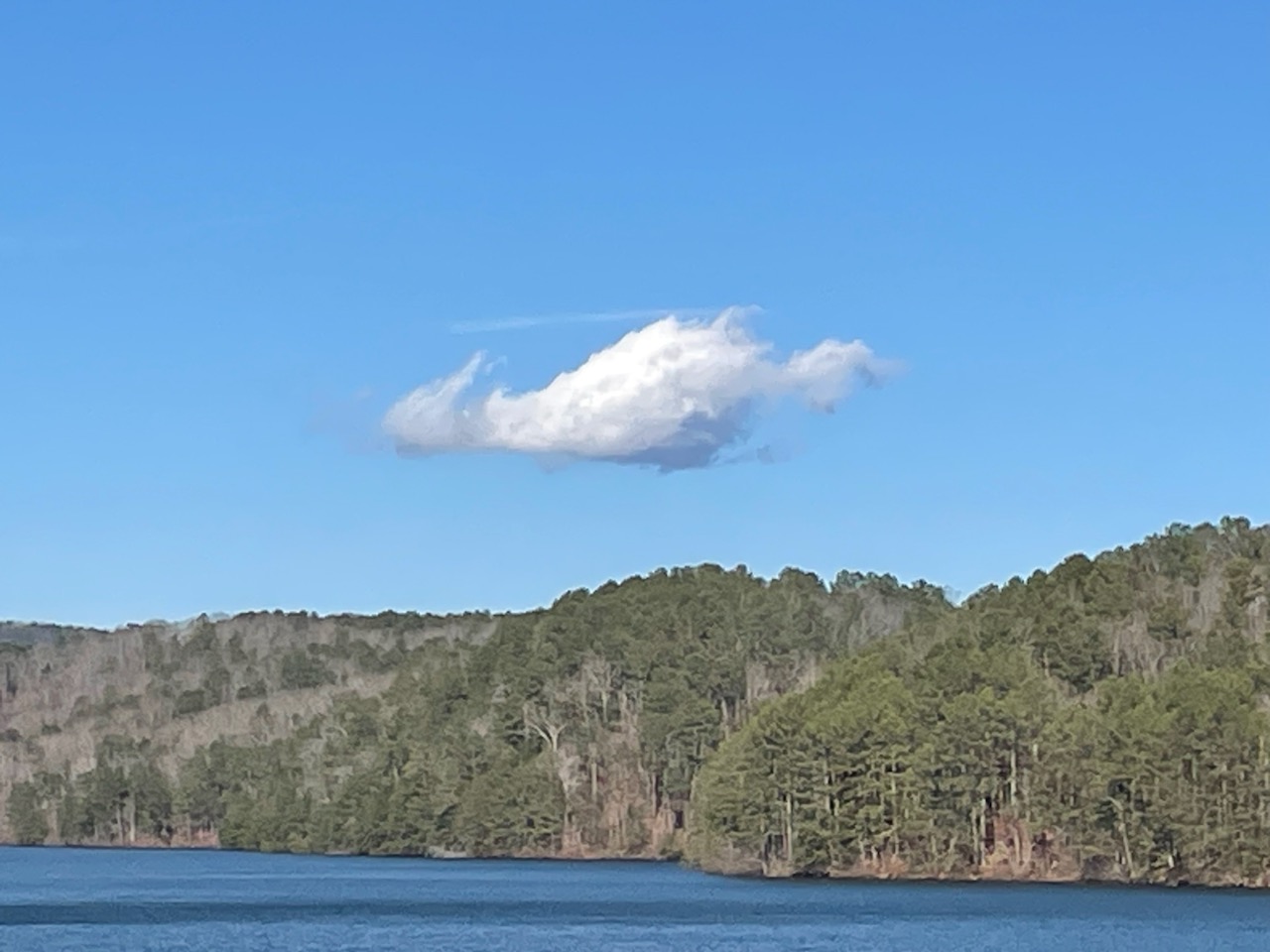
For me, one powerful visual reminder is seen when I look west as the sun descends upon another day.

6 Words Being Raped

Words matter.

And many words are being raped of their meanings.

Some have been so misused that they’ve been stripped of their teeth.

Here are some examples:

  1. existential
  2. weaponized
  3. experts
  4. begs the question (okay, more than one word)
  5. identify
  6. extremists

Just a few slices of contemporary misuse:

  1. If a politician panders to her base by Tweeting that if they (her sheeple) don’t pedal unicycles to their midday meditation classes, the earth is going to dissolve within the next 17 seconds because everything–absolutely everything!–is an “existential” threat, well then, nothing is an “existential” threat.
  2. Government/big tech/media are a “weaponized” oligarchy to control the sheeple. Self-evident as the statement is, weaponizing everything is en vogue in current parlance. But like man-buns and skinny jeans, let the adults pray that these embarrassments will go the way of the Ford Pinto.
  3. According to “experts,” the planet’s going to be destroyed in 17 seconds! Quick, Tweet something! You keep using that word experts, but it does not mean what you seem to think it means.
  4. So this “begs the question.” Begging the question means assuming the conclusion in the premise. What you mean can otherwise be accurately expressed by saying, “This gives rise to a related question . . .” and then posing your question.
  5. Where does one even start? Egads!
  6. He was a married man, a dad, too, and I saw him assemble with his wife and other extremists in corporate gatherings. They sang hymns, sat under the preaching of the Bible, and served their community. Extremist, I say! Arrest him! Arrest them all! They’re extremists!

When I was a lad, the older and wiser folks had a saying they’d offer when I made blunders. “Bless his heart,” they’d say, saying it in the third person even though I was standing there. Now that I’m the old guy in the room, I better understand.

Bless our little hearts.

Two Zingers from Eudora Welty

I am reading through some of the works of Eudora Welty.

Some I have read before. For others, however, it’s my first time.

One person noted Welty’s understated ways. Several other biographers noted her politeness. Many noted her humility.

But all of them have called attention to Welty’s precise eye for the telling detail.

I have a growing catalogue of Welty quotes I am thinking through.

These two remain for me among the most moving and thought-provoking:

“The events in our lives happen in a sequence in time, but in their significance to ourselves, they find their own order . . . the continuous thread of revelation.”

And then this one:

“People are mostly layers of violence and tenderness wrapped like bulbs, and it is difficult to say what makes them onions or hyacintths.”

I’m learning from you, Ms. Welty. I hope to be, anyway.

Camus’ Novel During the Night

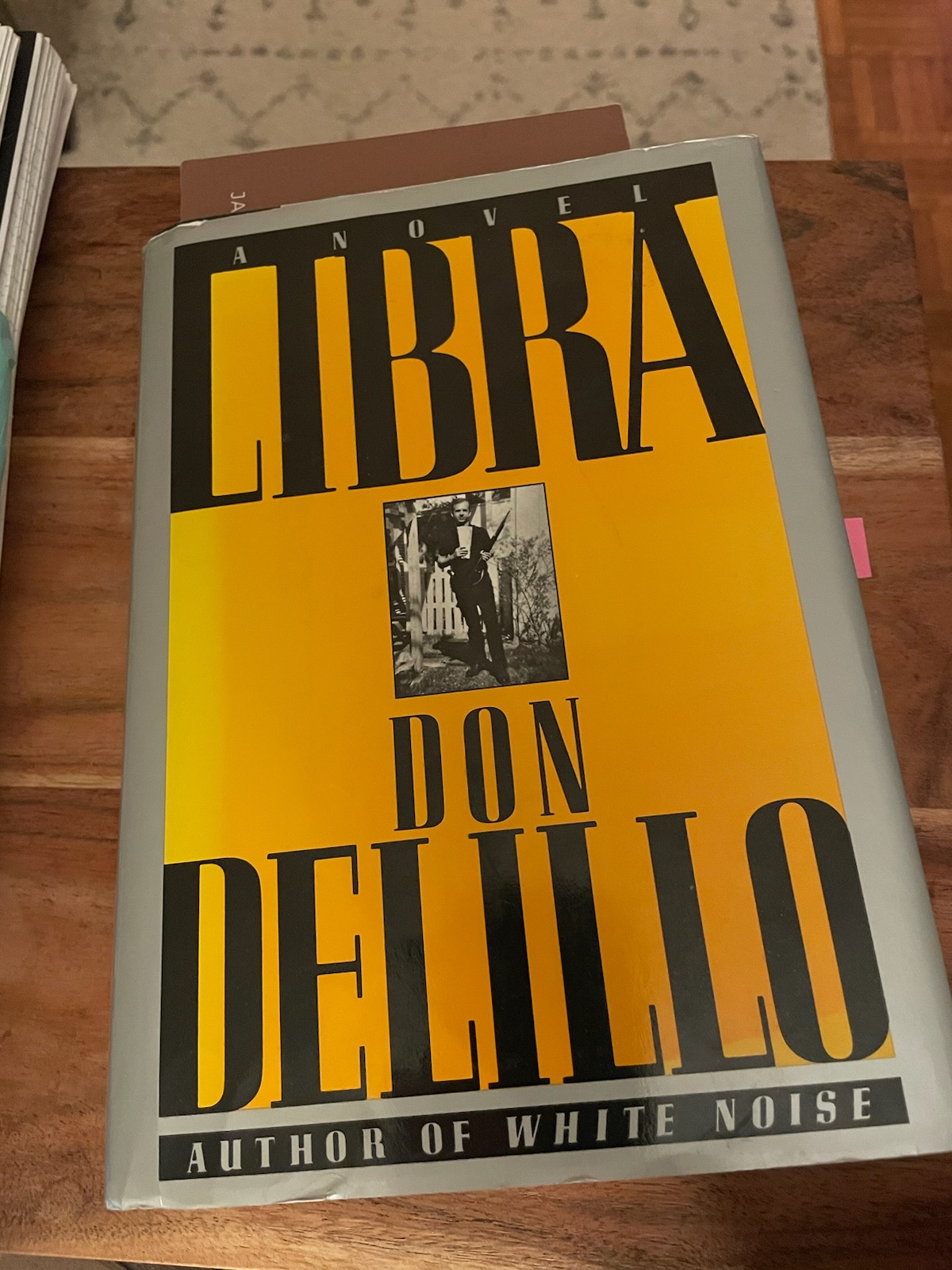
My master’s thesis in literature was a Christian response to a novel I read that shook me: Albert Camus’ The Stranger. My thesis, Walker Percy’s The Moviegoer as Christian Apologetic, was a Christian response to atheistic existentialism exemplified by Camus’ novel.

Maybe some background would be helpful. When I was a freshman in college many moons ago, I met a fellow student who was also a serious reader. We talked and talked of books, of writers we adored, of books we longed to read, etc. She told me that her favorite book was called The Stranger. I had never read it at the time. But I told her I would. And I did.

The book is quite short (just over 120 pages), so I got right through it quickly. But its brevity does not diminish its worldview. Camus, the author, was an atheist. And his characters, except for a magistrate and the chaplain at the end of the story, are atheists, too. They live lives of going through the motions. And the satiation of their physical appetites and the physical beauties in life (beaches, swims, good meals, etc.) and artistic beauties in life (good music, landscapes, seascapes, auroras, and gloamings, etc.) seem to be the sum of ‘the good’ in his characters’ secular worldview.

And so when the death of the protagonist’s mother opens the novel, Meursault (the main character) is largely unmoved. And when he murders an Arab man in the middle of the novel, he is unmoved, unrepentant, even apathetic, when he’s arrested.

There is no transcendent to which an appeal is to be made, in Camus’ world.

The only happiness is to be found by way of eating, drinking, and being merry. Why? Because tomorrow we die, of course. How different from the Christian worldview. Listen to how Jesus taught in Luke’s gospel:

But He said to them, “Beware, and be on your guard against every form of greed; for not even when one has an abundance does his life consist of his possessions.” And He told them a parable, saying, “The land of a rich man was very productive. And he began thinking to himself, saying, ‘What shall I do, since I have no place to store my crops?’ And he said, ‘This is what I will do: I will tear down my barns and build larger ones, and I will store all my grain and my goods there. And I will say to myself, “You have many goods stored up for many years to come; relax, eat, drink, and enjoy yourself!”’ But God said to him, ‘You fool! This very night your soul is demanded of you; and as for all that you have prepared, who will own it now?’ Such is the one who stores up treasure for himself, and is not rich in relation to God.”

And He said to His disciples, “For this reason I tell you, do not worry about your life, as to what you are to eat; nor for your body, as to what you are to wear. For life is more than food, and the body is more than clothing. (Luke 12:15-23, NASB)

The biblical view of man is that his life should not be reducible to his possessions, his stuff. The souls of men matter eternally, in other words.

History is replete of those who took their own lives but were drowning in stuff. I remember a few years back, for example, when Robin Williams took his life. He appeared to have gained the world, though, right? Yes. But it appears he may’ve forfeited/lost his soul.

It’s the same, but even darker, in Camus’ The Stranger. The protagonist is estranged because he’s an exile from God’s kingdom, but it’s a self-imposed exile. He hates God. He rejects the offer of forgiveness through the gospel. Moreover, he finds little to like about people, too. No God led him to misanthropy after a life of eating, drinking, and supposedly seeking to be merry.

Nothing teaches quite like contrasts. Last night as I battled insomnia once again, I pulled this novel from my shelf and read it straight through. And I became more convinced than ever that my M.A. thesis was correct–namely, that atheism leads to nihilism and despair; but the biblical view of man explains man’s nature accurately. We are estranged because we suppress God by donning fig leaves, as if we could escape the eye of the Omniscient. And yet God’s offer of the gospel remains for those who will come. What a contrast to Camus’ atheistic worldview.