Choosing the Given

Something in me believes that good books are forever. 

There is something about posts, tweets, and videos that promises to last as long as an honest politician or a Hollywood marriage. 

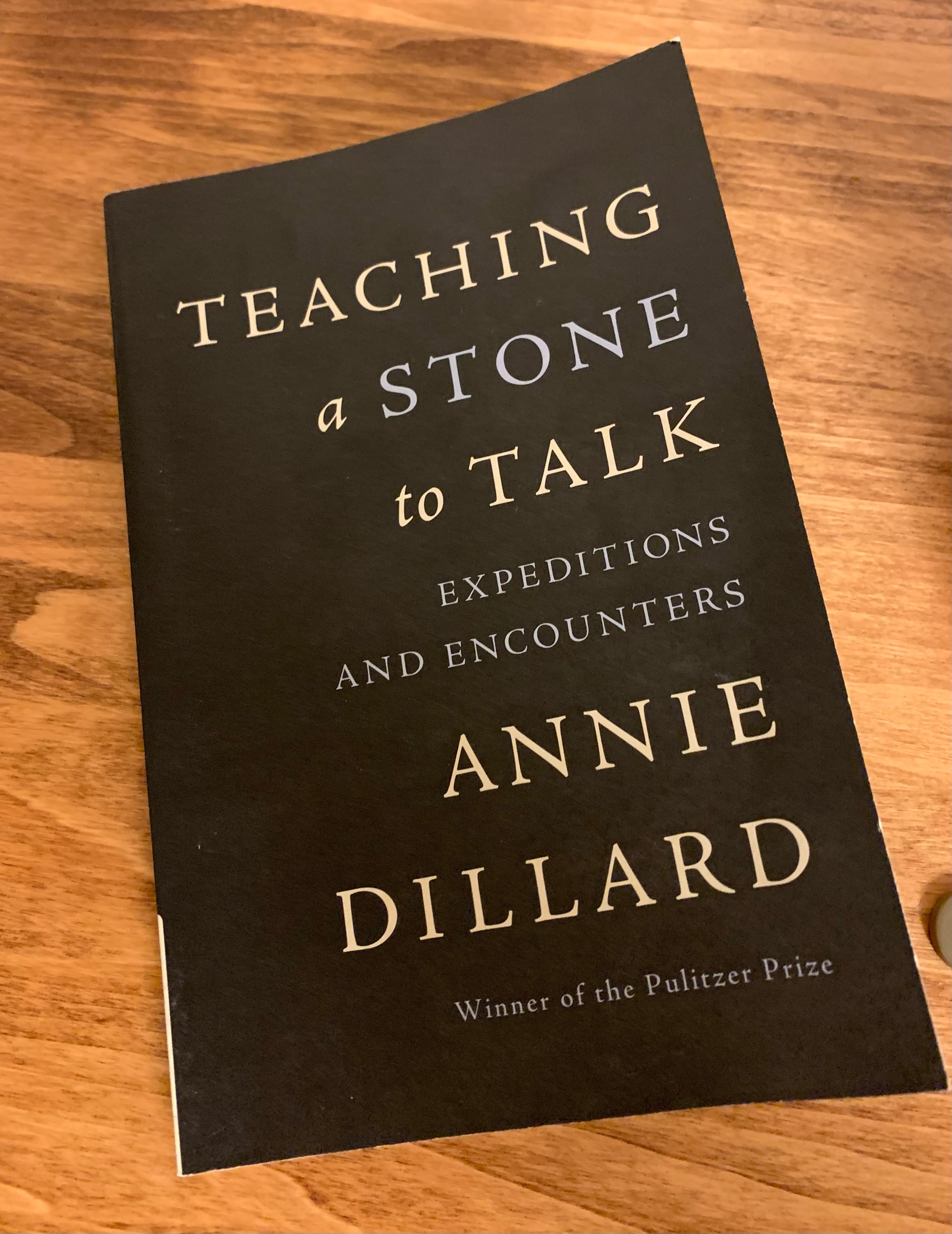
This evening I was reading an essay by Annie Dillard entitled “Living Like Weasels” and came across this extraordinary passage:

The weasel lives in necessity and we live in choice hating necessity and dying at the last ignobly in its talons. I would like to live as I should, as the weasel lives as he should. And I suspect for me the way is like the weasel’s: open to time and death painlessly, noticing everything, remembering nothing, choosing the given with a fierce and pointed will.

The background context of the statement concerns how Annie was looking into the water in a pond in Virginia, when suddenly a weasel shot up from under a downed log in the water. Their eyes met. They both were stunned at the otherness of the other. Then, just as quickly, it was over. And all that was left for Annie was trying to make sense of the exchange. 

Then she expresses a longing: “choosing the given . . .” I love that. Choosing the given. 

There’s a worldview implied in that—namely, that we can choose to understand, appreciate, and share the truth and beauty of what is given, or we can amuse ourselves to death via distractions. No one will stop you. If you want to live your life in front of a screen, you’ve arrived. Behold your god. 

And there is at least one other application in her phrase about choosing the given. Life is, the world is, the sunrise today is, the moon’s glow is, the sound of the birds is, the smile of your children is, in sum, given. It is all to be received with thanksgiving because it is just that: a gift. Gift upon gift upon gift. 

1 Annie Dillard, Teaching a Stone to Talk, (New York: HarperCollins, 1982), 68-69. 

180 Seconds of Today

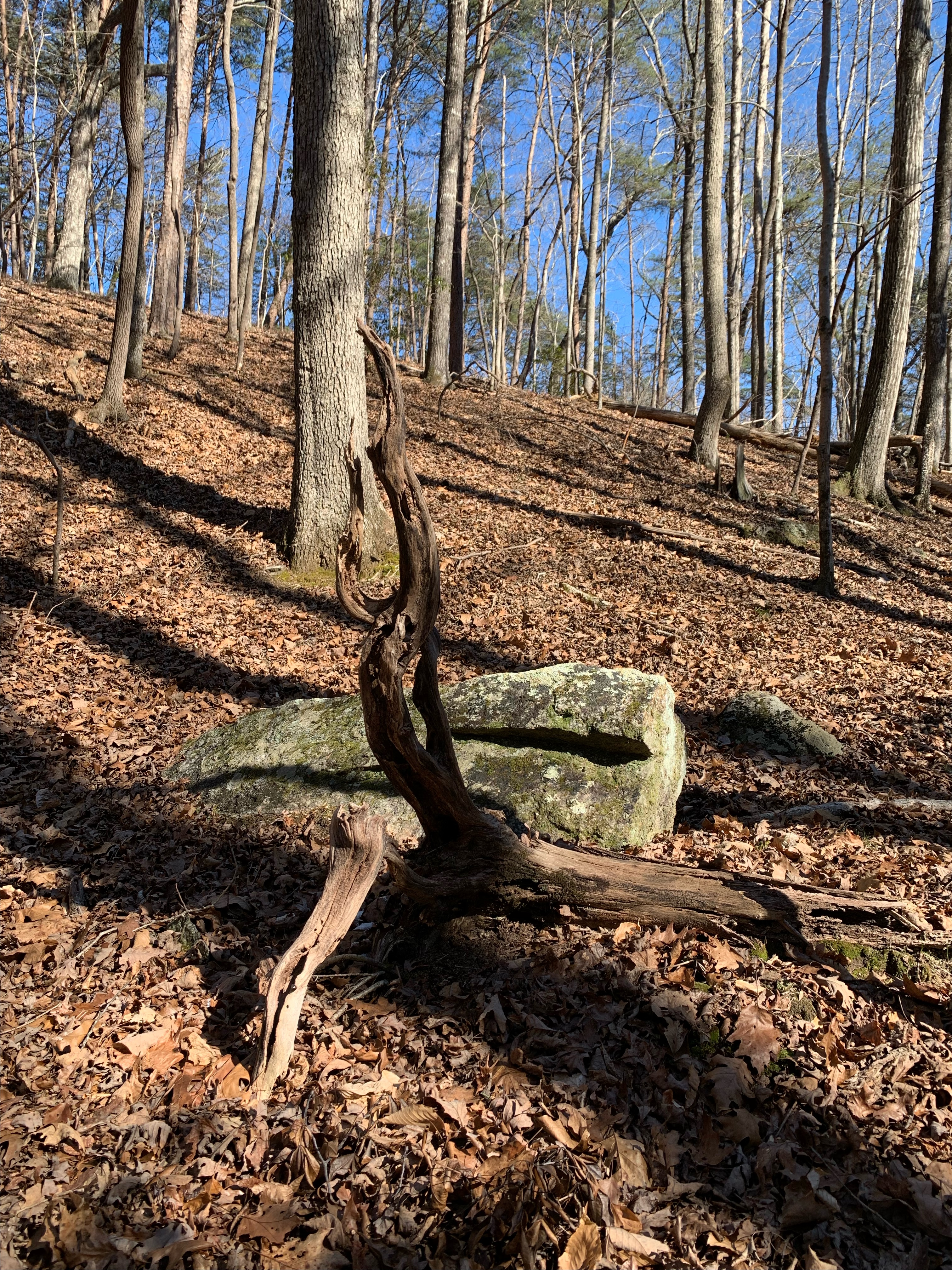
A place I love to hike has rock outcroppings. This one is one of my favorites. I call the rock upon which I sit “Reader’s Rock.” This weekend, it’s been home to Dickens (again) and his Oliver Twist. I love Dickens’s works. And as you will see, I love sunsets (regardless of season). Enjoy.

William Gay’s Literary World

Late in 2021 I discovered the literary world of William Gay, and fell in love with it. If you don’t care for the fiction of Cormac McCarthy, Flannery O’Connor, Katherine Anne Porter, and William Faulkner, you may not like the literary world of William Gay. But if you do gravitate towards Southern Gothic literature, you will likely appreciate William Gay’s literary world. 

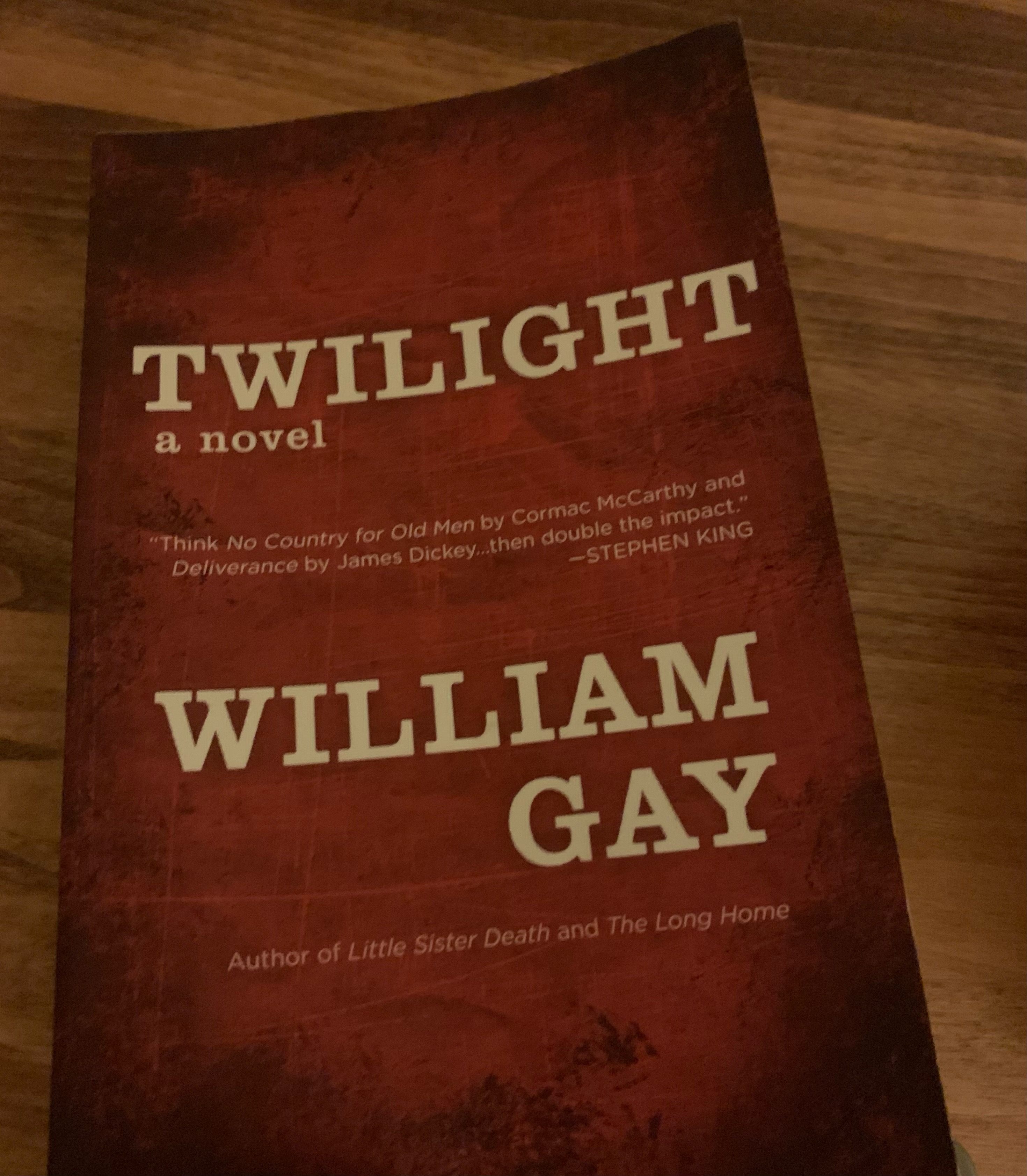
A few of Gay’s books remain for me to have read his oeuvre. And I’m eager to get to them. Why? Well, it’s Gay’s wordsmithing, the sheer beauty of his language. Just read and savor the power of this passage from Twilight, a volume of Gay’s I completed just this week: 

Beyond the window the night looked purple. The window vanished and thunder came rumbling down the corridors of the night. The rain came in hard, windy gusts, then subsided to a slow, steady winter drizzle, and he wondered where Sutter was. Under boughs of cedar, hidden with the nightbirds clotted about the branches like malefic fruit, driven to earth like the rest of the beasts of this fabled wood. Crouched in a dry spot beneath the caved roof of an abandoned house, malign revenant among other revenants keeping council. Cursing the rain and biding his time. Or maybe he had just trudged on, as impervious to the vagaries of the weather as stone. 

The above passage is indicative of Gay’s style. Like McCarthy, he is a master of capturing his world’s landscape. For Gay, it’s Tennessee—with its rolling hills, caves, limestone, backwoods gnomes, and ominous mysteries. Gay makes the woods pulse with mystery—the perfect setting for the moral evils men and women commit. 

Some of the violence and moral depravity you come across in Gay’s literary world is so haunting that you will wonder if man is noble at all. But then you will read of those who sacrifice themselves for others, and do it out of sheer love. No boasting, no public acclaim, no recognition by others. That was William Gay’s way, too. He did not publish until he was in his fifties. But when the literary world discovered him, he was recognized for the literary giant he was. Read William Gay’s works. There are a couple of interviews of him you can find on YouTube, too. You sense even in his interviews how much he left unsaid. He played the ignorant bumpkin from TN; in fact, he was a masterful writer of literature and a writer for the ages. 

1 Gay, William. Twilight (Ann Arbor: Dzanc Books, 2006), 186. 

Into the Gloaming with Courage

I had the misfortune today of reading the news online. The first headline concerned a “Red Threat,” about tensions between Russia and America reaching “dangerous levels.” The second headline was about Oregon’s governor lauding a “clemency push for violent criminals.” The third headline was video footage of a “brazen crime in NYC” wherein the criminal simply walked out without being so much as bothered by security personnel. The upshot of the headlines: chaos is carrying the day. Crime is paying. Criminals are being glorified. Lawfulness is mocked and blasphemy is praised.

This is the macro level, the bird’s-eye view. But when you talk to your own people on the micro level, with the day-to-day view, it all comes into sharper focus, a sharper image. We are undergoing a dissolution, an undoing. For those with theological moorings, we are undergoing divine judgment.

Of course the secularist scoffs at such a notion. “Divinity? Hah! Nonsense. There’s no Divinity in charge, up there somewhere, ruling the nations. We’re on our own,” they contend. Well, if that’s true, where’s all the “progress” the Enlightenment promised? How is secular humanism panning out? How is “the brotherhood of man” looking for you? Is Utopia just around the corner still?

It’s funny when I read the secularists. They hate the God they say they don’t believe in, but then they demand “rights.” Rights? But you are just so much matter in motion. Why should material causes be granted rights? Says who? Who told you you were special? You’re just goo, according to your own worldview. Rights? Meh.

There is another way, of course. It’s the biblical way. It’s the way that says the world is a mess because it is fallen. People are a mess because we are fallen. Politics is a mess because fallen sinners want their own fallen sinful ways.

But the biblical way also is crystal-clear in its offer of reconciliation and hope. It centers on Christ and the Gospel. In Acts 17, the Jewish apostle Paul, having become a Christian years earlier (see Acts 9), is in Athens, Greece. He has been explaining that man is an idolater by nature. He worships idols. He worships lies and liars, but God commands us to love the truth, not lies. And the people’s reactions to Paul’s biblical teaching were just what you should expect, if you have a correct anthropology: some mocked (Acts 17:32a); some gave him another hearing (Acts 17:32b); and some believed (Acts 17:34).

The world has been a mess since Genesis 3, since the Fall. Man wants his own way, not God’s way, unless and until individuals are reconciled to the God who is, the God of the Bible. That’s not a popular message. Never has been. But it’s the truth.

So when you see the sun going down, when you lament the gloaming of the culture you’re in, when you see violence rewarded, and virtue penalized, know that you have a choice. You can shake your head in fear and revert to pietistic retreat and mutter, “Oh, isn’t it all just dreadful?” or you can saddle up, be of good courage, strengthen yourself in the Lord and His Word, and know that Paul came before you, and fought the good fight. You can be of good courage, and know that Timothy came before you, and fought the good fight. You can be of good courage, and know that John came before you, and fought the good fight. You can read of heroes of the faith in Hebrews 11, and then go back and study the lives of those men and women who showed courage and fought the good fight.

But ultimately, if you’re a Christian, you will know Christ. You will see that He is the historical proof of courage, of faithfulness, of righteousness, and of triumph in the end. Look to Him. In Paul’s words in Acts 17 in Athens that day in the first century:

The times of ignorance God overlooked, but now he commands all people everywhere to repent, because he has fixed a day on which he will judge the world in righteousness by a man whom he has appointed; and of this he has given assurance to all by raising him from the dead. (Acts 17:30-31)

It was not a popular message then. It is not a popular message now. But is it true? And if it is, may we have the courage to deal with it.

Muddy Waters & Trail Time

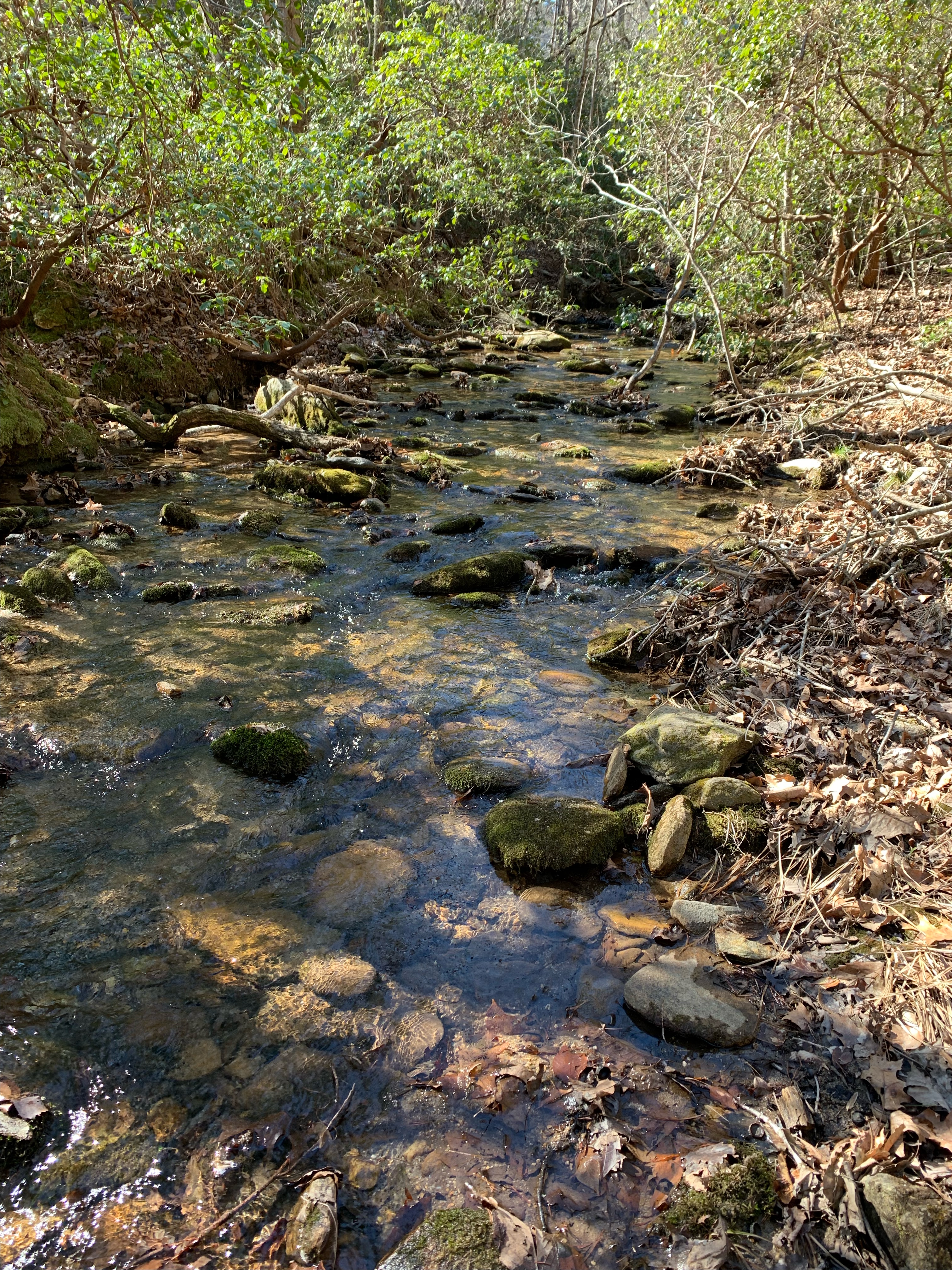
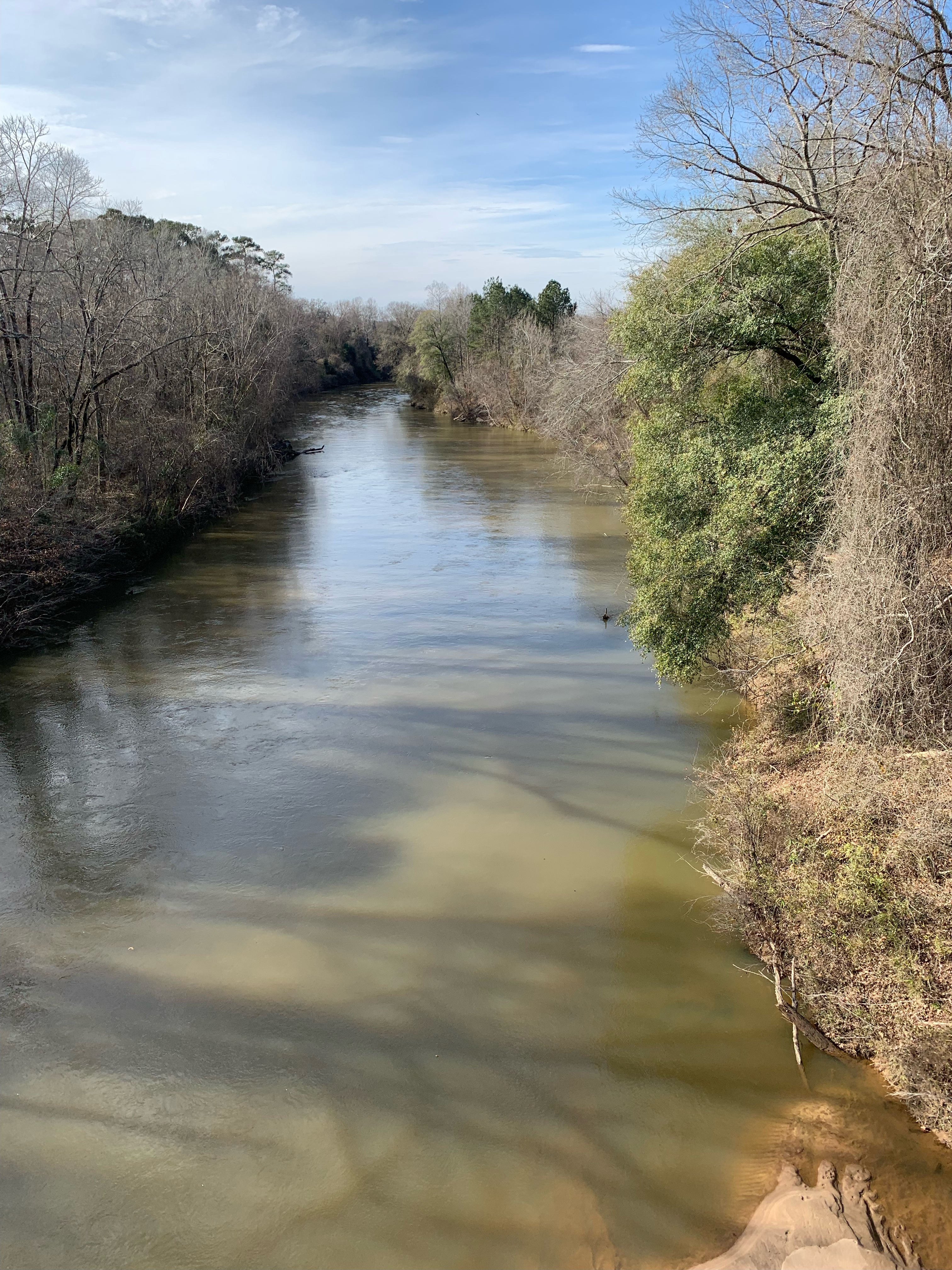
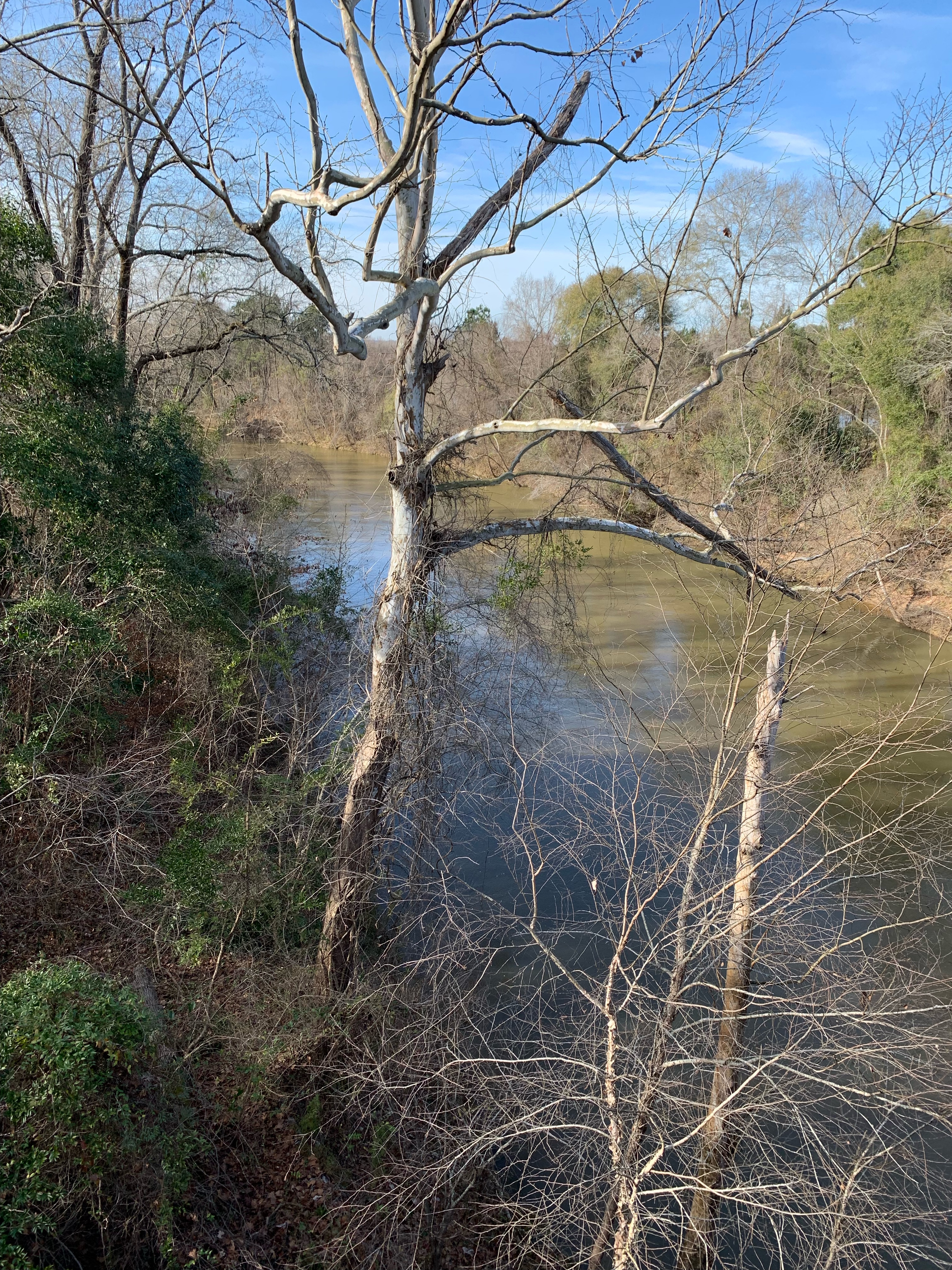
Appreciate the time along the muddy waters, even in winter, when deciduous trees stand naked, their leafy garments shed below them. Sycamores with wraith-like limbs overhang the creeks and cast shadows over the muddy water.

Trail time is good time.

According to Plan

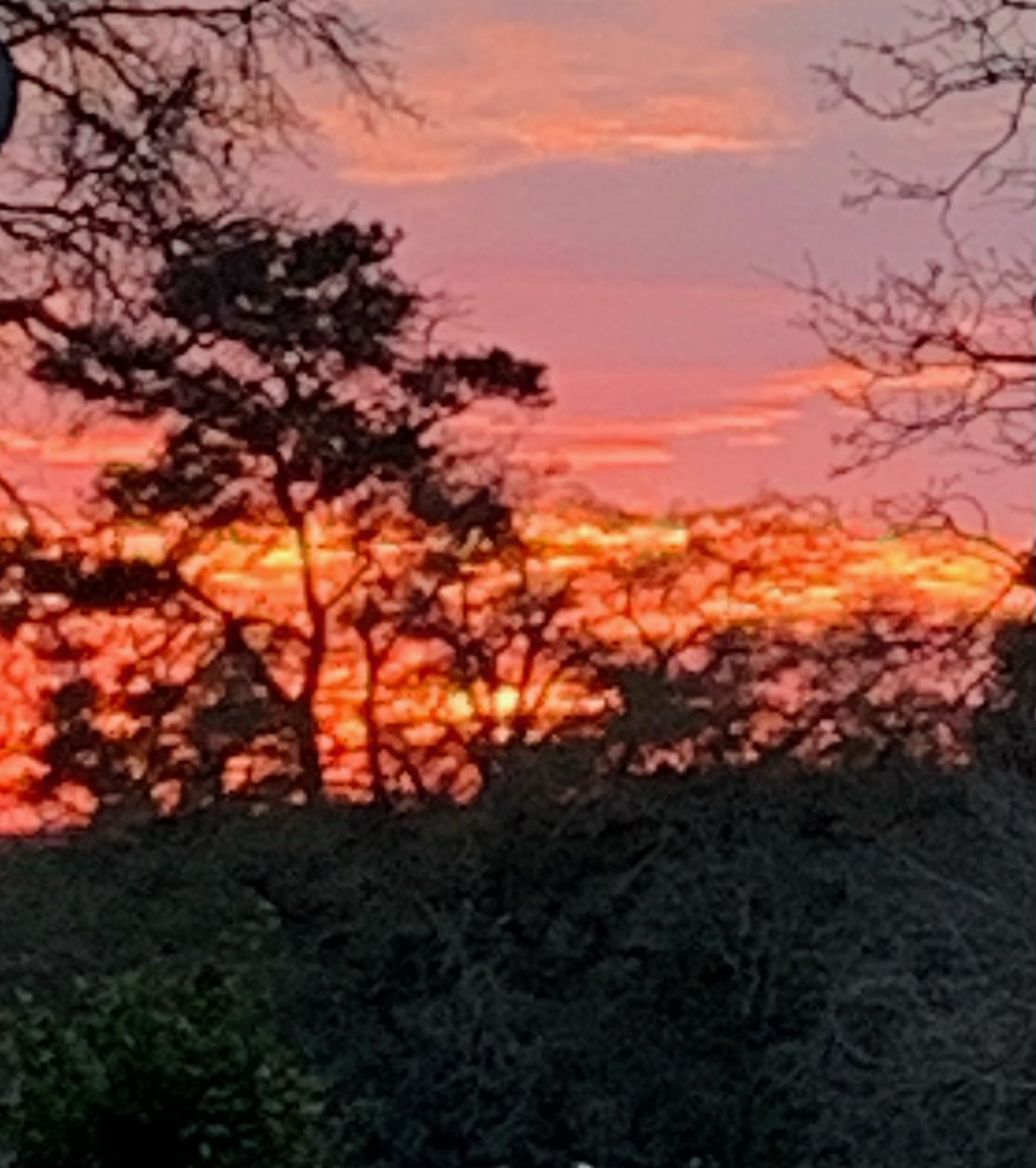
Psalm 113:3 reads, “From the rising of the sun to its setting, the name of the LORD is to be praised!”

The secularist has no such worldview. He has no one to thank, no one to blame, no one who can explain mind, matter, truth, goodness, or beauty.

But the Trinitarian God of Scripture explains it all.

Ordinary? Yes and No.


This evening as I drove through the western gate on post, there remained about 30 minutes of daylight. Today’s skies have been crystal clear and seemingly infinitely blue–so blue that if one has even a smidge of imagination, s/he would imagine taking flight upon wings of fancy.

As I drove across the black rubber speed bumps and scanned my military ID card under the red laser, and the electric arm lifted allowing me to pass, I sort of shook my head at all the surveillance. Just think of it: cameras video you, your vehicle, your license plate; then your ID is scanned; then there’s a traffic light with another camera for more surveillance.

But then things changed.

I turned up my street. The sun was near setting over the western hill. Oaks, which grow abundantly here, stood majestic on the hill I ascended towards my place.

A young man (I’m assuming a dad) was tossing a baseball to a boy (I’m assuming his son). When the dad lobbed the ball to his son, the boy (who appeared to be six or seven-years-old) was completely focused on the ball as it traveled from his dad’s hand. Total concentration. There seemed no possibility that the son or the father would be thinking of anything but each other and the game of pitching the ball to each other.

When the boy threw the ball back to his dad, he’d jump in place in a form of pure adolescent ecstasy: up and down, up and down. His world was here, it seemed to say. Here now, with his dad, pitching the white baseball with red-threaded stitching, with the gold sun over the hill and the smell of a cold night coming on.

And as I pulled into my place, I was thankful to them, though they never saw me as I drove past–relishing, investing, expressing love through the simplest of ways–pitching the baseball on a Sunday evening.

Who knows, but that–one day–that boy may remember this ordinary day as anything but ordinary …

“No one suspects the days to be gods” (Emerson).