Making an Impact?

One of my favorite zingers from the pen of C.S. Lewis is this one: “If you read history you will find that the Christians who did the most for the present world were precisely those who thought most of the next.” Like much that issued from Lewis’ pen, that is profound.

The idea, of course, is that unless you understand your story has ultimate value because it is grounded within the larger God-story unfolding, your particular story is negligible. But because God exists, because He has revealed His story, individual stories therefore have significance, overarching significance as they unfold within history.

I read Michael Reeves’ engaging and brief (less than 200 pages) The Unquenchable Flame: Discovering the Heart of the Reformation this week. I went through a whole Sharpie highlighter in reading this book; it was that packed with lasting impacts.
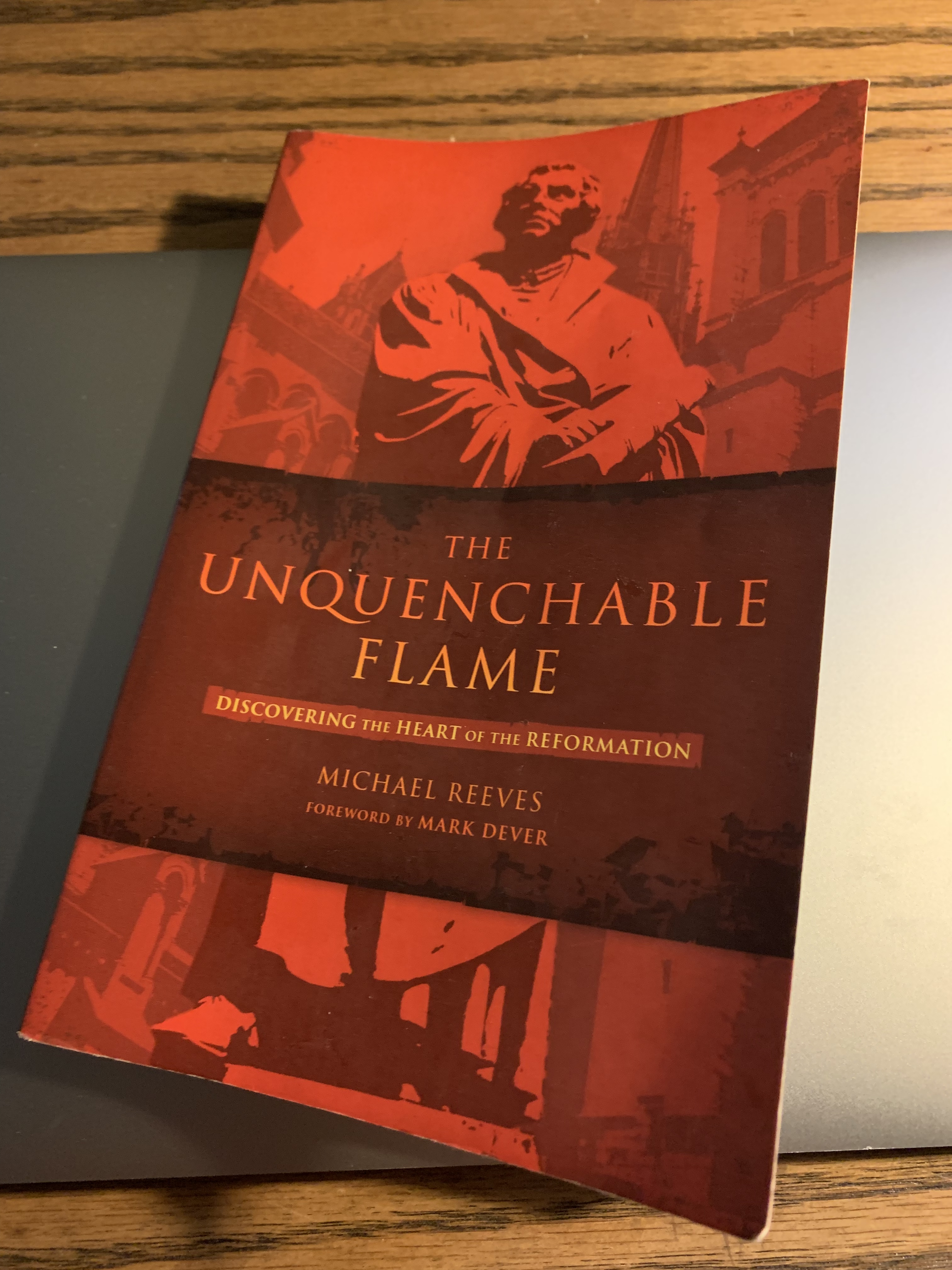
When I read it (holding the Lewis quote in mind), I relearned of men and women whose impact ripples even today, 500 years and more after the Reformation. Their ministries endure because they discovered their stories within the larger cosmic story of what God was doing and aligned themselves with God’s revealed will.

John Wycliffe: I read again of John Wycliffe in England in the 1300s. The Roman Catholic church had descended into utter apostasy. Two popes, Clement VII and Boniface VIII, were elected by populations with divided allegiances. Politics and papistry, corruption and compromise. The seeds of the Protestant Reformation continued to take root.

And God was doing something. He was raising up men like John Wycliffe in England. After Roman Catholicism suffered another humiliation in the Great Schism, Christians knew the corruption could not stand. When two popes were inaugurated in 1378, Wycliffe heralded that it was the Bible, not popes, that was authoritative. The papacy was a human invention shot through with sin (Reeves 2009, 29). God used Wycliffe to encourage the saints. God changed England and Europe through the courage and biblical fidelity of John Wycliffe. Gifted in languages, Wycliffe translated Scripture into the language of the people. And they devoured the Word of God. Literacy in no small way saved England and eventually Europe from Romanism and its myriad idolatries.

Martin Luther: In Wittenberg, Germany the Augustinian monk Martin Luther pored over the Scriptures, submissive to what the Bible taught about justification, about how people could ever be made right with God. Was it through praying to saints? Was it through confessing to a human priest? Was it through indulgences and giving money? Was it through attending a mass wherein the human priest purported to literally change bread and wine into the body and blood of Jesus? Again and again, day in and day out, did Roman Catholic priests have this ability? What was Calvary for if these priests offered Jesus again and again as a sacrifice via the mass? And the superstitions within Roman Catholicism pricked Luther’s conscience. Reeves writes of Roman Catholicism’s spiritual darkness:

. . . the castle church had nine aisles proudly displaying more than 19,000 relics. There you could see a wisp of straw from Christ’s crib, a strand of his beard, a nail from the cross, a piece of bread from the Last Supper, a twig from Moses’ burning bush, a few of Mary’s hairs and some bits of her clothing, as well as innumerable teeth and bones from celebrated saints. Veneration of each piece was worth an indulgence of 100 days (with a bonus one for each aisle), meaning the pious visitor could tot up more than 1,900,000 days off purgatory (Reeves 2009, 40-41).

Reeves writes of Luther:

Here Luther saw for the first time truly good news of a kind and generous God who gives sinners the gift of his own righteousness. The Christian life, then, could not be about the sinner’s struggle to achieve his own, paltry human righteousness; it was about accepting God’s own, perfect divine righteousness. Here now was a God who does not want our goodness but our trust. All the struggles and all the anxiety could be replaced with massive confidence and simple faith, receiving the gift (Reeves 2009, 48).

Thomas Cranmer and Nicholas Ridley: When Bloody Mary was having Protestants murdered during her reign, three of the most impactful martyrs were Thomas Cranmer, Nicholas Ridley, and Hugh Latimer in 1555. When Ridley and Latimer were burned at the stake by Roman Catholic Bloody Mary’s forces, Latimer, “aged about eighty, was the first to die, shouting through the flames: ‘Be of good comfort, Master Ridley, and play the man; we shall this day light such a candle, by God’s grace, in England, as I trust shall never be put out.'” (Reeves 2009, 138).

Encouragement: Lewis’ wisdom is made clear when we reflect upon the courageous, clear, faithful men and women through the ages who discovered their stories within the overarching story of God. They impacted their generations and countless subsequent generations. “If you read history you will find that the Christians who did the most for the present world were precisely those who thought most of the next,” Lewis penned. Lewis has been dead for almost 60 years now and yet he speaks. The Reformers still speak. And may the Lord be pleased to raise up courageous, clear, faithful men and women again to speak to this generation. Be encouraged. Read Reeves’ book. Learn from the past. Remember the Lord. Be of good courage.

Two Options

Context and Options: In Mark 5 of the New Testament, Mark recorded when Jesus performed miracles and also the ways in which people reacted. People’s reactions revealed a lot about their views of Jesus. We either recognize His deity and flee to Him as the Lord incarnate or we hate Him and rejoice in His murder. Below is the episode in Mark:

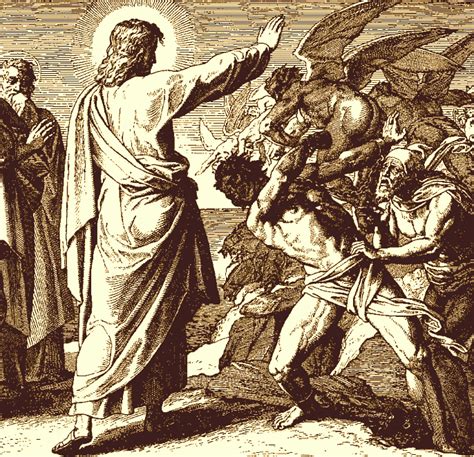
They came to the other side of the sea, to the country of the Gerasenes. And when Jesus had stepped out of the boat, immediately there met him out of the tombs a man with an unclean spirit. He lived among the tombs. And no one could bind him anymore, not even with a chain, for he had often been bound with shackles and chains, but he wrenched the chains apart, and he broke the shackles in pieces. No one had the strength to subdue him. Night and day among the tombs and on the mountains he was always crying out and cutting himself with stones. And when he saw Jesus from afar, he ran and fell down before him. And crying out with a loud voice, he said, “What have you to do with me, Jesus, Son of the Most High God? I adjure you by God, do not torment me.” For he was saying to him, “Come out of the man, you unclean spirit!” And Jesus asked him, “What is your name?” He replied, “My name is Legion, for we are many.” And he begged him earnestly not to send them out of the country. Now a great herd of pigs was feeding there on the hillside, and they begged him, saying, “Send us to the pigs; let us enter them.” So he gave them permission. And the unclean spirits came out and entered the pigs; and the herd, numbering about two thousand, rushed down the steep bank into the sea and drowned in the sea.

The herdsmen fled and told it in the city and in the country. And people came to see what it was that had happened. And they came to Jesus and saw the demon-possessed man, the one who had had the legion, sitting there, clothed and in his right mind, and they were afraid. And those who had seen it described to them what had happened to the demon-possessed man and to the pigs. And they began to beg Jesus to depart from their region. As he was getting into the boat, the man who had been possessed with demons begged him that he might be with him. And he did not permit him but said to him, “Go home to your friends and tell them how much the Lord has done for you, and how he has had mercy on you.” And he went away and began to proclaim in the Decapolis how much Jesus had done for him, and everyone marveled. (Mark 5:1-20)

The Responses of the Demon-possessed Man Who Was Delivered and Born Again: 1) Christ is Lord; 2) Proclaim that truth

  1. “Jesus, Son of the Most High God.” That was the man’s verbal response when he recognized that Jesus was/is God incarnate (Mark 5:7).
  2. Proclaim the truth. The man, after being delivered of demonic possession by Jesus, begged Jesus to let him remain with Him (Mark 5:18): “As he [Jesus] was getting into the boat, the man who had been possessed with demons begged him that he might be with him.” Jesus’ response to the man’s pleading? “And he did not permit him but said to him, “Go home to your friends and tell them how much the Lord has done for you, and how he has had mercy on you” (Mark 5:19).

The Response of Unbelievers:

When the witnesses saw what had happened, what do you think their response was? Human nature was the same then as now:

And those who had seen it described to them what had happened to the demon-possessed man and to the pigs. And they began to beg Jesus to depart from their region. (Mark 5:16-17)

They hated the truth of Christ. That is the nature of unbelief. It is hostile to truth. It is not neutral or apathetic. It is a visceral gut reaction and disgust for God and His power of everything–demons, human machinations, and evil.

Encouragement: The demonstration of God’s grace towards sinners is overwhelming. For those who repent and believe upon Christ, they are delivered, redeemed, and restored. They are humbled. They are filled with a new joy to proclaim the truth that Christ is Lord. Just like the man who was delivered from demonic possession, reborn men and women are changed; they want to share the good news.

And the song remains the same for unbelievers, too. They still hate Christ, hate His works in history, hate the fact that He has come, lived a perfect substitutionary life, died a perfect substitutionary death, been raised bodily, has established the church, and that the true church continues to prevail against the gates of hell. And the fact that He will come again should both spur believers on to proclaim and live the truth, but also remind us that our days are numbered, and that faithfulness is all. Two options, the ways in which we respond to Christ, and two vastly different outcomes. Be of good courage. Christ is Lord.

Aiming at Narnia because of Aslan

I’m reading through Lewis’ The Chronicles of Narnia again. If you have not read the seven books comprising the Chronicles, they hinge upon whether or not the physical is all there is. Four siblings enter through a wardrobe into the “more real” world of Narnia–of satyrs, beavers, foxes, centaurs, and of course the King, Aslan.

And Aslan changes everything. Aslan has the power of life and death, has the power over the grave. Aslan makes all the difference.

Of course there are wicked witches, too, who interrupt Aslan’s design for periods, turning beauty into wintry landscapes and freezing life into deadly stillness. But Aslan changes everything. Why? Because He has the power of life and death, has the power over the grave. Aslan makes all the difference.

In The Lion, the Witch, and the Wardrobe, Susan asks (still trying to get her mind around the majesty of Aslan), “But what does it all mean?” And Aslan’s response?

“It means,” said Aslan, “that though the Witch knew the Deep Magic, there is a magic deeper still which she did not know. Her knowledge goes back only to the dawn of time. But if she could have looked a little further back, into the stillness and the darkness before Time dawned, she would have read there a different incantation. She would have known that where a willing victim who had committed no treachery was killed in a traitor’s stead, the Table would crack and Death itself would start working backwards” (C.S. Lewis, The Chronicles of Narnia, p. 185).

And Lucy’s response? “Oh, you’re real, you’re real! Oh, Aslan!” cried Lucy, and both girls flung themselves upon him and covered him with kisses” (C.S. Lewis, The Chronicles of Narnia, p. 185).

Because Aslan changes everything.

The visible is not all there is. Invisible spiritual forces are at work, too, in London, England; in Madison, Wisconsin; in Dallas, Texas; in Tokyo, Japan; in Los Angeles, California; in your zip code; and in Narnia. Why?

Because Aslan changes everything.

Because Aslan is real, what we do matters.

How we respond to Aslan matters.

Aslan, remember, is on the move.

Slavery is Necessary

Clarification: If you have read past the title, perhaps you will read farther still. No, this has nothing to do with racism, or historical revisionism, or trying to guilt anyone into feeling shame for her skin tone. This is a gut check for people who think they are Christians. And it is for people who are Christians. And it’s for people who are open to Jesus’ teaching about discipleship. And it’s for the pagans who could not care less.  

Context: Matthew records a conversation that Jesus had with the mother of James and John, the sons of Zebedee, in Matthew 20. The context was that of a mother asking Jesus if her sons could have places of prominence in God’s kingdom:

     She said to him, “Say that these two sons of mine are to sit, one at your right hand    

     and one at your left, in your kingdom.” Jesus answered, “You do not know what you

     are asking. Are you able to drink the cup that I am to drink?” (Matthew 20:22)

The disciples, and the mother of James and John, all had a superficial understanding of what it meant to be a Christ-follower. They were concerned about their prominence. They wanted recognition. They longed for the world’s applause. They longed to please men. 

Jesus’ rebuke stung:

     “You know that the rulers of the Gentiles lord it over them, and their great ones

      exercise authority over them. It shall not be so among you. But whoever would be

      great among you must be your servant, and whoever would be first among you

      must be your slave, even as the Son of Man came not to be served but to serve,

      and to give his life as a ransom for many.” (Matthew 20:25-28)

Connections to today: I don’t know anyone who does not like to be commended. We seem designed to crave approval—from parents, friends, peers, supervisors, our spouse (if applicable), etc. But Jesus was teaching His people about what it means to be a doulos (a slave). In our sinfulness, we tend to crave approval from the wrong sources. We tend to try to please men instead of laboring to please the Lord, the One whose approval is most important.

He inverted the humanistic understanding of greatness. The Christian is the one who is over himself. He is crucified with Christ (Galatians 2:20). His life is to be consumed with the redemption wrought by Christ. His ministry is to be Christ-exalting, not self-exalting. 

I think this is particularly difficult in our day when the temptations are to call attention to ourselves. Follow me; see pictures of me; let me show you my spiritual resume, etc. Even the disciples had to learn why slavery is necessary. Why? Because Jesus is Lord, not me. Because Jesus is the Savior, not me. Because Jesus accomplished redemption for His people, not me. Jesus is the hinge of history, not me. 

Even Jesus, the God-Man came “not to be served but to serve” (Mt 20:28a). Jesus rebuked those He loved, telling them, “It shall not be so among you.” Want to be first? Be a slave. It’s not an option for the believer. To be great in the Christian life is to be small in this life. Want to be exalted in the kingdom of God? Serve faithfully and humbly now. Christian slaves are to be like their Master. Ultimately—in the end—we will reap if we do not give up (Gal 6:9).

Jesus’ clarity of expression was unparalleled. “The greatest among you shall be your servant. Whoever exalts himself will be humbled, and whoever humbles himself will be exalted” (Mt 23:11-12).

The Accused, the Accuser, & the Faithful High Priest

Setting: Heaven as seen in a vision by the Old Testament prophet Zechariah (see chapter 3). Joshua is a high priest. As a high priest, he represents particular people. But the high priest has filthy garments: “Now Joshua was standing before the angel, clothed with filthy garments” (Zechariah 3:3).

Author: Zechariah, prophet and priest in the 520s B.C.

Characters:

  1. Joshua: the high priest who needs forgiveness for his own sin as well as forgiveness for all those he represents
  2. Satan: the accuser
  3. The angel of the LORD
  4. God

The Accusations:

Joshua is filthy. His “robes” are rags of unrighteousness. He is helpless before God. He cannot atone for his own sins, much less the sins of others. Sullied. Unable. Disqualified. Satan is pictured in the vision as the accuser: “Then he [God] showed me [Zechariah] Joshua the high priest standing before the angel of the LORD, and Satan standing at his right hand to accuse him” (Zechariah 3:1).

The Heart of the Problem:

How can a sinner, even a human high priest like Joshua, who is himself a sinner, obtain forgiveness for his sin? How can those he represents obtain forgiveness? How can we in filthy rags obtain robes of righteousness? How can the dirty become clean? How can the diseased be healed? How can guilt be atoned for?

The Answer:

“And the LORD said to Satan, “The LORD rebuke you, O Satan! The LORD who has chosen Jerusalem rebuke you! Is not this a brand plucked from the fire?” Now Joshua was standing before the angel, clothed with filthy garments. And the angel said to those who were standing before him, “Remove the filthy garments from him.” And to him he said, “Behold, I have taken your iniquity away from you, and I will clothe you with pure vestments.” And I said, “Let them put a clean turban on his head.” So they put a clean turban on his head and clothed him with garments. And the angel of the LORD was standing by.” (Zechariah 3:1-5)

And then in verse 8, God promises–once again–His gospel: “behold, I will bring my servant the Branch.” The Branch of David is Jesus, the Christ. He is the only sufficient faithful high priest. God does through Himself in the gospel what human intercessors could never do–atone for sin.

To Whom All the Promises Point:

When Jesus was delivered up to be crucified, even wicked Pilate acknowledged Jesus’s sinlessness: “Take him [Jesus] yourselves and crucify him, for I find no guilt in him” (John 19:6).

Paul makes crystal clear in Colossians 2 that it is Jesus’s work alone that is able to redeem sinners. Only Christ’s robes of righteousness are clean and those He clothes:

“And you, who were dead in trespasses and the uncircumcision of your flesh, God made alive together with him, having forgiven us all our trespasses, by canceling the record of debt that stood against us with its legal demands. This he set aside, nailing it to the cross. He disarmed the rulers and authorities and put them to open shame, by triumphing over them” (Colossians 2:13-15).

And then the crescendo of Christ’s perfect work from the letter of Hebrews:

“For it was indeed fitting that we should have such a high priest, holy, innocent, unstained, separated from sinners, and exalted above the heavens. He has no need, like those high priests, to offer sacrifices daily, first for his own sins and then for those of the people, since he did this once for all when he offered up himself. For the law appoints men in their weakness as high priests, but the word of the oath, which came later than the law, appoints a Son who has been made perfect forever.” (Hebrews 7:26-28)

Encouragement for Christians & a Call to the Lost:

For those clothed in the robes of Christ, you are (by definition) in Christ. That means Satan’s accusations are vanquished. Why? Because you have been clothed with the righteousness of Jesus. Jesus is your faithful high priest.

But for those who remain in their own garments, you remain rightly accused and justly condemned. No efforts you make to be your own high priest, or any other effort/idol, will do anything but ensure your condemnation.

The gospel in Christianity is unique among all worldviews, dear reader: It demonstrates that God has done what we neither would nor could do–namely, atone for our sin: “For God has done what the law, weakened by the flesh, could not do. By sending his own Son in the likeness of sinful flesh and for sin, he condemned sin in the flesh, in order that the righteous requirement of the law might be fulfilled in us, who walk not according to the flesh but according to the Spirit” (Romans 8:3).

Learning from Failure …

I love southern literary fiction. Ann Patchett’s novels, somewhat new to me, satisfy as fully as some of my enduring favorites. I just completed reading Taft this week. It’s the story of Levon Taft, a father who has failed to raise perfect children.

He works himself to a frazzle; he provides to the best of his abilities. But his children, Carl and Fay, stray. Carl falls into drugs and dissolves into tragedy after tragedy. Fay flees to Memphis from the hills of east TN. She goes to work in a bar. She is veiled, evasive, and filled with appetites for a world she is too naive to understand as seventeen-year-old and, near the end of the narrative, an eighteen-year-old girl.

Then there’s the first-person narrator of the novel, John Nickel, the bar manager and former drummer, whose wife (Marion) left him, and took their son, Franklin. John, too, like Levon Taft, is a failed father. But John Nickel, in his way too, works hard–real hard–to provide, to sweep up the shards of his life, as well as the lives of others intersecting with his life.

Patchett’s Taft is a book about wounded men doing the best they can with what they have. They hold a lot of pain in, and they often make poor choices, but they–in the end–love. Is their love salvific? No. But is it still in some way redemptive? Yes, in a sense within the arch of the storyline.

This is a well-written, tender love story about men and dads who have blown it but persevere, aiming to sweep up the glass from a shattered world.

They love like tough, wounded warriors who are trying to be better than they are.

Soul Food in September

Moisture hung on the leaves, in the air, inside the mushroom caps. The creek ran swiftly in the valley. Its sounds came to me in the heavy air. The granite stones, topped with green moss, were slippery beneath the soles of my hiking boots. I laid the Ann Patchett novel down I was reading. Inhaled. Tasted the air. Drank the smells of recent rains with more to come. All was still except the sounds of waters running in the valley. I picked up the novel again, zipped it up in my ruck, grasped my hiking poles. Took my bearings. Continued to feast.

Soul food in September. My cup overflows.

Any Daniels Left?

Why Daniel matters: Readers with some familiarity with history and biblical heroes may have heard of Daniel. The titular book in Scripture bearing his name was written in the 600s–500s B.C. It records events from Daniel’s life and also events yet to come. The main theme of Daniel is the sovereignty of God.

I have never been one particularly interested in things to come, as a subset of theology. I prefer history. I prefer what has been revealed. When a seminary student, there was invariably the group of anxious theologians whose passions revolved around timelines and predictions and prophetic passages in Scripture about things to come.

I love reading Scripture, to be sure, but the least interesting parts to me involve prophecy. Prophetic passages are certainly important to God because He put them in Scripture. However, I find that some folks focus on eschatology and prophecy and “reading the tea leaves” camps of theology, and they neglect historical realities. Sometimes they become animated at seeing signs everywhere. “This means this, don’t you see?” they imply. Um, okay. You go ahead with your interpreting signs everywhere. I’ll stick with the past and what I can learn from history and what has been revealed (Deut 29:29).

Daniel, though the second part is largely concerned with future events, is about God’s rule, about God’s sovereignty. Despite wicked rulers, despite human folly, despite rampant sin, God is sovereign. And part of God’s sovereignty includes times of testing, times of suffering, times of raising up wicked leaders so that a genuine believer–but more importantly, the Lord Himself, is made manifest.

Suffering is required to teach the willingly obtuse. Why? Because the instruction of fools is folly (Pr 16:22b). Some folks just won’t listen or learn until it’s too late. They are what God repeatedly calls in Scripture, fools. Daniel, however, was most certainly not a fool. Sometimes I picture a scene from one of my favorite movies, The Shawshank Redemption, where Andy Dufresne responds to the pagan, wicked Warden Norton with a caustic question, “How can you be so obtuse? Is it deliberate?”

Daniel is only 12 chapters long. You can read through it in less than an hour. I have spent a good bit of time in Daniel. Partly it is because Scripture speaks to all of life. We are living in a time when government officials are mandating free American citizens to submit to injections. So much for feminists’ call of “My body, my choice.” Abort boys and girls? Fine. Just don’t refuse the jab ostensibly for the Chinese coronavirus with a 99% survival rate for those who don’t have compromised systems. And we all know of people who’ve taken the jabs and still gotten sick and/or died. But the letters of the Greek alphabet continue to be rolled out by the friendly government–delta, lambda, etc. Fear not, your government and big pharma tell you, just a few more boosters. Then you’ll be good to go.

Now some government officials pronounce, as if they were not elected employees, “You will comply.” This is one reason the book of Daniel is relevant for us today. This is one more reason I appreciate knowing history. Daniel, you see, was a prisoner of a foreign occupying force. First he was captive under the Babylonians and Nebuchadnezzar. Then he was captive under the Medo-Persians under Cyrus. He was an exile. He was educated in the language and arts and culture of pagan systems (Dan 1:5). He was given wisdom by God Himself (Dan 1:17). He had a heart for wisdom (Dan 1:20), a heart for God (Dan 1:8). He lived in a time when the human governing authorities in his life were pagan, wicked rulers.

Connections to today: When the wicked ruler in Daniel’s day told him that the sorcerers and fake prophets could not interpret his (Nebuchadnezzar’s) troubling dream (a not uncommon experience when trusting in lies and peddlers of lies), Daniel prayed to the sovereign Lord, not to government. Daniel’s prayer is one of the most beautiful prayers in the Bible:

“Blessed be the name of God forever and ever, to whom belong wisdom and might. He changes times and seasons; he removes kings and sets up kings; he gives wisdom to the wise and knowledge to those who have understanding; he reveals deep and hidden things; he knows what is in the darkness, and the light dwells with him. To you, O God of my fathers, I give thanks and praise, for you have given me wisdom and might, and have now made known to me what we asked of you, for you have made known to us the king’s matter.” (Dan 2:20-23)

The pagan ruler Nebuchadnezzar acted as if he (Nebuchadnezzar) was God. He was not. Daniel interpreted Nebuchadnezzar’s dream accurately. Nebuchadnezzar’s response? “Truly, your [Daniel’s] God is God of gods and Lord of kings, and a revealer of mysteries . . .” (Dan 2:47).

Then Nebuchadnezzar had a second dream that he longed to be interpreted and understood correctly. Once again, Daniel was the truth-teller to the pagan governing authority. And Nebuchadnezzar’s response?

“At the end of days I, Nebuchadnezzar, lifted my eyes to heaven, and my reason returned to me, and I blessed the Most High, and praised and honored him who lives forever, for his dominion is an everlasting dominion, and his kingdom endures from generation to generation; all the inhabitants of the earth are accounted as nothing, and he does according to his will among the host of heaven and among the inhabitants of the earth; and none can stay his hand or say to him, “What have you done?” (Dan 4:34-35)

Encouragement: Daniel’s ministry was not self-centered; it was God-centered; it was truth-centered. Do we have any Daniels left? I think so. There are truth-tellers about … even still. Though we are living in a time of cultural upheaval when evil is called good and good is called evil, when darkness is put for light and light for darkness, be assured, God remains sovereign. There is a time for every matter under heaven. And the Judge of all the earth will do what is just. The questions before the world remain. Will we call for Sauls of the world when the Lord has rejected them? Will we instead heed the truth-tellers? Will we acknowledge the fountain of truth and only hope of redemption? Do we have any Daniels left?

Remembering: Fallenness, Redemption, & Reconciliation

Remembering Fallenness: Many people remember JFK’s assassination somewhat like many of my generation probably remember the  September 11, 2001 attacks—with shock, incredulity, and disbelief. I was in Savannah, GA. Suddenly the secretary, who kept a tiny TV on but muted behind her desk, shouted, “O, my God!” I rose from my chair in the office and walked briskly out to her desk. “What is it?” I asked. 

      She was staring at the TV. Over and over the commentators appeared to grasp for appropriate words. Donna and I stared at the TV screen. We watched the images of the planes crashing into the towers. We watched the president halt all air travel. The skies suddenly became ominous. I literally looked up at the ceiling in our office, as if I could gaze through the roof into the skies outside. I know it sounds silly, but my thoughts were not rational for a few moments. Visceral fear entered. My thoughts raced regarding those I loved. Where were they? Would our phones work? Where was safe? Were we at war? Was this the end of something? Was it the beginning of something? Who was behind this? What now? The questions multiplied. 

     The days that followed were fraught with emotion, with bloviating, with courage, with resolve, with love of neighbor, with hatred, with patriotism, with xenophobia, with sacrifice, with bravado, with truth, with lies. 

     Some pontificated this was God’s judgment on America for her iniquity. Then the predictable responses came: “How dare one say that? Don’t you know America is a city on a hill, a light to the nations?” (For the sake of transparency and clarity, I am an American patriot to my core, but America is assuredly not the gospel. 

Receiving Redemption: The gospel is about who God is, what He has done in the person and work of Christ the Son, how we sinners who repent and believe upon Christ’s work are reconciled to holy God. Our sin is imputed to Christ; His righteousness is imputed to us. This is done by grace alone through faith alone in Christ alone. It is not sinners meriting righteousness. We are not infused with righteousness. We are clothed in the righteous robes of Christ when we flee to Him in repentance and faith, knowing that we are otherwise justly condemned. But God has done what we never would or could do—reconciled particular sinners through the redemption accomplished and applied by the triune God of Scripture. 

     2 Corinthians 5:21 puts in plainly: “For our sake he [God the Father] made him [Jesus the Son] to be sin who knew no sin, so that in him [Jesus the Son] we might become the righteousness of God.” 

Rejoicing in Reconciliation: As I tried to sleep tonight, I could not. I don’t know if it’s all the years in the Army and sleeplessness that seems to come with that, or if it’s the fact that September 11th has been on my mind for days, or whether it’s just the thunderstorm raging outside currently. Regardless, here I sit … writing in the wee hours of the morning. 

     I see the country’s fallenness like a banner on the news on my computer screen: Americans left to be martyred in Afghanistan; law enforcement officers being fired for not taking mandatory jabs; colleges students being paid to take the jab (what does it say that you have to bribe someone with cash to allow you to put something in his/her body?); Fauci’s latest contradictions; threats of Islamic attacks on this anniversary of September 11th; open borders with flu (coronavirus-infected) illegals pouring into Texas and being bussed to Wisconsin, North Carolina, and Georgia. The list goes on. Fallenness is manifested with each article I read. 

     But God’s reconciliation is still to be offered. We are to endure. We are to be an enduring people, especially in the midst of the fallenness. Now is not the time to shrink, to retreat, to quit. No. Trust the Lord. Press into Him and His Word. Remember that the Lord is sovereign and His will cannot be defeated: “Ah, Lord God! It is you who have made the heavens and the earth by your great power and by your outstretched arm! Nothing is too hard for you” (Jeremiah 32:17). 

     Why does that not amaze us anymore? It should, folks. God’s sovereignty is the believer’s comfort. If God is not sovereign, then your lot is worse than you can possibly imagine. The universe would be an unpiloted chaos–no design, no Designer, and no foundation. But God is sovereign and His grace towards us sinners is amazing. Grace is amazing. Why? Because we don’t deserve any. We deserve judgment. 

     God calls reconciled sinners to have what the Bible calls a “ministry of reconciliation” (2 Corinthians 5:18-19). He then calls believers “ambassadors for Christ” (v. 20). And He calls us to the mission field. To do what? To hold fast the word of life (Philippians 2:16). To appeal to fellow sinners to be reconciled to God through the person and work of Christ (2 Corinthians 5:20). 

     Remembering tonight that we are a fallen race, yes, that is certain. But the gospel is also certain. It is certain that God is redeeming a people for Himself, reconciling sinners to Himself through the person and work of Christ; that the triune God of Scripture is calling people out from darkness into light, and that they will rejoice in the midst so that many may see and say that the Lord is good.