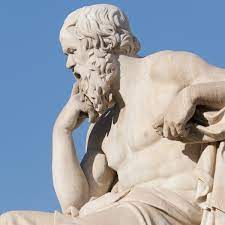
Is this an age of wisdom? Is this an age of creativity in art and culture? Is this a generation characterized by those whose wisdom rivals that of Milton, Shakespeare, Dante, or Sophocles? We surely have certain geniuses scattered in the highways and hedges who are honing their crafts. Maybe I will live long enough to see a great American novel to rival Moby Dick or The Road. Maybe.
What I find more prevalent, however, is that this is an age of crassness, of imbecility, of shallowness that exposes an emptiness of soul. There is a vulgarity in today’s world that saps the soul of sublimity. Art museums have been replaced by video games, if you will. We have lost a sense of appreciation for the beautiful, sublime, and wise. Kitsch over depth.
In part of Scripture’s “wisdom literature,” Proverbs explores the theme of wisdom vs. folly. Listen to how clearly Solomon sets the stage for the thirty-one chapters of proverbial wisdom: “The fear of the LORD is the beginning of knowledge; fools despise wisdom and instruction” (Proverbs 1:7 ESV).
Notice what’s happening here. The first part of the verse posits the very genesis of knowledge/wisdom: the fear of the Lord. The wise person is one who fears God. And the second part of the verse restates the same truth by way of contrast. Since the wise person is the one who fears the God of Scripture, what is the other type of person? What is he like? Solomon writes of that type of person by penning, “fools despise wisdom and instruction.” That’s the nature of fools. They don’t fear God. They scoff at wisdom. They mock the idea that they should be instructed. They are puffed up, impetuous, and unteachable.
The controlling principle for wisdom is submission to the revealed will of God in Scripture. Stated another way by Christ Himself, we know a tree by its fruit. When Jesus was teaching in Luke’s account, He said, “For no good tree bears bad fruit, nor again does a bad tree bear good fruit, for each tree is known by its own fruit” (Luke 6:43-44 ESV) and in the very next sentence He says, “ . . . for out of the abundance of the heart the mouth speaks” (Luke 6:45 ESV).
Our words ought to reveal wisdom and maturity. May we be those who speak wise words, words grounded in the wisdom of the revealed words of God (Scripture). May we pray to the Lord—the fount of wisdom—to raise up mature, wise men and women in this age diminished by the puerile.
Illustration: When I was in college and graduate school for English, one of my favorite professors was a Shakespeare scholar. He taught classes on the Bard’s plays—the histories, the comedies, and tragedies. He taught classes on the sonnets. He taught overview courses of Elizabethan drama, of Renaissance literature, of the history of England as she fought through power plays between Roman Catholicism and Protestantism. I took all the classes I could from said professor. He was gifted in teaching how history is often best understood by way of literature.
I have read a lot of books of ancient history, but when you read Shakespeare’s Julius Caesar, for example, history comes alive. In the play, you get a sense of the personalities of Caesar, of Brutus, of Cassius, etc. Evil is not just a theological term there; you can smell its sweat and feel its breath on your neck. Hamlet (in the titular play) originally thought Elsinore was all above board; he discovered the reality that the kingdom was shot through with evil. His father had been murdered by Claudius, Hamlet’s uncle, who was having an affair with Hamlet’s mother. Caesar thought he was surrounded by friends, but he was literally stabbed by his “friend” Brutus. Even non-readers would surely know the line, “Et tu, Brute?” Appearance vs. reality.
Connections: If you are like I am, you are well past the weary stage regarding prevarications. We have been subjected to “fifteen days to flatten the curve” to going on almost two years now. My spidey sense tells me some camps are jockeying for more lockdowns. Excited yet? We have heard we should wear masks, but then see videos of politicians and Hollywood entertainers at a former president’s palace on Martha’s Vineyard where (Presto!) masks are unnecessary. They dance the night away. Masks? Bah humbug! No need for “social distancing” there.
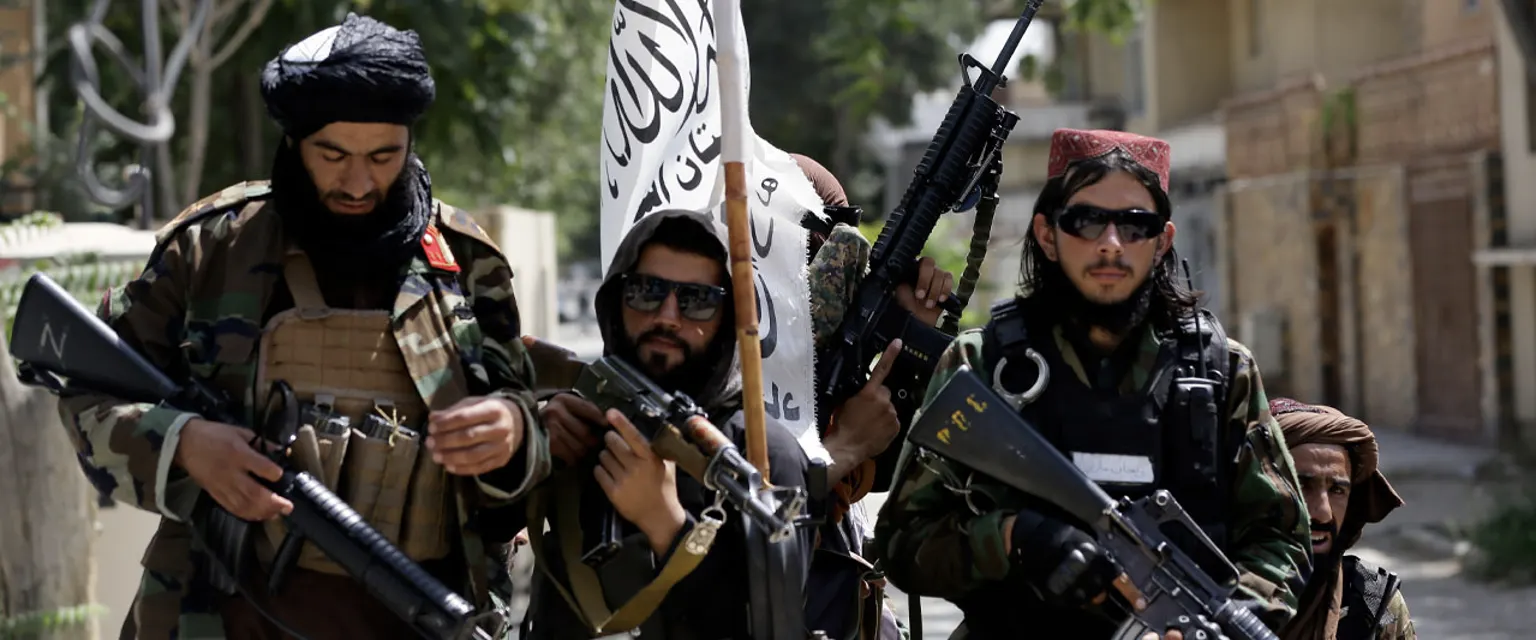
You hear that the Taliban in Kabul are not preventing folks from fleeing Taliban terror but then you see with your own eyes images of civilians clinging to the landing gear as planes depart a nation that has once again descended into hell on earth. Appearance vs. reality—over and over again. You are told one thing but the reality is something quite different.
Scripture: In Psalm 55, David illustrates it this way via literary parallelism: “His speech was smooth as butter, yet war was in his heart; his words were softer than oil, yet they were drawn swords” (Psalm 55:21 ESV). The false person’s speech was as smooth as butter. That was the appearance of things. But “war was in his heart.” That was the reality. Then you get a restatement of the same truth in the parallel image. The false person’s words were softer than oil. That’s pretty soft, isn’t it? Slick, smooth, rhetorically polished even. And yet … those smooth words concealed the reality that they were actually drawn swords. Appearance vs. reality.
Encouragement: It’s a theme as old as man: appearance vs. reality. In what can you trust? What source is reliable? Is truth to be found? O yes, thank God. Listen to Scripture’s encouragement: “Let God be true though every one were a liar . . .” (Romans 3:4 ESV). Remember John 3, after Jesus taught Nicodemus that God was and is the sovereign One, that man’s heart is known by God. Listen to the words near the end of John 3 and take encouragement, especially if you are well past weary of the mendacity, of the prevarications, of the distortions, lies, and all appearances that try to deny reality.
In writing of Christ, the apostle John says, “He who comes from above is above all, He who is of the earth belongs to the earth and speaks in an earthly way. He who comes from heaven is above all. He bears witness to what he has seen and heard, yet no one receives his testimony. Whoever receives his testimony sets his seal to this, that God is true” (John 3:31-34 ESV). With Christ, there is no distinction between appearance and reality. He was and is truth. His words are true. He cannot lie because then He would no longer be holy. Why would we not want that?
When I was seventeen and a college freshman, I read Defoe’s Robinson Crusoe. It is often cited as the first English novel. It packs a lot boys and arguably many men gravitate to imaginatively–(sea) adventures, voyages, tests of one’s mettle, shipwrecks, miraculous survival, Providence, isolation, savages, exotic islands, dangers from hurricanes, floods, madness, survival, improvisation, primitivism, ingenuity, gratitude vs. ingratitude, beasts, kindnesses repaid, friendship (the unforgettable character Friday), love, sacrifice, and more. Not bad for one book, right?
I packed my little paperback copy in my ruck on the way up to the ridge during a recent hike. It was nestled in there between hammocks and some bottles of red Gatorade. I had only a few pages left but I wanted to read them from what I felt to be a proper place–a place where I could take more in visually. It was a sunny day, so I knew I would be able to see a great distance once I got to the top.
During the ascent, I paused to take sips of my Gatorade. I felt something staring at me. You know the feeling. I was hiking a spur up to the ridge. Down to my right ran the creek. There was a tunnel of view in the rhododendron and laurel. I could hear the creek running, the water splashing on the rocks. I peered down through the tunnel, and I saw what first saw me. A doe was lying down beside the running waters. Her black nose was up in the air. I assume she was smelling me, as I was already sweaty from my climb. I reached into my right pocket to retrieve my phone in an effort to capture the moment. But when I set my hiking poles down to reach into my pocket, she popped up and scampered down the hill, from the direction I had come. How does one capture such moments? Why do they seem so important to me? Why do I feel the need to share them? I don’t know that I can answer my own questions. But there is something about the hike, something about the smell of mountain laurel and rhododendron thickets, and the sound of water rolling over the rocks, and of the way a deer sizes you up long before you see her, that moves me. It is soul food. I am of northern European stock, but I have the soul of a Native American in many ways. I like living close to the earth. Give me small town life. Buckhead has its perks but it’s far from my soul.
My climb continued. I intentionally was hiking the steepest way up, just to test myself. Occasionally, however, I would hit a relatively flat area. Variegated mushrooms dotted the forest floor. Kaleidoscopes of fungal color everywhere. I took more pictures. Why? In order to remember, I think. Danger lurks when we downgrade beauty; the soul atrophies.
I continued. An hour or so later, I was at the top. I could feel the winds now. Birds did figure eights in the skies, their eyes dialed on prey hundreds of feet below. I strung up my hammock, unlaced my hiking boots, sipped more red Gatorade, and opened Crusoe again. And I am grateful. Crusoe learned gratitude throughout his adventures in the novel. He learned to thank God for His mercies, for provisions in the forms of beauty, Scripture, the incarnation of God, friendship, and even suffering. Obviously there are millions of people who prefer concrete jungles of downtowns. But I cannot feed my soul there. Some will understand. Indeed I am grateful for days like this on the ridge with Crusoe.
It was about 10 p.m. I was so upset at what I was seeing stream across my computer screen I could not explain it to myself. I turned away, hoping to shut off the images. I texted a Marine friend of mine with whom I deployed to Iraq a few years ago. I told him, “We are all Marines tonight, brother.” He, in his eternally optimistic way, wrote me right back. “Our brothers never died in vain over there [Afghanistan], and the mainstream media doesn’t get to change that for their sound-bites.” We texted back and forth, trying to make sense of it all, trying to encourage one another, longing to return to Afghanistan.
It was not from vainglory or because we are different from thousands of other service members for wanting to go back. No, it’s because of the brothers on the left and right side of us, those who remain in the core of who we are.
And yet the appearance from all the video footage is of terror on every side. Ten Marines, two Soldiers, and one Navy corpsman are listed among the dead. At least 169 Afghanis were killed. Hundreds are maimed, blinded, and crippled for life.
The White House briefers are predicting more bloodshed in Kabul, Afghanistan and abroad. A Marine commander has been relieved for questioning on social media the wisdom of the plan of egress from Afghanistan. The Marine named names in his questioning of what is playing out on the world stage. The current Secretary of Defense Lloyd Austin, along with others of Mr. Biden’s counselors, and General Mark Milley, current Chairman of the Joint Chiefs of Staff under Mr. Biden, were all named by the 17-year Marine officer. Said Marine officer has been removed.
I have not seen times quite like this in my years. When I was a kid, I fell in love with novels and memoirs and other books and films of the Vietnam War. I was a child during Vietnam, and so all I know of it is via history. I still have my tattered copies of The Things They Carried and Going After Cacciato and We Were Soldiers Once and Young. I have shelves of accounts by Soldiers and Marines in southeast Asia. The list could go on. What I see in those books is a glimpse into times of cultural upheaval, of folly on a grand scale, of often senseless death and violence, of sinister purposes by powerful coteries. Terror on every side, as Jeremiah says in his book.
And as I try to process what I am seeing unfold, as I try to understand how and why we are committing cultural suicide by a thousand cuts, of how many seem more convinced that a paper mask they hang on their car mirror and stuff in their pocket and then put back on their face is somehow going to save civilization, and how supposedly vaccinated people continue to die ostensibly from the coronavirus, but we are to trust the government that big pharma has a ready supply of “boosters” and second and third and fourth doses that will be just the cure. Just a few more shots, folks.
I stayed up most of the night, worrying, grieving over my nation, trying to pray and articulate what I was feeling, but the words would not come. I was just … spent. Emotionally wrung out. I see a culture that is fracturing. I see a culture being indoctrinated with wokeness–where we are told to evaluate people based upon skin color, sexual behavior, and their perceived senses of entitlement. Don’t hire based on merit; hire based on gender and sexuality and grievances. Identity politics. Division. Class warfare. Alphabets for new groups. What? Is that what it has come to?
O folks, may it not be so. Let us sober up. Let us learn our history rather than tear it down statue by statue, burn it up block by block, rewrite it via propaganda and grievance studies. Lord, have mercy. We have lost our way. May You relent from what we deserve and humble us and mature us before it is too late.
Question: Do you have someone you look up to for his/her courage? I have several people in my life that inspire me in terms of courage. I had a fellow officer on a deployment to Afghanistan some time back that remains one of those men. When pressured to go along with some unwise practices, he kept to the high road; he did not acquiesce; he upheld his oath. What abides with me most about him, however, even more than our oath as officers, is the way he maintained his honor. He spoke the truth and did so at significant personal costs. He was maligned at the time by some peers for his principled stand, and yet he endured. I saw him again recently after many months. We caught up. And my respect for him increased even more. He continues to keep to the high road. Compromising on matters of honor and integrity is not in his wheelhouse. And I am grateful to him and for him for that. I saw a man whose honorable works matched his honorable words.
Scripture: In the wisdom literature of the Old Testament, especially in the book of Proverbs, the literary device is of a wise father teaching his son. In Proverbs 24, the father says,
If you faint in the day of adversity, your strength is small. Rescue those who are being taken away to death; hold back those who are stumbling to the slaughter. If you say, “Behold, we did not know this,” does not he who weighs the heart perceive it? Does not he who keeps watch over your soul know it, and will he not repay man according to his work? (Proverbs 24:10-12, ESV)
So many lessons are here:
Adversity comes, so be steadfast. Don’t “faint” amidst the trials.
Guard those in your keep.
Remember that God sees all. Our motives are known to God almighty.
Holy God will mete out justice.
Our works demonstrate our character. As the half-brother of our Lord Jesus said, “ … faith apart from works is dead” (James 2:26b). People demonstrate their faith through their works. And God repays justly.
Connections: When we survey the current climate, we see the results of various ideas/faiths/worldviews. We see the works. This week I read the news online and was met with the following:
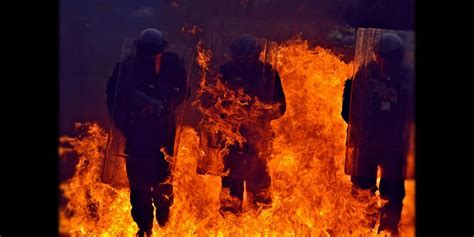
‘Hands-off’ strategy in Portland, Oregon regarding ANTIFA despite destruction
Disgraced Cuomo commutes sentences of convicted murderers in New York
Kabul, Afghanistan airport terror threats ‘very real’
American woman stranded in Kabul, beaten by Taliban
The list goes on and on. These are the works of our hands. Does God not see? Do you think God won’t repay/is not repaying? So, where are the adults? Where is courage? Where is clarity? Where is conviction? “Does not he who keeps watch over your soul know it, and will he not repay man according to his work?” What do these works say? Do they say that we’ve a mature mind, honorable leaders, and self-disciplined citizens? Or do the works demonstrate the follies of abandoning God and subsequently being abandoned by God?
Encouragement: The good news remains where it has always been, however—in the gospel. When the prophet Jeremiah spent his years of telling the truth to Israel and Judah in 600s-580s B.C., and when his nation was being judged by Assyria and then Babylon, and when he saw Jerusalem destroyed by Nebuchadnezzar and the temple desecrated, he continued to herald the good news for all with ears to hear:
But this I call to mind, and therefore I have hope: The steadfast love of the LORD never ceases; his mercies never come to an end; they are new every morning; great is your faithfulness. “The LORD is my portion,” says my soul, “therefore I will hope in him.” (Lamentations 3:22-24, ESV)
That is good news for all who are in Christ, to all who are grafted into the true vine. Listen to the words of Christ Himself who laid it out plainly:
Abide in me, and I in you. As the branch cannot bear fruit by itself, unless it abides in the vine, neither can you, unless you abide in me. I am the vine; you are the branches. Whoever abides in me and I in him, he it is that bears much fruit, for apart from me you can do nothing. If anyone does not abide in me he is thrown away like a branch and withers; and the branches are gathered, thrown into the fire, and burned. (John 15:4-6, ESV)
One of great benefits of truth is that it does not change. It is steadfast, sure, unchangeable. The God of truth does not change. And He calls out through His gospel to those whose works only reveal their own lostness and folly. He said it through Jeremiah; He said it through Solomon; He said it through Jesus’ incarnation; He said it through the resurrection of Christ from the tomb: God will repay according to our works if we refuse Him. But for all who will repent and believe upon the One whom He has sent, the Lord Jesus, God in the flesh, we receive the benefits of Jesus’s works instead of our own. In short, redemption purchased and applied to us who flee to God in the gospel of Christ. There alone, we sinners who are in Christ are reconciled … and it’s all according to His work, not ours. And for that the praises of all the redeemed will utter, “Amen! Blessing and glory and wisdom and thanksgiving and honor and power and might be to our God forever and ever! Amen.”
Here are four literal or essentially literal English translations of Proverbs 29:18 from the Hebrew text:
KJV: “Where there is no vision, the people perish; but he that keepeth the law, happy is he” (Pr 29:18).
NASB: “Where there is no vision, the people are unrestrained, But happy is one who keeps the law” (Pr 29:18).
ESV: “Where there is no prophetic vision the people cast off restraint, but blessed is he who keeps the law” (Pr 29:18).
NKJV: “Where there is no revelation the people cast off restraint; But happy is he who keeps the law” (Pr 29:18).
Proverbs is part of the wisdom literature in Scripture. The book bearing the name of Proverbs is just that–31 chapters of wisdom for daily living about folly vs. wisdom; man’s way vs. God’s way; perishing vs. life; reprobation vs. blessing; chaos vs. Christ.
Proverbs 29:18 speaks about what happens when there is a rejection of wisdom. People perish. They cast off restraint. They regress. The descend into mobs.
Often when I counsel people who are in dire straits, I ask them them about their core beliefs, about where wisdom comes from. Most cannot articulate a clear and coherent answer. Their answers are often messy and jumbled, chaotic, disconnected, and illogical.
When you have an age unable to articulate answers to fundamental questions about wisdom, it is well past time to take notice. The imbecility of what passes for wisdom should terrify you.
We are in an age of folly. Emotivism and narcissism have replaced revealed wisdom and biblical moorings. And we wonder why people cast off restraint? They don’t view themselves as accountable to God or to anyone or anything.
It is as if those with eyes can’t see and those with ears can’t hear. But those words, too, are from the One who inspired Proverbs.
Behold, the consequences of suppressing the truth. You are witnessing a casting off of restraint: unrestrained mobs, violence, the silencing of the prophetic voices. Behold your gods.
Right before your eyes: It has been one of those nights when sleep eludes me. Images of Taliban mobs flood my mind, the scenes of muzzle flash from rifles, RPGs on men’s shoulders, women fleeing in terror, Christians praying for God to make them faithful amidst what awaits them. Pictures and stories unfold before my eyes. I see the weapons Islamists brandish, see the women and girls flee and hide in terror, smell the odors of Kabul and the rest of Afghanistan. (For those who have been, you remember well the pungent odors of Afghanistan.) I can see the black beautiful eyes of the Afghani children. I see their tragedy—defenselessness amidst the horrors awaiting them. I see my fellow soldiers left behind by their own government. I see America being transformed into a spectacle. No wonder sleep has fled. It (this sleeplessness) is an inconvenience when compared to the horrors allowed and unleashed. I grieve for what we have become. Lord, have mercy. Church, have courage.
The same pattern: In the Old Testament book of Habakkuk, set in the 600s B.C., the prophet of God Habakkuk addresses his nation when it was in chaos. The complaint that Habakkuk expresses may be summed up simply: Why does God allow such evils to befall this nation or any nation? Why does God allow wicked nations to seem to triumph over other nations (who are also wicked)? How does God’s providence explain this? Any thoughtful person grapples with similar questions today. Amidst the nations that rage and the peoples of the earth that plot evil towards one another and at God, how long, O Lord, and why?
First, Habakkuk’s Question:
O LORD, how long shall I cry for help, and you will not hear? Or cry to you “Violence!” and you will not save? Why do you make me see iniquity, and why do you idly look at wrong? Destruction and violence are before me; strife and contention arise. So the law is paralyzed, and justice never goes forth. For the wicked surround the righteous; so justice goes forth perverted. (Habakkuk 1:2-4 ESV)
Second, the Position:
Judah is being controlled and judged by Assyria and now Babylonian empires. Why? Because Judah, too, was wicked. God was using wicked empires (Assyria and Babylon) to judge another wicked nation (Judah) as demonstrations of His righteousness, His hatred of sin, His judgment of it, and of His—yes—providential care. In chapter three of his book, Habakkuk utters one of the most powerful statements in the Bible: “in wrath remember mercy” (Habakkuk 3:2b ESV). This is central to the Christian message. This gets to the heart of the matter: wrath and mercy, and what wrath and mercy have to do with God, with us, with questions of justice, evil, and providence.
Third, the Answer:
God, despite loud cries to the contrary, does answer questions about evil, about suffering, about theodicy, about providence.
Look among the nations, and see; wonder and be astounded. For I am doing a work in your days that you would not believe if told. (Habakkuk 1:5 ESV)
God was raising up the wicked Chaldeans, “that bitter and hasty nation” (Hab 1:6) to wreak violence upon Judah. God told Habakkuk again even why He was judging:
Woe to him who builds a town with blood and founds a city on iniquity! Behold, is it not from the LORD of hosts that peoples labor merely for fire, and nations weary themselves for nothing? For the earth will be filled with the knowledge of the glory of the LORD as the waters cover the sea. (Habakkuk 2:12-14)
God was “doing a work” that He tells Habakkuk the people “would not believe if told” (Hab 1:5). Catch that? First, God was doing a work. Second, the people would not believe if told.
So what must happen? The people must be made to experience it. Nothing teaches quite like suffering. My grandfather used to say that to me in his folksy wisdom. But that is biblical. Nothing teaches quite like suffering.
Takeaway and encouragement: Habakkuk finally understood that the righteous shall live by faith (Hab 2:4). He makes the great confession in his prayer:
O LORD, I have heard the report of you, and your work, O LORD, do I fear. In the midst of the years revive it; in the midst of the years make it known; in wrath remember mercy. (Habakkuk 3:2 ESV)
Habakkuk was answered by God. What was God’s response? Trust Him. Put your faith in God, in His way, in His justice, in His plan for the nations. Don’t trust in chariots and horses (Psalm 20:7). Trust the one true and living God.
God was and is the God of both wrath and mercy. His wrath is poured out upon sin. And His mercy is poured out, too. Just like in Habakkuk’s prayer—“in wrath remember mercy” (Hab 3:2). God did, you see. Jesus the Christ took the wrath. And mercy flows to all who receive Christ alone as their Redeemer, Substitute, and only sufficient sacrifice for sin.
A majestic hymn by the Gettys, “The Power of the Cross,” says it all:
This the power of the cross,
Christ became sin for us, took the blame bore the wrath
Ever walked into a beautiful church? I have, too. Georgia has some truly beautiful churches. Some are cruciform in design—in the shape of the cross of Christ from an aerial view. One of my favorites is a Presbyterian church in Hinesville, just south of Fort Stewart. The stained glass windows depict historical scenes from Scripture. The acoustic designs in the sanctuary carry the theological hymns to the ears of worshipers, week in and week out.
I remember when I was stationed in Europe and traveled often through Germany, but also to England, France, Austria, Italy, and Switzerland, among other places, partly to view the churches. Amazing! How one can stand in Notre Dame and not sense foretastes of heaven! We are designed to respond to beauty with gratitude.
Be we are living in a time that has rejected beauty. Secular culture prefers the crass. Why have acoustics, arches, and spires pointed to the heavens when you can have toilets? Do you know what the most visited piece of ‘art’ is at New York’s Guggenheim? It’s called America. Know what it is? It’s a toilet. No, I am not kidding. Research it for yourself. And it’s available for patrons to use. The reason? Obviously, to use scatological functions to demonstrate their views of America. This is what we have come to. From Christian Notre Dame in Paris to the golden toilet at the Guggenheim. Why? Because of secularism.
This is what rejection of God leads to—a rejection of the Author of beauty, the Author of goodness, the Author of truth. You are left with the scatological, with a golden toilet named for the nation whose theologians include massive influences like Jonathan Edwards, R.C. Sproul, John MacArthur, and Francis Schaeffer. Yet the secularists line up to use this ‘art’.
You see a culture given over to what the Bible calls a debased/reprobate mind. It is a culture that is upside down, in love with perversion, and enslaved to sin. Listen to what Scripture says. Hear how folly follows from the suppression of the truth of God’s revelation:
For the wrath of God is revealed from heaven against all ungodliness and unrighteousness of men, who by their unrighteousness suppress the truth. For what can be known about God is plain to them, because God has shown it to them. For his invisible attributes, namely, his eternal power and divine nature, have been clearly perceived, ever since the creation of the world, in the things that have been made. So they are without excuse. For although they knew God, they did not honor him as God or give thanks to him, but they became futile in their thinking, and their foolish hearts were darkened. Claiming to be wise, they became fools, and exchanged the glory of the immortal God for images resembling mortal man and birds and animals and creeping things.
Therefore God gave them up in the lusts of their hearts to impurity, to the dishonoring of their bodies among themselves, because they exchanged the truth about God for a lie and worshiped and served the creature rather than the Creator, who is blessed forever! Amen.
For this reason God gave them up to dishonorable passions. For their women exchanged natural relations for those that are contrary to nature; and the men likewise gave up natural relations with women and were consumed with passion for one another, men committing shameless acts with men and receiving in themselves the due penalty for their error.
And since they did not see fit to acknowledge God, God gave them up to a debased mind to do what ought not to be done. They were filled with all manner of unrighteousness, evil, covetousness, malice. They are full of envy, murder, strife, deceit, maliciousness. They are gossips, slanderers, haters of God, insolent, haughty, boastful, inventors of evil, disobedient to parents, foolish, faithless, heartless, ruthless. Though they know God’s righteous decree that those who practice such things deserve to die, they not only do them but give approval to those who practice them. (Romans 1:18-32 ESV)
The Alternatives: I don’t know how much farther down the West will go. I do know history well enough to know that cannibalism and child sacrifice and bestiality are linked to Oneist paganism. I do know that I receive requests from service members claiming paganism as their religion. So don’t kid yourself; you need to be aware of the culture you are in, whether you want to admit it or not. When ‘art’ is now the scatological, when Christ is rejected, reprobation will reign. The fools are professing themselves wise. Loudly. And the evidence is present before you. How is secularism working out? No God, no objective standard, loss of civility, loss of critical thinking skills, etc.
And yet the biblical worldview calls out to all with ears to hear:
Finally, brothers, whatever is true, whatever is honorable, whatever is just, whatever is pure, whatever is lovely, whatever is commendable, if there is any excellence, if there is anything worthy of praise, think about these things. (Philippians 4:8-9 ESV)
The beautiful, the good, and the true—antidotes to chaos.
Remember these? I am old enough to have lived through some events whose meaning altered the ways in which modern man lives. These may have changed what many now view as normative. Are there not lessons here about the temptation of giving in to fear?
Reflect upon these:
the nuclear power plant at Chernobyl in the USSR spreads radiation over Russia and Europe (1986)
a terrorist bomb destroys a Pan-Am 747 over Lockerbie, Scotland (1988)
in China more than a million demonstrate in Tiananmen Square for more democracy (1989)
Iraq invades Kuwait and seizes oil assets, igniting the Persian Gulf War (1990)
Timothy McVeigh bombs the Oklahoma City federal building in retaliation for the Branch Davidian standoff in 1993. He’s caught and put on trial for murder (1995)
The House impeaches Clinton for lying and obstructing justice (1998)
On September 11, terrorists attack the World Trade Center in New York. The twin towers are hit by two jet airliners and collapse. Over 3,000 are killed. Another plane hits the Pentagon, and a fourth crashes in Pennsylvania (2001)
“15 days to flatten the curve” after viruses from Wuhan, China are spread (March 2020)
Lessons from history? I could continue, of course, with more events. But most would agree that these events changed things. Things that were normative in our lives were jarred. They were shaken. They were upset.
I remember being scared after Chernobyl videos because media made it seem the sky was falling and we would all die of radiation soon. After the Pan-Am terrorist attack, I remember how media whipped us into a frenzy about Islamic terrorism. I remember the incessant videos of Tiananmen Square and of how one man’s courage demonstrated to the world the evils of communism and its hatred of the individual. I remember Clinton lying over and over to the world and of how truth died daily with each replaying of his lies. I remember being just off post near Ft. Stewart when Islamic terrorists flew planes into the WTC in NY, the Pentagon, and aimed others at the White House, but how one brave soul shouting, “Let’s Roll!” saved others’ lives.
And we all are still living with masks, potential jabs, “social distancing,” “the new normal,” the end of dining out in actual restaurants but having to use their drive-thrus, etc. due to “guidance” from government employees. Coronavirus has a 99.9% survivability rate, but it is being used to change the way the world lives—well, some of the world. The rules don’t apply to everyone, just to the little people.
The default position for some people is easily summed up: fear. It is sad to see. It paralyzes them. Many families are divided from loved ones over their views on taking the jab, on masks, on shaking hands, on “social distancing.” Many people have let themselves become homebound out of fear. Many students live through their computers via “online learning.” Some so-called churches still don’t assemble. Our church does assemble, and we are packed. So, take courage; there are churches about who do still gather, who do still fellowship, who do still worship, and do still gladly sit under the preaching of the Scriptures.
Encouragement: I do not wish to lose relationships over my views of the coronavirus/flu, or whether or not you believe Tony Fauci is an honest man who is actually concerned about your health, or whether you agree with me that Critical Race Theory and being ‘woke’ and all things politically correct are destroying the remaining vestiges of heretofore common sense and honesty. But I do wish to encourage you to begin where you are. Reach those in your circle. Demonstrate compassion to those the Lord brings to you. Speak truth lovingly but courageously and clearly. We are all surely sick to death of political schmoozing and posturing and condescension. To live in fear is to forfeit hope. Trust the Lord, not the media. The media make money by keeping you in a panic. They keep you tuned in and on edge for the next catastrophe. That’s not living, folks. That’s being pimped by emotional bullies. Step back, recalibrate, and recognize that you do not have to be a victim.
Historical example: One of the most moving friendships in history is that of David and Jonathan in the Old Testament. Jonathan knew that his father (Saul) was a jealous and wicked man. Jonathan recognized that David, on the contrary, was God’s man. After the Lord used David to prevail over Goliath (1 Samuel 17), we see the friendship between Jonathan and David grow: “Then Jonathan made a covenant with David, because he loved him as his own soul” (1 Samuel 18:3 ESV).
Much is going on here. The two men are friends, of course, but there is a recognition by Jonathan that David is the man of God’s own choosing, the soon-to-be Old Testament king for a season, the king that God will prosper, the king who is to don the armor for war, the king who is a precursor of the Messiah-King Jesus who will come later. And look what Jonathan does as a symbol of recognizing David: “And Jonathan stripped himself of the robe that was on him and gave it to David, and his armor, and even his sword and his bow and his belt” (1 Samuel 18:4 ESV).
Jonathan, Saul’s son, should have been the one to be king after wicked Saul, but God sovereignly intervened via sovereign grace. And Jonathan recognized it, and did what was right in the eyes of God. He put his trust in God’s man.
Connection to military life: In the Army, we soldiers are to follow the Army Values. For civilians who may not know them, here they are: Loyalty, Duty, Respect, Selfless Service, Honor, Integrity, Personal Courage. The acrostic LEADERSHIP is therein promulgated. Loyalty remains central to the success of nations, of armies, of organizations, of families, but ultimately to us on the individual level and how we relate to God. The language from the Army regarding loyalty elaborates on it this way: “Bear true faith and allegiance to the U.S. Constitution, the Army, your unit and other Soldiers.”
A Day in the Life: I was in a conversation once with a friend who was sharing some sensitive information with me that was to remain private. But an eavesdropper was nearby. And he did what eavesdroppers do: he leaned in—like a parasite—and attached himself to information that was not for him. And how long do you think it took him to share what he thought he had learned with others of his ilk? Exactly. Not long. Not long at all. To use an expression I heard and used a lot growing up in the country, in a jiffy. Why is the world like that? Because some folks love to be busybodies, to eavesdrop, to stir things up. They are like Saul—petty, jealous, insecure people.
Encouragement: Jonathan was loyal to David. David was loyal to Jonathan. Some folks are loyal only to their sin natures—like Saul. They may sport a carapace of honor but their shell will be unveiled in time, just like Saul’s was. He fell many times internally before he fell literally. Saul was loyal only to Saul, you see. And that made all the difference. How do we maintain hope? How do we know where to place our loyalty? How can we be loyal men and women ourselves? By recognizing and obeying the One who is “Faithful and True” (Revelation 19:11 ESV). Belief is evidenced by behavior. Jonathan recognized that David, though a very imperfect man, was nevertheless God’s man. In a world sabotaging itself daily through false kings, false friends, false flags, and Sauls of every stripe, may we be people loyal to our calling as followers of the One, the Lord Jesus, who was loyal to the end, One who “sticks closer than a brother” (Proverbs 18:24 ESV).









 MIND & MATTERS