The Devil’s Books?

Prepare to be offended. I want to ask two related questions. First, should Christians read the classics? Second, what principles should guide their reading?

Let me sharthe the background of what got me thinking on this. Recently, I was having an email conversation with a “Facebook friend.” We’re both Christians, both thoughtful people, and both reasonably well educated. In the course of our writing back and forth, she asked me why I had read Rowling’s Harry Potter books. Here are my exact words to her: “Ha, I read widely. I was a latecomer to Harry Potter (sic). I read a lot of history, theology, and literature. But when something is as influential as those books, I thought I should read them all in order to understand their worldview. Just because I read something doesn’t mean that I buy into its ideology or worldview. I read many things with which I disagree. But I think it’s important to know the entire marketplace of ideas, not just things that make me comfortable or with which I agree.”

Can you guess her response? Here is the first part: “I’ve heard that before. Please don’t be offended, but don’t you think we can know about it because we know about the enemy and his worldview? All I need to know is that it is inspired by the dark side. When Harry uses supernatural powers that do not glorify Jesus Christ, it’s pretty obvious that it’s not good for us. We can know a lot about it because we know the enemy. We know how he works and we know his tactics, but we don’t need to eat from his table. It’s kinda (sic) like the Lord’s warnings in the Old Testament about going to them for counsel.”

What does that conversation reveal about the issues raised? Am I sinning because I read the Harry Potter books? I don’t practice divination; I don’t consult the dead; I don’t cast spells. But I did enjoy the books. I cannot speak for other readers, but I was never as interested in the magic that Harry performed as I was in Harry’s character—how Rowling made him (and other characters) come alive in the stories. We see how Harry grew up, and how and why his personality was the way it was.

The same goes for any literary character, right? Read The Great Gatsby? I feel like Jay Gatsby, Nick Carraway, and Daisy Buchanan live in my imagination, but they were just literary characters. I don’t worship them. Rather I learn from them. How? I can only say, in the way that great literature alone accomplishes. It is part of the (forgive the pun) magic of great literature.

On the other hand, I have tried to think through my friend’s counsel. She is right in that Scripture clearly condemns magic, astrology, demonic spirits, witchcraft, etc. (see Deut. 18:9-12 and 1 Chr. 10:13, e.g.). There are scores of examples in Scripture where witchcraft is condemned. I selected these as among the most obvious, for those who will read them and think through them. Does thinking on things that are honorable, just, pure, lovely, and commendable (Phil. 4:8) preclude me from reading anything but Scripture and Sunday school literature?

I asked her if Christians should read War and Peace and Huckleberry Finn. I’m still waiting on her answer. Because we need to think through these things. Much is at stake. I’d hate to think that all my shelves of Dostoyevsky, Tolkien, O’Connor, Walker Percy, Tolstoy, C.S. Lewis, Larry Woiwode, and T.S. Eliot are for naught. Murders abound in Dostoyevsky, but he’s generally considered a Christian novelist. Tolkien wrote of hobbits, magic, etc., but his writings have reached thousands with the gospel worldview. O’Connor’s writings are filled with sexual deviancy but she’s overtly biblical. Percy, like O’Connor, was Roman Catholic, but I wrote my master’s thesis on Percy, and he was saturated with the biblical worldview, and warned through his writings of man, outside of Christ, is “lost in the cosmos.” Tolstoy, Lewis, Woiwode, Eliot, et al were all orthodox Christians, but each had things in his writings that wouldn’t make it into one’s Sunday school curricula. And the Christian world should evade reading them? I don’t think so.

Fear not, we’re still “Facebook friends.” Iron sharpens iron, right? Hopefully, we can discuss more than the 66 books we both cherish. I hear some good ones have been written. Many even term them “the classics.”

I realize I didn’t answer the questions myself, but you might infer what I think. I continue to teach literature and writing to this very day. I think life without literature, like life without music, would be a mistake. Scripture must guide our evaluations of what constitutes “great” literature (often termed ‘the classics’). Though I don’t make the case that the Harry Potter books constitute great literature, I do think they’re worthy of being read.

Secularism does not lend itself to the creation of great literature simply because secularism is reductionistic. Only a biblical Judeo-Christian worldview gives objective reasons for man’s dignity (he is the creation of God who is goodness Himself) and art, as an ability of co-creation of the true, good, and beautiful, is rooted in a biblical worldview.   But to disparage quality literature as inspired by the devil, it seems to me, cheapens the discussion and tends more towards intellectual cowardice than towards sanctification. Romeo and Juliet, e.g. is replete with metaphors about astrology and the roles of fate. However, to ignore and/or forsake the incomparable beauty and truths in that play, or others of that caliber, ends in making Christian holy huddles an object of pity.

As thoughtful Christians, let us trust truth-tellers, even if they don’t have coffee with us in our Sunday school classes. God even uses pharaohs to manifest his glory.
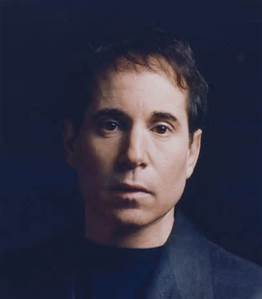
 

Paul Simon and a Question about the Position of the Word

th-2In the words of poet-musician Paul Simon, “The words of the prophets are written on the subway walls and tenement halls.” Do you remember the sign’s words? “The words of the prophets are written on the subway walls and tenement halls.”

The sign warned people to look around at what they’d become. It called them to account. The speaker in the poem laments the fact that he’s in a world where communication has been reduced to superficiality, where style has debunked substance. In the speaker’s words, he’s witnessing a culture of death, where genuine communication had been largely replaced by neon and artifice. The result: spiritual and existential death. In other words, silence:

People talking without speaking

People hearing without listening

People writing songs that voices never shared

The “neon god” the people had made spoke amidst the people. That seems paradoxical. Why would people create a sign that rebuked them? After all, we craft things to serve us, not admonish us. But the speaker is saying more. He’s saying that the very existence of the neon god the people made undermined meaning found in human friendship, in human communion. Entertainment and artifice had replaced human communion and divine communion. The sacred was being replaced by the profane. And cultural depravity is its own indictment. The result: spiritual and existential death. In other words, silence.

Prophetic messages had been sent to them in the form of words spray-painted on the subway walls. They were words of warning that culture was changing, that the roots were being torn out of their soil. But the people didn’t listen.

Simon penned this song in 1964, and libraries of historical tomes have recorded what the varied revolutions of the 1960s have done to the West. JFK’s murder by a leftist caused a nation to mourn. Vietnam dragged on into the 1970s, and Watergate eviscerated many Americans’ optimism in American greatness. Yes, Vietnam and Watergate eviscerated America. Racial bigotry on all sides ripped at America’s core. MLK, Jr. was assassinated. For some, Malcolm X’s Nation of Islam-inspired political vitriol replaced King’s biblical worldview about human dignity for all. But the prophets still spoke. Cultural depravity is its own indictment.

Despite JFK’s statement, “Ask not what your country can do for you; ask what you can do for your country,” liberals and leftists of today evade that idea. They ignore that it was JFK who oversaw the implementation of U.S. Green Berets. It was JFK who led for putting a man on the moon. It was JFK who championed NASA’s research and development. Contribute to society by the way we live our lives? Yes. That came from the mouth of a U.S. president. Today’s leftists again demand something for nothing. And destruction is invariably the result.

And Paul Simon, living and writing during these events, framed it in poetic language—namely, that no neon god can replace what an overarching theology provides: communion with God and community with others. Neon gods cannot satisfy. Baal and Asherah cannot satisfy. Political solutions cannot satisfy. Multiculturalism and political correctness cannot satisfy. Know what results when the transcendent is dethroned? Not freedom but enslavement; not enlightenment but darkness; not rhapsody but silence.


Sleeplessness and Disagreement with Hemingway

Surely others know him. He mocks us as we turn upon our beds. He scoffs at us as we wriggle and squirm into our preferred positions, seeking to close our eyes. Perhaps we fluff our pillows or sip some water. We may arise and check the blinds, making sure they’re drawn, that the doors are locked, and then lie down again. Perhaps we look at our spouse and/or children with envy, as they rest, seemingly untroubled. But we wrestle on…against our mocking foe: sleeplessness. Tonight was such a night. Why? Perhaps it was because my father-in-law is slated for surgery today. Perhaps it was because our college-aged daughter came home last night to accompany her mom to Papa’s surgery later today, as I stay home with our son. Perhaps it was because I was so thankful to see our daughter home, even under the serious family circumstances, that I could not rest. Perhaps it was because God wants me to listen to him. When even the cicadas and frogs have fallen silent, I can listen without disturbance.

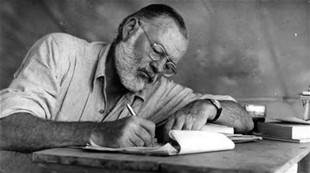
thIn Hemingway’s short story, “A Clean Well-Lighted Place,” an older experienced waiter and a young restless waiter discuss an old man who is sitting and drinking brandy alone in their café, late in the night. The older waiter respects the old man, and seems to have a spiritual kinship with him. However, the young waiter is hurried, impatient, and feels the old man is a nuisance. The young waiter wants only to close the cafe for the night, so that he can go home to his young wife.

But the old man remains in the café. He likes to sit in this particular cafe late at night where he can imbibe, not just brandy, but the night’s simple beauties. He takes note of the shadow of leaves in the electric light, th-1and of how clean this café is. He notices a soldier and girl, as they walk by in the street. The light reflects off the brass number on the soldier’s uniform. Details sparkle in the night when the pace of the day has slowed. The combination of light, some brandy, and cleanliness create a sanctuary for the old man, in his world that is otherwise a world of nothingness—the operative theme in this Hemingway story.

As the story unfolds, the two waiters discuss how the old man tried to commit suicide recently by hanging himself. But his niece discovered him in time, and cut him down by slicing the rope the old man had used. The old man had been, according to the waiters, in despair. When one waiter asked the other waiter what caused the old man’s despair, the response is crucial: “Nothing.”

Nothing as a cause? Yes. Why? Because man cannot truly live if his belief system is anchored in nothingness. Philosophically speaking, this is the worldview of nihilism. “He has plenty of money,” one waiter quipped. So fiscal poverty couldn’t be the cause of the old man’s despair. The assumption made is clear. Since the old man has enough money, then despair, that nagging sense of lostness, of nothingness, should not plague the old man. But it does. He’s in spiritual poverty. And so he comes out to cafes late at night, alone, and drinks brandy to dull his despair in order to endure.

The assumption by the young waiter is that if one has a good work/career, a loving spouse, and money, he/she should be fulfilled. In the words of the young waiter, one must only have “confidence.” Speaking of himself, the young waiter boasts, “I have confidence. I am all confidence.” Pity this man; he’s a shell.

This is how masterful Hemingway is. Look at that word carefully. Confidence. It denotes the feeling or belief that one can accomplish something, that success is just around the corner. What’s the root? Confide. It denotes the entrusting of something valuable to someone for safekeeping. And there’s the irony that’s crucial to think through in this story. The older waiter understands the reason for his spiritual kinship to the old man sitting alone in the café, sipping his brandy. Both the old man and the old waiter have lived enough to have lost it all; they’ve experienced the nothingness that life can bring, if it’s lived only in artificial light.

Solomon’s perennial lessons from Ecclesiastes are dangerous if taken in isolation: “And I commend joy, for man has no good thing under the sun but to eat and drink and be joyful, for this will go with him in his toil through the days of his life that God has given him under the sun” (8:15 ESV). It’s vital to read the whole context, because if we don’t understand the overarching story of God behind the existential momentary joys, we are spiritual amputees, like the old waiter and the old man.

They both are seeking light in the night–just a simple café, with clean tables and polished wood and decent brandy. The young waiter is likewise lost, but he’s still so immature, that he’s “all confidence.” He’s just a younger version of the lostness of each man in the story. Why do the old waiter and the old man suffer alone? Because they’re cut off from the confidence the young waiter has, the sense of having life by the tail. They understand lostness, the sense of seeking light and beauty in a world devoid of God.

That light, however, was absent for them because, in Hemingway’s worldview, God was absent. When God is absent, Hemingway had the intellectual honesty to admit, despair and nihilism result. He, like his characters, wanted to entrust his soul, to another. He wanted to confide. He longed for a spiritual confidant. Like the old man drinking brandy late at night alone at the café, Hemingway, too, attempted suicide. But Hemingway’s own end differed in one significant detail. Hemingway’s suicide was actualized. He blew his brains out with a double-barrel shotgun.

The old waiter and the old man had lost almost all hope. And the young waiter’s hope was misplaced. All three men were near to light, but shut it out. Could it be because the true light had come into the world but they preferred darkness (John 3:20)? Could it be that when anyone suppresses the light of God, he/she invariably substitutes other lights—well-lighted cafés, brandy, or activities/busyness?

The young waiter assumes his busyness, his wife, and his activity will stand him in good stead. But the older waiter and the old man share some sad wisdom. Life’s not that neat. The two older men know what happens when those things are taken away. One is left exposed before God. But for Hemingway, as for these men in the story, God was absent.

I’ve read Hemingway deeply for two and half decades now, and I’m continually astounded by his giftedness in evoking catharsisthe pathos engendered by such a masterful writer, where our souls are knit with characters to such a degree that our life experience is deepened. However, I wonder what it would have taken for him to acknowledge that we are always exposed before God. The Bible served Hemingway for more than a few of his titles of his novels and stories (The Sun Also Rises title comes from Ecclesiastes 1:5, and the Lord’s Prayer, found in Matthew 6:9-13, is mocked in “A Clean Well-Lighted Place”).

In Hebrews 4:13, Scripture records this promise from God: “And no creature is hidden from his [God’s] sight, but all are naked and exposed to the eyes of him to whom we must give account” (ESV). Often in Hemingway’s writing, the reason we come across men like these, men who are alone, in despair, and teetering over the spiritual chasm, is because they’ve cut themselves off from the author of rest. Perhaps sleeplessness can be a gift to draw those who will listen to the God who grants rest, a Sabbath rest, for those who’ll seek refuge in him. He even calls himself the light. Such light, one might dare to say, outshines even a well-lighted café.


Which Mind are You?

thWith the subtlety of a boot to the face, Donald Trump has become the presumptive nominee of the Republican Party. Mr. Trump may be president of what has become of these United States. The current president promised up front to fundamentally transform the nation. Honest people concede he has succeeded in unparalleled fashion. What might we learn about how we got here and where we may go? What does the current state of affairs reveal about your mind/worldview?

The 2015 watershed Supreme Court Obergefell v. Hodges 5-4 decision overturned the institution of marriage, insofar as man’s law is concerned. Men can now marry men; women can marry women. As astute thinkers predicted, polygamy and polyamory are now on the horizon. Moreover, there is a push to legalize men marrying boys. To not allow that, in the secular/leftist worldview, is discrimination. Any sexual inclination should be allowed and sanctioned by the law; that is where the Left wants to take the nation.

We have abortion on demand. As of this week, the U.S. is now at 60,000,000 abortions since Roe v. Wade in 1973. I have taught school either fulltime or part-time for the past 15 years; when I worked for government schools, I was required to teach about the Holocaust in WWII. That, of course, is wise. To not teach history accurately is shameful. I was required to teach students about how certain worldviews led up to and enabled the slaughter of Jews by a Leftist regime. But why do we shudder at 6,000,000 slaughtered Jews but not weep over 60,000,000 aborted children in America? Where’s the logical consistency?

Remember last year? The 2015 ESPY Award, given by ABC/ESPN, was to Caitlyn (formerly named Bruce) Jenner for “individual achievement.” And if you enter a Target today, you can claim you “identify” as something other than your born gender. To paint that picture, I, a married man with two children, could claim I “identify” as a woman, and enter the women’s restroom. Are you awake yet? Folks, this is madness.

The 2nd Amendment (the Constitutional right of citizens to keep and bear arms) is up for grabs, too. According to some current sociology studies, many college students are in favor of relinquishing the First Amendment. Why? Because what matters now is one’s feelings, not truth. State-run education has been supplanted by statist indoctrination. “Safe spaces,” multiculturalism, and relativism are in; liberty of thought, logical thinking, and wisdom of the ages are out.

For at least this theological and political conservative, I am an orphan. As I survey the political melee over recent history, one word captures how I feel: weary. Is this what it has come to in America’s public forum? I have taken leave of television. My family and I will occasionally watch a film or attend a concert for entertainment, but television is the real opiate of the people. What might we learn about how we got here and where we may go? In short, we need to learn the lesson we so often forget—that the day we choose to be gods rather than listen and obey God, we die. Judgment falls. We are banished from the first Garden. Yet God did what we couldn’t. He performed what he demanded—perfect obedience:

“For God has done what the law, weakened by the flesh, could not do. By sending his own Son in the likeness of sinful flesh and for sin, he condemned sin in the flesh, in order that the righteous requirement of the law might be fulfilled in us, who walk not according to the flesh but according to the Spirit. For those who live according to the flesh set their minds on the things of the flesh, but those who live according to the Spirit set their minds on the things of the Spirit. For to set the mind on the flesh is death, but to set the mind on the Spirit is life and peace. For the mind that is set on the flesh is hostile to God, for it does not submit to God’s law; indeed, it cannot. Those who are in the flesh cannot please God.” (Rom 8:3-8 ESV)

The key here, as always, is to read carefully. Are we living according to the flesh or the Spirit? That’s the issue that must be settled. That will reveal our worldview. “For the mind that is set on the flesh is hostile to God, for it does not submit to God’s law; indeed it cannot. Those who are in the flesh cannot please God.” (Rom 8:7-8 ESV) Those words are so clear I don’t know how people can misread them. Those who are regenerated by the Holy Spirit submit to God’s law; those who remain unregenerate do not, because they cannot.

Never confuse categories; America is not the church. Therefore, do not expect America or her pagan culture to be the church. But how much greater, therefore, is the seriousness of the hour for the church to be biblical, clear, and bold? When we witness a culture given over to such levels of crassness, one that shakes its fist at the heavens, it does not bode well. The church has largely failed to teach and live out the doctrines we believe. We’re salt that has largely lost its savor. Let the church return to her first love and refocus on the lampstand (Rev 2:4-5).


Judas Iscariot, a Perennial

Ever been betrayed? Sure. Everyone knows a traitor. The most infamous traitor in history is Judas Iscariot. Judas betrayed Jesus. Thirty pieces of silver. That was the equivalent of four months’ wages for a laborer. Let that sink in. For the equivalent of 16 weeks’ pay, Judas betrayed Jesus. But the money was symptomatic of a deeper and deadlier issue. Judas had a pagan heart. Money was the visible exchange for the invisible transaction within Judas’ soul. It would not have mattered if the amount were a thousand times that much; the amount was immaterial. What was sold was a soul. Judases are perennials; they recur with each generation. There are many who profess genuine faith in the lordship of Christ but their deeds contradict their professions.

Yet God knows all. Jesus was, and is, God in the flesh. As such, he knows all. He knew who was to betray him. Matthew illustrated it by telling of Jesus’s betrayal by Judas and his (Jesus’s) subsequent arrest. As Judas knew where Jesus’ habitual place of prayer was, he (Judas) had orchestrated his scheme ahead of time. Listen to Matthew’s account: “Now the betrayer had given them a sign, saying, “The one I will kiss is the man; seize him.” And he came up to Jesus at once and said, “Greetings, Rabbi!” And he kissed him. Jesus said to him, “Friend, do what you came to do.” (Matthew 26:48-50a, ESV) Can’t you feel the drama? God incarnate is praying in Gethsemane and he knows that one of his own disciples is a devil. And when Judas approaches him (with a kiss!) Jesus, still knowing all, says, “Friend, do what you came to do.”

Yet Jesus allowed it all. In fact, he ordained it. John’s gospel further illustrates Judas’s treachery. When the story unfolds, Jesus had just washed the disciples’ feet, and he was about to give his true followers the great commandment recapitulation (John 13:34-35). John records that Jesus began to be “troubled in his spirit” about the encroaching betrayal, passion, and crucifixion:

After saying these things, Jesus was troubled in his spirit and testified, “Truly, truly, I say to you, one of you will betray me.” The disciples looked at one another, uncertain of whom he spoke. One of his disciples, whom Jesus loved, was reclining at table close to Jesus, so Simon Peter motioned to him to ask Jesus of whom he was speaking. So that disciple, leaning back against Jesus, said to him, “Lord, who is it?” Jesus answered, “It is he to whom I will give this morsel of bread when I have dipped it.” So when he had dipped the morsel, he gave it to Judas, the son of Simon Iscariot. Then after he had taken the morsel, Satan entered into him. Jesus said to him, “What you are going to do, do quickly.” Now no one at the table knew why he said this to him. Some thought that, because Judas had the moneybag, Jesus was telling him, “Buy what we need for the feast,” or that he should give something to the poor. So, after receiving the morsel of bread, he immediately went out. And it was night.” (John 13:21-30, ESV)

It’s crucial to understand what’s occurring. Jesus, knowing all, had just washed his disciples’ feet. Wash the feet of one’s betrayer? Yes. Exactly. What kind of love is this? Then some of the disciples are actually listening intently to Jesus and realize that God incarnate had just told them that there was a devil in the room. And though John’s gospel does not record the facial expressions of Jesus and Judas, can’t you envision them? Perhaps Jesus spoke gently but firmly to Judas when he (Jesus) said, “What you are going to do, do quickly.” Heartbreaking. What’s more, the imagery is vital to grasp. Verse 30 says “And it was night.” Yes, darkness (evil) had indeed descended. Evil had just broken bread with the Messiah. Judas was slithering his way to damnation.

My mother is a master of the soil. She can make flowers grow in almost any soil. She taught me about annuals and perennials when I was a boy. To this day, I love flowers and spring, and things in bloom invariably remind me of my mom. The first thing she taught me about perennials is that they recur; they come back year after year. And we’d do well to learn that traitors are a lot like that; they’re perennials. Thus, we are to be wise as serpents and yet gentle as doves (Matthew 10:16). “Many a man proclaims his own steadfast love, but a faithful man who can find?” (Proverbs 20:6, ESV) There was, and is, one who is faithful. In fact, he is called faithful and true (Revelation 19:11), and he even washed sinners’ dirty feet.

Baseness Rules when the Basis is Destroyed

One way to assess cultural trends is by surveying headlines. Here are some from today:


  • Judge: IRS ‘Untrustworthy’ in Tea Party Case
  • Terror scare as mystery surrounds ‘Arab’ and unclaimed bag…
  • Ohio woman accused of livestreaming alleged rape of teen friend
  • Man accused of murdering Seattle-area mom abused former girlfriend, woman says


Awake yet? When a civilization is this coarse, it is hardly civilized; it is base. It is coarse. Its basis has been destroyed and in its place is baseness. When people are not ruled by objective moral law, they will invariably be ruled by force, and force is illustrated via a culture’s baseness.

Last year, I read several books of history, as is my custom. Like other serious readers, I divide my reading into areas of study. One of my areas of reading is the history of ideas. In a very important book, Matt Walsh’s The Devil’s Pleasure Palace, the author writes, “Look about your daily lives here in early twenty-first-century America and Western Europe, and see the shabbiness, hear the coarseness of speech and dialogue, witness the lowered standards not only of personal behavior but also of cultural norms, savor the shrunken horizons of the future” (p. 2). Walsh’s book, the weight of that sentence, and the pages of illustrations that followed, gripped me.

Think back to just today’s headlines. Then think about what Walsh wrote. We’re increasingly coarse as a culture. Baseness rules when the basis of a culture is destroyed.

Many people even minimally familiar with the biblical worldview know the Scripture that says, “If the foundations are destroyed, what can the righteous do?” (Psalm 11:3 ESV). We don’t know if David had a specific event in mind when he was inspired to write that psalm. However, the theme is straightforward: crises come to cultures when objective moral law is evicted, and baseness becomes the norm rather than the exception. “If the foundations are destroyed, what can the righteous do?” he asks rhetorically. The answer of course is to return to God, to return to the foundation of righteousness.

One of my favorite hymns is “Come Thou Fount.” Its theology is profound, because the writer knew that God/Christ is that fountain of every blessing. The writer also knew that he was “prone to wander.”

Know what results when we not only wander, but also evict, the fount of blessing? We heap judgment upon ourselves. We become coarse. We see baseness rule when the basis for civility has been eviscerated.

Prophets are without honor; we know that historically. But that doesn’t ever seem to discourage them from warning us. May I suggest a simple precept as a student of history? When the basis is destroyed, baseness rules. And when baseness rules, judgment is sure to follow. Might we have the humility to return to the fount of every blessing.

Spiritual Resumes

Some hard looks. That’s what I received recently as I began teaching through the New Testament book of Galatians. The theme of Galatians goes to the heart of the gospel message: there is only one way to please God; sinners are justified only when they repent of their works and cast themselves through faith alone upon the substitutionary atonement of Jesus Christ. But when I worked my way verse by verse through chapter one recently, I got a taste of what Paul (and scores of other biblical messengers) invariably received—some hard looks.

I began as I usually do—by asking a question. My question was simple: What is our biggest problem before God? As the small group mulled that over, I asked some related questions: how is anyone justified, and secondly, what does God require of us? These questions go to the heart of the gospel. Several in the group answered, “God requires obedience.” Others said, “We are to trust God.” Still others said, “We are to love.”

All of those answers certainly touch upon the heart of the matter. But what Paul labors in his letter is the necessity of faith alone in the person and finished work of Christ. But that goes against our nature. We are wired for law. We are wired to assume we can do enough to somehow infuse righteousness or merit rewards through doing certain things or not doing certain other things.

All worldviews except Christianity teach works-based systems of justification. Some teach you must uphold dietary laws and obey litanies of laws. Except for Christianity, all other worldviews teach your good works must outweigh your bad works in order to merit justification. If we’re baptized in a particular worldview, do missions work, observe certain ordinances, tithe, etc., will that suffice? Must you face certain directions when you pray, give alms, make a pilgrimage, recite creeds, and make converts? Are those sufficient? If people deny themselves, renounce desire, and follow the Four Noble Truths, will those works suffice? Others teach their followers that their works follow them via reincarnations. The pattern is simple: our works can somehow merit righteousness. But not in Christianity, and that is what Galatians is all about.

The bad news is this: our spiritual resumes will damn us. No work we do suffices to forgive our just punishment for our sin. No diet, no law, no work, no pilgrimage, no tithe, no holy day, no spiritual one-upmanship, etc. will do. Why? Because they all smack of human pride, and that’s our problem.

However, in Christianity alone, there is redemption. And it comes one way—by faith in the person and finished work of Christ: “yet we know that a person is not justified by works of the law but through faith in Jesus Christ, so we also have believed in Christ Jesus, in order to be justified by faith in Christ and not by works of the law, because by works of the law no one will be justified” (Galatians 2:16 ESV).

If we do not repent and cast our faith completely in the person and finished work of Christ, we’re believing “a different gospel” (Galatians 1). The Bible teaches that if anyone believes or preaches any other gospel besides the atoning substitution death and resurrection of Jesus Christ, he/she is accursed. Anathema. Under God’s wrath. That’s how important it is to get the gospel right. Why? Because any human work smacks of works righteousness and our works are polluted garments/filthy rags (Isaiah 64:6).

Our spiritual resumes or Christ? Yes, I got some hard looks, but truth is worth it.

What Does it Take?

What does it take to be right with God? More good deeds than bad? To have been a good person, whatever that is? To not have done horrendous things, whatever those are? I know, I know; skepticths may say, “First, you have to prove God’s existence.” Perhaps there’s a time to engage in that discussion. For now, however, I want to ask this straightforward question: What does it take to be right with God?

I will show my theological cards up front. I now write as one who believes that the height of folly is to deny God’s existence. “The fool says in his heart, ‘There is no God.’” (Psalm 14:1a, ESV). Scripture indicates that mankind’s root problem is sin, and the root of sin is willful suppression of the truth. Perhaps the clearest indictment of our universal sin was penned by Paul in the first chapter of his letter to the Romans: “For although they knew God, they did not honor him as God or give thanks to him, but they became futile in their thinking, and their foolish hearts were darkened. Claiming to be wise, they became fools, and exchanged the glory of the immortal God for images resembling mortal man and birds and animals and creeping things” (Romans 1:21-23, ESV). In short, all of us know God exists, but we suppress that knowledge because we want to evade God’s holy judgment.

When I was an undergraduate studying philosophy, I remember a conversation I had with one of the closest friends I have ever had. The conversation was about epistemology (how we know things), and about God’s existence. My friend was always a levelheaded guy, and he was patient with my moods as I battled waves of doubt. I’d been reading Locke, Berkeley, and Hume; I’d been reading Kant. I’d read Heidegger and Nietzsche. I read more Descartes than was probably healthy. Then Whitehead and the logical positivists nearly drove me to despair because I couldn’t explain my own thoughts. Were my thoughts only material accretions? What about language? What about any moral category? Was justice just a figment of my thinking? Was truth a chimera? Why write? Why be honest? It seemed solipsism was the only option if materialism were true.

All that is context for the conversation I had with my friend. I asked him, in utter seriousness, “I cannot even prove that I exist, so what hope is there?” He looked at me and said, “Some things are just obvious, Jon. You know we’re here, by these tennis courts; you know we’re friends. You know these things.” To some readers, you may scoff at this, but I promise it’s true. I longed to understand how we come to know things for sure. What is the basis for knowledge? Is knowledge just a sensation, or do we have innate ideas/categories for understanding? After all, if all knowledge is sensory, how does one explain love, or language, or beauty, or friendship, or sacrifice, or honor? These ideas make no sense in a materialistic worldview. But my friend reassured me, “You know certain things.”

I was in my twenties then; now I’m in my forties . . . and I’ve learned a few things. You might say, I know some things now. First, I now recognize (literally, to re-know something) that much of my questioning then was an intellectual cloak. I wanted there not to be a straightforward answer to my longings in order that I might indulge my flesh. If I couldn’t prove God’s existence, I reasoned then, I could live as I wanted. I thought it would get me off the God-hook. But what I didn’t want to admit then is that I was proving Paul’s thesis: I was suppressing the truth. I did know certain things. I knew my friend was there; I knew we were having that conversation; I knew what lifestyle I was living. But I didn’t want to admit the moral nature of the God-ruled world. If I could exclude God from the equation, if you will, I’d not be culpable. In short, I was living out the Psalm 14:1 and Romans 1 indictment—suppression of the truth. This suppression of the truth is the root sin. This is man’s nature prior to regeneration. We cloak our questions in the garb of sophistication; we adorn ourselves with degrees and titles, but at heart, we’re suppressors of the truth.

Recently I was in a chapel service listening to a peer preach from 1 Corinthians 1. If you’re unfamiliar with that text, the thesis is simple: man’s wisdom is folly; God’s wisdom is Christ and him (Christ) crucified. Paul writes: “But God chose what is foolish in the world to shame the wise; God chose what is weak in the world to shame the strong; God chose what is low and despised in the world, even things that are not, to bring to nothing things that are, so that no human being might boast in the presence of God” (1 Corinthians 1:27-29, ESV). And earlier in the passage, Paul made this profound indictment: “For Jews demand signs and Greeks seek wisdom, but we preach Christ crucified, a stumbling block to Jews and folly to Gentiles, but to those who are called, both Jews and Greeks, Christ the power of God and the wisdom of God. For the foolishness of God is wiser than men, and the weakness of God is stronger than men” (1 Corinthians 1:22-25, ESV). In other words, Paul teaches us this: before God, we creatures are humbled. There’s no way around it. “God opposes the proud, but gives grace to the humble” (James 4:6, ESV).

And it hit me—again. What does it take to be right with God? A recognition (a re-knowing) that God is holy and I am not. And humility. None of us, when we have a right understanding of God’s holiness and our depravity, should boast. Job learned it; Solomon learned it; I learn it (oftentimes, the hard way).

Perhaps my favorite book of Scripture is Ecclesiastes. Solomon learned of his own suppression of the truth, but he did, eventually, learn what it takes to be right with God (see Ecclesiastes 12:13-14). During that process, however, he penned this wisdom: “Be not rash with your mouth, nor let your heart be hasty to utter a word before God, for God is in heaven and you are on earth. Therefore let your words be few” (Ecclesiastes 5:2, ESV). The idea here is to guard against ornamentation of speech, to guard against pride in our speech and in our lives. Why? Because the end of the matter leads us and the whole of creation to this: humility before the wisdom of God. And that wisdom of God is not a thing. It’s not a what; it’s a who, and his name is Jesus.


Medal or Mettle: A Mark of Resilience

Ever noticed how many civilians look at Soldiers when we’re in dress blues? They look at the medals and decorations. They ask us what our ribbons and medals symbolize. They ask us, “What does that stand for?” They often thank us for serving. Understandably, they admire the appearance of us as Soldiers. They admire the external accoutrements that adorn the uniform. Many Soldiers have combat patches and/or combat action badges that serve to demarcate they’ve served in combat zones and/or been in direct combat with the enemy. And what do we see oftentimes? We see other folks stare at those medals, and mentally assess what the Soldier wearing them must be like. However, there’s a big difference between medals and mettle. Medals are external; medals commemorate. Mettle, on the other hand, is internal; mettle undergirds. Medals are visible ornaments; mettle is inherent character. Medals decorate but mettle strengthens.

In 1 Samuel 16, Scripture records where God ordered Samuel to find the king of Israel that God himself had chosen. When Samuel went to survey the lot of young men from whom he thought God would choose, Samuel thought God would choose Eliab, one who appeared to fit the bill. Samuel thought, “Surely the LORD’s anointed is before him.” (1 Samuel 16:6, ESV) However, God did not judge Eliab’s appearance. The very next line draws the discerning reader up short. “Do not look on his appearance or on the height of his stature, because I have rejected him. For the LORD sees not as man sees: man looks on the outward appearance, but the LORD looks on the heart.” (1 Samuel 16:7, ESV).

Many readers know whom God had chosen; he’d chosen David. The New Testament calls David “a man after [God’s] heart” (Acts 13:22, ESV). The principle? Eliab lacked godly character; Eliab was unequipped with mettle. Eliab may’ve had medals, if you will, but lacked mettle. He lacked the quality of resilience, of godly character, of fortitude that would stand David in good stead as Israel’s greatest king during the monarchy. David had mettle.

Subsequently, David’s monarchy waxed and waned. He was far from a perfect king. He, too, was a man with feet of clay. He was, in short, a man much like we—prone to wander. Yet he had mettle. He had that inherent quality of character that God grants and grows. That mettle is more important than any external medals we wear on the outside.

I’m a country boy at heart, and I remember a phrase from a conversation my mother and I had when I was a child. I’d been talking with my mom about someone in our family whom we both loved. I’d asked Mom about how and why this person seemed so much deeper than most folks. My mom said, “Still waters run deep.” She was right. Depth of character, a person’s mettle, is what matters.


Words with Granddaddy

th    “Granddaddy, may I ask you a question?” I asked, looking at him.

“Of course. What is it?” he said.

“Can you explain to me whether you’re a leftist or a conservative, and why?”

Looking back now, it appears I asked him more than one question. However, as a Baptist pastor of decades, he was accustomed to people’s questions. I never once knew my grandfather to be anything but an earnest man. What’s more, he was never one for small talk. When he spoke, discerning people knew to listen.

This conversation took place many decades ago, and my grandfather has long since died. However, I remember what he said. What he told me decades ago abides with me still—namely, the importance of discernment. In short, I was to prize wisdom. The converse, he said, was also true—namely, to distance yourself from folly. I realize now that he was echoing Solomon’s words in Proverbs. He did tell me, eventually, whether he was a leftist or a conservative, by the way.

With very few exceptions, I’ve unplugged a lot from contemporary culture. Disillusioned especially by the coarseness of politics and television/movie entertainment, I prefer to read, fish, and enjoy my family. In coming days, the word trump will have more definitions after its place in the dictionary. Perhaps it’ll mean “to engage in vitriolic ad hominem attacks, especially as an evasive strategy.” Who knows? It seems that we cannot escape the deluge of worldviews in conflict. What’s better—leftism (big government; higher taxation; fewer liberties; entitlements, etc.) or conservatism (smaller government; lower taxes; individual liberty; an ethos of hard work, etc.)?

In teaching some of my students last week, I was searching for an apt illustration when explaining postmodernism in literature. I could tell, by observing their faces, that some of the language I had been using was too technical. “Think of it like this,” I said. “All is up for grabs. There’s no metanarrative, no overarching story to unite your life, or to unite anything. It’s a random universe. God is rejected; Christ is rejected; the Bible is rejected; history is rejected; distinctions between male and female are rejected. Kardashian culture and MTV paganism are the religions of the land. What used to be deemed folly and coarseness doesn’t shock us as much as it used to, and that is tragic. Wisdom is vanquished and vileness is crowned.” Then, it seemed, my students began to understand. Their facial expressions changed. They began to connect the intellectual dots.

What does my question to my grandfather, many decades ago now, have to do with why I wanted to know if my grandfather was a leftist or a conservative? What does my question have to do with postmodernism and the differences between a leftist worldview vs. a conservative worldview? The ideas are related. Solomon’s wisdom, like my grandfather’s echo of it, gets to the heart of the matter: “Be not wise in your own eyes; fear the LORD, and turn away from evil” (Proverbs 3:7, ESV). What my grandfather was teaching me was that wisdom and folly are deeper issues of character than politics. “If you are wise, you are wise for yourself; if you scoff, you alone will bear it” (Proverbs 9:12, ESV). We’re in a day when scoffing is cool; we’re in a day when mocking is hip; we’re in a day when wisdom is maligned and manners are largely in graveyards.

The contrast to wisdom is folly. Folly is characterized in Scripture as loud, ignorant, and in love with death (Proverbs 9:13-18). Postmodernism is just this: loud, ignorant, and in love with death. Postmodernism lacks heroes because it’s impossible to be a hero when you’re given over to solipsism and despair. When all is relative, nothing is worth fighting for. There are only power plays by victimized groups. All is up for grabs, but nothing is inherently valuable, since the author of life has been killed. “If God is dead, all is permitted,” wrote Dostoyevsky in The Brothers Karamazov, a warning to the discerning about the depths to which civilizations descend when they reject God as revealed in Scripture.

The New Testament echoes the same principle: “Brothers, do not be children in your thinking. Be infants in evil, but in your thinking be mature” (1 Corinthians 14:20, ESV). The contrast between a biblical worldview regarding wisdom vs. folly is crystal clear. Discernment is inextricable from wisdom and maturity; growing up involves growing deep. This means self-discipline. When shaped by the biblical worldview, people cultivate self-discipline, and big government is unnecessary, because the people’s morality is rooted in a biblical teaching regarding the preciousness of wisdom.

But what does leftism do? It teaches that man needs government to do what unrestrained pagans will not do—namely, be self-disciplined. Instead of working hard, leftists want to take wealth from producers and redistribute it to those who won’t work. Instead of admitting that all lives matter, leftists divide people by gender, skin color, and sexual preference. For some leftists, only some lives matter.

Granddaddy taught me through his words and through his life many truths. However, what he taught me about why he was politically conservative paled in comparison to what he taught me about wisdom. Wisdom or folly; big government leftism or small government conservatism; fluid “gender identification” or men and women created in the image of God.

Paul wrote that Israel had “a zeal for God, but not according to knowledge. For being ignorant of the righteousness of God, and seeking to establish their own, they did not submit to God’s righteousness” (Romans 10:2-3, ESV). “Not according to knowledge” could be the epithet for today’s culture. I, for one, would rather learn from my grandfather.