Certain passages haunt. Some books are remembered for first lines or opening paragraphs. You’ve invariably heard many people quote the first line of Melville’s Moby Dick. A perennial quotable is the first paragraph of Dickens’ A Tale of Two Cities. Others often sample soliloquies from some of Shakespeare’s plays. But some novels are filled with certain passages that haunt. One cannot shake them. Why? It’s because they make the universal concrete and particular. They capture the soul’s longings. Faulkner said the best writers write about “the human heart in conflict with itself.” One of my professors from many years ago taught us that the best writers of literature dealt with the “imaginative concretization of universal themes.” Sound too sophisticated? It’s not. The bottom line is that the best writers capture what it is to be human and to wrestle with God, with one another, with death, with love and heartbreak, with friendship and loneliness, with ourselves. For me, McCarthy’s The Road exemplifies many passages that I’d rate alongside certain works of Shakespeare, Milton, and T.S. Eliot. So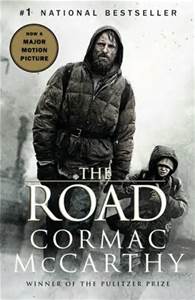 much has been written about McCarthy’s fiction, and about The Road in particular, that I’m almost loath to comment further, but as I wrote above, certain passages haunt. The question that concerns me is this: Have we followed the logic of how we answer the questions the passage raises? It’s a passage dealing with ultimate issues of God, evil, and meaning.
Here is the context: A father and son are laboring to survive. The adjective used so often to describe The Road is “postapocalyptic.” There has been some kind of catastrophe or series of catastrophes. The sky is gray. The normal means of technology are gone. The few survivors are reduced to primitive scavenging and foraging. A father and son speak cryptically about their ominous and precarious state. The son begins the conversation:
Can I ask you something?
Yes. Of course you can.
What would you do if I died?
If you died I would want to die too.
So you could be with me?
Yes. So I could be with you.
Okay.
He lay listening to the water drip in the woods. Bedrock, this. The cold and the silence. The ashes of the late world carried on the bleak and temporal winds to and fro in the void. Carried forth and scattered and carried forth again. Everything uncoupled from its shoring. Unsupported in the ashen air. Sustained by a breath, trembling and brief. If only my heart were stone.
He woke before dawn and watched the gray day break. Slow and half opaque. He rose while the boy slept and pulled on his shoes and wrapped in his blanket he walked out through the trees. He descended into a gryke in the stone and there he crouched coughing and he coughed for a long time. Then he just knelt in the ashes. He raised his face to the paling day. Are you there? He whispered. Will I see you at the last? Have you a neck by which to throttle you? Have you a heart? Damn you eternally have you a soul? Oh God, he whispered. Oh God. (11-12)
No quotation marks. Just naked emotion in staccato questions and answers between a boy and his father. Do we sense the love, the sacrifice the father has for the son, and vice versa? If there were separation, it’d be better to die.
Then the father is apart from the son in the next narrative paragraph and he (the father) petitions God. I don’t see how the context could read otherwise. Observe the imagery and language. Ashes, cold, silence, opaqueness, a cycle of tragedy (Eccl. 1). Their tragic life is a breath (Job 7:7: Ps 144:4). The father almost curses and yet petitions the God he’s not sure exists. This is sublimity.
Who does this remind us of? Job. He endured unimaginable suffering (deaths of his entire family; loss of his wealth and property; flawed counsel from his friends; boils on his skin; and apparent abandonment by God). And yet.
I have read The Road several times and yet I’m reading it again. Why? Because I think McCarthy puts his finger on the problem of evil, but does not preach the answer. He leaves it to astute readers to follow the logical outflow of their worldview.
Evil is unexplainable in a naturalistic worldview (where all that exists is material). Simply put, there is no answer in a secular/naturalistic worldview to the problem of evil. In fact, evil is not (for the materialist) a real thing.
In the biblical worldview, evil is real but explainable. Suffering is real, but explainable. Man’s tragic state is real, but explainable. The Fall was real, but so is God. The father in McCarthy’s The Road sacrifices himself, as it were, for his son. The son is left on his own to seek whomever else might be “good.”
In the biblical worldview, however, the triune God (Father, Son, and Holy Spirit) sent the Son for the world. Rather than a father who petitions a (silent?) heaven for answers, history records that God sent forth his Son to seek and save the lost. Tragedy is not the necessary endgame. Tragedy can lead us to look up and see that Jacob’s ladder has been extended (Gen 28:12; Jn 1:51) and trod upon by the Son. And rather than tragedy, redemption. The road ends, in the biblical worldview, in restoration.
 ed over twenty years ago. I doubt Dr. N. even remembers it, but I have kept his words in mind.
 f only we had godly leaders. If only our side was in power. If only we had leaders who followed the Constitution. If only. Are you tempted to think and/or mutter thoughts like these? I am, but I hope that I’m learning better—and not from earning more degrees or anything like that. I’m learning that leadership begins at home. We are quick to expect more of our leaders than we do of ourselves. In 62-63 A.D. the apostle Peter wrote to Christians enduring persecution in the 1st century, encouraging them with this truth: a godly life is the best example to an ungodly world, but that is only possible if God changes our hearts/wills from the inside. External political systems cannot reform the idolatrous heart. “For this is the will of God, that by doing good you should put to silence the ignorance of foolish people. Live as people who are free, not using your freedom as a cover-up for evil, but living as servants of God. Honor everyone. Love the brotherhood. Fear God. Honor the emperor.” (1 Peter 2:15-17, ESV)
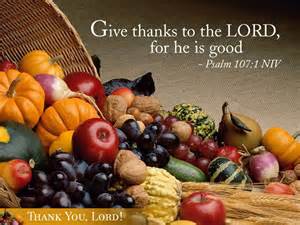 e Thanksgiving. What Americans believe about God will be evidenced in what we do/don’t do this week. Will we pray or not? Will we express thankfulness? To whom? To ourselves? To our predecessors? To our nation? Our military? Why? These questions go to the heart of the matter. If we are thankful, does that thankfulness not assume there is someone to whom to be thankful? It personalizes the act of thanksgiving. Ought we to be thankful to someone? How you answer that question reveals much. Ought implies a moral imperative. It is a way of saying, there is a right standard, a way man ought to follow. But we’re in a day when many will gather together and be at a loss as to whom they should thank. In other words, they’re cut off from the author of life (God), the only One to whom we ought to be supremely grateful.
 ng headlines. First, a female student at Spring Valley High School in SC was so defiant in class that the police were called to deal with her. Let that sink in. Classroom misbehavior in the government-run school system has reached such lows that police are necessary. That’s how much is tolerated in a culture given over to eschewing personal responsibility. If that’s insufficient, now the student has raised nearly $50,000 via an internet fundraising maneuver. See the tragic paradox? Students who were doing their work, obeying the rules, and even being (ready for this?) self-disciplined are not the protagonists. Nope, they are invisible. The one who gets the attention is the rebel, the defiant, and the one whose behavior is so bad that police have to be called. And no
 w she’s making money. We’re amidst moral breakdown. Most people reject the diagnosis that we are all sinners in thought, word, and deed. Most people reject the only remedy—namely, repentance and faith in the gospel. And the moral breakdown continues.
 s/Democrats are calling for more government, more taxes, the redistribution of wealth, political correctness, and socialized health care. Conservatives/Republicans are calling for less government, lower taxes, wealth creation via private enterprise, freedom from political correctness, and free market competition in health care.
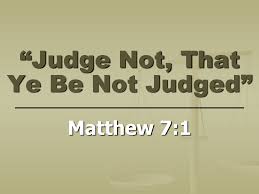 now next to nothing of Scripture spew this verse as a quip aimed to terminate discussion. We rarely hear this verse taught in context. What usually happens is instead a person is failing to make a cogent and/or coherent argument for his position. He does not want to offend or seem hateful. He wants to be tolerant of even the most inane people or ideas. He wants to be loving and respectful. And this one verse surfaces like a reflex. It is viewed as a way of assuaging one’s own conscience and mollifying those with whom you disagree. It is used as a kinder and gentler way of saying, “Well, I wouldn’t live my life that way, but it’s not really for me to say the other person is wrong.”
 s to the ground, most of the chairs on the rostrum were vacant. Most people did not know or care of this man’s passing. As I read Scripture, prayed, and consoled a couple of his friends, I had an overwhelming sense that there were multiple deaths at hand. We were not just marking the
 passing of another veteran’s life. I was witnessing in microcosm a culture that chooses to forget what is praiseworthy. What/whom one generation fails to honor, thenext generation will forget altogether.
 MIND & MATTERS