A little yellow warbler to hopefully brighten your day.
Beauty’s all around, is it not?






A little yellow warbler to hopefully brighten your day.
Beauty’s all around, is it not?
Words matter.
And many words are being raped of their meanings.
Some have been so misused that they’ve been stripped of their teeth.
Here are some examples:
Just a few slices of contemporary misuse:
When I was a lad, the older and wiser folks had a saying they’d offer when I made blunders. “Bless his heart,” they’d say, saying it in the third person even though I was standing there. Now that I’m the old guy in the room, I better understand.
Bless our little hearts.
I am reading through some of the works of Eudora Welty.
Some I have read before. For others, however, it’s my first time.
One person noted Welty’s understated ways. Several other biographers noted her politeness. Many noted her humility.
But all of them have called attention to Welty’s precise eye for the telling detail.
I have a growing catalogue of Welty quotes I am thinking through.

These two remain for me among the most moving and thought-provoking:
“The events in our lives happen in a sequence in time, but in their significance to ourselves, they find their own order . . . the continuous thread of revelation.”
And then this one:
“People are mostly layers of violence and tenderness wrapped like bulbs, and it is difficult to say what makes them onions or hyacintths.”

I’m learning from you, Ms. Welty. I hope to be, anyway.
My master’s thesis in literature was a Christian response to a novel I read that shook me: Albert Camus’ The Stranger. My thesis, Walker Percy’s The Moviegoer as Christian Apologetic, was a Christian response to atheistic existentialism exemplified by Camus’ novel.

Maybe some background would be helpful. When I was a freshman in college many moons ago, I met a fellow student who was also a serious reader. We talked and talked of books, of writers we adored, of books we longed to read, etc. She told me that her favorite book was called The Stranger. I had never read it at the time. But I told her I would. And I did.
The book is quite short (just over 120 pages), so I got right through it quickly. But its brevity does not diminish its worldview. Camus, the author, was an atheist. And his characters, except for a magistrate and the chaplain at the end of the story, are atheists, too. They live lives of going through the motions. And the satiation of their physical appetites and the physical beauties in life (beaches, swims, good meals, etc.) and artistic beauties in life (good music, landscapes, seascapes, auroras, and gloamings, etc.) seem to be the sum of ‘the good’ in his characters’ secular worldview.
And so when the death of the protagonist’s mother opens the novel, Meursault (the main character) is largely unmoved. And when he murders an Arab man in the middle of the novel, he is unmoved, unrepentant, even apathetic, when he’s arrested.
There is no transcendent to which an appeal is to be made, in Camus’ world.
The only happiness is to be found by way of eating, drinking, and being merry. Why? Because tomorrow we die, of course. How different from the Christian worldview. Listen to how Jesus taught in Luke’s gospel:
But He said to them, “Beware, and be on your guard against every form of greed; for not even when one has an abundance does his life consist of his possessions.” And He told them a parable, saying, “The land of a rich man was very productive. And he began thinking to himself, saying, ‘What shall I do, since I have no place to store my crops?’ And he said, ‘This is what I will do: I will tear down my barns and build larger ones, and I will store all my grain and my goods there. And I will say to myself, “You have many goods stored up for many years to come; relax, eat, drink, and enjoy yourself!”’ But God said to him, ‘You fool! This very night your soul is demanded of you; and as for all that you have prepared, who will own it now?’ Such is the one who stores up treasure for himself, and is not rich in relation to God.”
And He said to His disciples, “For this reason I tell you, do not worry about your life, as to what you are to eat; nor for your body, as to what you are to wear. For life is more than food, and the body is more than clothing. (Luke 12:15-23, NASB)
The biblical view of man is that his life should not be reducible to his possessions, his stuff. The souls of men matter eternally, in other words.
History is replete of those who took their own lives but were drowning in stuff. I remember a few years back, for example, when Robin Williams took his life. He appeared to have gained the world, though, right? Yes. But it appears he may’ve forfeited/lost his soul.
It’s the same, but even darker, in Camus’ The Stranger. The protagonist is estranged because he’s an exile from God’s kingdom, but it’s a self-imposed exile. He hates God. He rejects the offer of forgiveness through the gospel. Moreover, he finds little to like about people, too. No God led him to misanthropy after a life of eating, drinking, and supposedly seeking to be merry.
Nothing teaches quite like contrasts. Last night as I battled insomnia once again, I pulled this novel from my shelf and read it straight through. And I became more convinced than ever that my M.A. thesis was correct–namely, that atheism leads to nihilism and despair; but the biblical view of man explains man’s nature accurately. We are estranged because we suppress God by donning fig leaves, as if we could escape the eye of the Omniscient. And yet God’s offer of the gospel remains for those who will come. What a contrast to Camus’ atheistic worldview.
Received a few pictures from friends in Sunday school class today. They were able to enjoy their grandbaby amidst some beautiful scenery in our neck of the woods. Psalm 104 comes to mind.



Reading Eudora Welty’s Delta Wedding currently. Less than 100 pages in so far. Slow in its plot development but precise in its attention to detail, especially concerning clothes, fashion, stitching, the kinds of fabric, etc. that women wore in the post-Civil War South. This is noteworthy not because these observations are irrelevant. Just the opposite: Welty’s eye is exceptional. She observes how people use their fashion to project, to subdue, to make certain statements about themselves, about how they view themselves, and about how they long to be viewed by others. Welty’s eye for the detail and her ear for the rhythm of southern speech are remarkable. When you hear her read her own stories, it’ll transport you. No kidding. A magnificent eye, ear, and sense of voice and beauty of the spoken tongue. (I have spent much of my life in towns not unlike Jackson, so I may be biased in this regard.)
Laura, the nine-year-old girl/protagonist, is the character from whose vantage point we view the unfolding story. Like its title suggests, the story is so far consumed with the upcoming wedding at the plantation home of the MS family in the Delta. Welty’s precise eye for naming trees, flowers, insects, types of southern cuisine, etc. is unbeatable. When she writes of the smell of magnolias or the swoosh of an oak door opening into a foyer with collards and buttered corn on the table, it’s as visceral as Dickens’ portrayals of Christmas time in Victorian England in A Christmas Carol.
Aunts and uncles and cousins, etc. converge upon the plantation to plan. They exude southern expressions, colloquialisms, mannerisms, etc. This is where Welty shines. She demonstrates an expert ear for spoken language. And her writing reflects the cadences and rhythms and soft vowels and slow pace of the MS Delta and the South generally.
Here’s what I like about the novel so far. It is accurate in its portrayal of southern belles and those who long to become southern belles. It is precise in its portrayals of southern speech patterns. It reflects, again with precision, the general tendency of southern families to adopt an, “It’s always been this way, so play your part, and keep the tradition going” mindset; the gatherings around the big table in the main home; the way women (young and old) appear consumed with marriage and their future livelihood provided by their husbands; the way the conversations are almost exclusively laden with rumor, tradition, innuendo, prejudice, etc. and a tendency to always view “outsiders” as less than and themselves as the noble and upright exemplars of virtue and civic honor. Welty is not a showy writer.
She’s an observer of human behavior and she lets her stories show what consumes her. She reveals characters who, though they often play the parts assigned to them, often internally kick against the goads, and it is in that kicking that we readers see what actually connects us.
The link’s below.
Thanks for tuning in.
Tolle Lege.
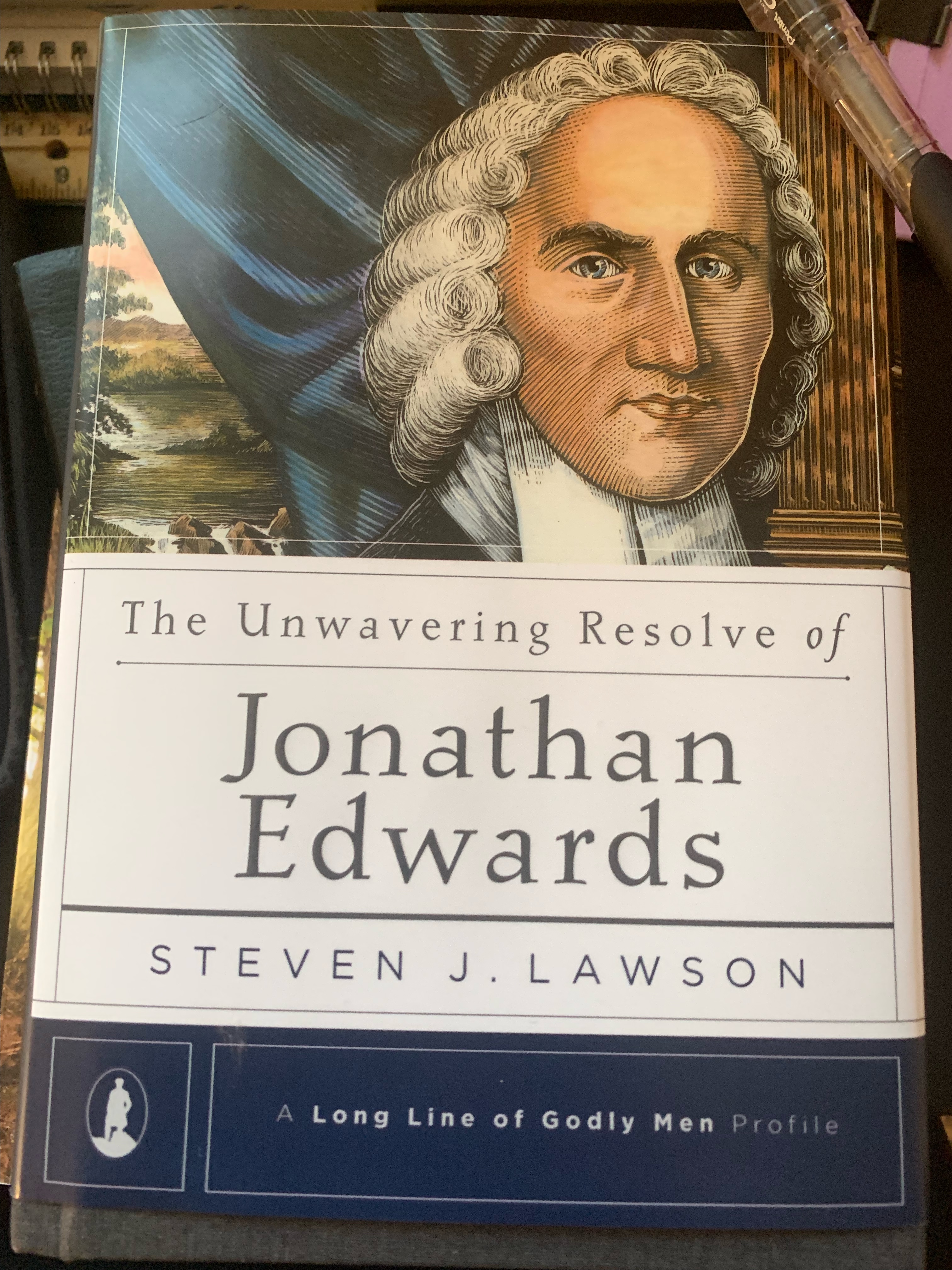
I don’t think I’ve read any Christian theologian as much as I’ve read Jonathan Edwards. I knew I had come upon a theologian for my life when I read how Edwards described a spider’s web that captivated him. He observed the intricacies, the design, the way the spider “launch’d forth filament, filament, filament, out of itself . . . ” as Walt Whitman would describe in his poem, “A Noiseless Patient Spider.” What the poet Whitman observed in his lifetime a century after Edwards’ life, Edwards observed a century earlier, but through a vastly different theological lens. Edwards, unlike Whitman, understood that God was and is the Prince/Author of life, to use Peter’s phrase (Acts 3:14-15).
The NASB translates it this way:
But you disowned the Holy and Righteous One, and asked for a murderer to be granted to you, but put to death the Prince of life, whom God raised from the dead, a fact to which we are witnesses. (Acts 3:14-15, NASB)
The ESV translates the same passage this way:
But you denied the Holy and Righteous One, and asked for a murderer to be granted to you, and you killed the Author of life, whom God raised from the dead. To this we are witnesses. (Acts 3:14-15, ESV)
What the apostle Peter was doing in the above passage was rebuking his hearers, what he calls the “men of Israel” (Acts 3:12), for their rejection of the truth, for their crucifying the truth, for their sin. Jesus, the God-man, had come, and yet they (and the world generally) rejected Him. They didn’t want the truth. They hated the truth.
But when I read this bio of Jonathan Edwards (my thanks to my friend, Justin, for sending it to me), I was reminded–once again–that Edwards did what Whitman apparently never did. Edwards truly believed the gospel. He understood God’s glory and he was ravished by it.
He understood it from the ways in which a spider spins webs of intricacy. He understood it from the ways sunglight dances on leaves in dappled wonder. He understood it in the ways the Holy Spirit convicts sinners of our sin and brings us back to God’s redeeming good news, the gospel.
Edwards was consumed by the glory, the wisdom, the mercy of the God of the Bible, the only God who is.
If the spider is as instructive through its crafting of intricate webs, how much greater is the God who created corral, zebras, giraffes, fawns, whales, stars, babies, sunsets, grapes, the Swiss Alps, and the colors of Hawaii?
When I was a college kid and graduate student studying literature, I was invariably moved when I read and wrote about Whitman’s poem below:
A noiseless patient spider,
I mark’d where on a little promontory it stood isolated,
Mark’d how to explore the vacant vast surrounding,
It launch’d forth filament, filament, filament, out of itself,
Ever unreeling them, ever tirelessly speeding them.
And you O my soul where you stand,
Surrounded, detached, in measureless oceans of space,
Ceaselessly musing, venturing, throwing, seeking the spheres to connect them,
Till the bridge you will need be form’d, till the ductile anchor hold,
Till the gossamer thread you fling catch somewhere, O my soul.

Why so moved? Because the speaker sees the intricacies but rejects their Maker, and the speaker’s soul is left detached, disconnected, unrooted. Unlike the spider’s filament which does what it’s supposed to do in accordance with its design, Whitman’s speaker refuses and is left detached. And the poem is therefore a lamentation.
How different from Edwards’ theology.
For Edwards, he discovered that beauty exists because of the One who is beauty Himself. Truth exists because of the One who is truth Himself.
And that makes all the difference.
Nothing bears witness to God the Creator quite like His feathered creatures.
Here are 7 pictures of said creatures.
*Thanks to my friend Jim for sending these my way.
Enjoy.







Was able to come home this weekend and see the family.
Able to sit on the back porch and read, write, and study, too. Was able to hang out with my beloved dogs and hike some.
Saw scores of deer and squirrels.
The leaves of the hardwoods blazed colors.
*My thanks to my friend Justin for his gift of the Edwards bio. It was a great read of my favorite theologian, a man who used his time well.

Some folks can sit in the office and study. As for me, if possible, this is preferable.

My old buddy Brewster, always vigilant.

Looking shaggy after playtime, Lady is thinking only of one thing: food.
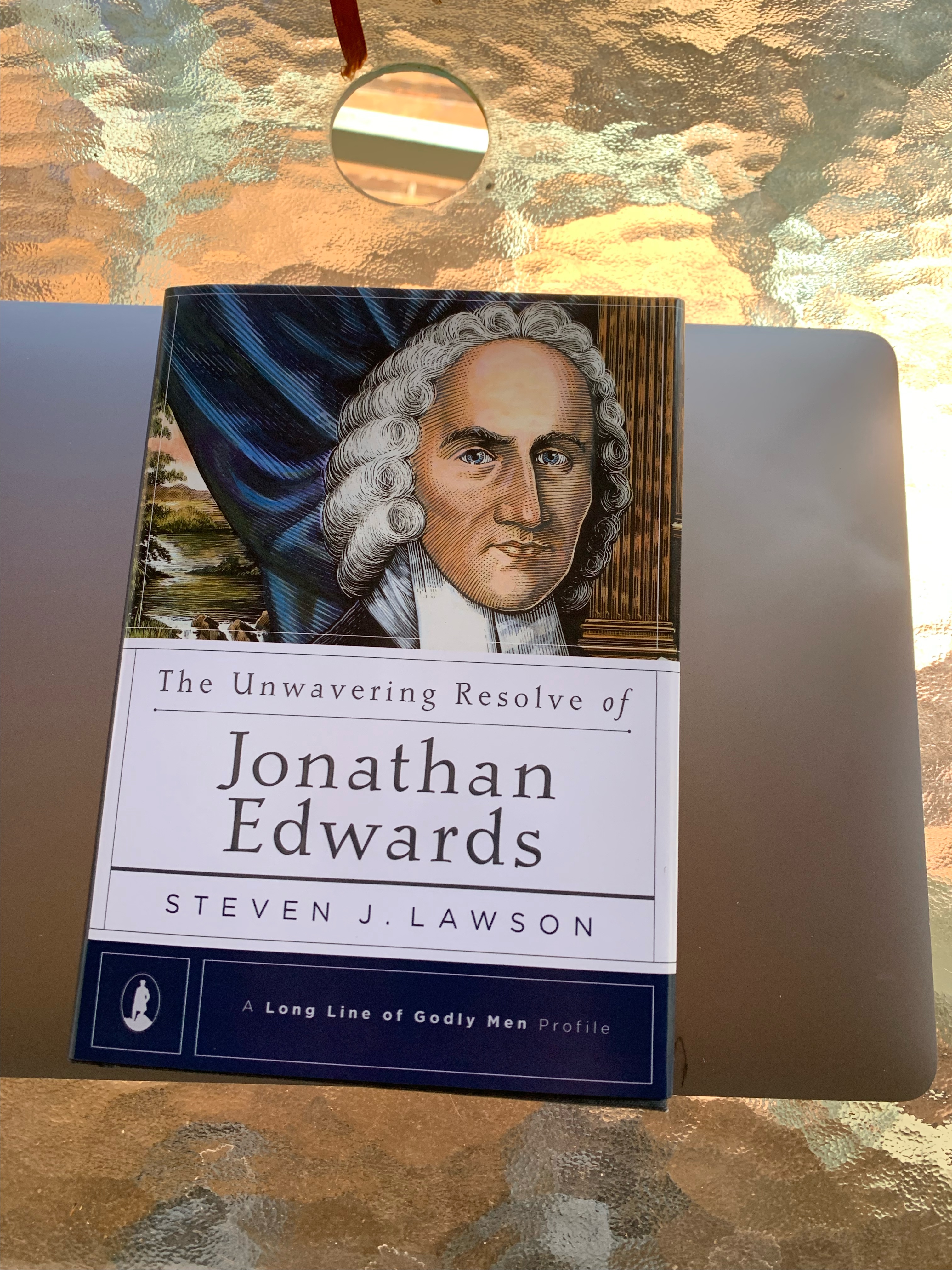
My thanks to my friend Justin for the Edwards bio. ‘Twas a great read of my favorite theologian. I’ll upload a YouTube video on Pirtle’s Pages, Episode 5, on this book, later today or tomorrow.
 MIND & MATTERS