Alternatives

Alternative[noun] a choice betweeen two or more propositions, choices, or options.

Illustration: Early this morning I was reading through the Gospel of John again. I came to the place where Judas Iscariot betrays Christ and where Jesus is arrested in the garden across the brook Kidron and hauled before Ciaphas and Pontius Pilate. I saw again how familiar the story is of the ultimate alternative–truth or lies–and of how the pagan world system chooses to go (cancel/kill/aim to destro–the truth).

One could picture it this way:

Truth vs. Lies

Christ vs. Chaos

God at the Center vs. Man at the Center

Objective Morality vs. Subjective Preferences

God vs. Gulag

The Context: In John 17 Jesus prayed his High-Priestly Prayer in front of his disciples and for all believers. He began by saying aloud “the hour ha[d] come” (John 17:1 ESV). The time of the Passion of the Christ was about to unfold in its ultimate purposes of redemption. All of the following and more were being played out in accordance with the plan of God: the works of betrayal by Judas Iscariot, the false brother; rejection of the Messiah by the Jews; the mocking of Jesus by the crowds; the denial of truth by Pontius Pilate (John 18:38); Jesus’ torture; crucifixion; burial; and bodily resurrection.

And as I read the story of the Passion yet again I saw how nothing has changed, in at least this sense: the world system hates the truth. The world system loves itself. The world system demands that the truth be cancelled/killed/destroyed.

What do I mean? Judas was a thief. Remember when Jesus was in Bethany and Judas pretended he was concerned for the poor? He was not concerned for the poor. He was a thief:

But Judas Iscariot, one of his disciples (he who was about to betray him), said, “Why was this ointment not sold for three hundred denarii and given to the poor?” He said this, not because he cared about the poor, but because he was a thief, and having charge of the money bag he used to help himself to what was put into it. (John 12:4-6 ESV)

Sound familiar? One who pretended to be good was actually a thief, Satan’s soldier, Christ’s enemy, an enemy of the truth.

When Judas sells out Jesus, he (Judas) comes to the garden with soldiers, chief priests, and Pharisees and kisses the Lord Jesus. What should have been a gesture of friendship and loyalty was actually a sign to Judas’ conspirators who they were to arrest, the Lord Jesus (Matthews 26:48-49). Even the most hard-hearted atheist might be moved by such treachery.

Jesus, the only innocent one, was being betrayed by a false brother and the secular world system of which he was a disciple.

Alternative: The alternatives for Judas were money or the Messiah, the crowd or Christ, lies or the truth.

So the soldiers arrest Jesus, haul him before Ciaphas and then to Pontius Pilate. The accusation by the Jews is that Jesus had claimed to be God, the King of kings.

And Pilate interrogates Jesus:

“So you are a king?” Jesus answered, “You say that I am a king. For this purpose I was born and for this purpose I have come into the world–to bear witness to the truth. Everyone who is of the truth listens to my voice.” (John 18:37 ESV)

Then Pilate utters one of the most crucial questions possible:

Pilate said to him, “What is truth?” (John 18:38 ESV)

That’s always the question, of course. Who’s telling the truth? Was Judas? Was the crowd? Were the soldiers? The sanctimonious Pharisees? Pilate? What was the truth? Who was bearing witness to it?

The answer, of course, is the One who was being sold, betrayed, spat upon, flogged, whipped, rejected, and nailed to the tree.

Connection: When I survey our day and see the unfolding events, it’s as if it’s all been played out before. As Leonard Cohen penned in his song “Everybody Knows,”

Everybody knows that the dice are loaded
Everybody rolls with their fingers crossed
Everybody knows the war is over
Everybody knows the good guys lost
Everybody knows the fight was fixed
The poor stay poor, the rich get rich
That’s how it goes
Everybody knows

Everybody knows that the boat is leaking
Everybody knows that the captain lied
Everybody got this broken feeling
Like their father or their dog just died
Everybody talking to their pockets
Everybody wants a box of chocolates
And a long-stem rose
Everybody knows

And everybody knows that you’re in trouble
Everybody knows what you’ve been through
From the bloody cross on top of Calvary
To the beach of Malibu
Everybody knows it’s coming apart
Take one last look at this Sacred Heart
Before it blows
Everybody knows

The alternative remains: Christ or chaos. Truth or the lie. Jesus or the Judases of the world.

Pilate asked the question, “What is truth?” but I think he knew the truth; he just didn’t like it. He preferred the glory of man more than the glory that comes from God (John 12:43).

I wonder what it will take, I really do.

It could be argued that the world preferred apathy and lies to courage and truth. But it does not have to be so.

A Kind of Grace: Gifts of the Pen

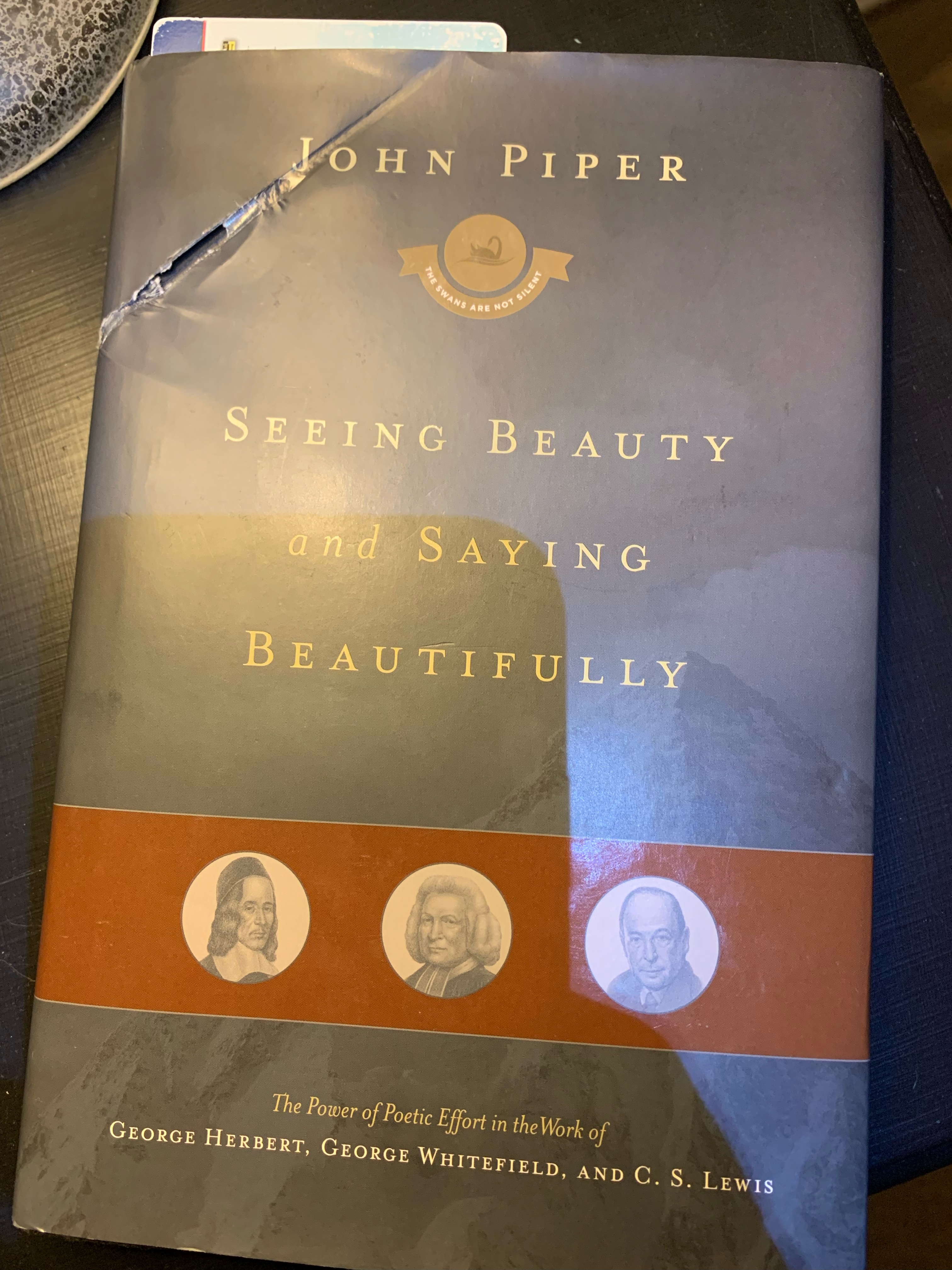
If you appreciate the works of George Herbert, George Whitefield, and C.S. Lewis, this is a book to read. Then go back and reread the works of Lewis, Whitefield, and Herbert.

Poet (Herbert), preacher (Whitefield), and scholar-novelist (Lewis) are giants still.

Grateful for this volume by Piper reminding us of the treasure we have, and of how God raises up particular writers as part of heralding the truth to a world in love with lies.

It Lives Up to Its Title

A couple of years ago I discovered the writings of Charles Baxter. He is a professor of literature and writing in Minnesota. But he does not exude the hubris of many professors. When I read Baxter, I sense a man who makes much of the proper things rather than of himself. His posture is invariably one of humility. And his zeal for literature overflows on each page.

Remember how pompous Harold Bloom was in his views? Well, Baxter comes across as the opposite of all that blustering. With Baxter, the focus is invariably upon the language, the power of the story, the figurative language used by masters of the writing craft. Every time I listened to Bloom, I grew more convinced that Bloom’s favorite sound was that of his own voice.

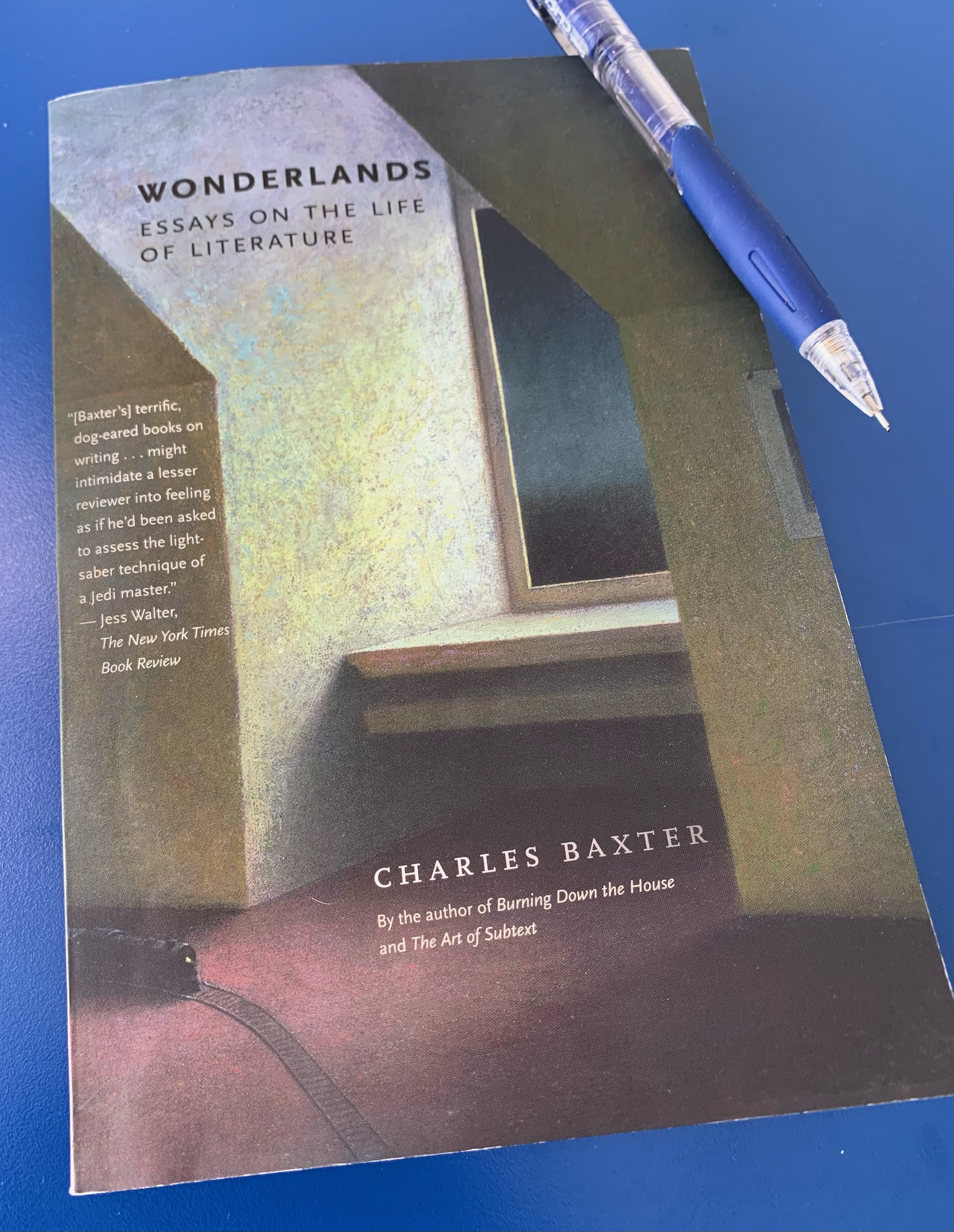
My copy of Wonderlands is all marked up now. Below are a few samples of passages I marked up. In the first passage, Baxter was addressing charisma that characterizes so much of mindless pop culture, politics, and Hollyweird, etc.

“Someone who gives up common sense and leads a go-for-broke crusade has got to be wrong–this is the settled position of the ironist who sees through every blind faith. For such an ironist, however, there is no such thing as a hero, and no such thing as heroism, For the ironist, everybody sooner or later proves to be a hypocrite. Everyone traffics in fraud” (154).

Baxter is a skeptic of the meta-anything. His stance is one of, “I’ll just wait and see.” His lament resonates with his readers because they, too, have grown so accustomed to being lied to that they’re simply weary of it all.

Here’s another taste of Baxter’s observation and awareness:

“At the time of writing this essay, I found myself in an elevator in downtown Minneapolis with approximately six other people. I was the only person on the elevator who was looking at the display indicating which floor we were approaching. Everyone else was gazing downward at their iPhones. Gertrude Stein once said that the only thing that changes from generation to generation is what people are looking at. Every time I see someone tapping away at an iPhone, I think of Gertrude Stein” (49).

Baxter has the poet’s eye to see “what people are looking at.” By noticing and understanding how people spend their time, the talented writer portrays the human condition.

In a passage entitled, “Things About to Disappear,” look at how keen is Baxter’s observational eye:

“The quiet bars of my youth, dark and mournful, whose tables were polished with the tears of the clientele, have given way to noisy sports bars with multiple TV sets, where the patrons shout raucously to each other. It’s another, newer way of being lonely” (54).

And here is one more from his chapter titled “Lush Life”:

“Transformative love is often a feeling of joy. We may also feel a negative fullness in panic states. And this fullnes stands against what many of us feel these days most of the time, which is emptiness and skepticism. Irony and flat assertions are the signal tonalities of emptiness. A feeling combining cold removal, withdrawal, suspicion, and barely suppressed anger is this style’s magnetic north. Irony is a form of protection, and it’s possible that we’re now all overprotected” (91).

When I read Baxter’s stories, novels, and essays, I become even more convinced that literature has something magical about it that gets to the heart of the issue like no other art can. “A word fitly spoken,” Solomon wrote, “is like apples of gold in a setting of silver.” With Baxter the setting merits orchards of silver heralding such apples.

A Story of Veterans Day 2022

Today has almost come and gone, another Veterans Day, a national holiday in America and in many Western nations. For example, in England it is called Remembrance Day. In Australia and Canada, it is also known as Remembrance Day.

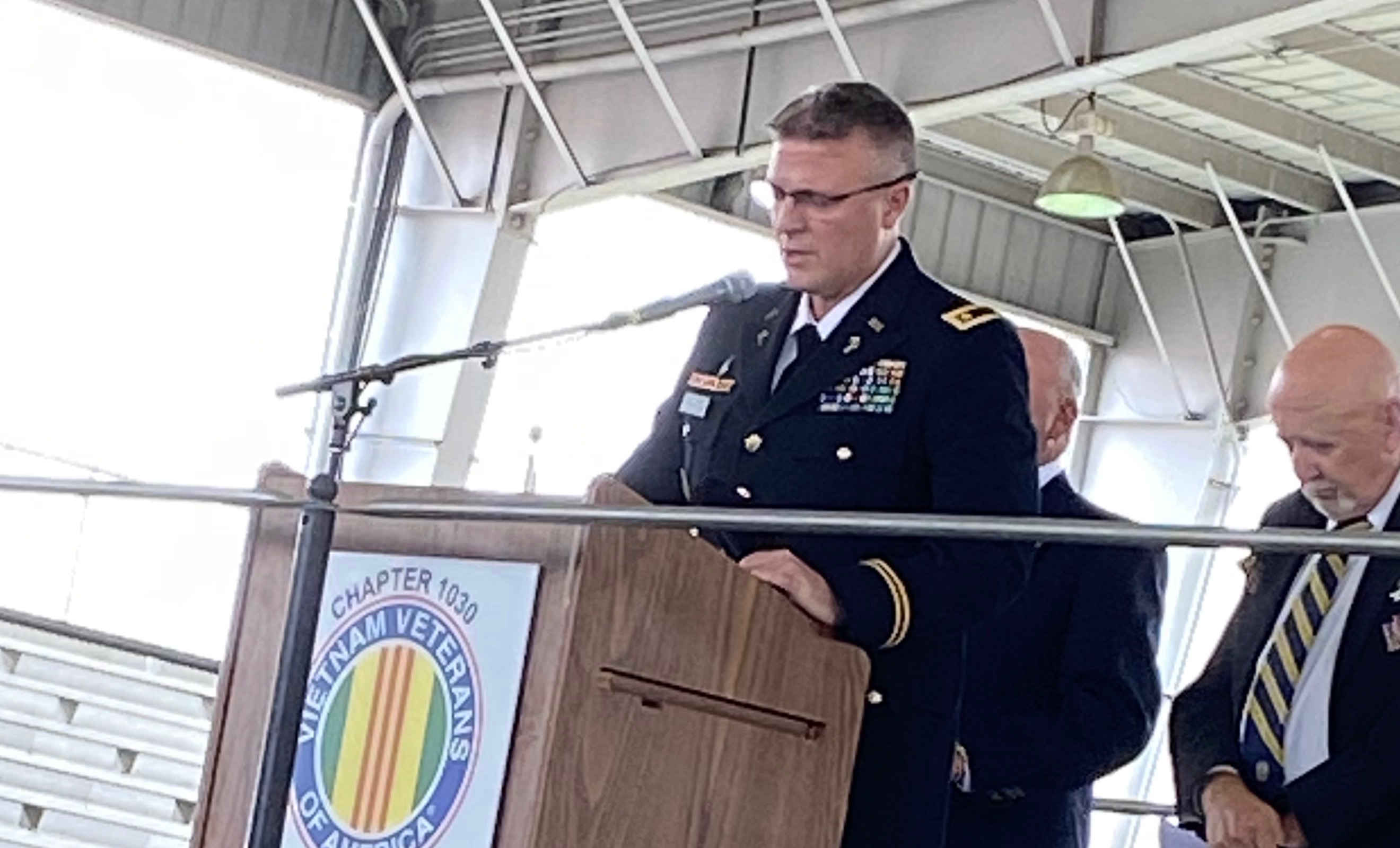
Today I offered an invocation and benediction at a Veterans Day ceremony near where my family and I live.

Nothing encourages me quite like looking out at audiences with veterans from all branches of the U.S. military. They’re almost all men with gray hair or perhaps no hair. Many of them have beards or goatees. Those are invariably gray or white in color, too.

Some of the vets wear lapel pins advertising the branch of service in which they served. Still others wear pins calling attention to the schools from which they graduated or of which they were a part: Sappers, Submariners, Aviation, Seabees, Recon, etc.

Today as I listened to the guest speaker, I surveyed the faces of the crowd. But I found myself paying close attention to the children and students. They were mostly from a school for the arts in our area, and their level of talent was impressive. The girls were dressed in uniforms from the eras of some of the wars of the 20th and 21st century: WWI, WWII, Korea, Vietnam, the Gulf War, Afghanistan, and Iraq. Mostly they were dressed like the Andrews Sisters when they sang “Boogie Woogie Bugle Boy” and other staple songs of that era.

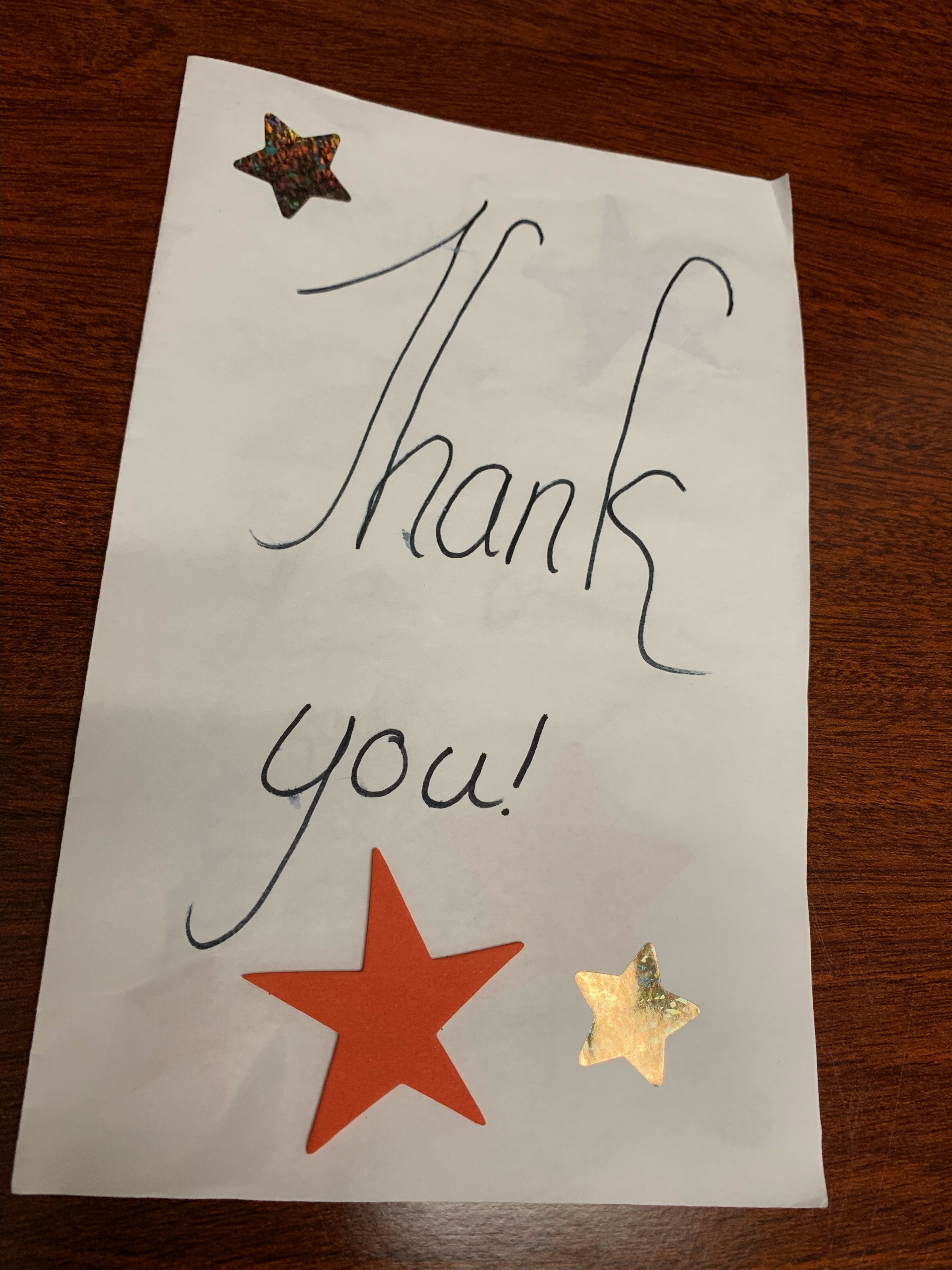
When I was walking to the stage to take my seat until the ceremony began, a girl tugged at my uniform. “Sir,” she said, and handed me the bulletin below she had made.

“Thank you,” I said, and felt the insufficiency of my statement. Amazing the pathos that comes by way of a child handing you a bulletin she has made. The power of a child writing in markers and pasting stars onto paper and handing it to me as she looks up at my eyes seems to drawf any number of speeches I hear.

I offered my prayers, thanked the veterans–past, present, and (hopefully) future– and took my seat again. But still I found myself listening to the kids. Something was perhaps different, I thought. They seemed to have a bit of understanding of history, of why we have fought wars. They cited some historical realities. And the speaker named names in his speech and he clarified that good and evil are actual things, and that good and evil are played out on the battlefields of ideas and in our daily lives.

The kids seemed to get it, I thought to myself. And my heart leapt for joy at the thought that, instead of being brainwashed into hatred of America; instead of being “woke” and trained to respond that white people are evil and that men are “birthing persons” and that people are to be divided by skin color and sexual proclivities, etc., these kids seemed to be waking up to the idiocy of all that tripe and to see that all that rubbish is fit only for fools.

If current statistics are to be believed, less than 1% of Americans serve America by becoming Soldiers, Sailors, Airmen, Marines, or Coast Guardsmen. And the trend currently is that it will be even less than 1%, a fraction of that, for the forseeable future. Why? Because ideas have consequences. If you raise your children to erase history, to rewrite it, or to pervert it, you raise, in sum, fools.

But my hope is that the tide is turning, that some (at least a remnant) are seeing the insanity of current wokeness, secularism’s self-defeating presuppostions, and all the group identity politics. I hope, I say.

I was so touched today by it all. I am a realist. I know that this Veterans Day was largely just a day for most folks to lounge, but for some, it was a time to remember, to show gratitude, to gird up our loins for the next battle, because the next battle is not a specter but a reality. Battle is inevitable.

The questions involve who will be willing to fight those battles and why. Will wisdom undergird our worldview or will mindless political slogans about sexuality, skin pigmentation, and resentment?

When I listened to the children, my hope was rekindled.

I salute you, future generations, as I do the vets of the past, present, and (hopefully) future.

Some Scenes from this Week’s Ministry Out West

Spent a great few days in Idaho ministering to fellow soldiers. Salute to Idahoans for their hospitality. And kudos to Jack Simplot for J.U.M.P. (Jack’s Urban Meeting Place) in Boise. What a wonderful facility and gift to Boise and beyond.

During breaks between teaching, and as the snow fell, I walked to the windows and watched kids construct snowmen and climb the pyramid.

Below are some scenes I snapped from my flights from Idaho and Utah respectively.

Watching the sun rise over the Rockies is enough, I should think, to make even the hardest of souls pay attention.

And as we flew east over the Great Plains, the fields seemed to stretch on endlessly.

The picture above is of a range east of Salt Lake in Utah. It was spectacular viewing this morning from 30, 000 feet.

Military Ministry, Idaho, & a View from the Hotel

Remember these lines?

You prepare a table before me/in the presence of my enemies;/you anoint my head with oil;/my cup overflows./Surely goodness and mercy shall follow me/all the days of my life,/and I shall dwell in the house of the LORD/forever. (Psalm 23:5-6, ESV)

They are surely some of the most cited poetic words of the Old Testament. These words were penned by King David and comprise the closing verses of Psalm 23.

Illustration: This morning before I drove to meet with soldiers I’m training in Idaho, I looked out from my hotel window as the sun rose. The ridges had snow on the highest parts. And the various spruce trees whipped back and forth in the morning winds.

My cup was already being filled.

And as I drove onto the military installation, I could feel my adrenaline racing. I’d been able to get in a workout at the hotel, had a hearty breakfast, and I’d seen the sun come up, had checked on my wife and family back home, and had entered through the checkpoint where an Airman scanned my government ID card.

As I drove to meet with fellow soldiers, the wind was whipping the American flag and the POW/MIA flag up above and in front of me.

I met with soldiers, and they showed me around their work area and the area of operations. I met with the commander and she welcomed me to the unit and expressed her endorsement of and support for the skill sets we chaplains bring to the armed forces. We worked on calendars for my next trip out here to teach and minister to her unit.

I found the chapel and met the senior chaplain and assistant, and we coordinated for them to participate at this week’s training.

My cup was being filled.

I saw another chaplain conclude a counseling session with a soldier and saw the soldier hug the chaplain at the end, thanking him for his help. It appeared a genuine thank you, a universal expression of gratitude and human connection.

My cup was being filled.

I remembered a passage from a book I am currently reading by Charles Baxter entitled Wonderlands: Essays on the Life of Literature:

“At the time of writing this essay, I [Charels Baxter] found myself in an elevator in downtown Minneapolis with approximately six other people. I was the only person on the elevator who was looking at the display indicating which floor we were approaching. Everyone else was gazing downward at their iPhones. Gertrude Stein once said that the only thing that changes from generation to generation is what people are looking at. Every time I see someone tapping away at an iPhone, I think of Gertrude Stein” (49).

Baxter, a brilliant writer in his own right, saw what evaded the others. Human connection.

iPhones, wonderful as they are, are to be viewed as tools, not as ends in themselves.

Just by having read Baxter’s book last night at the hotel, and by seeing and experiencing what I was already experiencing today, my cup was being filled.

Ridgelines with snow; my nation’s flag under a blue sky; being with soldiers and being able to minister to them this week; pondering Baxter’s observation and Gertrude Stein’s insight into people . . . it all partook in filling my cup.

The forecast here calls for heavy snow tomorrow and I am pumped. I will rise very early and watch it fall on the mountains surrounding the hotel, and try to remember the privilege I have, and labor to be faithful, and notice that what matters–what really matters–are the people to whom I’m able to minister. I am grateful for them and for the opportunities I’ve been granted.

May I use the time wisely to minister well, to work (in hope) to fill others’ cups, and be part of God’s cosmic plan that includes the use of fallen vessels to pour a message of redemption to all who will hear.

Upon Returning

Upon returning from travel and/or just an evening stroll near my work, I am struck many evenings with the view to the west.

In a world where discourse is often shallow, coarse, mean-spirited, or just plain mindless, sometimes all it takes for some of us is a reminder.

For me, one powerful visual reminder is seen when I look west as the sun descends upon another day.