Walking up the hill, my Hokas gripped macadam with each heel plant and fall of the arch and lift of the toes. I smelled the rain, only moments spent. The air was pungent. I swung my white Walmart bag with rubbish from the last two days: an empty bottle of Cholula, a wadded plastic envelope from the online bookstore from which I order, some leftover bones from a broiled chicken.
Rounding the bend my eyes lifted upward to see.
When the storm clouds pass overhead they streak the skies in oranges, grays, blues, and hues unnameable but spectacular. My old iPhone does not give them their due.
I deposited the trash in the appropriate bins, walked back down, washed up, read some, drank some water before bedtime.
When I walked up and back I glimpsed denizens inside thier domicilies, electrified screens mounted onto sheetrock of living rooms, and the people sitting like fish awaitng bait, gulping hours from the aquarium wherein their lives swam.
I prefer the sunsets, the smell of rain–pungent, irreplacable; and the way live oaks turn in the evening winds; the feel of macadam under my running shoes; and lights from the heavens.
One of the blessings of my current ministry setting is the marriage of two of my passions: soldiering and Christian ministry.
Currently my guys and I are going through the book of James in the New Testament. And we are loving it.
Why such love? The reasons abound:
New soldiers come almost each week.
A sense of Christian fellowship is growing and deepening.
Men are confessing sins.
James is practical; it’s “operational Christianity” and soldiers love actionable doctrine.
Very capable, strong, rugged men are humble.
They are asking solid, sincere, doctrinal questions about the gospel.
They are in the Scriptures; they (the Scriptures) are the authority–not me, not the church, not any council, but Christ and his Word.
As I prepare each week, in the forefront of my mind is always the question, “Will they come today? Will they show up? Will they want to hear the Word?”
And each week, they come. They share.
And we listen to the Word as I read it. We fellowship. We eat pizzas together and we pray. But most of all, we just listen to what the Scriptures teach.
It’s such a simple thing, in a sense. A room of men gather to break bread, fellowship, pray, sit under the teaching of the Scriptures, and then we go out. It’s a simple thing, but it’s also the fundamental and foundational thing.
Because that is the way lives are changed via the gospel–it is often one man, one woman at a time, bathed in Scripture, edified by fellow saints, bearing witness, not just hearing but doing.
When reading tonight, while thunderstorms pelted the centipeded clay and sand with rains, one of the books was Michael Farris Smith’s Nick. It hit many of my bells: American literary fiction, war novel, a protagonist who has been through combat and battles with what it means “to return,” faith in the God of the Bible vs. the void, the prospects of family, baggage (what soldiers often bring to relationships), the ‘establishment’ in its garishness, et al.
Smith’s story plays upon Fitzgerald’s Nick Carraway, upon all-things-Gatsby, upon Hemingway, upon 1920s expats in France, sipping cognac and wine and reading T.S. Eliot and James Joyce and William Faulkner.
These are formative writers for anyone who knows and longs to learn from masters, regardless of their theologies. I’m a believer, and so would be distinct from many of the American masters, but God’s not consumed with counting noses, and so I’ll go with God.
But Smith is on to something in this piece (as he is with his other pieces). He sees things, important things, things worth writing about.
In today’s study time I completed reading through the Old Testament book of Jeremiah again. It remains one of my favorite books of Scripture. Why?
There are several reasons, but here are three: 1) It demonstrates the human heart played out in real historical events; 2) It shows how God uses sinful nations and people as means of executing judgment upon people who said they were God’s people; and 3) It shows God’s sovereignty/rule, thereby reminding me that the world, crazy as it seems most days, has God as Ruler, and the dissolution we see is part of God’s cosmic plan to both redeem a remnant of people through grace and to leave others to justice.
In sum, what does Jeremiah’s book have to do with today? Everything. Will you stick with me for a moment or two?
Context: 500s B.C. in the ancient Near East (Israel, Judah, Babylon, Egypt, etc.) To use modern geography, the book of Jeremiah initially addressed audiences that today are the countries of Israel, Iraq, Iran, Egypt, Kuwait, Turkey, Syria, parts of Saudi Arabia, and more.
Cultural Crises of Jeremiah’s Time: There were several crises of the time, brought about because of the people’s sin and unrepentant spirits, their hardheartedness towards God’s messenger (Jeremiah) and God’s message (the gospel). A primary crisis in the 500s was the fall of Jerusalem, the burning of the temple, the exiles to Babylon under Nebuchadnezzar, and more. In simple terms, God used other wicked nations to judge Judah for its wickedness.
Judgment came by way of military invasion by foreign nations and foreign armies. Judgment came by way of deportation. Judgment came by way of God’s truth-teller (Jeremiah) being persecuted and mocked. Judgment came by way of letting people see what depths to which a culture can and will sink when the people are given over to paganism.
One of the refrains pervading Jeremiah is the lament, “Terror on every side!” (6:25; 20:3, 10; 46:5; 49:29). The people see their civilization crumbling. Yet truth-tellers like Jeremiah were exiled, mocked, cast into the mud, deprived of sustenance, and threatened (Jeremiah 26 and 38, e.g.).
Connections: Any similarities to today? Any chance that if you’re a truth-teller you may be cast into the cistern or “cancelled” or mocked or uninvited or de-platformed? “Beuller, Beuller? Anyone?”
Any chance there are truth-tellers like Jeremiah today saying, “The walls are being broken down and invasion is taking place”? “Beuller, Beuller? Anyone?”
Any chance that God is judging wicked nations by way of other wicked nations because of our rejecting his messenger (Jeremiah in the 500s B.C. in Judah and truth-tellers today) and his message (the gospel)?
But God and His Sovereignty: In Jeremiah’s ministry, God reminded all those with ears to hear that he was revealing a remnant, a covenant people, who would be given a new heart. Listen to these words:
But this is the covenant that I will make with the house of Israel after those days, declares the LORD: I will put my law within them, I will write it on their hearts. And I will be their God, and they shall be my people. (Jeremiah 31:33, ESV).
God was bringing good out of/from the evil choices of men.
God was using wicked rulers for his sovereign purposes. God was using invasion by foreigners, military defeats, wicked politicians, the people’s paganism, the people’s folly—God was using it all for his own glory to show that he is good and he is gracious to redeem anyone.
Left to ourselves, we’re a sad and foolish lot, “but God shows his love for us in that while we were still sinners, Christ died for us” (Romans 5:8). Why do so few hear that message and respond to it in repentance and faith? Jeremiah addressed that, too: “The heart is deceitful above all things, and desperately sick; who can understand it?” (Jeremiah 17:9).
When I read of current events and I see the moral rot, and when I see the coarsening of social interactions that fill our days; when I see generations coming up who are so foolish as to think that men are “birthing persons” and judges are so terrified of the D.C. swamp that they won’t even admit what a woman is, well, you know you’re living in a time of divine judgment.
We’ve sunk to a level where it’s okay to have taxpayer-funded “Drag Queen Story Hour” but we mustn’t read and teach the Classics or read the U.S. Constitution. Now we have grievance studies, where the urchins can be indoctrinated with self-esteem and educate us, the taxpayers, on how offended they are by patriarchy and speciesism.
But through all this folly, God is judging. God is refining. God is heating up crucibles to purify, to separate, to distinguish, to make distinctions between good and evil. He is, to use Jeremiah’s language, the Potter, and we are the clay. And he is the good, holy, sovereign Potter, and when he shapes vessels, be on the lookout. Why? Because it matters. You will be made to care.
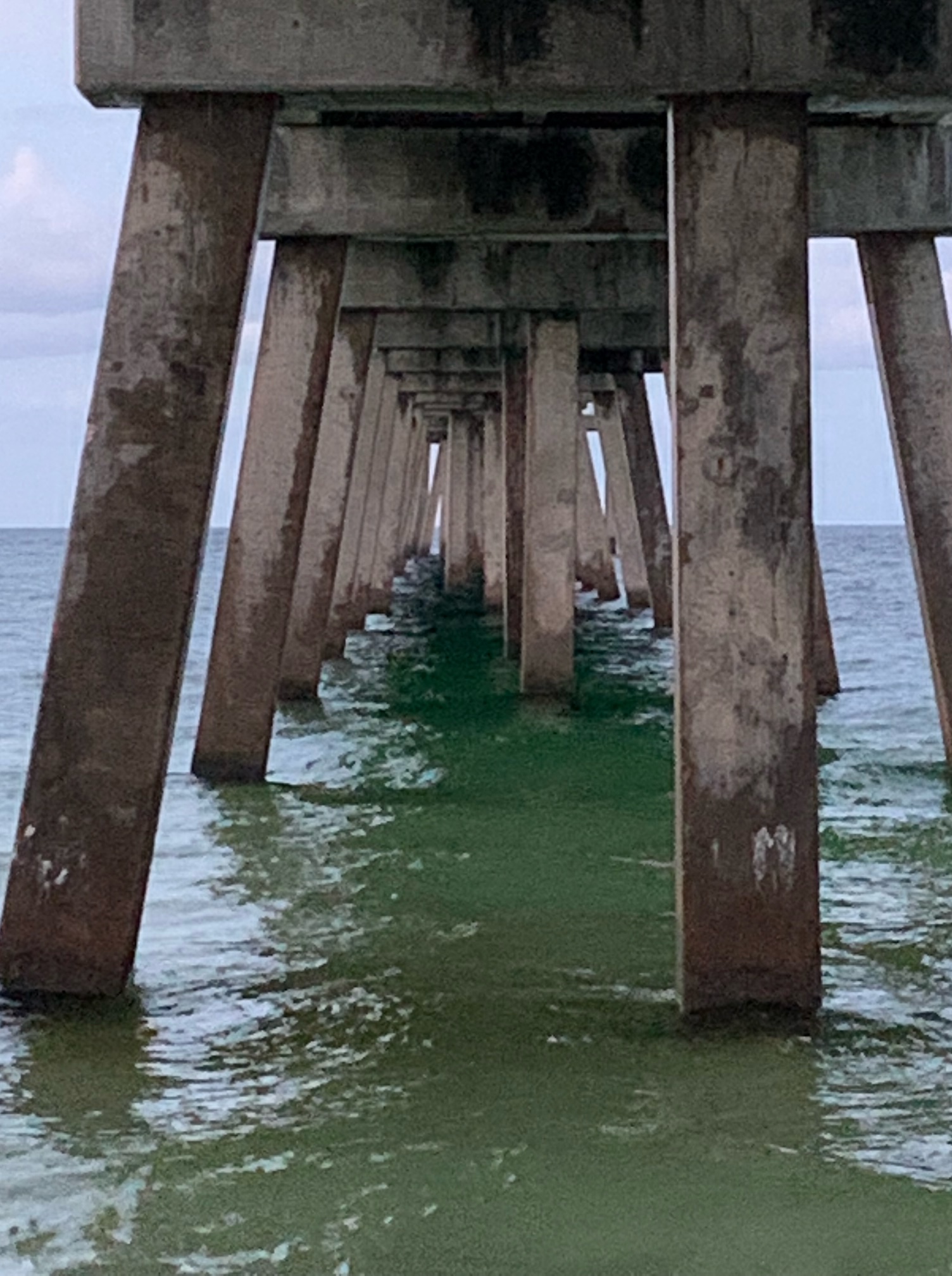
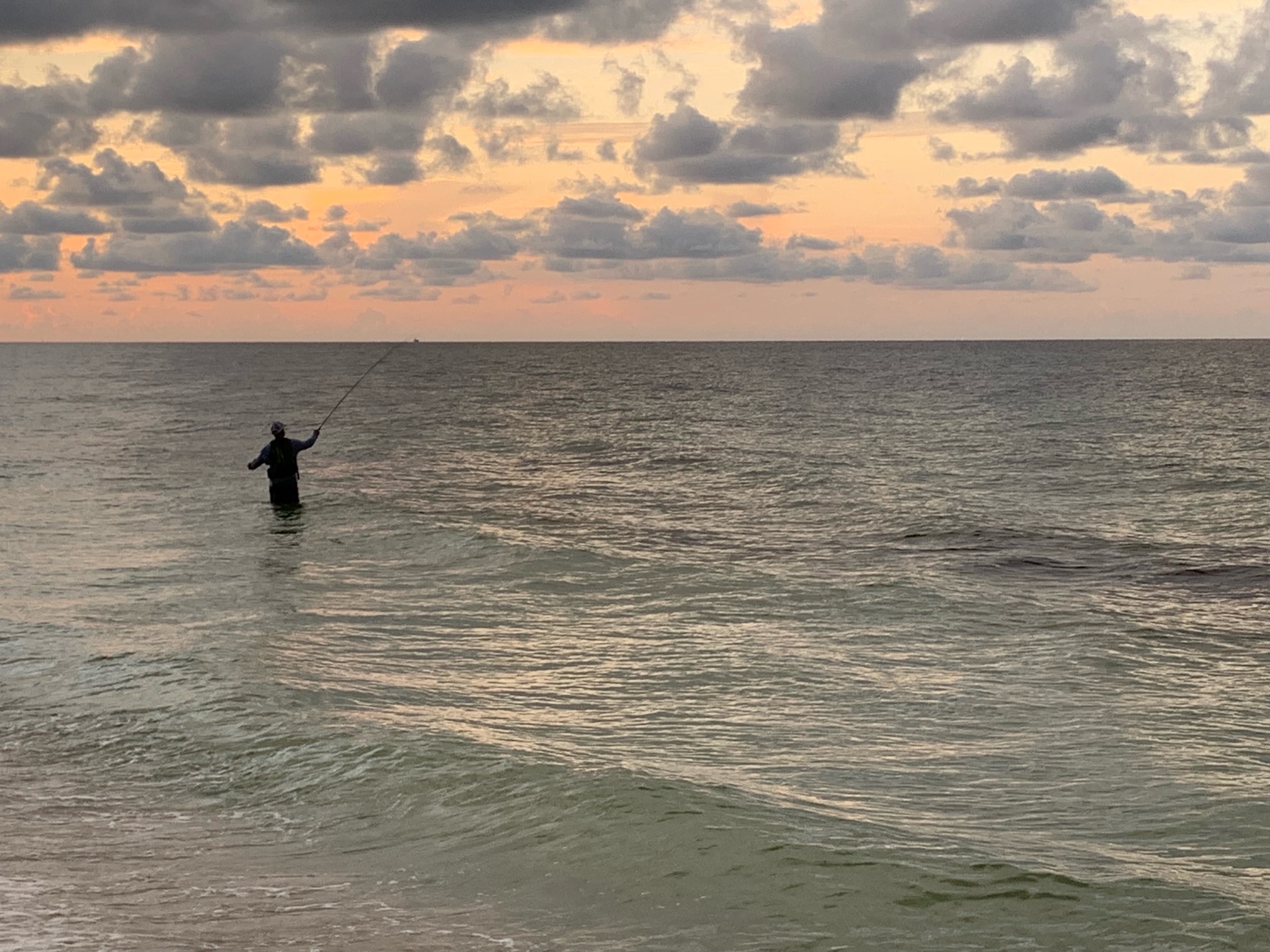
Over recent days I have led another marriage retreat for soldiers and their wives and children. It did not hurt that this retreat was on the Florida panhandle. The sands are white; the Gulf is often translucent; the dolphins hunt just a few meters out into the water and you can see them in the first hour of daylight and the last hour of daylight, almost without fail. Their rounded dorsal fins emerge from underneath, slicing through the sea with ease, and one can lose himself in the view.
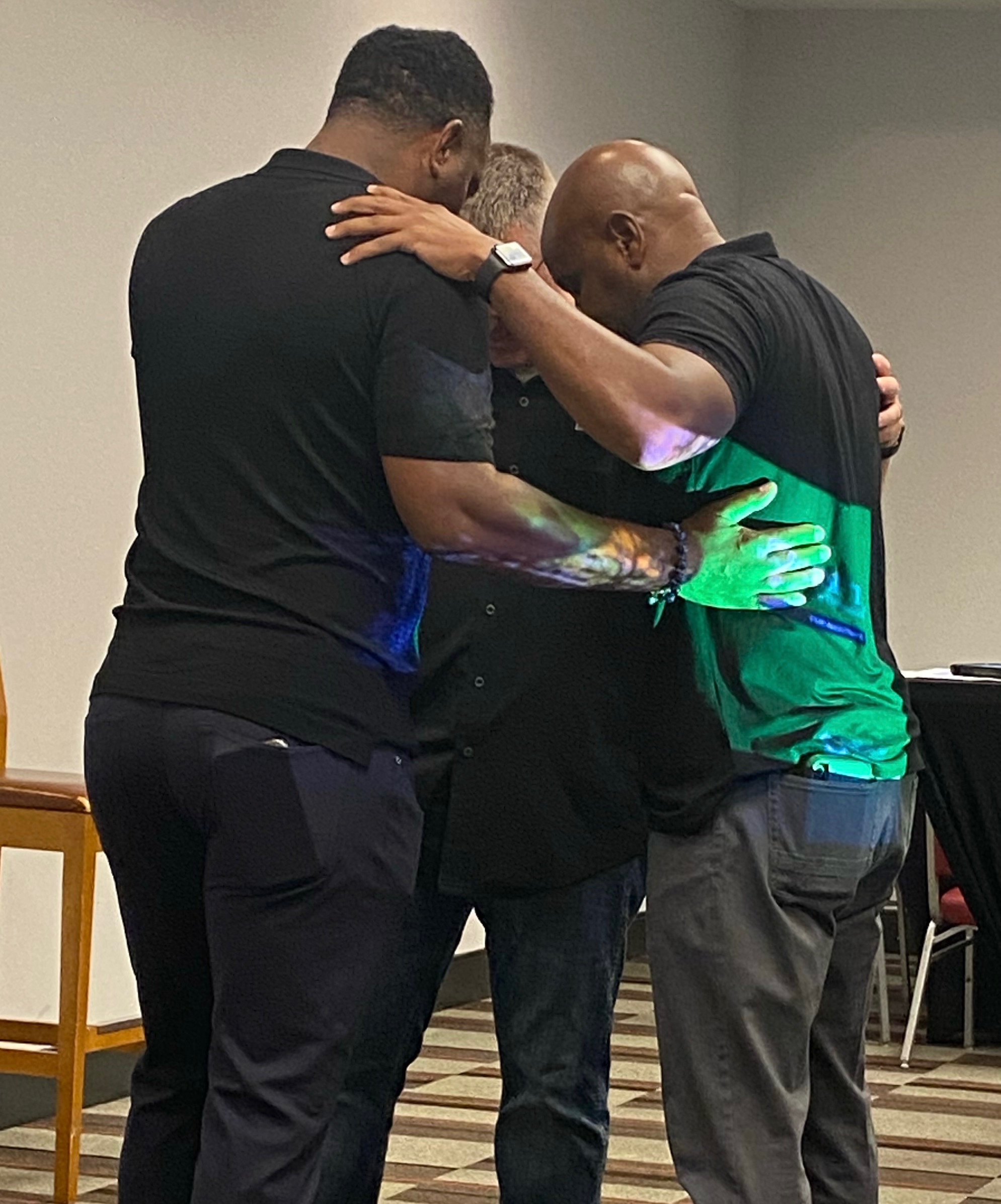
One morning before we began to equip the married couples, one of the chaplains said, “Jon, let’s pray.” And we huddled up in a moment of prayer for the weekend, for God to till hearts and to use us for his purposes. My wife snapped a photo of the moment, it seems.
One afternoon thunderstorms appeared to be forming for their brief refreshing cameo and a small rainbow scene formed above us. I was captured by the scene of the bird flying below the rainbow.
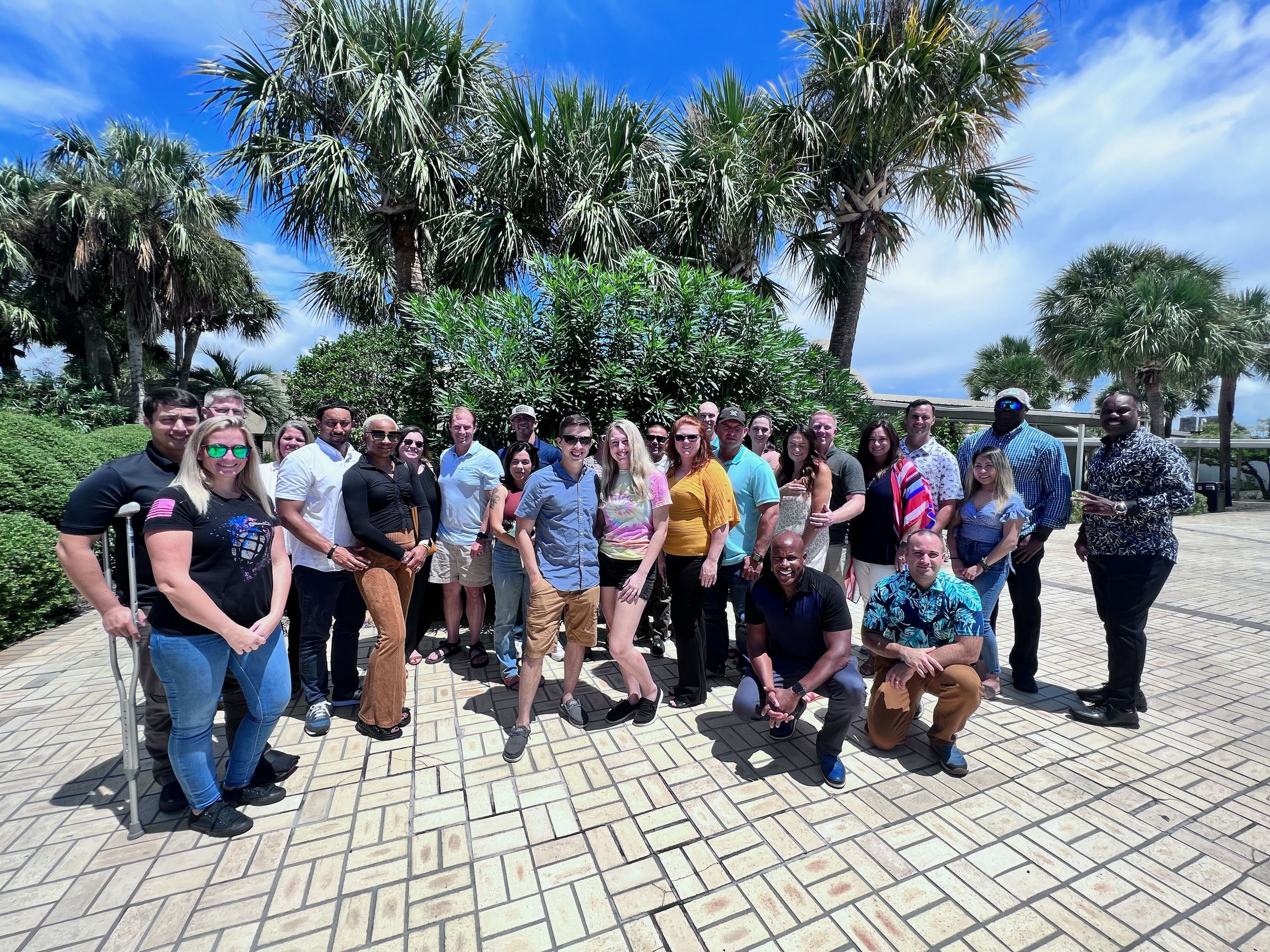
Below are some of the couples we were able to minister to.
I walked the beach with my wife and son. We saw the countless fowl, some fishing, some frolicing, some waiting for sunbathers to throw them scraps.
As I drove back to post I crossed the river for my umpteenth time and felt nonetheless a current of kinship with Huck and Jim (yes, I know they are literary characters, but they live in the lives of those of us who understand), so moved was I by the river’s inexorable flow to the Gulf.
I am quite tired now but thankful, and prayerful that something was said, or done, or perhaps lived out whereby the sovereign hand of the One to whom we will answer may grip these soldiers, their wives and children, and we may come to understand and appreciate the God who authors the seas, the skies, the slice of the dolphins’ fins, the colors of the gulls’ wings, the pastiche of colors in the rainbow before a Florida thundershower, the way people’s feet leave temporary prints in the sands before the waves take them out to the sea again.
I am so thankful to have this ministry and to have a wife who’s indispensable to any success I may’ve had, my co-laborer in the faith, the one whose hand I hold on the beach each and every time.
Books. Specifically, true ones. Books that herald truth. Books that expose false worldviews. Books that demonstrate veracity via evidence.
When sleep will not come, bibliophiles do what we do: we turn the leaves of another volume.
Over the last 36 hours, I read–once again–one of my enduring favorite theologians/pastors/writers.
I cannot say that he’ll ever surpass Jonathan Edwards for me, but he and Machen and Sproul are treasures nonetheless.
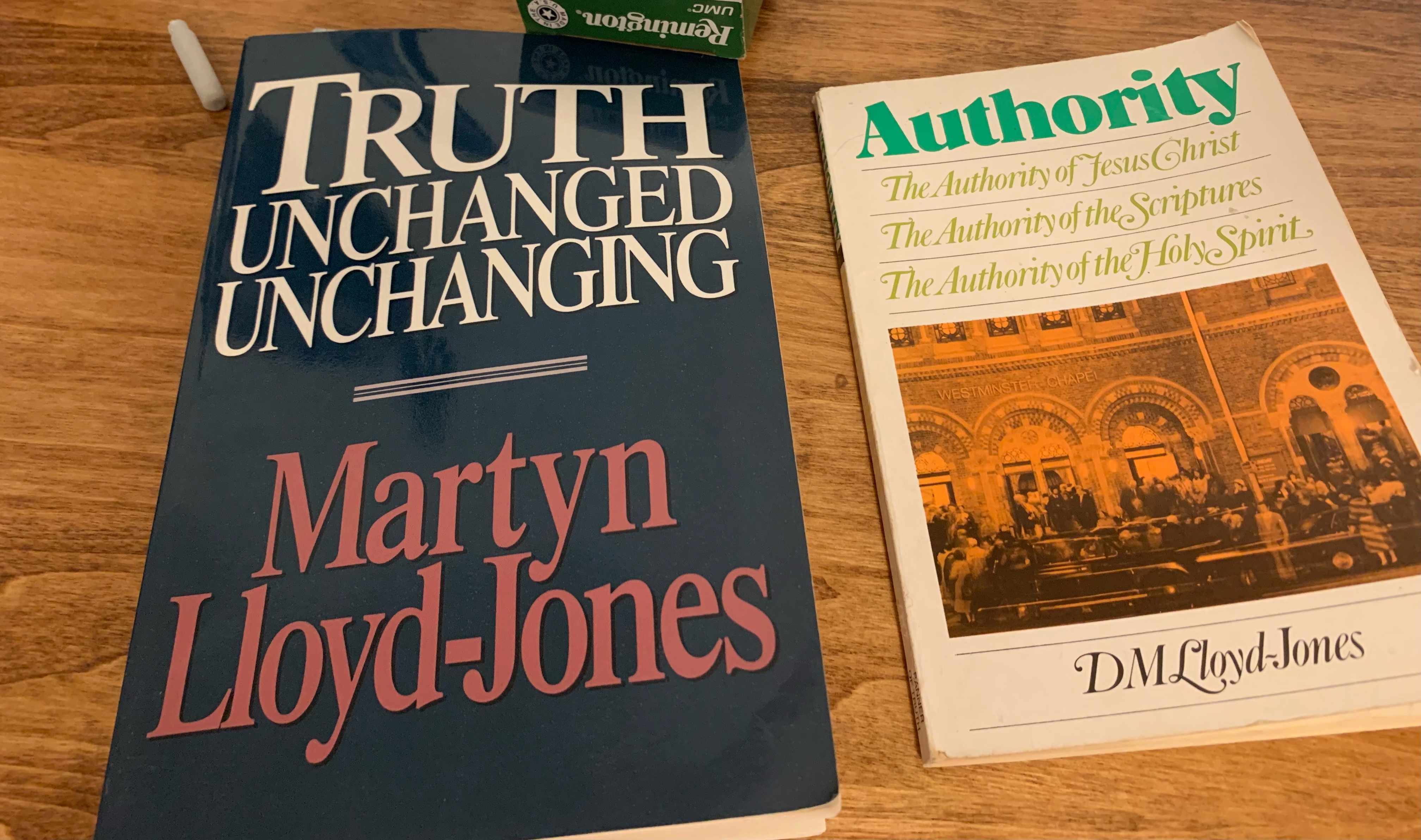
His name, of course, is D. Martyn Lloyd-Jones. And the two volumes I read again were Authority and Truth Unchanged, Unchanging.
Both pieces were penned and taught/preached in the 1950s.
That amazes me in one formidable sense. The same ‘progressive’ and ‘liberal’ and ‘scientific’ propaganda was being peddled then, and the gospel shattered it and outlived it, just as promised.
The good doctor of the soul wrote where all might take up and read, see and understand, and come to our senses.
Blessed be the faithful Lloyd-Jones and the glorious truths he faithfully expounded in words and in deeds.



































 MIND & MATTERS