Powers of Water

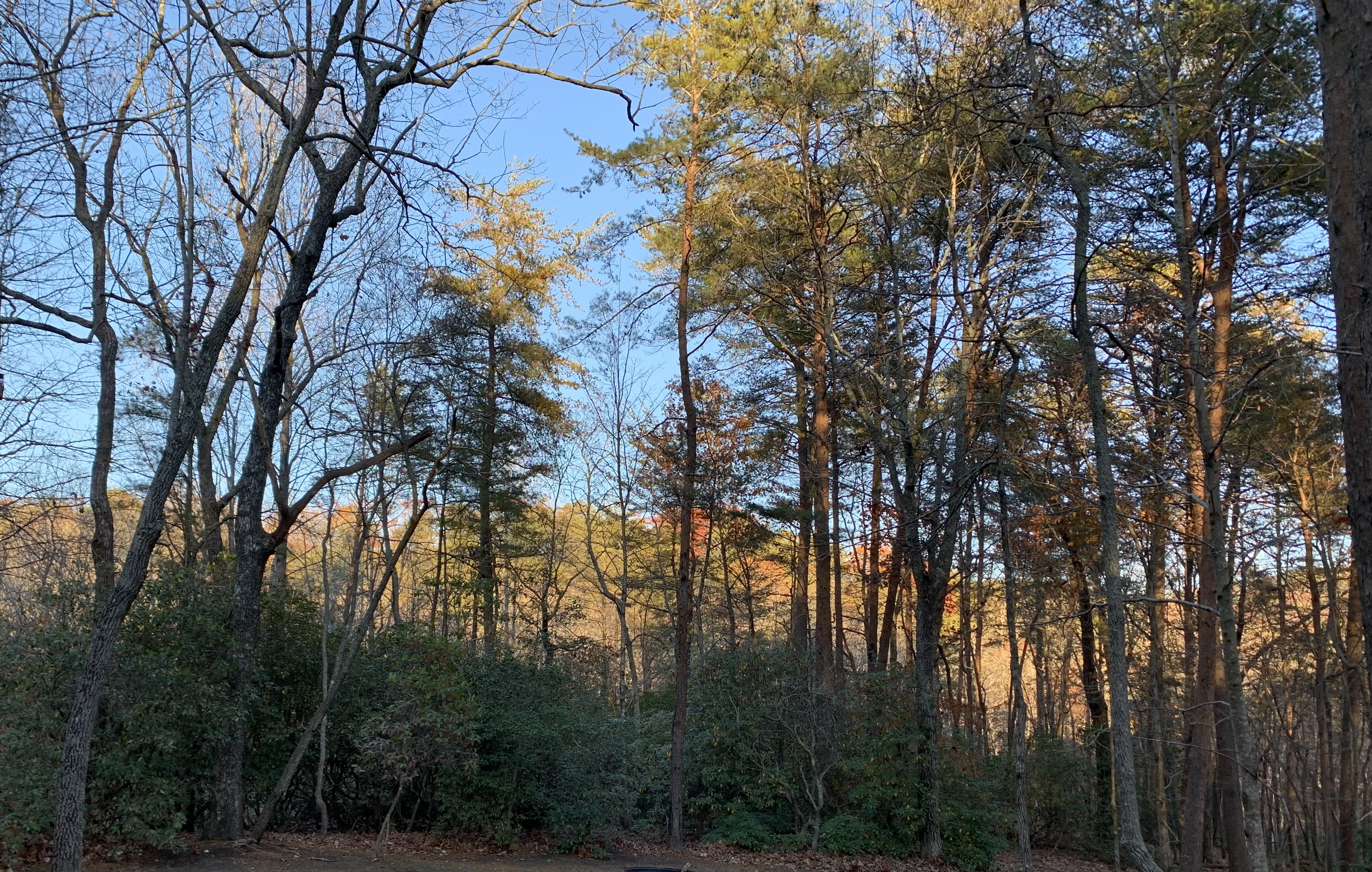
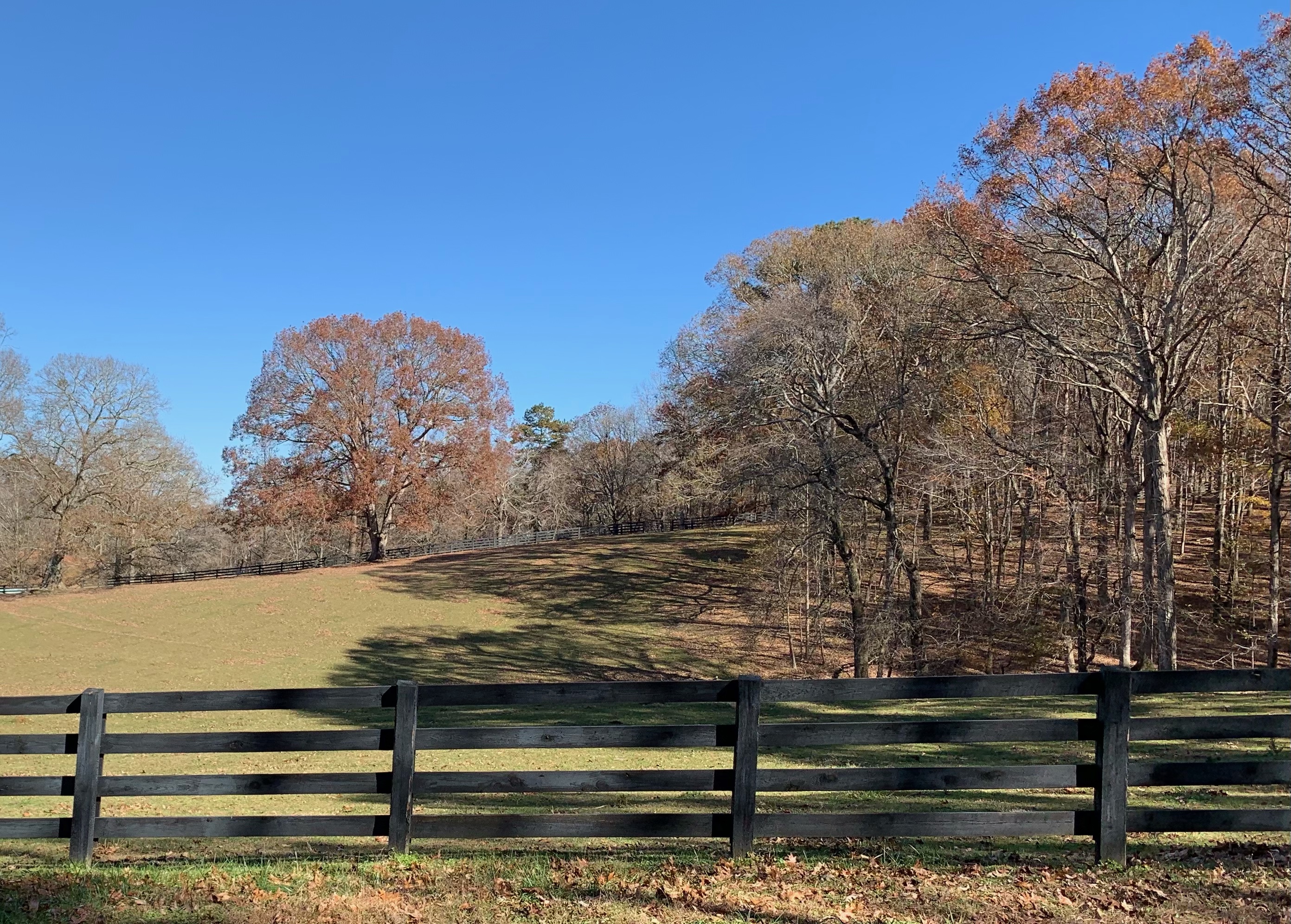
Some of our soldiers were jumping (as part of airborne operations) at the DZ (Drop Zone) on the west side of the river. To watch them, to be with them and their families (many of whom drove out to view the jumps), I drove west through a scenic part of the training area. Lots of hardwoods. A couple of air fields. UH-60s, C-17s, and C-130s were visible from the road. I watched them take off and land several times as part of training. I wound my way to the DZ and crossed the river. As I approached the bridge, I checked my rear view mirror to be sure no one was behind me. I rolled down my passenger-side window and snapped a couple of shots of the river with my iPhone. I don’t know why, at least not in the ultimate sense. I have crossed rivers on several continents many times and yet each time I’m a kid again at heart. I look down from the bridge and marvel at the power of the water, at the beauty of tree-lined banks, at the smells and sounds of rivers, and I feel my smallness and contingency amidst the grandness of waters.
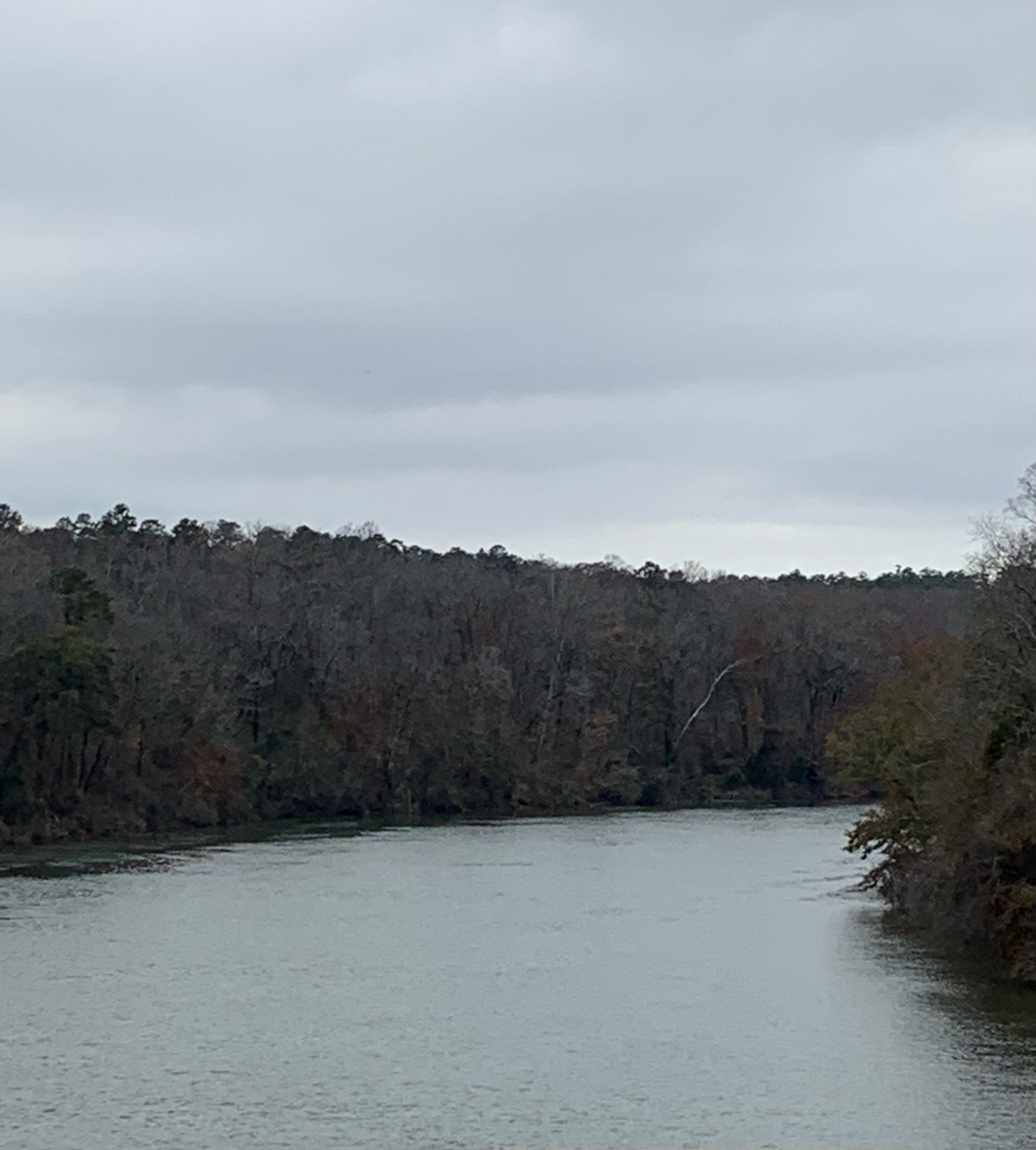
Most people, I think, would have just driven across the bridge with no thought, not even paused to look–to see the fowl in the tops of trees scanning the waters where shad flashed silver-gray beneath the leaden sky. Trails led down to the water where anglers and kayakers had worn their way to and from the river. I felt it again: smallness. My temporariness amidst the enduring power and mystery of rivers.
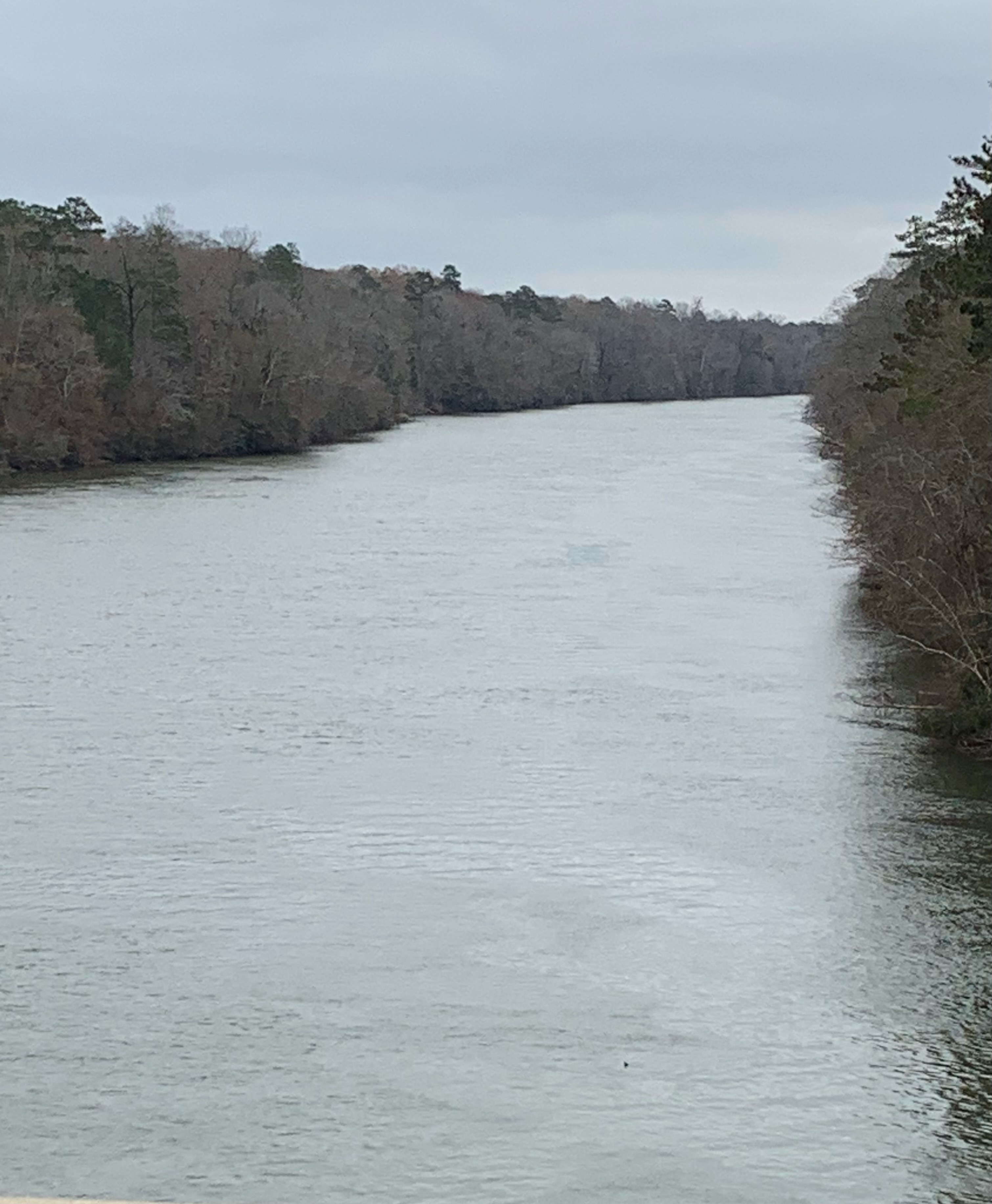
A car approached from my rear. I knew I had to speed up or be laughed at for pausing at a river people cross daily en route to work. “Who is this guy? Why photograph this? Good grief,” they might scoff. I’m at a place, however, where I don’t care anymore about why I am captivated. I’m wired this way–to look about, to attend, to learn the names of fellow creatures and creations before me. As I crossed the river, the language of taxonomy washed across my mind like liquid: hickory, cottonwood, longleaf pine, dogwood, swamp oak, pin oak, bream, carp, channel cat, white perch, redeye, shoal, smallmouth, and largemouth bass, turkey vulture, red-tail hawk, mourning doves. The words of the world in the crossing of the river on a cloudy December day where I was reminded once again of the powers of water … to wash the senses and imagination with words that name the world and in so doing make it speakable.

Enveloped

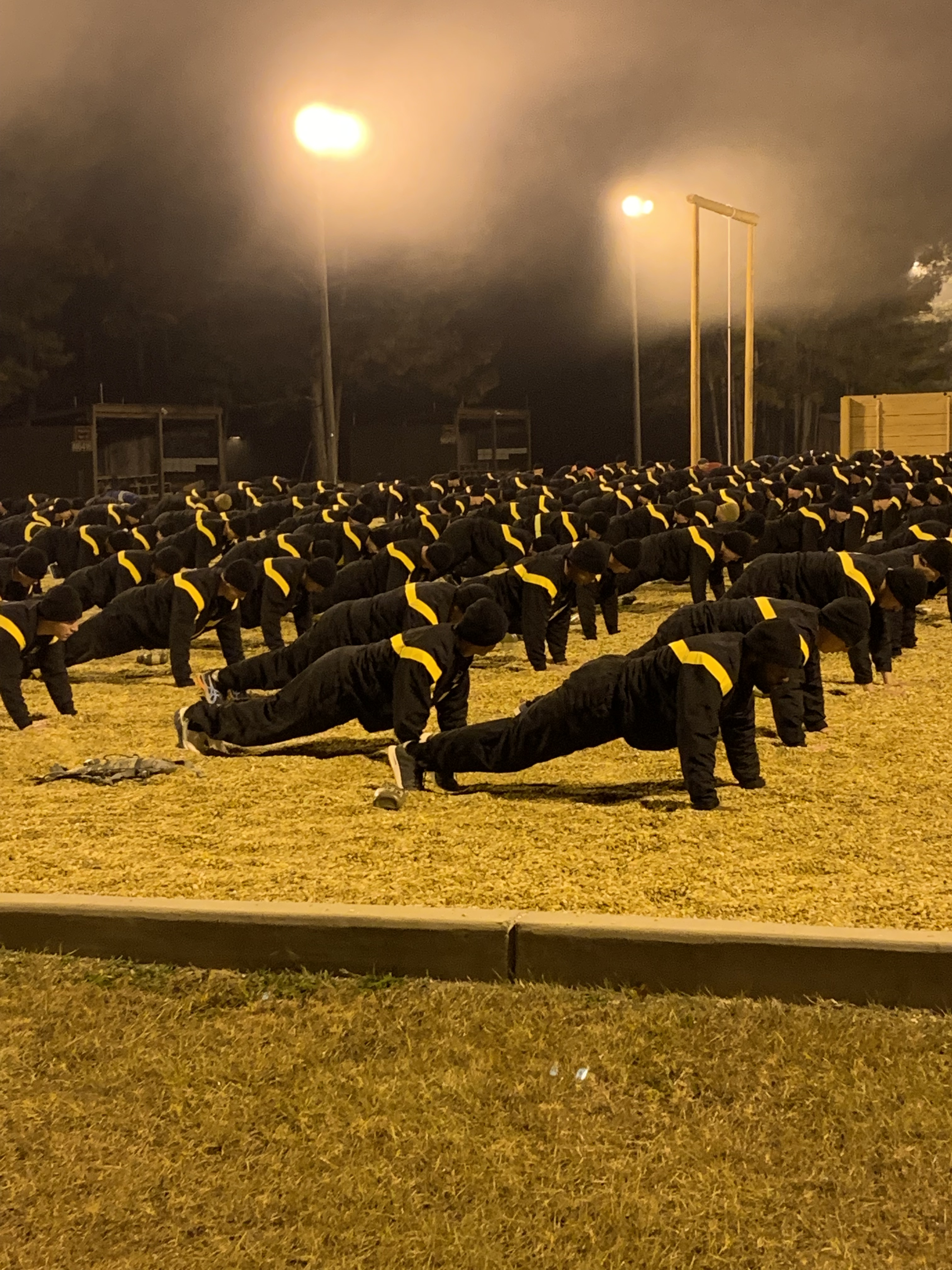
Opening the door to walk outside in the wee hours of this morning I was enveloped within windless fog. As I drove to the running trail for PT, my vehicle’s fog lights shot lances of white light into thick vapor for the drive. Normally I see whitetails grazing beside the roads. Today, however, I saw nothing but a black sow that had been hit by a vehicle as she attempted to cross the road. The deer and wild hogs abound here, so they are comfortable–and sometimes too comfortable, as was the case with this sow–with human contact.

When I arrived I parked and started my warmup on the running path. A runner, going clockwise on the path, passed me. Breathing heavily from the hill he’d just ascended, he appeared–even in the fog and dark–to have run several miles already. I knew him to be a strong runner and he was sweating heavily.

As I rounded curves on the running path, the heaviness of the fog haunted me. I am not one to watch or read the horror genre, but if one were looking for eerie cinematography, today’s predawn hours would have satisfied. I heard no wildlife either. Usually at this time you can hear the frogs in their choir, the cicadas if the season’s right, or birds stirring. But this morning, only silence, fog, the smell of water in the air.

Mornings like these remind me of what I have read hundreds of times–that man is a vapor, a mist. James put it this way: “yet you do not know what tomorrow will bring. What is your life? For you are a mist that appears for a little time and then vanishes” (4:14).

It is humbling. It is instructive. When I know from experience that this thick fog and mist will be burned away in a few hours, and this heavy silence will be stolen by the sound of the day’s labors, many will be tempted to forget this fog, this solitude and silence, and the fact that it is all so fleeting. We have only so much time to do that which we are called to do, and I feel it viscerally. It is as enveloping as this fog.

Three and a Half Hours Before Daylight

My knees were hurting today after a ruck earlier this week when I rucked and/or jogged several miles in combat boots. Young soldiers did it with no issues. I could hang with most of them but I paid for it later. My shins did not appreciate running in boots. They have ways of letting me know for the next three days. But today when the sun popped out and the clouds were burned away, and I had checked off some errands and done several quotidian things most folks engage in, I put on a pair of running shoes, but not to run, and certainly not in combat boots, but just to enjoy a leisurely walk for an hour or so—to be outdoors on a partly sunny day. It was quite warm  outside for December, even for GA, but nonetheless pleasant. 

     As I walked, I looked at the houses in the neighborhood where I’m currently residing. Many residents had erected inflatable Santa Claus figures in their yards and strung up lights on their shrubbery and homes. Most of the residents’ houses displayed a U.S. flag from a pole near each home’s main entrance. Many families were doing what I had done earlier in the day—returning from the grocery store or oil change station, or going out to run normal errands that come around quickly. 

     A few weekend runners and walkers were out, too, as were children. I saw twin girls, probably four or five-years old, riding their bicycles without training wheels. The girls shared the same curly brown hair and they both were in Christmas-time red and black and green pajamas. But their bicycles were pink, as were their helmets. Their dad was unpacking military gear from his gray Toyota 4Runner and watching his girls pedal down and back on the sidewalk that ran in front of their home.   

     An hour or so later, I was back at my place. I showered, ate a little snack, checked in with my wife, read some, got my thoughts together for what I’ll speak to soldiers about tomorrow as I’m given opportunity to minister to them. For this particular group I will be addressing, they are about halfway through a rigorous school. They are being tested physically, emotionally, and academically. 

     I’ve watched the class size go down daily since they arrived and began training. It has more than dawned on them that this training is for real, not some check-the-block tab/badge they get by mere talk. No, when I arrived this morning at 0400 to attend the safety brief for this morning’s run, the soldiers were already doing warmup PT (physical training). It was very humid and cool 

 this morning, so when the soldiers exhaled, their breath made clouds of mist in the early morning air under the lights in the PT pit. 

     I watched; I prayed; I felt my age and longed to be young again and not have knee pain, but I remembered to laugh at myself, too. I’m not special. I signed up. I love the pain at least in this sense: it reminds me of the hundreds of miles I’ve put in the countless pairs of now slick-soled boots, and running shoes, and of all the mornings when young soldiers like these are training when most of the world is still in bed for several hours.

It reminded me of one of my favorite books from N.D. Wilson where he writes thus:

“And from it all, from the compost of our errors, God brings glory—a world of ripe grain in the wind.

By His grace, we are the water made wine. We are the dust made flesh made dust made flesh again. We are the whore made brides and the thieves made saints and the killers made apostles. We are the dead made living.”

Yes and amen. 

1 N.D. Wilson, Death By Living, (Nashville: Thomas Nelson, 2013), 167.

I Wonder How …

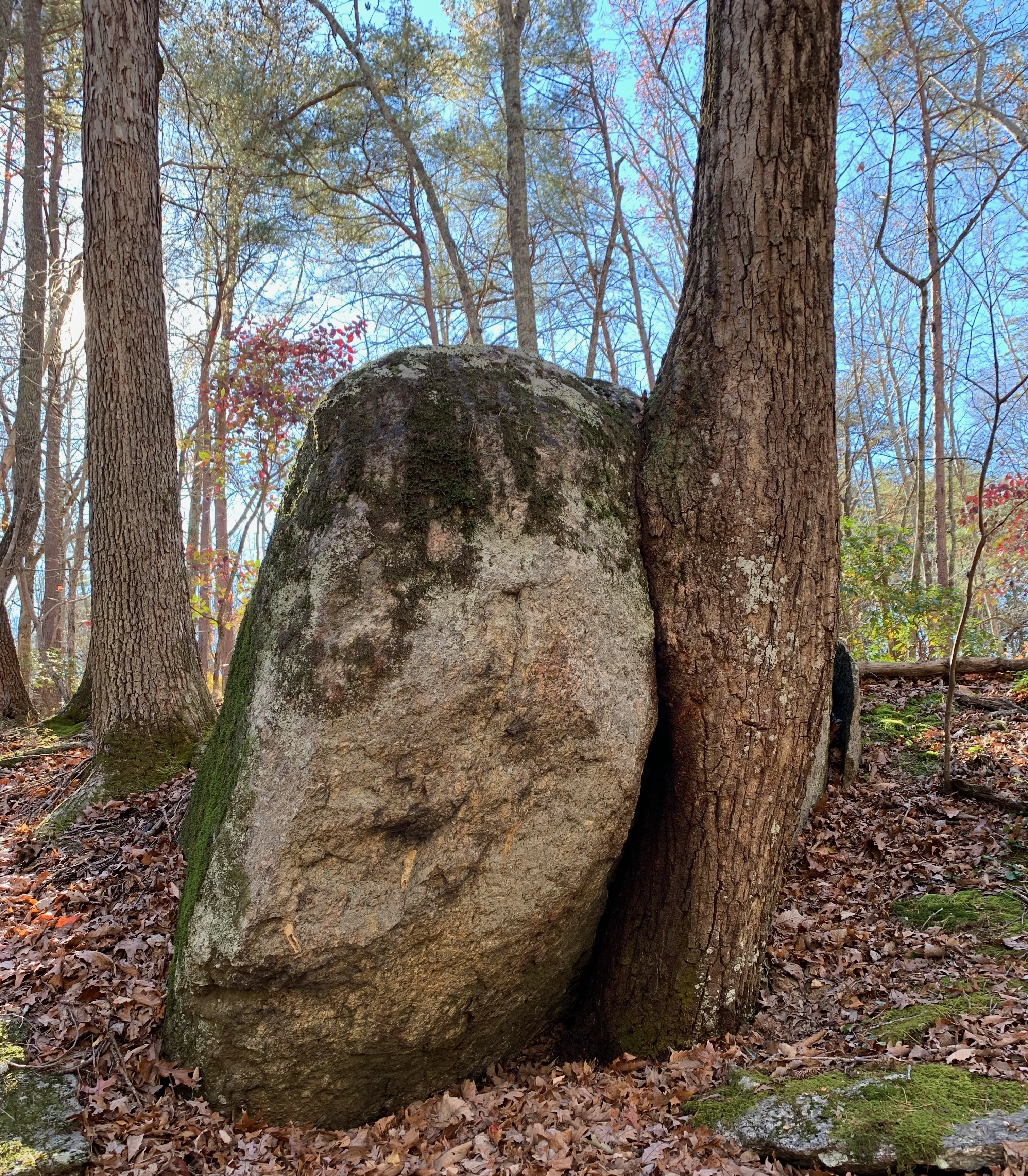
I wonder how long this took, how the tree was able to find the light provided. Now even animals nest in the small grotto that is formed behind the tree, a cleft that is home to some.

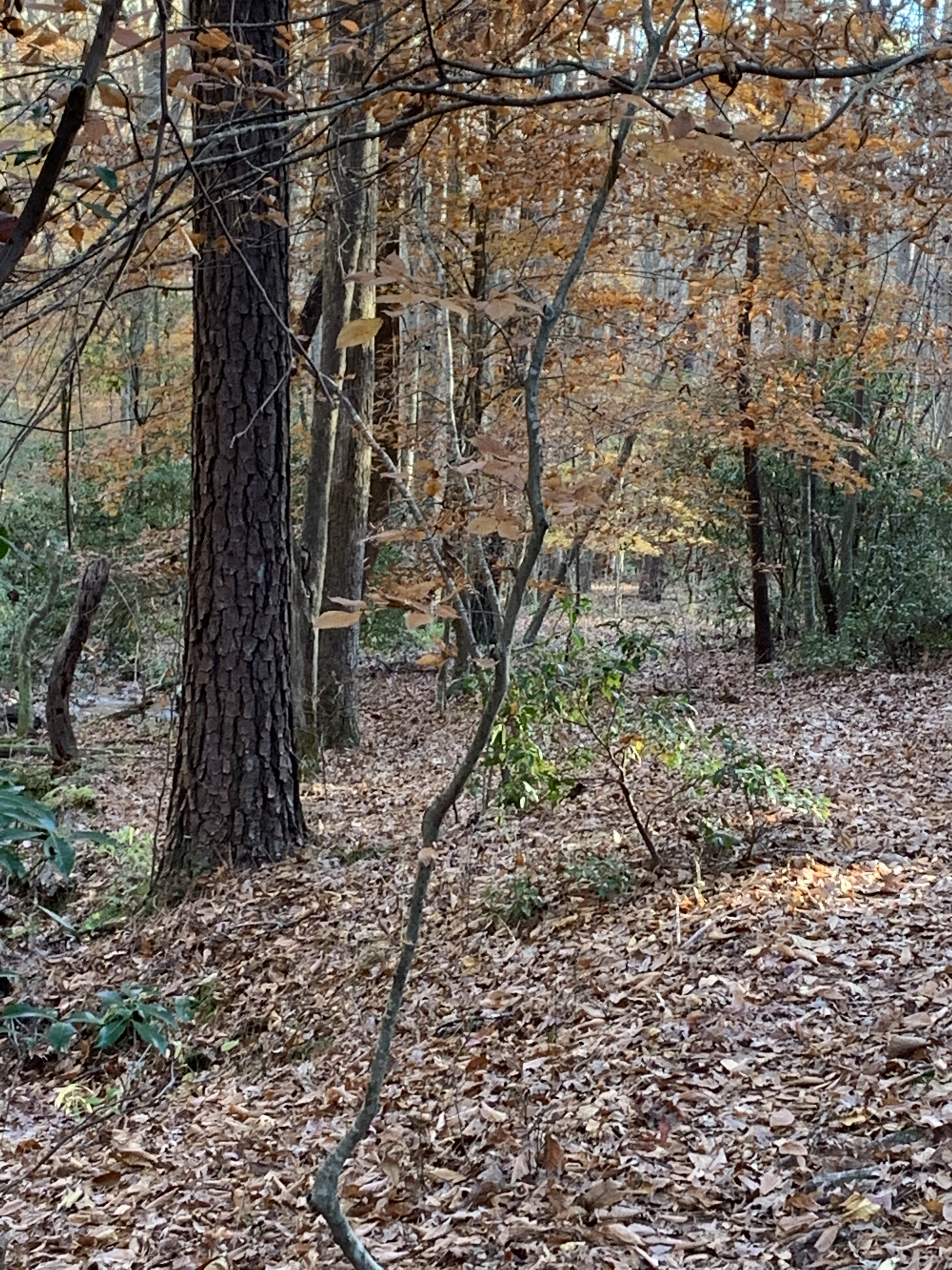
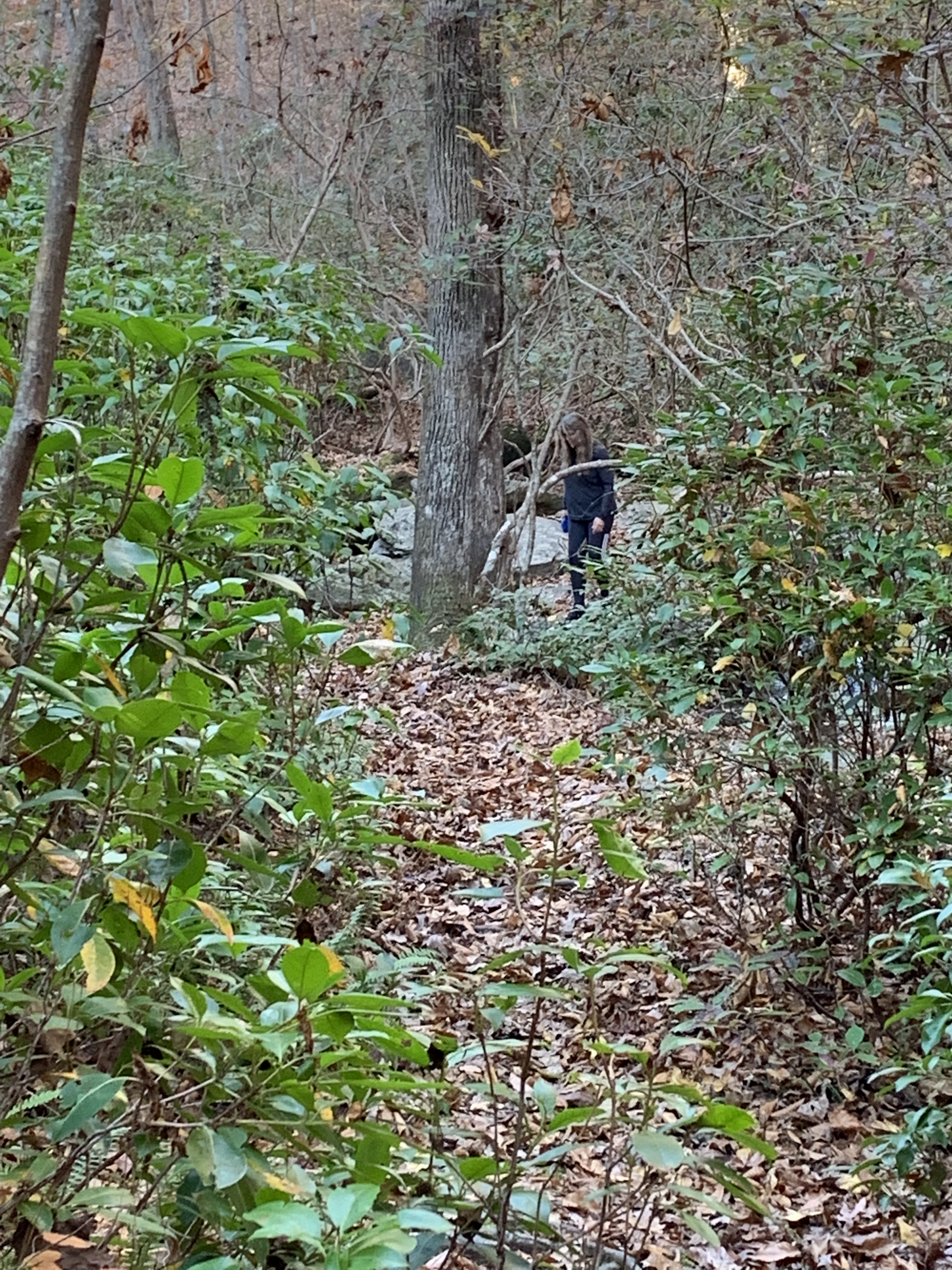
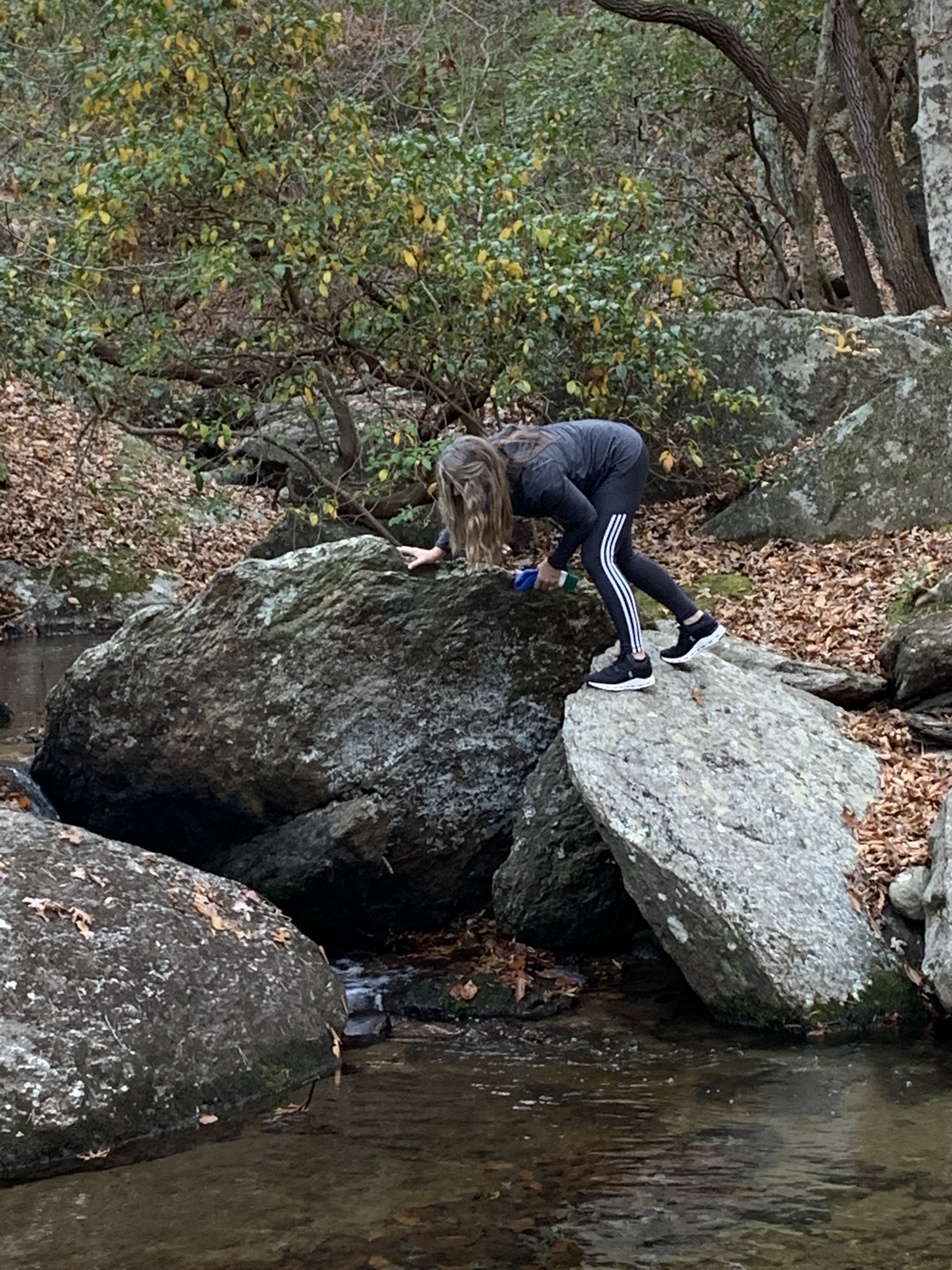
Often when hiking I step upon granite, limestone, and shale in my climbs. Oftentimes lichens carpet the rocks and stones in deep green moss that reminds me of the color of a billiard table. Green atop gray. Here an oak and stone lean upon one another. I love this spot. I pass it often on my way to the creeks that merge below. Game trails pass around the area, too. If you pause, you can hear the waters run below.

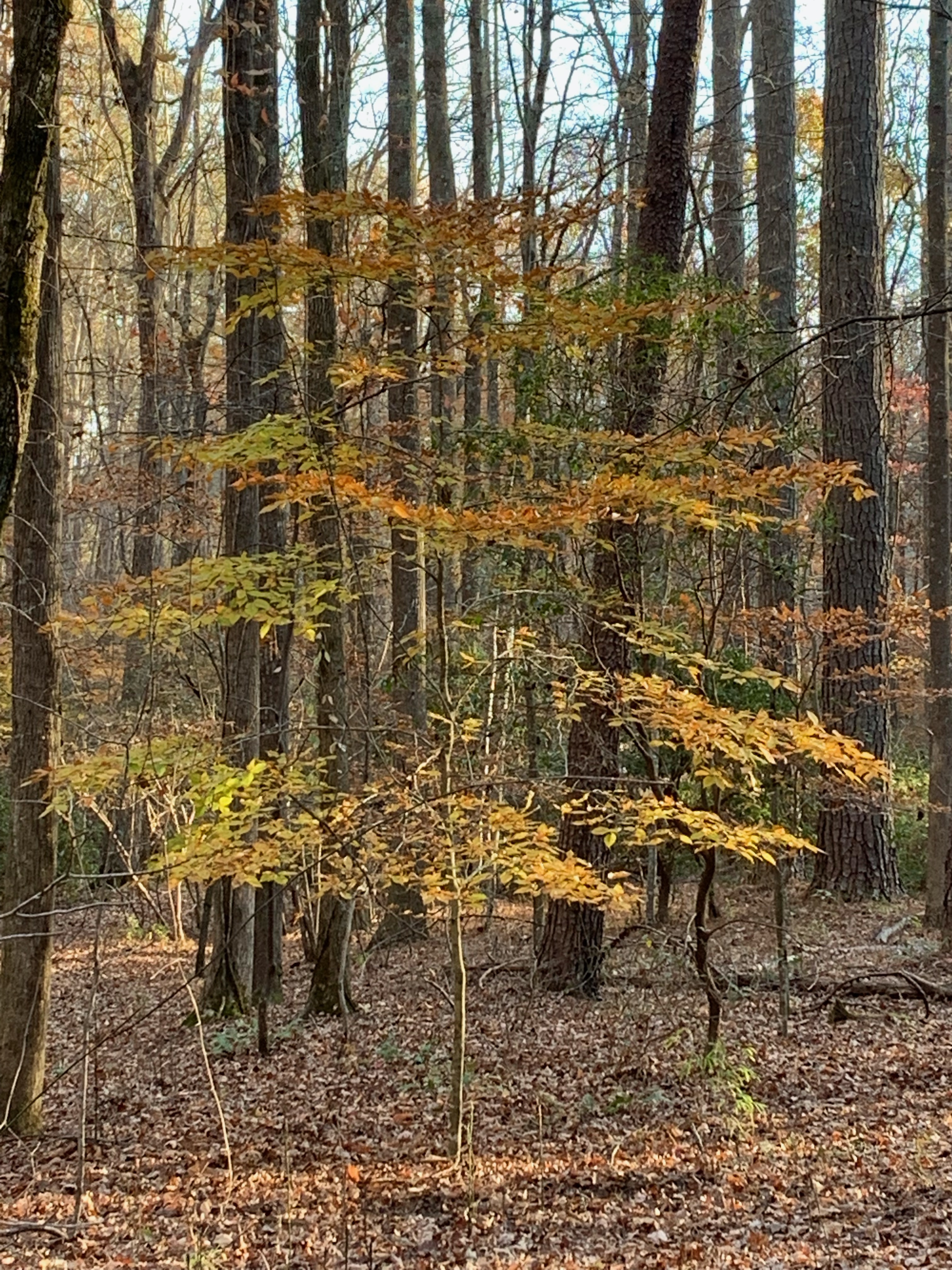
This time when I paused, I don’t know how I would have improved upon the display. Most of the leaves had fallen from the hardwoods by now; white birds migrating south honked in the sky above my head; gray squirrels scampered when I made noise walking (they’d scurry up the oaks, shake their tails in alarm, and bark to each other). I could smell the creeks below; and I knew I’d see whitetails if I would just remain quiet for a while.

I used my smartphone to snap pictures. To attend. To notice. To appreciate. Gratitude seemed the appropriate response to a banquet. It’s almost as if God Himself had said, Taste and see.

Buck in November

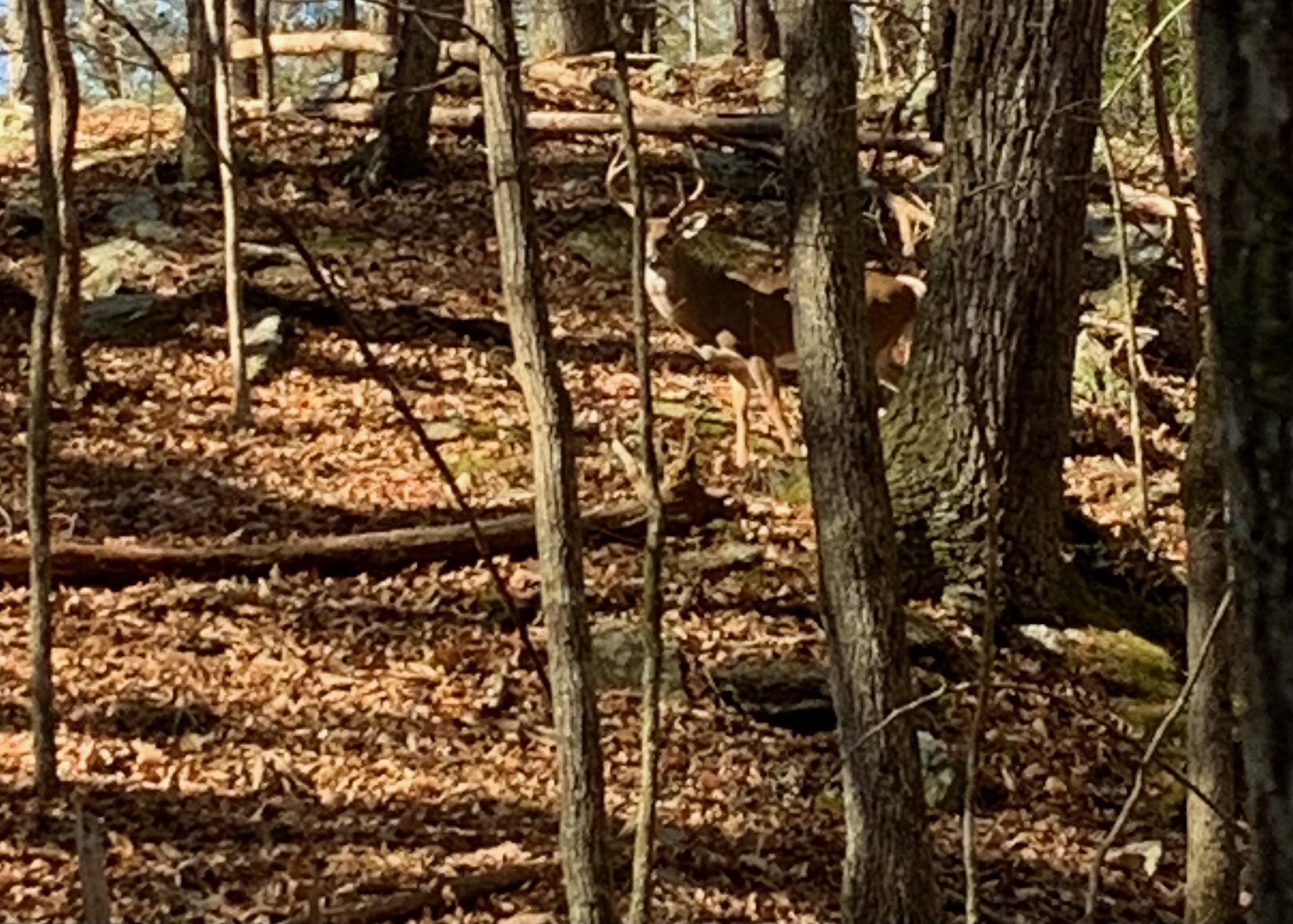
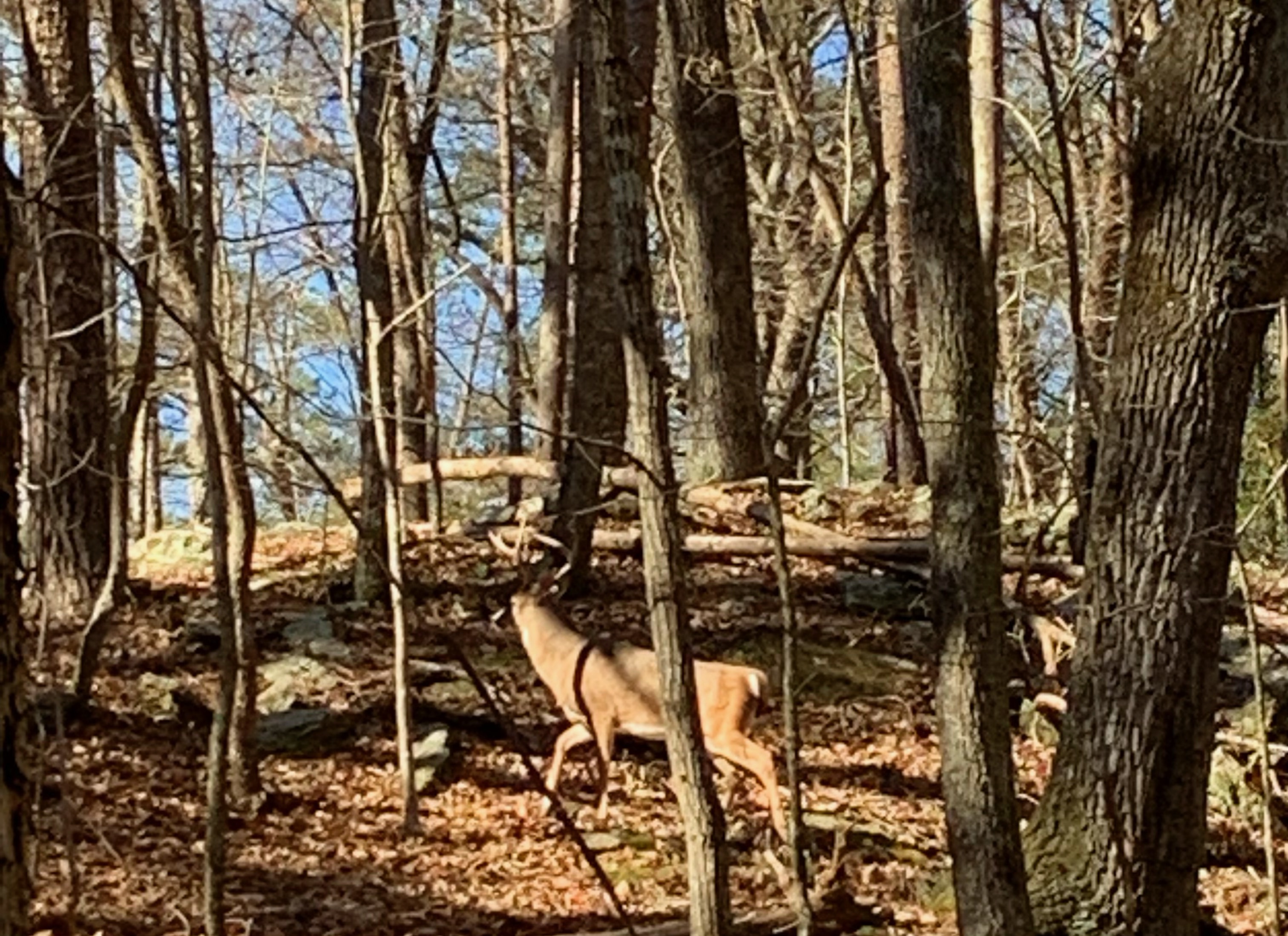
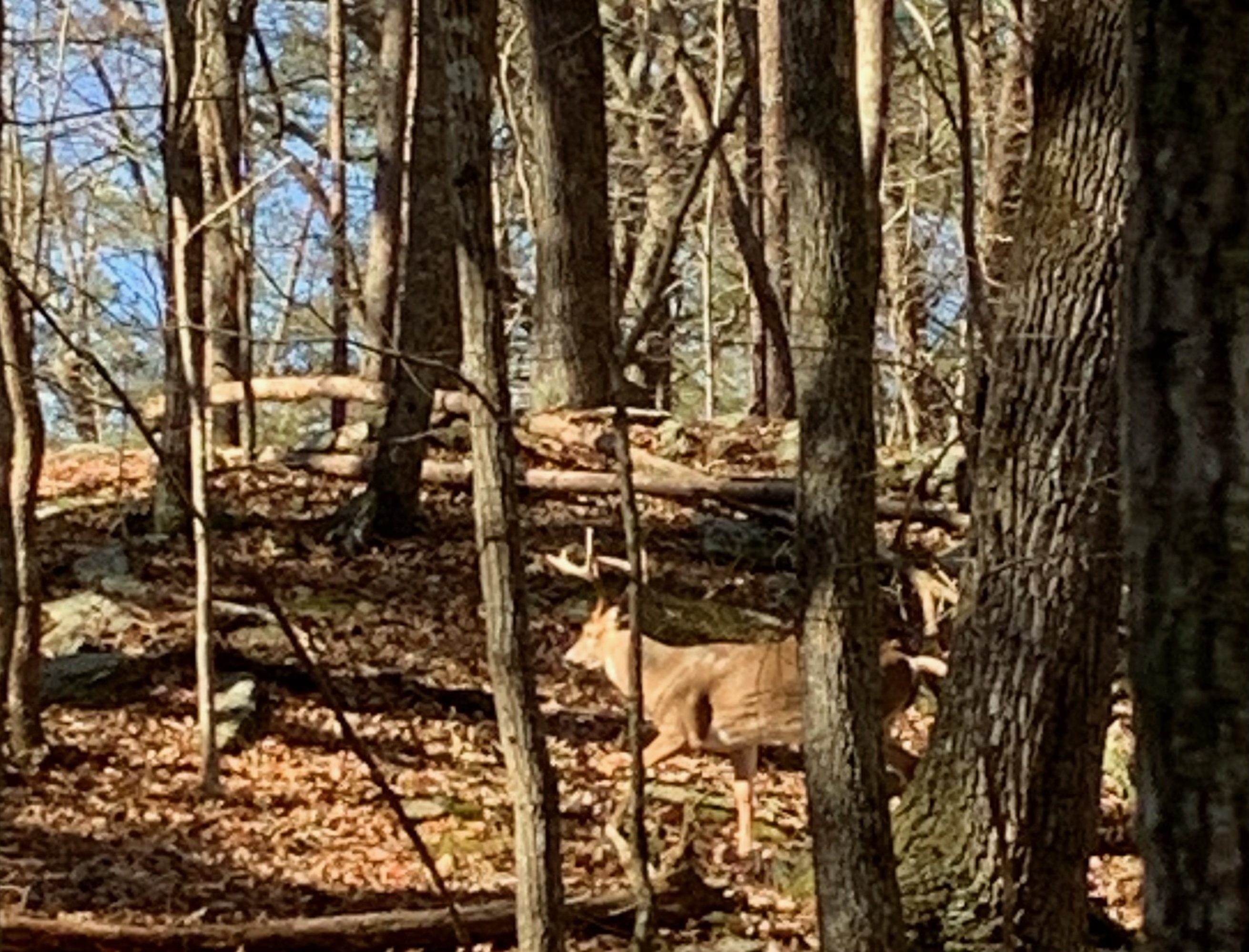
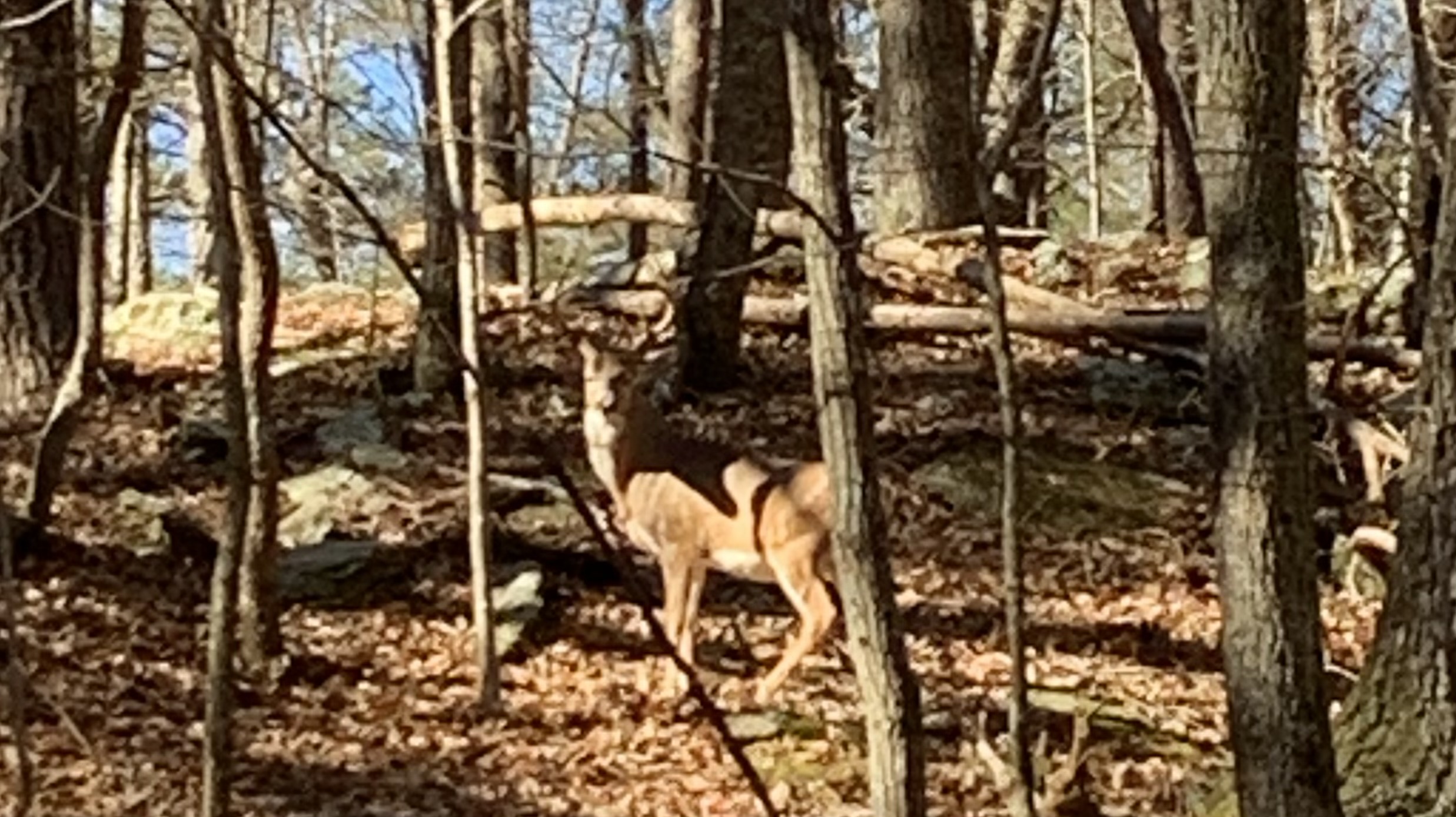
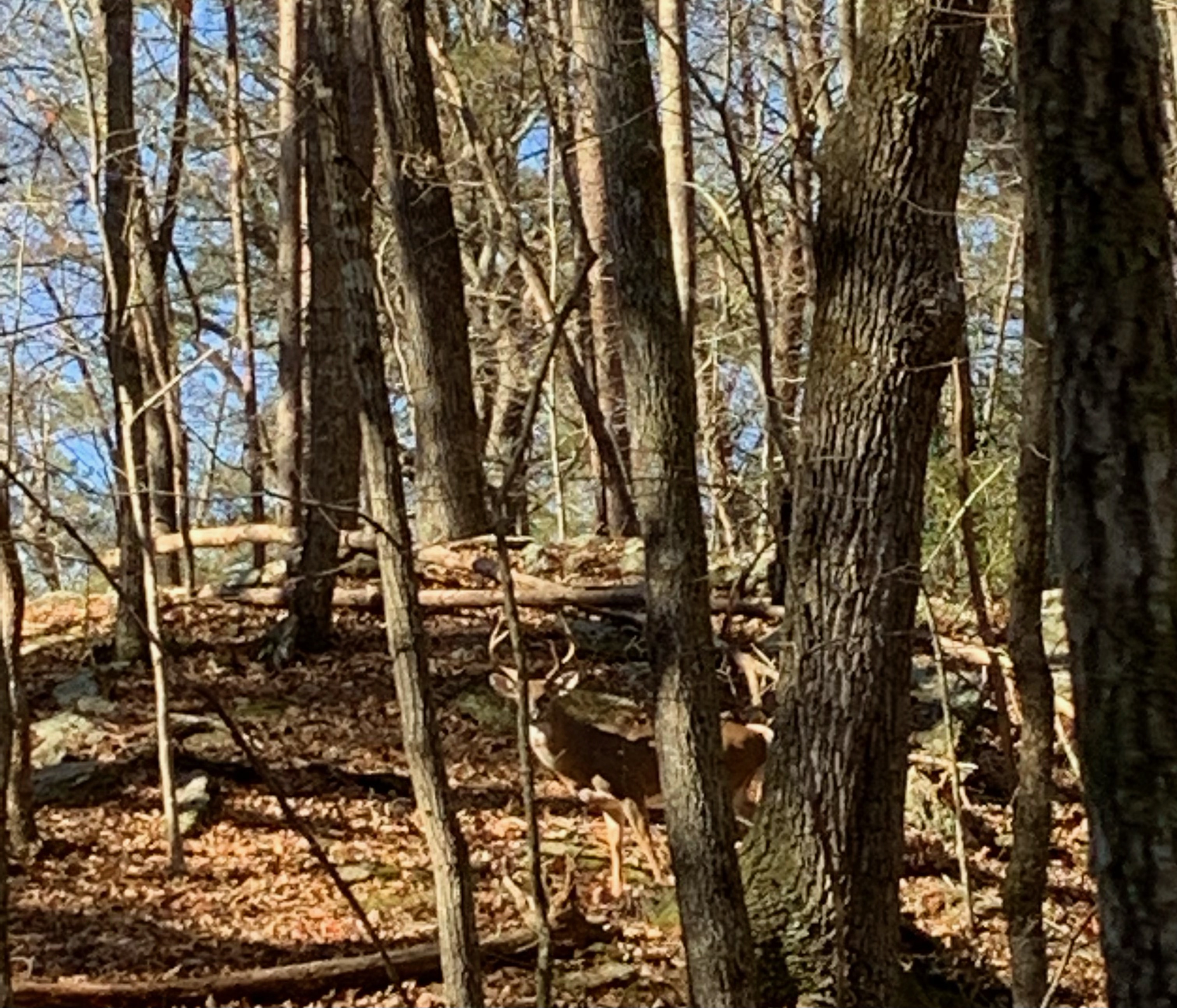
I heard him before I saw him. The leaves are very dry, and the sounds seemed amplified. I had the creek to my north, flowing on my right side. I had just come down a spur to the south. I put up my hammock between two mature oaks where two streams merged below me about fifty meters to the south.

I was still swinging from having gotten in. He came running down the spur on which I, too, had just descended. As soon as he got within about twenty meters of me, he sensed me. I don’t know if he saw me or smelled me, or both. But he knew immediately I was there. In his path. He held his head high, looking right at me. I tried to catch a video of him. For maybe fifteen seconds, we beheld one another. It never gets old. They are majestic to watch. Enjoy.

There are a couple of short videos here:

and here: https://www.youtube.com/watch?v=FXeLXGtrHYg

The Small Things Are Not Small

“Let’s go get a real tree,” she said.

“Yes. Let’s do it,” I said.

We had passed a local Christmas tree farm recently on an afternoon drive back home.

“Let’s go there,” she said. “They’re local.”

“I agree.”

So we loaded into the truck and headed out. The weather was as autumnal as its defining characteristics–wind that made your skin shiver; leaves that crunched under our steps; cerulean skies; temperatures in the forties.

The road to the Christmas tree farm is a state highway through countryside. Driving it, you see horse farms, cattle ranches, million-dollar new homes that aim to look rural, and then you see trailers and shanties, too. I love the contrasts, actually–the range of people and types.

We were far from alone when we arrived thirty minutes later at the Christmas tree farm. Trucks lined the highway.

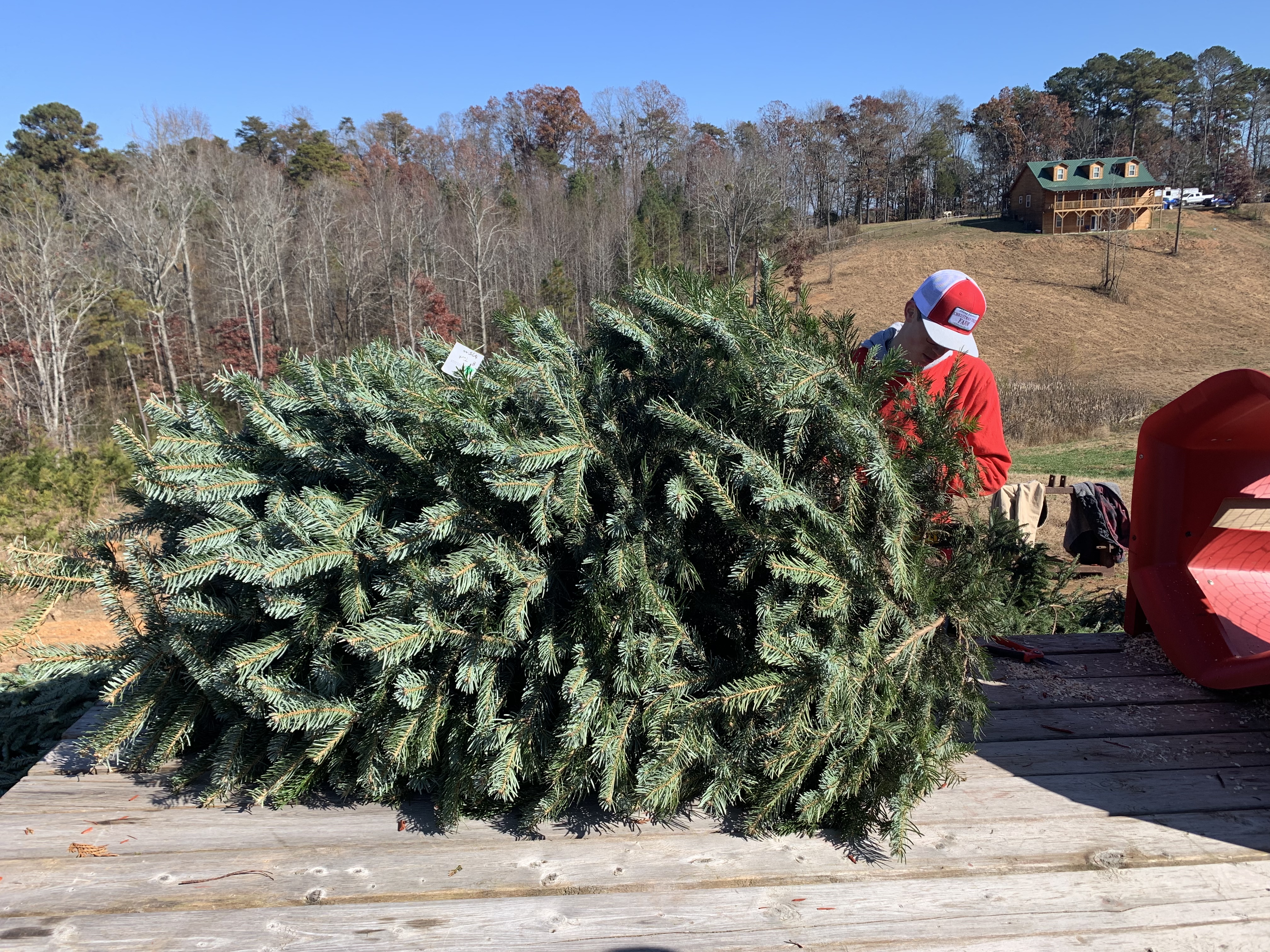
We saw some Frasier firs first. But then she saw the Turkish fir, and was hooked. It was full, smelled as delicious as Grandma’s house on Thanksgiving Day. “This one’s so pretty!” she said.

“Yes.”

“You done looking, already” I asked?

“Yes,” she said. “I’m so glad we came here.”

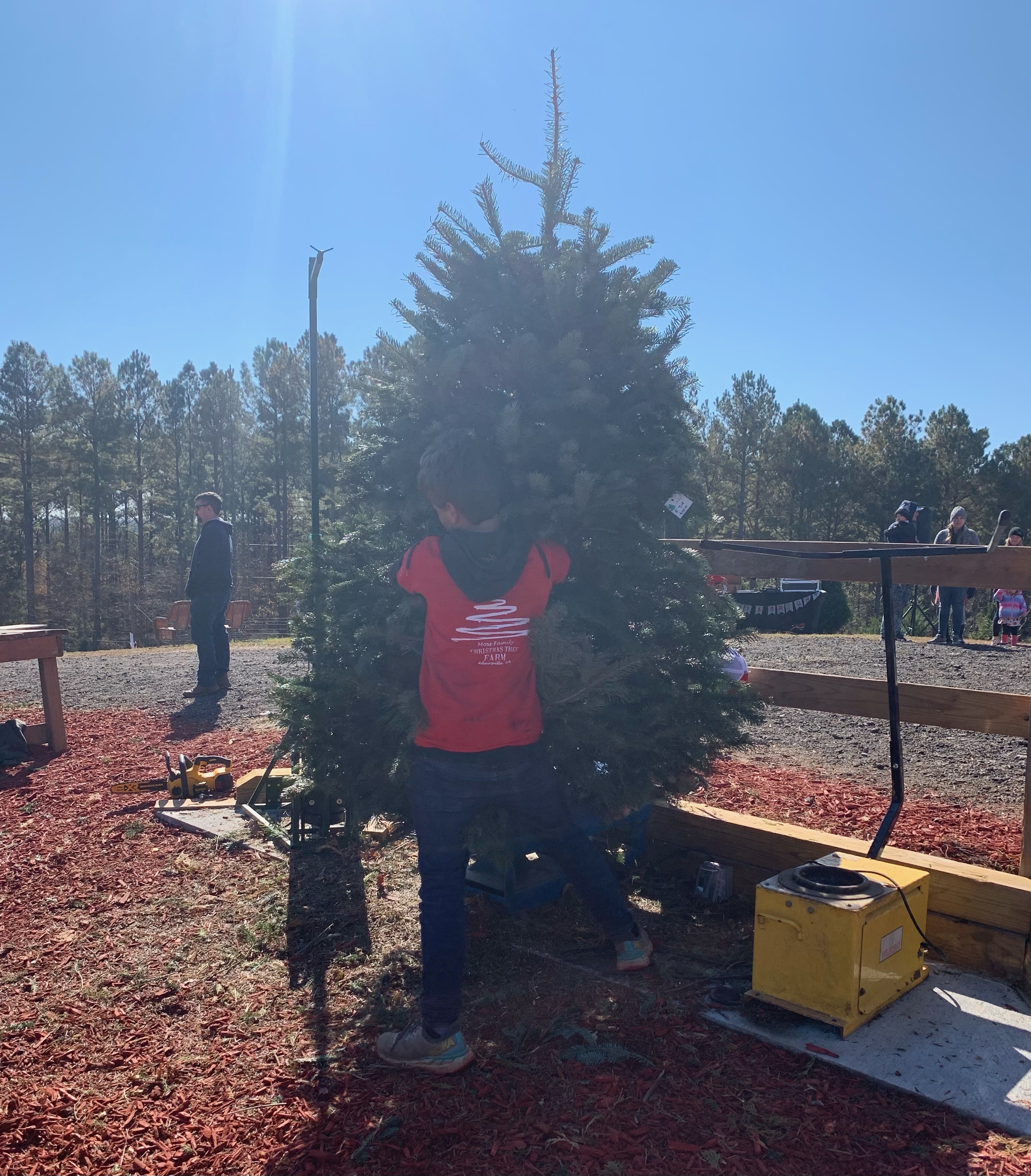
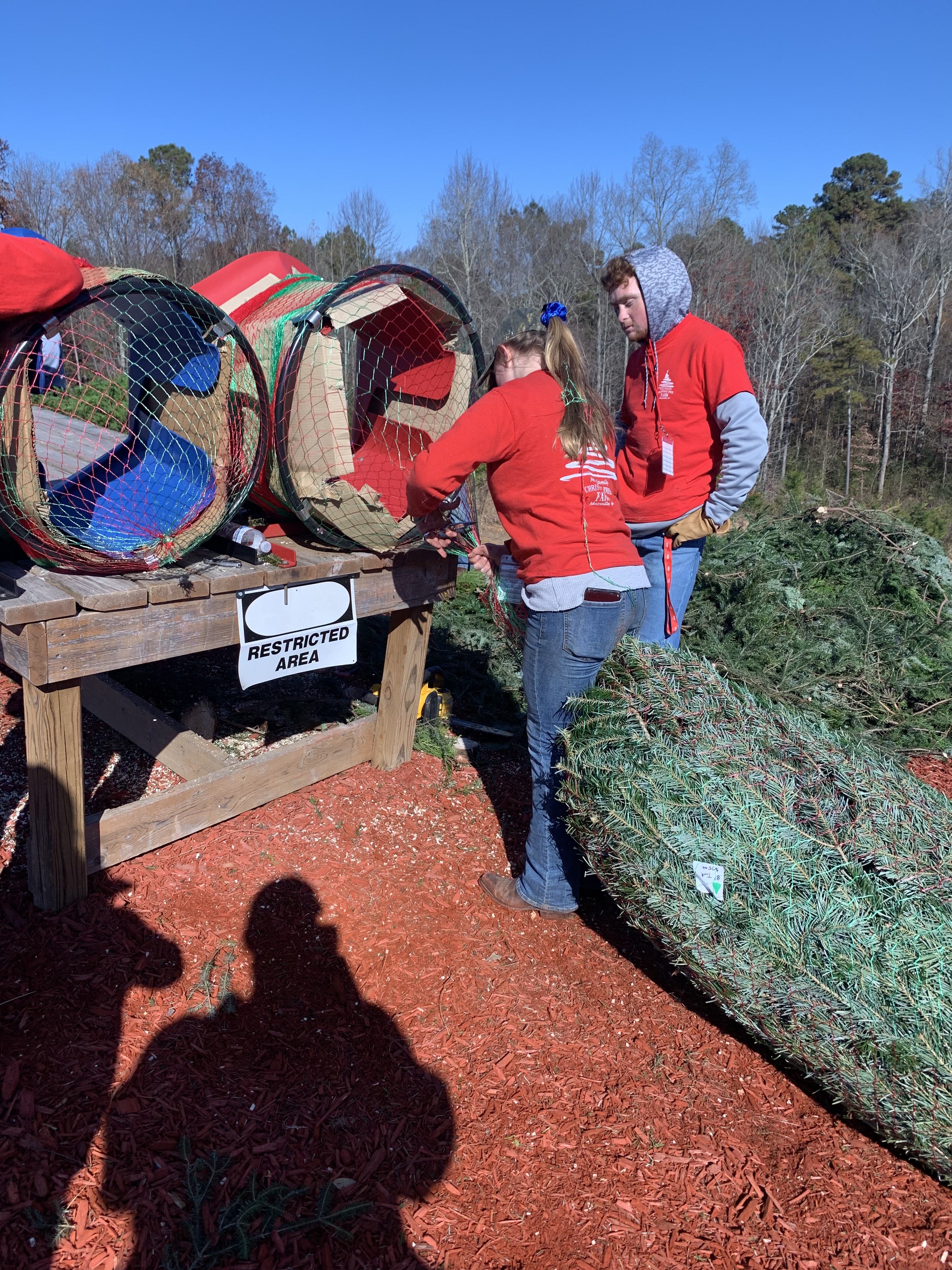
I told one of the employees we’d found the one for us. He helped me carry it to the kids who shook the loose needles off with a machine. Then two of the other young men and a young woman ran it through the baler. When they pulled it through the netting, red and green netting covered the tree and one of the young men carried it down the hill towards my truck.

I would like to say that I am a handyman and that I had no complications cutting off more of the base of the tree and fitting it perfectly into the stand, when I got home. I wish. But it was less than perfect when I did it. We turned the tree; I trimmed off limbs with my shearers; I used my chainsaw to shorten it, confident I could cut the angle needed to make the tree stand perfectly vertical. After more than a little frustration, we finally got it all to a place where it looked relatively good in the living room.

“I’m going outside,” I said. I went out, raked some leaves, blew off the driveway, played with the dogs–things I knew I could do, things requiring little if any skill.

Now the sun has set behind the ridge; I have fed the dogs; my back hurts from wrestling with the tree; she has gone to pick up some new lights for this year’s tree; and, well, it’s a good ache in my lower back.

Below are some scenes from the day. What’s the upshot? It’s the small things; they’re not small. We don’t do fancy. We do small and it’s okay. Here’s to the ache in my back, the scent of fresh-cut pine in the house, the sun setting over the ridge, and the sap on my pants.

Lady, our Cavalier King Charles, eyed me as I tried to get the tree straight in the stand:

Some scenes from the very helpful staff at the Christmas tree farm:
And another:
And one more:
And when I went outside to catch the sun go down behind the ridge to the northeast:
I say again, the small things; they intimate great things.

Thoughts on Ingratitude During Thanksgiving

At the risk of being too transparent, here goes:

Ever had a person you thought was your friend, but he/she wasn’t?

I cannot remember a time when I did not adore Thanksgiving. It is not just the time on the road in the car or truck, the traffic jams, the bathroom stops, the personalities, the strange uncle who shows up smelling of vodka and cheap aftershave, or the aunt who smells of basements, strange cigarettes, and her hair is of a color with an adjective ending in —esque. What’s not to love, right?

And there are other realities with which to contend. To (nearly) quote the Bard, “How sharper than a serpents’s tooth [i]t is to have a thankless [friend].” Nothing wounds quite like ingratitude.

To several people in my life who prefer texting to phone calls, I sent messages to this effect: “Happy Thanksgiving (a bit early) to you and your loved ones.” Many wrote back. Some called. For others, we had already talked this week. Others planned to link up down the road, etc. (I am away due to military obligations.)

But then there were those whom I thought were friends, but are not. I got back only platitudes: “You as well.” No sort of reciprocity. No genuineness. Platitudes, not friendship.

It is perhaps a character flaw in me. I am loyal. If I am friends with you, I am with you–through thick and thin. But I am learning–even at my age–that many are fickle. There are fair-weather folks in our lives … when it is convenient weather for them to fly. They want you when they want you, and then they are done. You are their napkin, their tissue, something to be flushed.

I do not get that, not when it comes to people. That is not healthy; that is cancer.

Then I texted some others (again, I have grown to understand many prefer texts to calls), and they were different; they encouraged me. “Hey, man; same to you, brother. Glad you’re here,” etc. Or, “Thankful for you and your precious family. See you Sunday.” Things like that. Commitment. Relationship. Endurance.

Many profess; few stick. Give me those who stick. Happy Thanksgiving. And yes, I am thankful. It’s helpful to admit the difference between words and deeds.

Really?

“Hey, chaplain, did Jesus really descend into hell?”

“Hey, chaplain, how old was Jesus?”

I was offering a devotional/message of encouragement/biblical word to soldiers. Some in the audience professed to be Christians. Other soldiers, when we shared with them up front I’d be speaking from a biblical worldview, left, wanting no part of the offer. Other soldiers were curious, and so remained. I taught from Psalm 143.

I walked them through how David–a soldier, a believer, a sinner, a redeemed man, often cried out to God for many things. First in Psalm 143, David called out to God just to be heard. Another way of saying it is that David wanted to know he was not alone, that the heavens were not silent. David prayed often to be reminded that God was there and that God heard him. This is crucial. Why? Because so many people, at least in my experience in ministry, feel abandoned and unheard. They feel discounted. But David cried out to God: “Hear my prayer, O LORD; give ear to my pleas for mercy!” (Psalm 143:1). But the good news (at least part of it) is this: God hears.

Second, David recognized that God is not far away from His people. God is near. David called God his refuge (v. 9b). He called Him, “my God” (v. 10b). David did not view God as a theological abstraction. David communed with God because he knew God was near and that God cared.

Third, David recognized that God is a deliverer by nature. “Deliver me from my enemies, O LORD!” David cried out (v. 9a). David prayed that God would “bring [his] soul out of trouble” (v. 11b). God is not a force “out there” or a deistic god who is incapable of governing the world. No; He is sovereign and knows all things and controls all things and knows right where you and I are, and what we are enduring. And He delights to deliver.

Fourth, God is for His people. What does that mean? It means He delights to give good things to His children (Matthew 7:11). It means that when we seek Him with all our hearts, He won’t turn us away (Jeremiah 29:13). It means He rewards earnest inquiry into truth (John 18:37-38).

Because I’m a questioner by nature, I asked for questions at the end. Some of them are above. One was about a phrase in the Apostles’ Creed about Jesus “descending into hell.” 1 Peter 3:18-22 and Ephesians 4:9 are parts of the New Testament that arguably inform this view. I did my best to address the soldier’s question about it and explain the main views through church history about the issue and some of the difficulties of each view.

Another soldier was curious about the age of Jesus at His crucifixion. Here again, I tried to explain dating paradigms and how Jewish and Roman calendars differed, and how we can miss the forest for the trees.

I asked the guys if I’d answered their questions. They were gracious and said, “Yes, chaplain.” Then I shared my testimony. I told them of how God broke me, how He used people in my life to break me of intellectual pride, and of how Jesus is the proof of what David prayed in Psalm 143. Jesus proves that God hears, that God is not far away, that God is a deliverer by nature, and that God is for His people.

I passed out business cards for them to contact me with questions. I offered the Lord’s Supper. I prayed with and for them. And I thank God that He may use flawed attempts like mine, and countless others’ faithful but flawed attempts, to bring many sons and daughters to glory. Why? Because that is God’s nature. He delights to do just that. He hears. He is near. He delivers. And He is for His people. Let us press on and fight the good fight of the faith that has been delivered to the saints.

Among the Leaves

Today temperatures here were in the fifties. I spent pretty much all day outside with the dogs and in the woods. The pictures here are by no means refined. They are, like today was, natural, unrehearsed, and free for the taking.

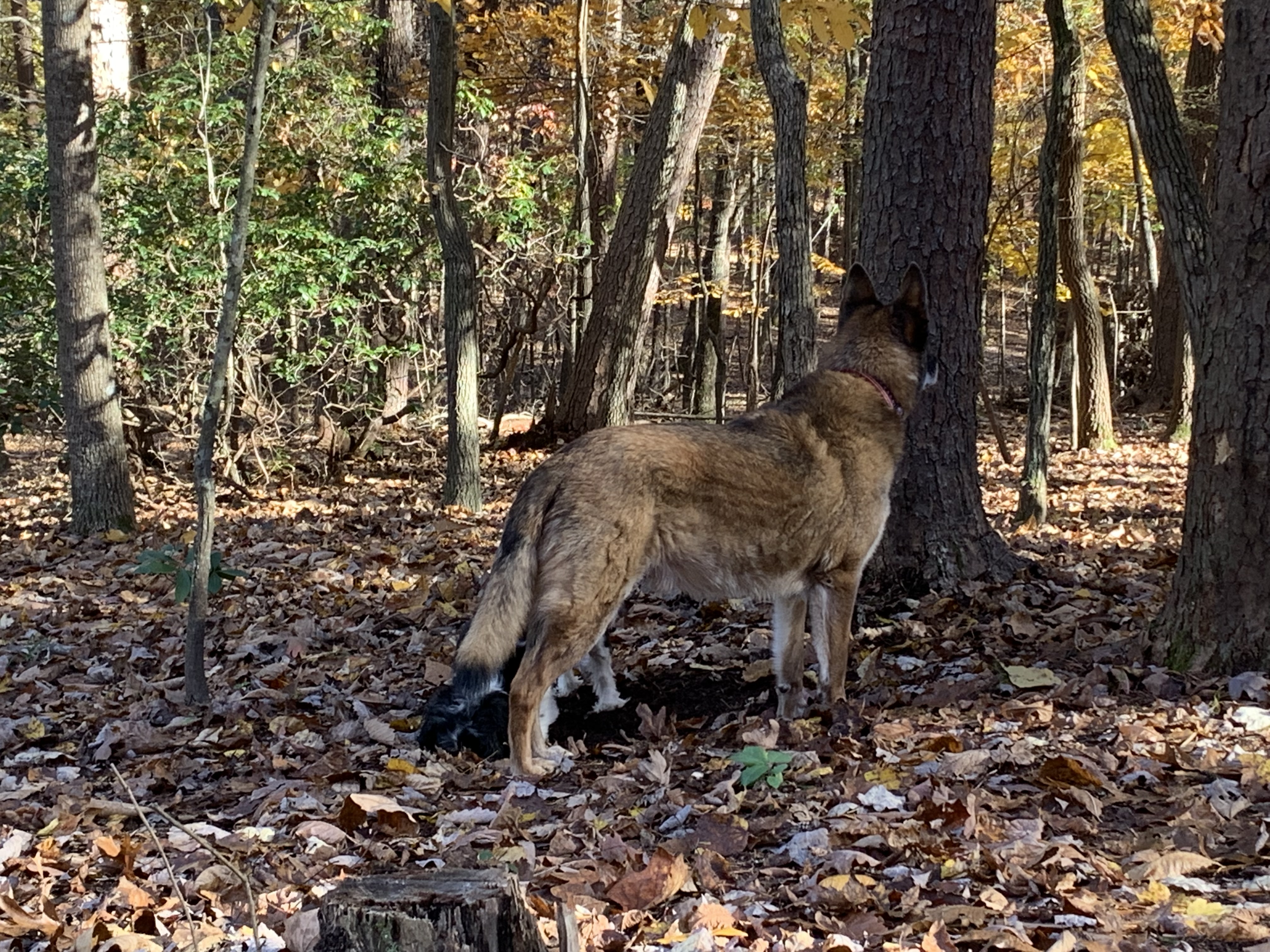
Brewster knows when the deer are nearby. Look at his ears.

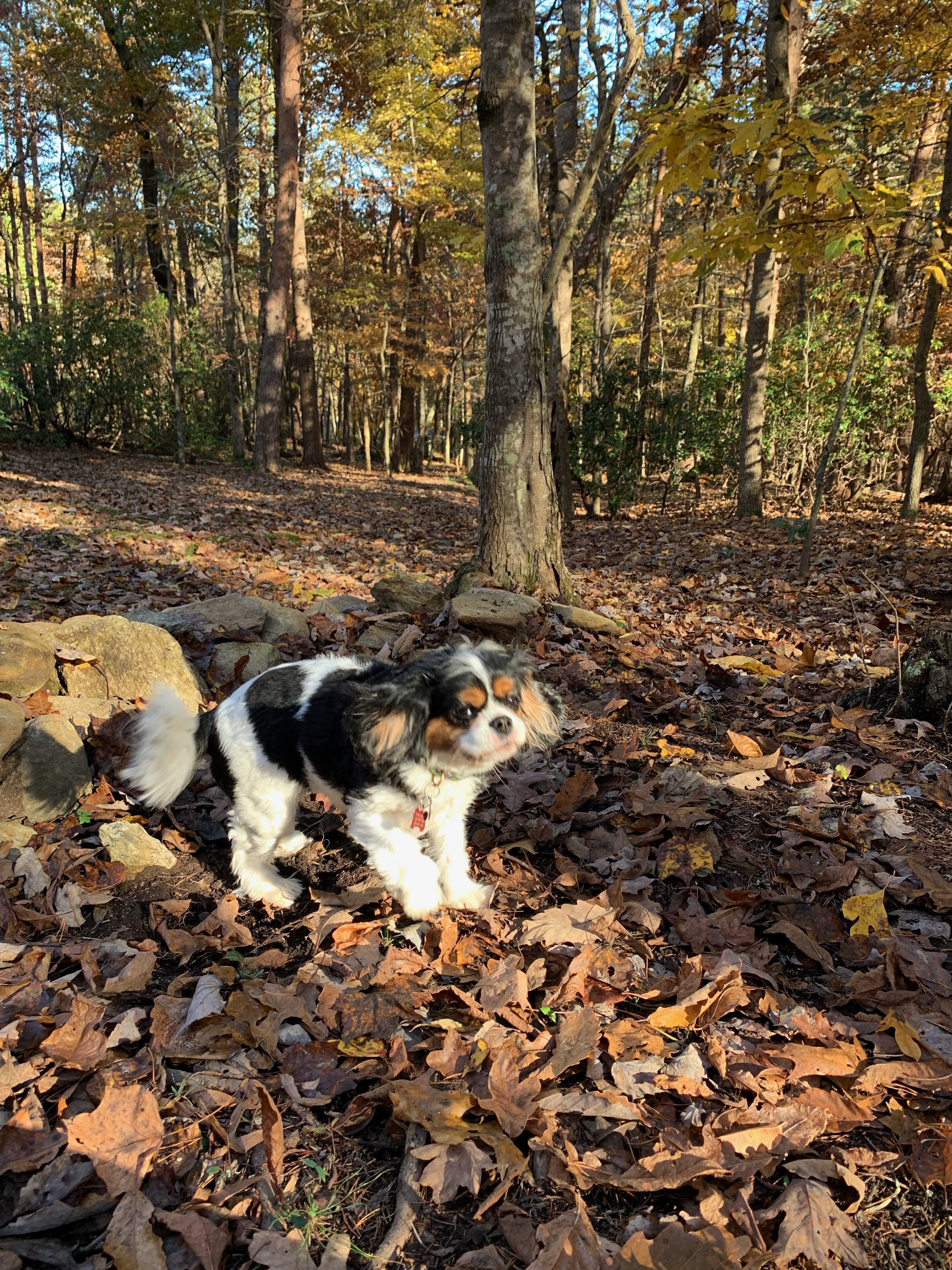
And Lady, the Cavalier King Charles, well, she just likes to play and to be made much of.
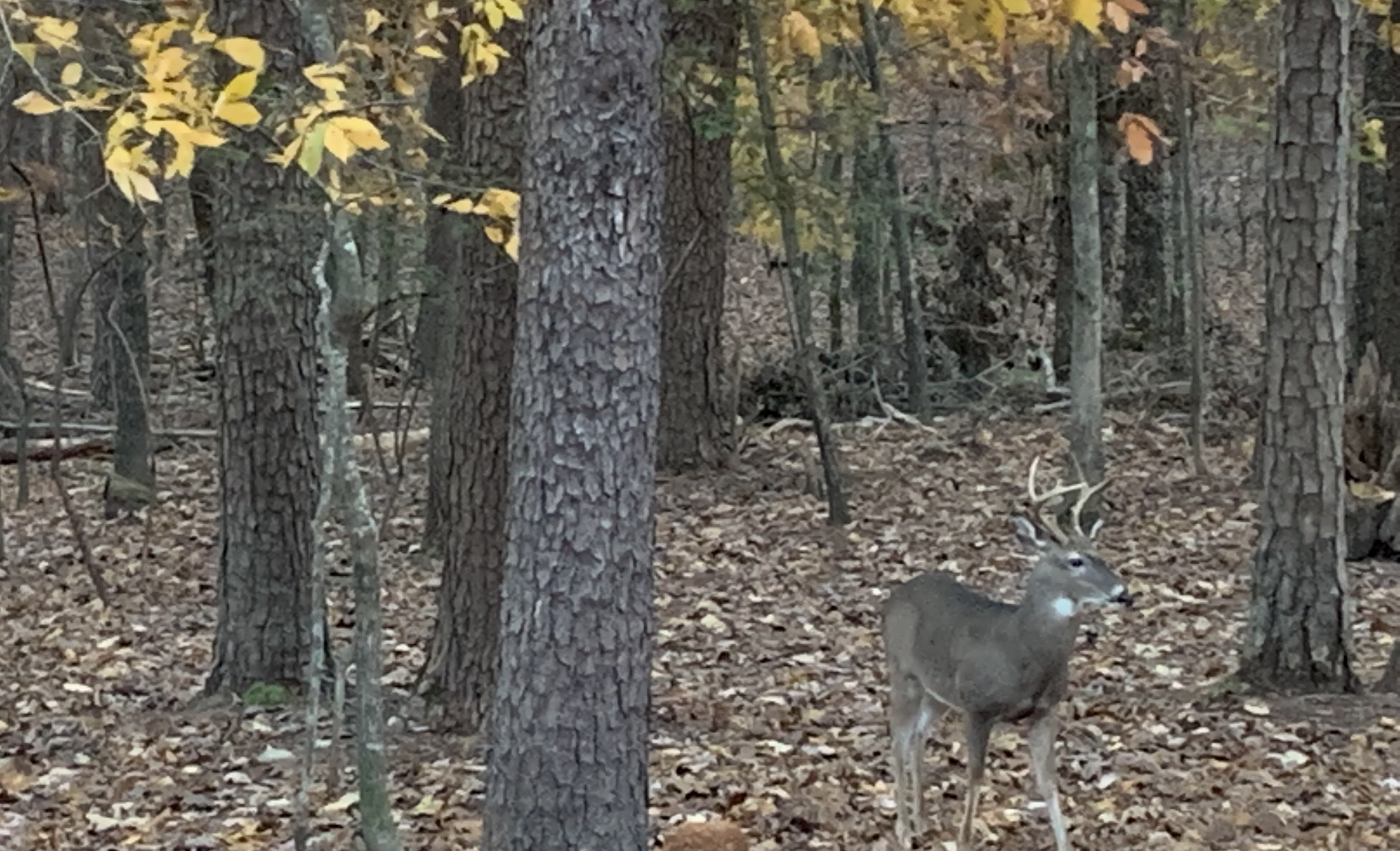
The little bucks come out early. The big ones wait till dark. (Something about age and wisdom.)
I completed a book, too. I could sit outside and read forever on days like this.

I piddled in the woods around the house. I raked leaves. I love to use my granddaddy’s old yard tools and remember him. I see his knotty hands with their bluish veins in my mind, clear as today’s sky.

I picked up limbs. I hiked with the dogs. We watched the birds enjoy the sunflower seeds I laid out.

We watched Jo-Jo, our cat, sun herself and stretch, and eye the birds. Her tail curled and uncurled like a hairy question mark.

And I’m a good tired now, having studied and prepared for tomorrow’s gathering of the saints, where we will assemble and study and sing and pray to, and because of, the Author of days like this.