Choosing

Illustration: Anyone else read Frost’s poem “The Road Not Taken” in your school days?  

Two roads diverged in a yellow wood,
And sorry I could not travel both
And be one traveler, long I stood
And looked down one as far as I could
To where it bent in the undergrowth;


Then took the other, as just as fair,
And having perhaps the better claim,
Because it was grassy and wanted wear;
Though as for that the passing there
Had worn them really about the same,


And both that morning equally lay
In leaves no step had trodden black.
Oh, I kept the first for another day!
Yet knowing how way leads on to way,
I doubted if I should ever come back.


I shall be telling this with a sigh
Somewhere ages and ages hence:
Two reads diverged in a wood, and I–
I took the one less traveled by,
And that has made all the difference.

An enduring archetype in literature is the path/road/journey. It makes sense why. Man has to choose which way he will go. Hither or yon? This road or that one? This job or that one? This person in my life or another one?  This school or that one?

When I teach this poem to students, I ask them what they think it means. They usually say something like, “Well, it takes courage to go down the road less traveled. But I’m brave, so that’s the way I’m going. The world will see because I am, if nothing else, in charge and determined.” Um, might there be more?

Scripture: Hebrew poetry uses the archetype of the path/road/journey, too. When my son was younger, I used to help him memorize several of the Psalms. Psalm 1 was one of his favorites. It speaks, like Frost’s poem does, to the necessity of choosing, and of the consequences of our choices. In Psalm 1, David contrasts two types of people—the wicked and the righteous, the one who walks with the evil/wicked in contrast to the one who walks with the good/righteous.

Blessed is the man
    who walks not in the counsel of the wicked,
nor stands in the way of sinners,
    nor sits in the seat of scoffers;
but his delight is in the law of the Lord,
    and on his law he meditates day and night.

He is like a tree
    planted by streams of water
that yields its fruit in its season,
    and its leaf does not wither.
In all that he does, he prospers.
The wicked are not so,
    but are like chaff that the wind drives away.

Therefore the wicked will not stand in the judgment,
    nor sinners in the congregation of the righteous;
for the Lord knows the way of the righteous,
    but the way of the wicked will perish.

Alternatives: The speaker in Frost’s poem says he will be telling of his journey “with a sigh” (line 16) in retrospect. He seems to be looking back sadly and in much grief. He is ruing the choice(s) he made. In Psalm 1, David teaches by way of contrasts but he teaches so that those who heed the teaching might see the consequences before it is too late. The good man is compared to a fruitful tree. He is “like a tree planted by streams of water that yields its fruit in its season” (v. 3). On the other hand, the evil man walks “in the counsel of the wicked” (v.1a) and scoffs (v.1b) and mocks. He is one who—for now–laughs at the idea of God and of God’s judgment. In Frost’s poem, the speaker looks back with a sigh. In David’s psalm, the wise man is blessed but the fool perishes.

Encouragement: As I watch my kids grow and develop and choose, they are a microcosm of a much bigger story. We are all choosing whom we will serve. Are we choosing God’s way or man’s way? Are we choosing wisdom or folly? Are we placing our reasonable faith in chariots and horses or in the name of the LORD our God (Ps 20:7)? I pray we are choosing wisely. Seems to me much is at stake.
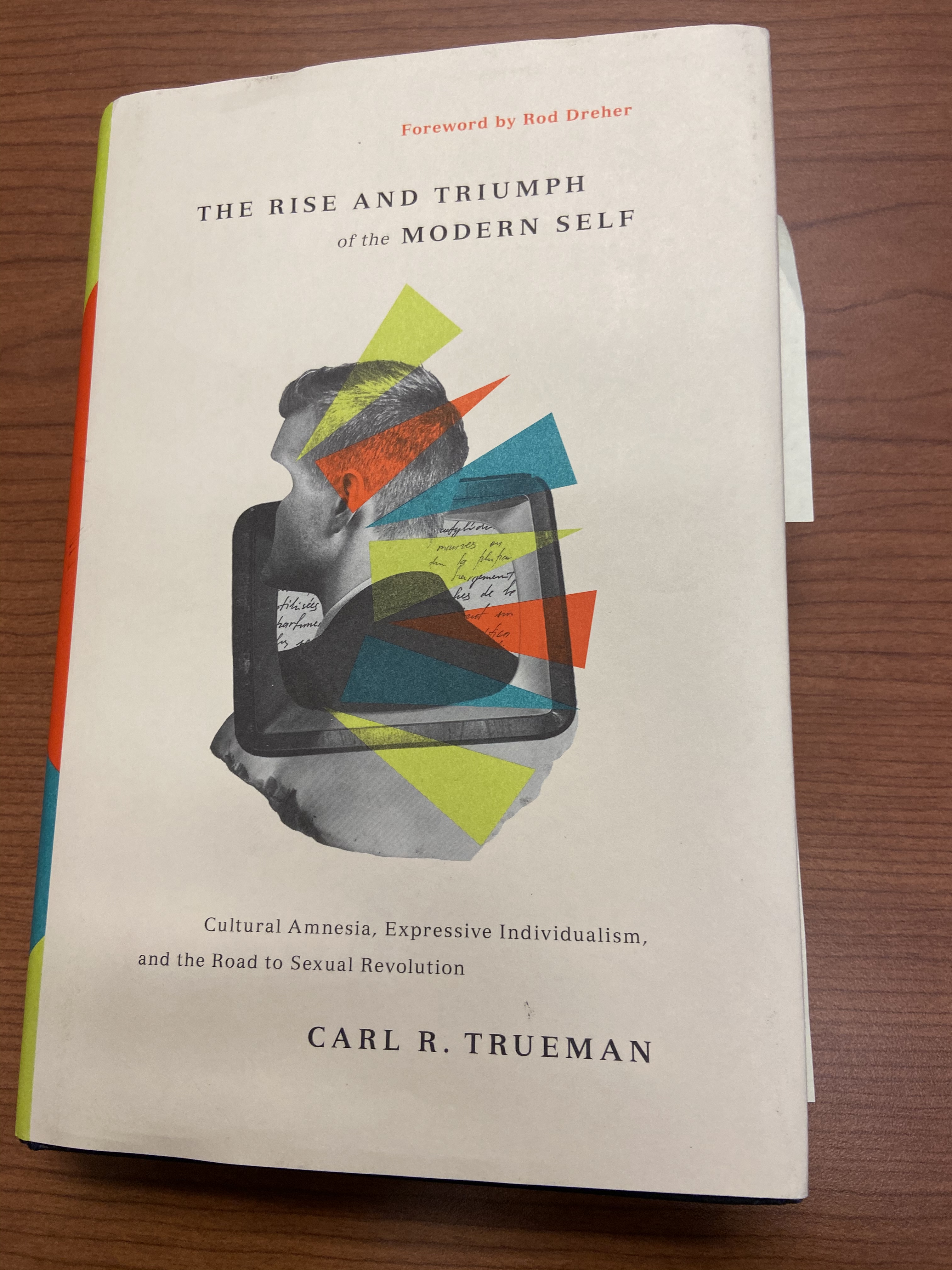
In Praise of Books, One in Particular

I have read some remarkable books over my lifetime. Like other serious readers, I have a list of writers and books to which I return again and again. Some names on my list of enduring favorite literary writers are known to many: Flannery O’Connor, Dostoyevsky, Shakespeare, Milton, Dickens, Cormac McCarthy, Hawthorne, Melville, Eudora Welty, and Faulkner. There are others on my list of enduring favorites, but I return to these writers’ wells of wisdom again and again.

The same is true when I study history. There are scholars who write books too important to neglect if you are a thoughtful person. Carl Trueman, once again, has written a book that merits close reading and examination. Pictured above, it is a 2020 publication. In short, it examines how modern man arrived where he is. Where is he, exactly? Well, he’s a therapeutic, psychological, confused, ‘feely’, emotive, self-referential mess.

Most honest people acknowledge the West is amidst a massive cultural sea-change. The hangover from postmodernism has left a world reeling where logic is out but victimhood is in. Character is out but intersectionality is in. Male and female are out but alleged ‘non-binaries’ are in. We’re in a post-Christian, post-logical, post-coherence world.

And Trueman explores the antecedent thinkers who enabled it: Foucault, Marx, Freud, Nietzsche, Rousseau, Wordsworth, Darwin, Shelley, Blake, and more. Relying heavily upon paradigms proposed by thinkers Philip Rieff, Charles Taylor, and Alasdair MacIntyre, Trueman wrestles with their models of explaining how we got into such a mess.

If you do not have a background in theology, philosophy, history, or ideas, don’t be scared off. Trueman’s writing is so clear, so compelling, so well-documented and explained, you will not get lost. He will hold your attention. This book is that good. Read it. Think about the challenges he raises. And think about his call for the redeemed community to once again act with courage, clarity, and conviction.

Closer Than a Brother

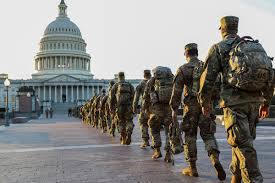
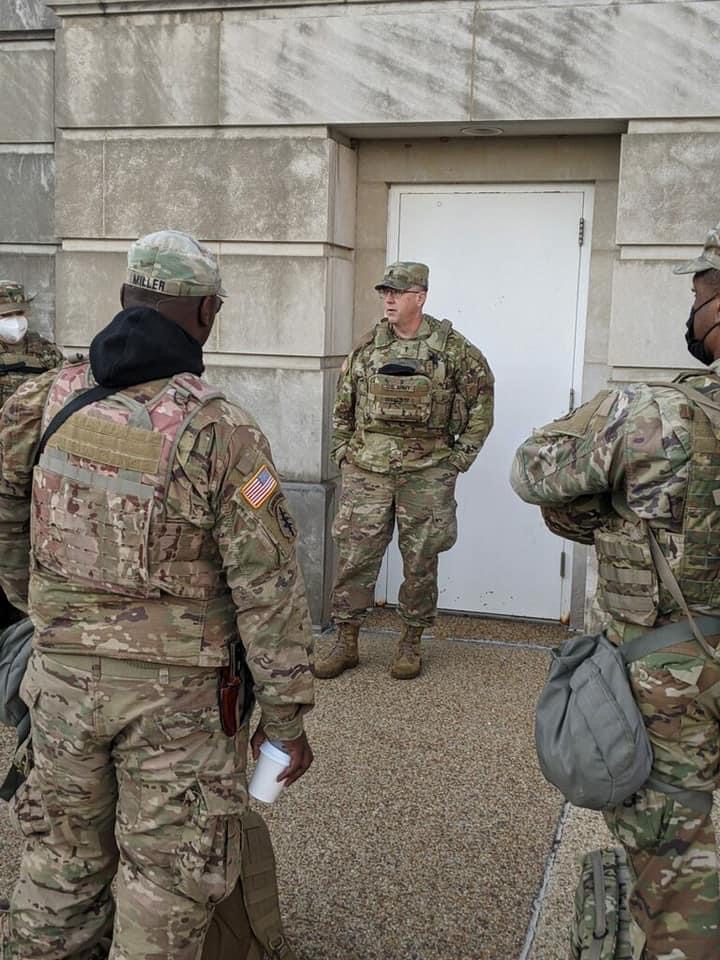
Illustration: During recent upheavals in our nation, GA’s Soldiers and Airmen have once again answered the call to serve. Our chaplains and assistants are right there alongside other Soldiers and Airmen. Pictured above is 1-121 Infantry chaplain, CH Phillips, speaking with his fellow Soldiers, encouraging them, speaking truth to them, while they were all deployed to Washington D.C.

As I spoke with him and the other chaplains, I was struck that I never heard about division among the ranks based on race or gender or politics. I just heard, “My guys were doing this, so I was there” or “The Airmen were over there, so that’s where I went.” I never heard, “Well, folks separated based on their identity groups and no one spoke to each other.”

The Soldiers and Airmen were a unit; they had a mission; they did not fracture over skin color, or over liberal vs. conservative, or over any of the other stuff that keeps so many in our nation polarized and on edge. And there, in their midst, were the chaplains/shepherds, tending America’s Service Members.

Most Service Members were guarding with guns and ammo; the chaplains were guiding with the spiritual shepherd’s staff, tending the flock over which the Lord appointed them.

Scripture: In Ephesians, Paul penned these words: “Therefore, having put away falsehood, let each one of you speak the truth with his neighbor, for we are members one of another” (Eph 4:25, ESV).  Paul was reminding the Ephesians that, if they were Christians, they were to be truth-tellers. Their lives were to be characterized by truthfulness. They were to have “put away falsehood.” It was only when truth was the foundation that true unity could be established.

Encouragement: There are calls by politicians and bureaucrats for unity. But unity, according to God, comes when the medium of exchange is truth. When I look across our formation, I see chaplains shepherding our Soldiers and Airmen and their families. May the Lord raise up more who are redeemed by the way, the truth, and the life, to be voices of truth. May they shepherd well and point them to the One who sticks closer than a brother.

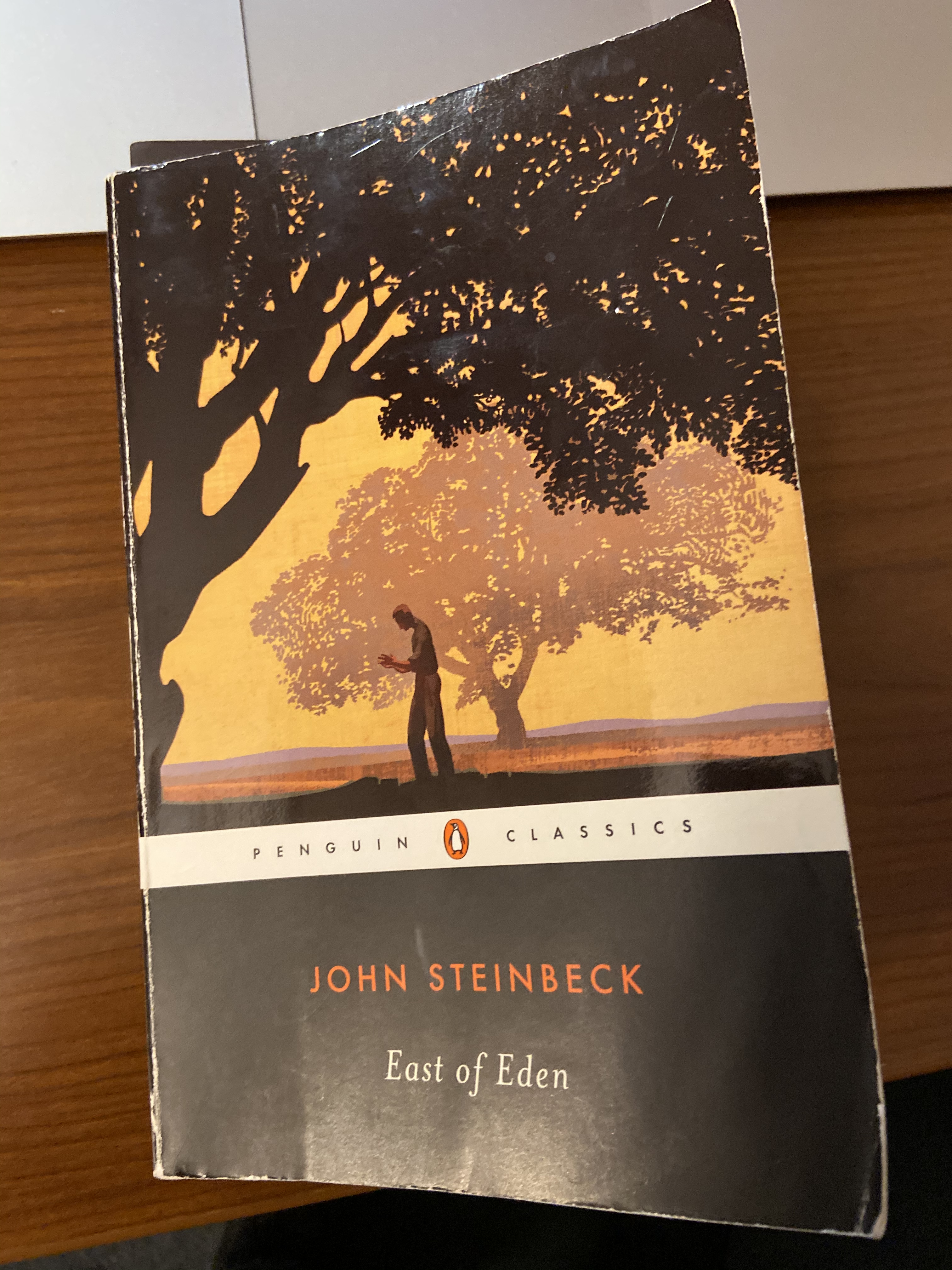
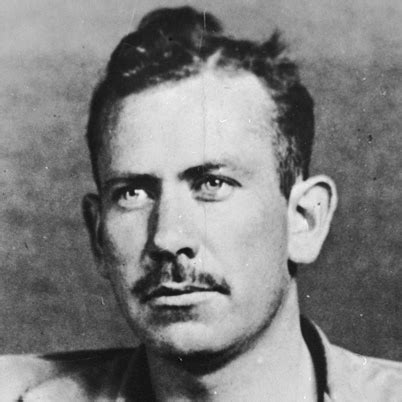
John Steinbeck: East of Eden (Part One)

Several years ago I was atop my issued government bed in Afghanistan reading East of Eden for the first time.

I was reading many other books at the same time, so that is perhaps why I did not notice as often as I should have many of Steinbeck’s observations.

Steinbeck’s title, of course, is biblical. It refers to the fall, to man’s rebellion and the resulting curse from God for his (man’s) rebellion. The upshot? Banishment, judgment, exile. Betrayal, bitterness, war, and on and on brought consequences. Ideas had consequences. As Solomon said (again, in the Bible) nothing is new under the sun.

I prefer different types of narration than Steinbeck uses in Eden but this passage, among many others, remains noteworthy:

I think the difference between a lie and a story is that a story utilizes the trappings and appearance of truth for the interest of the listener as well as of the teller. A story has in it neither gain nor loss. But a lie is a device for profit or escape (74).

I do not know if you have read the novel. I have, but it is worth rereading. And so my evaluation of the importance of this passage–among many others–may not resonate with you. But I think that Steinbeck used in this novel the models of biblical fallout without heeding their goal.

Steinbeck’s success in this novel comes through his accurate observation of human motivations, of man’s covered ways of coping with pain and betrayal and hurt. But he seldom fails “to own” his own his own sinfulness. He uses others’ sinfulness in an effort to justify his characters’ own sins. The novel laments the cycles of human depravity but does not propose the means of redemption. Rather the implication is that man is doomed to repeat his folly in each generation.

I do not wish to spoil the novel for you if you have not read it. It is worth reading. But I wonder if there was redemption neither the author nor his characters was willing to embrace.

Though the Fig Tree Should Not Blossom

Scripture: Habakkuk 3:17-19 reads this way:

Though the fig tree should not blossom,

nor fruit be on the vines,

the produce of the olive fail

and the fields yield no food,

the flock be cut off from the fold

and there be no herd in the stalls,

yet I will rejoice in the LORD;

I will take joy in the God of my salvation.

GOD, the Lord, is my strength;

he makes my feet like the deer’s;

he makes me tread on my high places.

Context: Habakkuk was a prophet in the 600s B.C., during the final days of the Assyrian Empire and the beginning of the Babylonian Empire. Why is knowing that important? Because believers in the one true and living God have gone through, and continue to go through, hard times. God’s people are promised trouble. “In the world you will have tribulation. But take heart; I have overcome the world” (Jn 16:33b). God’s people go through the valley of the shadow of death (Ps 23:4a). In the 600s B.C. God’s people were in a dark place spiritually. But God had his prophet to speak to those with ears to hear.

Connection: Perhaps my favorite part of chaplaincy is talking with people offline, when they speak honestly, not just fill up space by bloviating. Recent conversations reveal many people are troubled. They are down. They are worried. They are grieving over the jettisoning of God from almost every area of life. Most folks don’t want God. He is perceived as a killjoy by unbelievers. Biblical illiteracy is at an all-time high. The list could go on and on. Thus, many believers are troubled. And yet, God has his Word to encourage the true believers. As in Habakkuk’s day, when Israel was headed into captivity in Babylon (present-day Iraq) under Nebuchadnezzar, God spoke.

Encouragement: I don’t know where you are on an individual level, but the Lord does. John wrote about God’s omniscience: “… he knows everything” (1 Jn 3:20b). Listen to David in Psalm 139:1-4:

O LORD, you have searched me and

known me!

You know when I sit down and when

I rise up;

you discern my thoughts from afar.

You search out my path and my lying

down

and are acquainted with all my ways.

Even before a word is on my tongue,

behold, O LORD, you know it altogether.

Takeaway: Habakkuk spoke to believers in his day. God still speaks through his Word today. God remains the same. “The LORD is near to all who call on him, to all who call on him in truth” (Ps 145:18). The great enduring question remains the same, too: Do folks really want the truth?

The Sifting

“Napoleon is always right.”

You remember obedient Boxer saying that repeatedly in Orwell’s Animal Farm, right? And you remember how obedient Boxer ended, right? Of course you do. He was slaughtered and pressed into glue. A rather unfortunate ending for the obedient.

But he was obedient, obedient even unto death.

All animals were equal, remember? It’s just some animals were more equal than others. Seems to be a neglected unpleasantry of being sheeple in a world system where wolves exercise the control.

But Orwell’s warnings were just for his generation, of course. We would never–in our enlightened, progressive, secular, egalitarian, evolved cultus replete with elites–when we have Silicon Valley and Hollywood (the center of classical wisdom, don’t you know), and Portland and Seattle–when we can Tweet (well, some can … if they tow the line of “Napoleon is always right”) … we would never fall for it. A dated novel like Orwell’s Animal Farm having truth to speak to us? Impossible. Come on, man.

We could never fall into such totalitarianism. We could never wake to discover free speech is disappearing because of it being labeled ‘hate speech’ and, because sheeple want to be kind, above all. No, it could never happen. Napoleon is always right, remember? Just ask Boxer. Oh wait, Boxer is … well … nevermind.

That was just a time period when Lenin and Stalin and Trotsky and Mao and Hitler and Goebbels, et al were rather unkind to a few unfortunates. But their kind words did not sound lupine; they sounded so un-wolflike and good: unity, togetherness, equality, purity, peace.

“Napoleon is always right,” of course. We know better now. We have progressed. That’s a great lesson of history … that man learns and becomes more noble. Your news bears that out, right?

Chicago has become the new Eden, didn’t you hear? If you’ll just step over the bodies, it’s Eden, I tell you. And San Francisco, it is better still. You can not only see Alcatraz as a tourist attraction but you can do so while standing in human excrement and hypodermic needles in Chinatown. The tents of the homeless can often block the view of the bridge but, come on, man, be flexible. We are progressing.

Yeats was surely mad when he penned “The Second Coming“:

Turning and turning in the widening gyre   
The falcon cannot hear the falconer;
Things fall apart; the centre cannot hold;
Mere anarchy is loosed upon the world,
The blood-dimmed tide is loosed, and everywhere   
The ceremony of innocence is drowned;
The best lack all conviction, while the worst   
Are full of passionate intensity.

There’s no way we are not getting better. There’s no way a sifting is underway. There’s no way it could be that. Napoleon is always right, didn’t you hear? Come on, man. Paul was surely just having a bad day when he wrote,

For although they knew God, they did not honor him as God or give thanks to him, but they became futile in their thinking, and their foolish hearts were darkened. Claiming to be wise, they became fools, and exchanged the glory of the immortal God for images resembling mortal man and birds and animals and creeping things. Therefore God gave them up in the lusts of their hearts to impurity, to the dishonoring of their bodies among themselves, because they exchanged the truth about God for a lie and worshiped and served the creature rather than the Creator, who is blessed forever! Amen. (Romans 1:21-25 ESV).

It is impossible we are being sifted. Flat impossible, I say.

Hey, does anyone else smell the glue?

Diminished?

I learn best by asking questions. Following are ten questions I am trying to think through:

  1. Are we in the West in a state of moral decline?
  2. If so, to what do we attribute the moral decline (destruction of nuclear family; jettisoning of God; historical revisionism and/or ignorance, etc.)?
  3. Are we diminished in our abilities to think critically? If so, why?
  4. Does government schooling have any relation to our level of discourse and/or the (in)ability of many people to think critically?
  5. If walls and guns for citizens are bad, why is D.C. pervaded by walls and guns?
  6. Francis Schaeffer wrote a lot in the 20th century about two of our idols: personal peace and affluence. He meant by these terms radical individualism and unending consumerism. Have those idols remained the main ones in today’s culture?
  7. I hear a lot about “spirituality” vs. biblical Christianity. Why do you think so many identify as “spiritual but not religious”? What do to the terms actually mean? To whom is one accountable in spirituality?
  8. Since America’s courts have legislated that marriage can be between two women, or two men, (and no longer just between one man and one woman), what exactly is prohibiting marriage between people and animals or between adults and children, or polyamory?
  9. Why do you think we are told that masks save lives and we ought to, therefore, wear them in order to save lives? And yet abortion mills run day in and day out and we’re told those are due to “choice”? Does the logic not cut both ways? Why should we supposedly try to protect some lives but simultaneously snuff out children’s lives?
  10. What are the roots of our diminishment/reduction/decline?

Just thinking.

What Kind of States of America?

Illustration: Unprecedented. Unique. Unparalleled. Those are just some adjectives used to describe what is happening in our nation. I don’t watch TV ‘news’ but I do read it online, and it is gut-wrenching. Many of our nation’s own Guardsmen are activated to the capital cities in our states. Nearly 30,000 Guardsmen are activated to Washington D.C., not just within the capital city but to the Capitol building. To see America arm her own citizen-soldiers to protect her from her own citizens reveals a lot about where we are as a nation and as a culture.

 Scripture: America is often described as a post-Christian nation. Most folks want nothing to do with the God of the Bible, nothing to do with the doctrine of God and His holiness, or the doctrine of man and his sinfulness, or of Jesus Christ, the God-man, the sole mediator between God and man. That is not new.

Prophets and truth-tellers don’t win popularity contests. Moses was on the receiving end of national criticism. Joseph was mocked and betrayed by his own family. Abel was murdered by his own brother. John the Baptist was beheaded. Paul was incarcerated and eventually beheaded in Rome, Italy. John was exiled to an island off the coast of Turkey. Peter was crucified. And, of course, Jesus Christ was denied, lied about, betrayed, sold, mocked, spat upon, crowned with briars, flogged, beaten, pierced, and nailed to a tree. No, to speak about biblical things in an accurate way, that is now “hate speech” that needs to be marginalized. This is why the Bible speaks so often about counting the costs of being a disciple. Americans want secularism, and paganism, and commercialism, and non-stop entertainment and distraction. But how is all that working out for us?

There is deep division running through our land. It is not just in Atlanta or Portland or Chicago or Minneapolis or the District of Columbia. No, it runs through the heart of sinners. And at the heart of the issue is whether or not we will acknowledge God as God, or if we will refuse to do that and play gods ourselves. It is the story of Genesis 3 all over again. Did Adam and Eve obey God perfectly? Did they acknowledge that God determines good and evil and defines the standards? No; they believed Satan (Genesis 3). They believed the lie and the father of lies (Genesis 3; John 8:44).

Evidence: In Luke 11:17, when Jesus was still trying to teach recalcitrant sinners, he taught with clarity what was at stake:

But he, knowing their thoughts, said to them, “Every kingdom divided against itself is laid waste, and a divided household falls.”

The issue was whether they would believe the truth that Jesus is the only Savior, the God-man, the second person of the triune God of the Bible, or if they would believe the lie, just like Adam and Eve did, in Genesis 3. Same story. Who is telling the truth? Would folks believe and follow the truth and evidence, or would they follow the lie?

You know the story: Jesus was rejected. Despite the miracles, the healings, the precise fulfillment of hundreds of Old Testament prophecies, despite his wisdom that baffled the Pharisees’ self-proclaimed wisdom, the hearers largely rejected the Messiah. And what happened to Jerusalem in A.D. 70? She fell. Conquered by invaders once again.

Takeaway: What does this have to do with us today? Everything. We are divided. People are in camps. Now is the day of “identity politics” and “intersectionality.” People claim victim status, and we’ve grown distasteful to ourselves.

Our nation’s soldiers are at the city gate, so to speak, to keep Americans from slaughtering one another. These are serious times, folks. If we are true believers, it is long past time to give ourselves a hard look in the mirror, repent, pray, encourage ourselves in the Lord and in the power of His might, speak truth lovingly but boldly and clearly to all who will hear, and be found faithful.

If we are to ever be united, it will only be because we are united in truth. Christ taught that Satan, the enemy of men’s souls, does this: he lies, steals, and destroys (John 10:10). But Christ came and laid down His life for His sheep (John 10:11). Why? Because He is the Good Shepherd.

The father of lies vs. the Good Shepherd. Satanic deception vs. the Good Shepherd who came for sinners who will respond in repentance and faith.

How is that for clarity of choice?

May God raise up truth-tellers who are faithful regardless of the costs.

Everything for Its Purpose

I was talking with some of my fellow chaplains this week about what they think our near future may hold. Some of them are rolling out to Washington D.C. as part of the Army National Guard’s ready response to our nation’s citizens.

The chaplains have a role unique in military history and unique to America’s troops. The chaplains are on the front lines of providing ministry to all our troops. Our chaplains provide for our troops in accordance with the Constitution’s First Amendment.

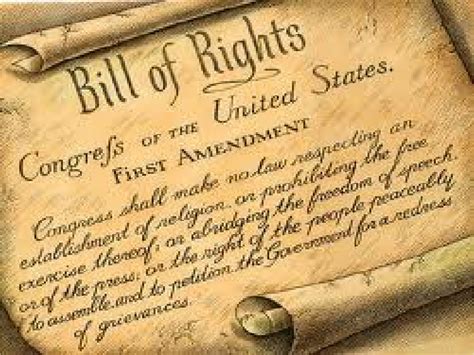
I keep a framed copy of our Constitution’s First Amendment on my office desk and a copy of the Constitution and Declaration of Independence in my breast pocket to read regularly. The words, just in the First Amendment alone, are profoundly important and foundational to America:

“Congress shall make no law respecting an establishment of religion, or prohibiting the free exercise thereof; or abridging the freedom of speech, or of the press, or of the right of the people peaceably to assemble, and to petition the Government for a redress of grievances.”

I asked one of our chaplains today how he was feeling about the next couple of weeks. “You okay? You feel good about things?” “Oh, I am ready, sir,” he said. “I’m right where I want to be. You know me.”

Yes, brother, I do know you. This is why I am encouraged. You embody the quality of most of our chaplains.

When we spoke, he was driving a van with his soldiers to our nation’s capital, and I saw once again what Scripture teaches with regard to our essence: ” . . . for out of the abundance of the heart his mouth speaks” (Luke 6:45b, ESV). Christ taught what is true of all of us: our words reveal our hearts, our core, our essential nature.

The chaplain was with his fellow soldiers. Do they know what lies ahead for them? No. Not in the immediate sense. But they know their chaplain is with them, walking through the valley of the shadow of death with them, shepherding them.

As we look at all the folly and rancor and outright spiritual suicide our nation seems intent upon inflicting upon herself through various powerful and wealthy industries and forces, may the Lord raise up those who are strong and courageous, knowing that “The LORD has made everything for its purpose, even the wicked for the day of trouble” (Pr 16:4).

Press on faithfully. Weary not in the doing of good (Gal 6:9). May we remember our foundations.

And for those who are clothed in the righteous robes of the One who mediates between God and man, for those like the chaplain who is even now en route to the political center of our nation’s divided mind, may you be found faithful.

God made everything for its purpose. There is comfort in that truth. May we be found in Him and discharge our duties faithfully.

The Long View

Congratulations! You made it. Finally it is 2021. You persevered through the last 365 eons . . . er, I mean . . . 365 days.

Who knows what’s coming over the following days? Prediction, as the old joke goes, is especially difficult with regard to the future. True story.

I prefer history over prophecy. I find studying history fortifies me better for the future than pundits’ prognostications. My tendency to study history is one of myriad reasons I love the book of Ecclesiastes. Here’s an example of Solomonic wisdom in Ecclesiastes:

What has been is what will be,

and what has been done is what will be done,

and there is nothing new under the sun.

Is there a thing of which it is said,

“See, this is new”?

It has been already

in the ages before us.

There is no remembrance of former things,

nor will there be any remembrance

of later things yet to be

among those who come after (Eccl 1:9-11 ESV).

Solomon is reputed to have been among the wisest men to have ever lived. And Ecclesiastes is one of the wisest books you and I have the privilege to read and learn from.

Illustration: Over the Christmas holidays in 2020, my plans did not go as I had hoped. I began feeling pretty crummy a few days before Christmas–severe headache, loss of taste, loss of my sense of smell, fatigue, etc. Finally I went to the pharmacy up the road for a swab test. The results revealed I was positive for COVID-19. So I spent almost all of ten days either in my bed, in my recliner, or shuffling between the two.

But my wife nursed me back to health by having me rest and follow the recommended regimen: hydrate, take lots of vitamins C, D, zinc, magnesium, etc. I did all of the above. And now I am good to go. But it was not a Christmas holiday season I ever care to repeat.

It was bittersweet to see others’ pictures and videos of Christmas together where their kids were opening gifts around Christmas trees and the stockings hung from the fireplace mantels resembled scenes from some of my favorite Dickens novels.

I had a lot of time to read and reflect. I think that is one more reason I relish the wisdom of Ecclesiastes. As Solomon wrote in the passage cited above, “there is nothing new under the sun” (Eccl 1:9b).

Viruses have been around a long time. But wisdom has been around, too. And the world keeps going. It does not stop because a few battle a virus for a week or two.

Encouragement: When I was scrolling my Facebook page one day over the break, one of our neighbors had taken a picture of the lake where we live and shared it for others to enjoy. She had snapped it from her dock. The picture reminded me of the wisdom found in Ecclesiastes.

When life goes topsy-turvy, and we are tempted to scratch our heads and ask, “Why this? Why now? Why me?” or “What’s next?” we can learn from history that “What has been is what will be” (Eccl 1:9a), and that “While the earth remains, seedtime and harvest, cold and heat, summer and winter, day and night, shall not cease” (Gen 8:22).

Let us press on in wisdom, “for in due season we will reap, if we do not give up” (Gal 1:9).