Buffy

Looking back, it’s hard to remember the day of the week, the temperature, whether or not I had on my Adidas tennis shoes and camouflage cap, or even what month it was, or if it was 1981. Most storytellers include all those details, and I understand why. They authenticate what happens to the characters; they lend believability to the story. But my memory here centers around the feel of my dog’s warm body, and the feel of heat rising from the highway asphalt in front of Bohannon’s Builders Supply, and of sliding my hands under Buffy’s lifeless body after she’d been struck by a vehicle.

But I hope you will read on, and forgive me if I don’t remember if all this occurred in May or August, or even whether it all happened at ten a.m. on a Saturday. It was from my boyhood. The thing is, you see, it was terrible. This terrible thing is not really novel, nothing special. It’s a simple sad story about how my dog, a Chihuahua named Buffy, was killed on Highway 23 in Cochran, GA, and of how that memory speaks still. There may be some other ideas in all this, too, but you’ll have to decide for yourself.

Lots of kids lose their pets, I suppose. So my experience was not in any way unique or more powerful than yours. Anyway, my mom and I were dog lovers. My stepdad was, too. He was a great stepdad, but he was not as affectionate by nature as Mom and I were. Mom and I loved our animals completely. We doted on them. We spoke to them like they were children. They came to be family, you see. And Buffy was our family’s Chihuahua.

Chihuahuas are not particularly beautiful dogs to look at, I admit, but when you’re a boy, and you cannot remember your life without dogs, well, it does not occur to you to evaluate the aesthetics of your dogs. You just love them, and you believe they love you back.

Anyway, here’s what I remember. Sunshine. Lots of it. I remember how bright and sunny it was. I cannot be sure if it was May’s sunshine or September’s. I just remember it was an extraordinarily sunny day. And for middle GA, where I was raised, it gets real hot in the summers, and the humidity clings to you like you’re wearing a sweater. But I don’t recall humidity that day, so it may not have been during those long, slow, hot, humid days characteristic of late Georgia summers.

And I remember a breeze–you know, the kind that makes the pond’s surface ripple, as if a chill raked across it. I always loved the way wind would sweep across the ponds in our little area, when I would watch the ripples start on one end of the ponds, and the water’s face would obey the wind, as if God were conducting visible music on the surface of water.

And I remember Mom’s mascara, and the way it ran down her cheeks when we accepted Buffy had been killed. I suppose most of us know the facial features of our own moms. We know how their lips reveal emotion; the way their eyes sparkle when they’re happy or excited; the way their chins quiver when tears are nearing. But on this day, it was Mom’s mascara I remember. Well, it was not the mascara exactly; it was the way it made crooked black streaks down her cheeks when she and I cried over Buffy.

I don’t remember exactly where I was in our neighborhood. I can’t recall if I was fishing in one of the ponds, or picking up pinecones in our yard (Mom was avid about keeping our yard up), or whether I was riding my Go-kart. Memory is a strange thing.

The next thing I remember is being told, “Buffy’s in front of Bohannon’s. Go get her.” But I don’t remember who told me. It could’ve been Mom, my stepdad, a neighbor; I really have no idea.

And I remember my heavy feet. What do I mean? Simply that when you get news like this, your feet can turn into cement blocks, and your stomach can go all green and sour inside, and your words won’t come the way they normally do. It’s like your universe suddenly shrinks and expands simultaneously. It shrinks in the way your world is drawn to a single point of pain and loss and experience, where you feel like no one else ever has felt pain like this. And your world expands in the sense of sensations. You feel the warmth of your dog’s body; you remember the way the sheets floated on the summer breeze on the clothesline behind the house; you remember the heat and the blackness of the pavement in front of Bohannon’s Builder’s Supply on Highway 23, and so on. These were all things I’d seen and felt countless times, but in memory, they expand. They grow in import.

The next thing I remember is Buffy’s weight. I’d heard the expression “dead weight” before, but when you hold your dog on your forearms, and her brown head hangs limp, and she’s still warm, and your mind is racing, and your heart is breaking, and you suddenly hate the fact that cars and trucks are zooming down Highway 23 still, and the people inside them don’t know or care that something outside you and inside you has died.

And the last thing I remember is the rocks. We buried Buffy in the backyard. We wrapped her up, and after we’d dug a shallow grave between some pines in the backyard, we buried her, and placed rocks we had from our hunting club over her, to keep, I suppose, predators from destroying her lifeless body. The rocks were the color of chestnut and had splotches of white on them. I can still see those rocks in my mind’s eye today.

Sunshine, the breeze, Mom’s mascara on her cheeks, my heavy feet, the weight of Buffy in my arms, the way the universe seemed to shrink and expand at the same time, the feel of the heat from the asphalt in front of Bohannon’s, and those chestnut-colored rocks under the pine trees that marked Buffy’s grave. That’s it. What does it all mean? I don’t know exactly. Maybe something about the power of love and loss. Maybe something about the reality of acknowledging death in life. Maybe something about how sights, sounds, smells, and feels of our lives we tend to underappreciate until, well, they’re taken, and you feel their removal still.


The Colonel

“You ever notice, chaplain, people don’t know their Bibles anymore?” the colonel asked.

The chaplain studied the colonel to see if he was asking with the desire to listen to the chaplain answer, or to hear himself. As the chaplain was about to answer, the colonel continued.

“You know, chaplain, I used to think it was just Millennials–the guys who can’t do fifty push-ups because their man-buns might come undone . . .”

The chaplain nodded his head slowly at the colonel to let him know he understood. The chaplain knew he would not have to say much because the colonel wanted to impress him.

“And what’s with women who now dress and act like men, but then get offended if we treat them like they are men? I mean, which is it?” Suddenly the colonel realized he’d left his original topic.

“What was I saying, chaplain?”

“You began with how few people know the Bible, sir.”

“Exactly, chaplain! But it’s even the older generation, too. You know that?”

“That’s been my experience, sir.”

“How old are you, chappy?”

“Forty-eight, sir.”

“Me, too, chaplain. But when I was coming up in the Midwest, at least my family taught us the Bible, and we even went to church. But people nowadays, chaplain—I just don’t know anymore.”

“Not much of a shared foundation anymore, sir. I’ve noticed.”

“You know, chaplain. I have an eleven-year-old son named Luke. Every night before I put him to bed, I read the Bible aloud with him for thirty minutes.”

“That’s great, sir,” the chaplain said. “He will remember that time with him and probably much of what you read with him.”

“You know what really gets me, though, chappy? It’s how he’ll hit me with a question a day or so later about something we read—something I didn’t think he was really tracking,” the colonel said.

“He may be beyond much of the West, sir,” the chaplain said, smiling a sad smile.

“Say again.”

“Firsthand knowledge of Scripture, sir, like you were saying,” the chaplain said.

“Exactly. He’ll up and ask me something about people loving darkness rather than light. Ain’t that something, chappy?”

“Yes, sir.”

“But what do we do, chaplain? With the world going the way it is, and all? I mean, I know the Bible, and my wife and I, we teach it to Luke. But this generation, and even our parents’ generation . . . I just don’t know, chaplain.”

“Sounds like you’re doing well, sir. Open the Scripture, read it, and share it with those who’ll listen.”

He watched the colonel listen to his own thoughts, and pictured the colonel with Luke beside his dad, perhaps under his boyish covers on his bed, listening to his father read of David and mighty men of valor, who surely resembled his dad the colonel, and his staff officers or non-commissioned officers; and a flaming sword that blazed amidst a ruined garden; and of Jewish boys perhaps his own age, cast into a furnace deep in the desert sands near the Tigris and Euphrates where his dad had battled and returned; and of trees cursed by Jesus as symbols of people not using their time the way God wanted, and . . .

Thus ran the chaplain’s thoughts as he watched the colonel listen to himself.

“You’re a good listener, chappy. Appreciate you.”

“Thanks, sir. Likewise.”

“Hey, sir?”

“What you got, chappy?”

“Tell Luke to keep reading, and that the chaplain says hello.”

“Good copy, chaplain.”


Thoughts on Wonder


Auggie, Via, Jack, Miranda, Daisy, Julian, and Bear. There are other characters, too: Julian, Mr. Browne, and Mr. Tushman. But these characters from Palacio’s novel Wonder are so true to life that you may say to yourself, “I know him!” and “Yes, that’s the way she is!” aloud. If you are like most readers who appreciate the story first and the artistry afterwards, I cannot say enough good things about this book.

Wonder is first of all a story. The protagonist is August, a fifth-grade boy living in New York, who is just like oodles of other ten-year-old boys. He likes to play video games. He loves Star Wars characters. He has a dog, Daisy, that licks him in the face because she loves him utterly. He likes to dress up for Halloween so that others cannot discern who is behind his mask. He longs to be accepted by his peers. He sometimes squabbles with his older sister, but loves her beyond words. He has stuffed animals on his bed still, but doesn’t want folks outside his parents and sister to really know that.

Wonder is secondly an exploration of tenderness. We readers get to see how fragile we are, not just as fifth-graders, but as people. We see how we jockey for positions—not just as middle schoolers, but as adults. Who will we sit with in the school cafeteria? Are people staring at us? Will people like us? Mustn’t we be cruel sometimes to get ahead? Wonder explores these questions in such a powerful way that my son, wife, and I all read it. And we all wept and laughed, too. If you think that sounds maudlin or overly sentimental, just read this book. Wonder recaptured for me the tenderness with which many of us were designed but that we’ve allowed life to harden.

Thirdly, Wonder reconnects us to each other by showing what courage and kindness accomplish. Palacio has created convincing characters here by revealing their sins and their glories. She shows how they failed at times to live up to what they nonetheless acknowledged was right. But haven’t we all? The author shows redemption in life, too. We see goodness in the world . . . not just evil. We see self-sacrifice, endurance, courage, compassion, and forgiveness.

I could go on and on about Wonder. Read this book, and be reminded of the capacities we have. You may relearn the greatness of some fundamentals; among them are courage, forgiveness, redemption, and kindness.

Notice

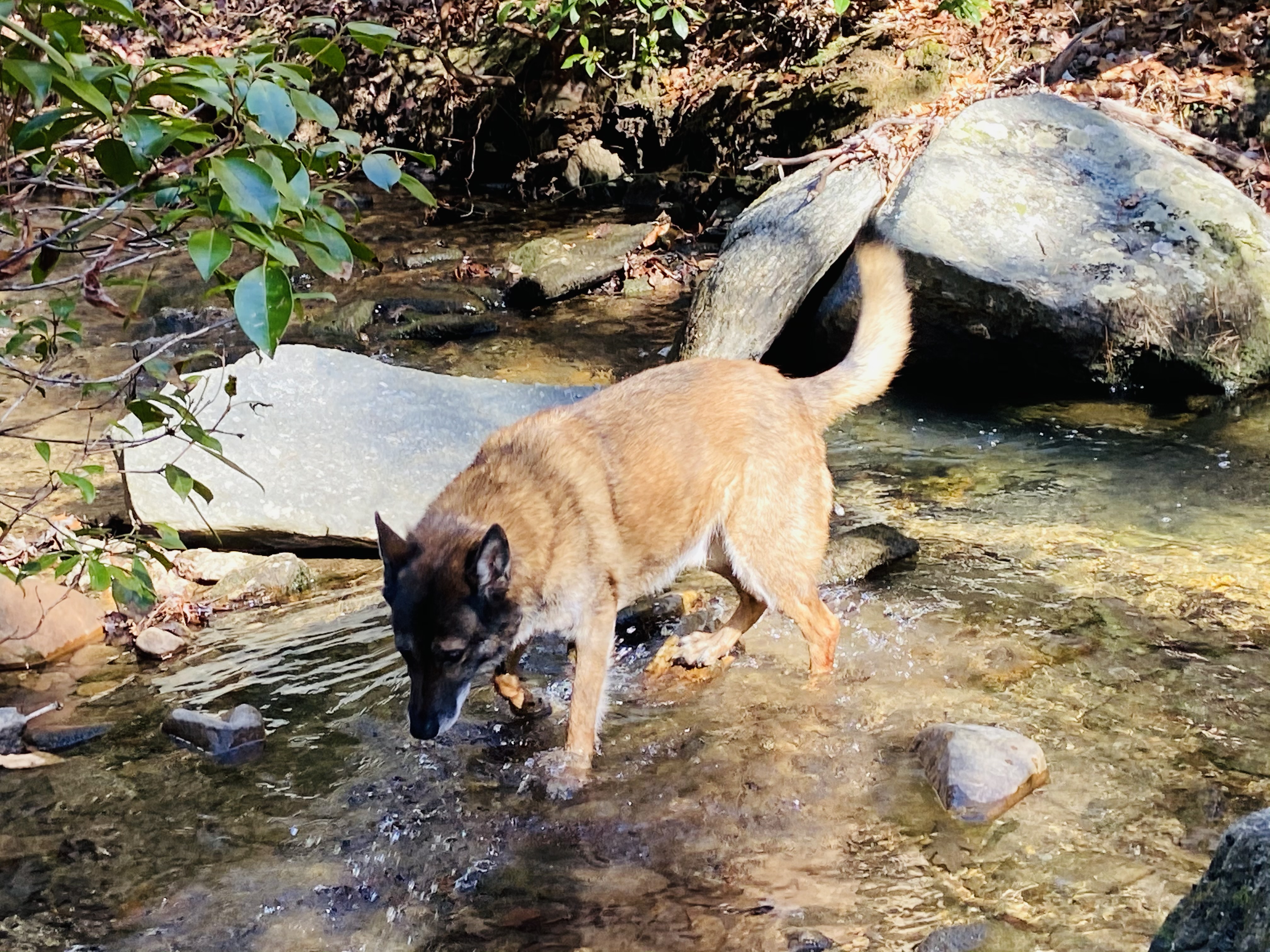
Only an hour of light remains. Today, of course, is the first day of a new year. And just as almost every other day if I’m home, I walk our family dog. He’s a male German shepherd, brown, gray, and black, several years old (not exactly certain how many years, though, since my family rescued him several years back from a shelter in south GA). I could go on and on. He’s special to us, as fellow dog lovers will understand. Anyway, he’s brown, gray and black, muscular but with a belly (I feed him too much), ears that make visitors think we have a wolf, and a keen nose. We typically walk down and back on the blacktop lane that runs in front of our house. Nothing special about today. It was just three thirty to four thirty on another Monday afternoon, and I opened the door to step outside with my dog.

Brewster’s black nostrils alerted him to the four does immediately behind the back porch of the house. They stood with their eyes on us, and their long gray ears pointed skyward like hairy pyramids. Their lean muscular legs were the identical colors of the forest floor, which was covered with crisp oak leaves down from the gray boughs above. The deer stood in silent intense motionless energy, eyes black as oil pools, watching.

“No, Brewster. Let’s go this way,” I whispered to him, and he headed to our usual route, disappointed I did not let him chase them. But on the way down the driveway, he turned his head back three times to the deer behind as if he and they exchanged a mystery or truce.

When we got to the top of the first hill, new timber had fallen on the left side of the lane. A rotten pine with holes from woodpeckers was wedged between the limbs of an oak twenty-five feet above our heads. And the wind was sending haunting sounds through the gulch below the road to our right.

Brewster marked his typical spots as I followed behind him with the leash in my hand. When he scared gray squirrels scurrying for the oaks, he’d chase them enough for them to look down on him and me from the trees, waving their tails in alarm, and barking at us till we passed on.

The January wind was as cold as I had ever felt in GA. My Columbia fleece top left my neck exposed and I reached to turn up the collar. I wanted to keep moving, but Brewster continued to stop and sniff what seemed like every few steps. He buried his nose in the frigid downed limbs, and pressed his snout in the brittle brown leaves, then scraped them back with his paws as if he were a buck marking territory.

How many times had we walked this way? Countless. But today, I noticed how green the moss growing in the shaded spots near the blacktop was, and felt the wind sting my ears and neck, and watched my shepherd chase the squirrels up the oaks again, and listened to the fallen pine wedged in the oak send haunting sounds tunneling down the laurel canyons. I did not think of news, schedules, of politics, but only of these sights and sounds, of today’s winds, of the particular ways the moss here reminded me of the felt on the billiard table my father had in our basement when I was a boy in high school. I thought of how watching the eyes of deer makes one feel small. I witnessed mystery, order, and providence in a walk with one’s dog.

Thoughts on the Death of R.C. Sproul

Sometimes just mentioning a man’s name makes a statement. I am not alone this week in mourning the loss of R.C. Sproul. He died just days ago near his home in FL. His ministries are manifold. They include Ligonier Ministries, sermons, lectures, teaching series, apologetics resources, CDs, and books, books, books. For me, R.C. Sproul made more than a statement. He formed and re-formed much of my thinking. Sproul’s ministry legacy will endure. Why? He was a stalwart defender and soldier of Christian orthodoxy. He had a pastor’s shepherding heart. He had a sharp theologian-philosopher’s mind. He had the sensitivity and attention to detail of a poet-writer.

When I was grappling with intellectual questions surrounding the problem of evil, R.C. did not sidestep tough questions surrounding the sovereignty of God and the existence of evil. He wrote volumes about how God is altogether holy, altogether sovereign, and how evil is obviously part of God’s decree to exalt Christ while calling all men to repent and turn to the saving gospel. Sproul did not evade tensions that thoughtful seekers asked. Through Ligonier Ministries and R.C.’s books, I discovered answers to tough questions.

Like thousands of others, my first exposure to R.C. Sproul was through his book The Holiness of God. I can still remember reading of his descriptions of Isaiah 6, and of how Isaiah learned of God’s consummate holiness. In light of God’s glory, Isaiah saw his own sinfulness, and the atoning work of God through the gospel. To read, and then later to listen, to Sproul explain the gospel by plumbing the holiness of God shook my thinking to its foundations.

After I read The Holiness of God, I went on to read and study Sproul’s other works. They are too numerous to mention all of them here, but they’re easily found. I remember reading Chosen by God and The Consequences of Ideas and Lifeviews. For me, those books were especially meaningful. Why? Because Sproul, and this is so important to me, he did not evade the thorny issues. He tackled the Bible’s teaching of predestination head- on in Chosen by God. He did not pander to keep from hurting feelings. He was, in short, faithful to God’s Word, but kind in his delivery.

In The Consequences of Ideas, Sproul walked me through the history of thought and showed how the Bible cohered where Greek ideas came up short, and/or omitted parts of universal human experience. He showed me (again) how the empiricism of Locke, Berkeley, and Hume failed to account for all the data. He showed me how Kant and Hegel fell short of answering fundamental questions and experiences. He showed me how existentialism and secularism had their philosophical feet planted in midair. In Lifeviews, Sproul tackled head-on the tendencies that many people have to settle for sentimentality, pragmatism, pluralism, and hedonism rather than the truth.

When my wife and I went to R.C.’s church in FL a few years ago to hear him in person, I was thrilled. I’d read his books for years. I had listened to him on teaching conferences. I had watched his lectures on Reformed theology and apologetics. And after his sermon, he sat on a chair in the church narthex and greeted us. My wife and I stepped up. He had breathing tubes in his nostrils. He shook our hands as I introduced us to him. True to form, he was gracious. He asked where we were from and where I’d studied during seminary years, etc. But he was a pastor, too, a gracious, faithful, gentle giant and theologian, one for whom I’m grateful. As just one more who is in your debt, R.C., thank you for your faithfulness to use what God granted you. Well done.

Sea to See

I think it was Melville who said something to the effect of contemplation being wed to the sea. I’m no different, I suppose. Not approaching the talent of a Melville, that’s certain, but I too find my mind reflecting upon time at the beach. Is it presumptuous to think we people drive or fly to the beach for reasons all that different from one another? I bet we’re more alike than that. To find reprieve from the mundane? To escape busyness and hectic schedules? To recharge our souls? To make memories with our loved ones? To gorge on crab, oysters, scallops, and shrimp? I went for all of those reasons and more. But the question remains: what did I go to the sea to see?

Back home at my desk, the small of my back hurts from many hours behind the steering wheel during the drive back. We’ve fed our pets and picked up the mail. We’ve plopped luggage down in the living room to put away later. And it’s good to be back. But what did I go to the sea to see?

First, to get away with my loved ones. Though my daughter could not go due to her schedule, the rest of us did get away. Metro Atlanta’s city lights faded into the Carolinas’ sands and brilliant stretches of sun on the Atlantic. Wispy clouds, whose shapes changed with the breezes, arrested my eyes more than a few times. Hours away from home but it felt like a universe away. But what else did I go to the sea to see?

Second, to leave the tyranny of the present. I did not take my schedule out of my backpack once. I’m a Luddite re technology. I still use a paper calendar and write my appointments in pencil to chart each day’s planned events. When most people operate comfortably on their smartphone calendars, I’m the holdout with a paper calendar and pencil. But hey, my pencil is mechanical, so there’s that. I only checked office email once, I think. I used my smartphone to take pictures of scenes I did not want to forget, but tried to stay away from news, social media, etc. It’s amazing how one’s mood improves the farther one gets from the barrage of information overload. But what else did I go to the sea to see?

Third, though not in the order of importance, is what I think I went to the sea to see. It’s one thing, I think, but it’s multifaceted. Here’s the way it washes over my mind’s eye: When my ten-year-old said each day, “Dad, let’s throw the football some more!” and I looked up from my folding chair on the sand, and he’s standing five yards away tossing the pigskin back and forth between his hands in a small spiral, and the sun’s rays shimmer off the waves over his shoulders, and the fall winds lift his blond hair as he walks closer to me shouting, “Dad, Dad, come on.” And I put down my biography of Emily Dickinson and look up to see him smile when he sees I’m coming his way to throw.

And there are the images of my wife walking barefoot up the shore looking at the shells around her tanned feet, and I can see her face brown already from a few days of sun, and I know these images will fill me long after we’ve driven west back to GA. She’s prettiest to me when she does not know I’m watching her and loving her from afar.

And I hear the gulls circling near us as we toss the football, and the pelicans fly in formation two hundred meters out, and blue pigeons strut incredibly close to us on the sands as if to let us know we’re the visitors.

It’s the wash of these sounds, the sea smells, the sun-drenched days, the unmistakable gait of one’s loved ones. The images of the leather spiraling in the sun, of one’s wife walking the beach afternoons or under stars and moonlight so bright it would be shameful to question God.

These reflections come into precious focus now, after I’m back at the desk and hear voices call my name to tell me it’s time to eat. It is as if I’m beginning to understand what I went to the sea to see.

Beauty as Messenger

Beauty as messenger. I’ve taught literature for many years now. I remain convinced that great literature reflects man’s best, noblest, most exalted efforts to express truth beautifully. For some, that may sound sentimental and saccharine. For others, however, Browning’s line, “Ah, but a man’s reach should exceed his grasp, Or what’s a heaven for?” expresses what great literature aims for, namely, truth beautifully written. Might truth beautifully expressed be a messenger? And why do most avoid contemplating it?

The things in life that mean most to us are oftentimes the things about which most people avoid talking. It is more convenient to tweet or post. Headlines, not history. News is just that—new. We’re a “… and now this” culture, as Neil Postman wrote about. It’s what’s “happening now.” There is no room for the great enduring truths of literature when we can get updates sent to our phones and have news scrolled across the gadgets of our choice. We’re connected electronically but exiled in our souls. Where’s room for truth and beauty? Any room for a messenger?

The world is too much with us; late and soon,/Getting and spending, we lay waste our powers;–/Little we see in Nature that is ours;/We have given our hearts away, a sordid boon!” Wordsworth’s poem, “The World Is Too Much With Us,” still speaks, does it not? Might these words, penned hundreds of years ago, serve as a messenger of that which endures?

This morning driving to work I had the radio on in my truck. The radio DJ was telling of how Tom Petty died this week, and of how his albums are now selling at many times the rate they were when he was still living. I was not a big fan of Petty’s music but I do respect how he labored in his craft. For Petty, it was music. His songs are played constantly because he spoke to the human experience and he tailored his talents to fit the genre of rock and roll. And music lovers continue to respond by buying up his albums and turning up the volume. There’s a message through all this and it’s not just the tunes. It speaks to a longing in the human heart for beauty and for truth. I do not wish to stretch the analogy too far. I would not choose to argue that Petty’s lyrics are great literature. However, Petty’s music has endured because it speaks to people in ways music mysteriously has the power to do. It touches people’s souls. It stirs them. It reminds them of what they value, of what brings joy. And those things endure.

I’ve read the following lines hundreds of times: “The heart of man plans his way, but the LORD establishes his steps” (Proverbs 16:9). It’s a reminder that we don’t know our end. I doubt that Tom Petty knew last week that he had less than a week to live.

James wrote in similar fashion: “Come now, you who say, ‘Today or tomorrow we will go into such and such a town and spend a year there and trade and make a profit’—yet you do not know what tomorrow will bring. What is your life? For you are a mist that appears for a little time and then vanishes” (James 4:13-14).

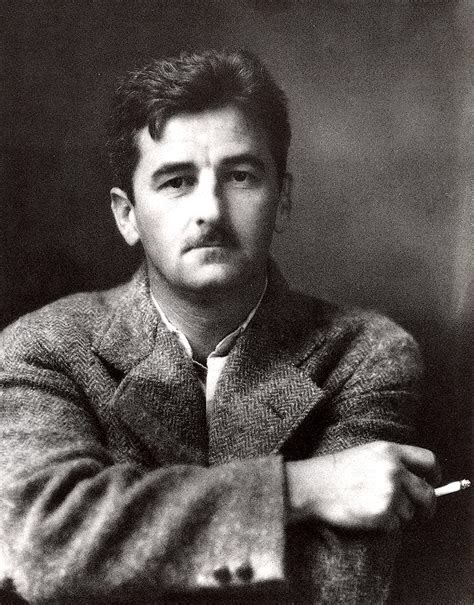
Why do I still love teaching Shakespeare and Faulkner? Why do I try to open the Psalms to students who malnourish themselves on intellectual Twinkies? It’s because I remain more convinced than ever that the human soul atrophies if starved of truth and beauty.

I plan to drive home late today. When I do, I will drive north and the sun will be descending over the trees over my left shoulder. When I enter the community where my family and I live, I will wind over hills and cross a lake. On that lake, the sun will place its golden fingers across the water’s surface. Loons and geese will likely be flying overhead. Drakes and ducks are likely to be paddling around and dipping their heads beneath the surface, then reemerging with drops of water on their glossy crowns. And again I will be speechless before beauty. I will be suddenly filled with a message. It’s a message worth telling.


He Still Is

I saw my grandfather today though he died in the winter of 2004.

I took the steps down to the basement searching for a tool. I had forgotten I had hung his worn and gray two-tine cultivator hoe (with the bent left prong and chinked metal on the blade) up on the brown pegboard of the basement walls.

When I saw it there, it was too late. I was as upturned as the middle Georgia soil he sank this hoe into. Torn open by steel.

I saw you again, Granddaddy, with your knotted hands around this handle, bent over the obdurate soil, importunate as the punishing sun, living sermons I was too immature then to appreciate, planting images in generations.

I saw you today, Granddaddy. And you were even grander.

Warning

Warning: The following paragraphs address an emotional issue—abortion. They also contain a link to a video of actress Martha Plimpton bragging about her multiple abortions. Finally, my paragraphs share some of my thoughts, some experiences germane to this issue, and a short confession. If you are willing, I invite you to continue. What is at stake is important; no, it is more than that.

I was driving home today to prepare my military gear. I am one of thousands of soldiers being called upon to support our nation amidst Irma’s lashing the land. But that is not what this is about. I had my radio on in my truck. Dennis Prager played an audio of actress Martha Plimpton who recently spoke to a gathering in Seattle, Washington. Her topic: the beauty of her abortions. Plural. Prager played forty seconds of Plimpton recalling her “best abortion” that was performed in Washington. The crowd reacted—with applause.
I’ve attached the link for you here: https://www.youtube.com/watch?v=URiXH_iMLqo

First, I became viscerally angry. I felt my chest tighten. I felt my pulse quicken. I discovered I was squeezing my steering wheel. For a moment, I only pictured this woman’s face in my mind, and I despised her. I wish I could say I am more sanctified than that, but I’m not. I was angry.

Second, I turned off the radio. I pulled off the road. I had to. My stomach was hurting. Why? I felt I might vomit.

The feeling that came to my stomach was the one I felt when I took fellow soldiers through Nazi concentration camps in Germany. I’m thinking of one time in Dachau. Some of my fellow soldiers and I took a few days and I led them on a tour of Dachau. We walked under the iron gates, stood in front of trenches that Jews were forced to dig; we stood in silence before the ovens where men, women, and children were incinerated; we walked into concrete rooms where Zyklon B poison was used to gas millions. We stood under the smokestacks where charred human remains billowed out like snow. We saw rooms stacked with Jewish hair, teeth, and shoes—all torn from them, since they were “undesirables.”

Back to Plimpton. As I heard her speak, and I heard the crowd cheer, that old feeling returned—that sickness that rises in the stomach when we see evil, whether in a concentration camp, or when mothers are lauded for murdering their boys and girls in the womb. One word only I could think of: barbarism.

Third, I thought of my wife. Several years back, she was unable to carry two of our children to term. We lost both of them. I won’t give you all the details, because this is not about us, but about something that affects civilization–if we call it that anymore. At any rate, after several weeks of pregnancy, we had been to the doctor, and we had those proud moments when we bring ultrasound pictures back and display them on our refrigerator. But those children were not to be born. I suffered in a way that defies language. But it was nothing to compare with what I saw my wife suffer and endure. She still grows silent around the time their birthdays would have been.

How do these three things relate? How do they cohere? I pulled off the road because my stomach hurt. It hurt in a way that was visceral. Today brought up some of the greatest pains I have ever known: the horrors of witnessing the remains evil men unleashed upon other men, women, and children in the 1930s and 1940s in Europe—because of a secular worldview; and the horrors of seeing my family’s children die in their mother’s womb, and our praying for God to save them, to deliver them to us healthy; and an American actress boast of multiple abortions to an audience who applauded.

What did I do? I pulled over. I tried to pray. But I wept. I lamented our barbarism. I saw the irony of how we deploy soldiers to save our fellow men from hurricanes, but we murder our sons and daughters in the womb. Barbarism. And I wept and prayed some more.

I wanted to write of literary things, or of history, or of theological interests again. But today I could not. Some things are too important; silence is not my choice.

Broken and Beautiful

Broken but beautiful. Ever had the experience of seeing the same pattern over several days? I don’t mean patterns like traffic or how we arrange silverware in our kitchen drawers. No, I mean patterns that speak to something deeper. If you have experienced them, what follows may resonate with you. If patterns are lost on you, skip this altogether. I write as one convinced that patterns are important. Why? Because confluence, convergence, and the coming together of ideas may serve as presages. Patterns exist for several reasons. One of those reasons is to act as messengers. Let me explain.

Last week I read a short theology book. The author wrote of how all people who are honest admit that our world is broken, and that we all are broken people. We know intuitively that the world is a fallen place. And we know that we’re fallen, too. Witness the current destruction of statues and monuments to America’s history by angry mobs. Witness the targeted slaughter of law enforcement officers. Witness the rancor among pundits who seem to have relinquished reasoned debate and replaced it with ad hominem attacks. Most of us would admit that the world we live in is hostile, rancorous, and well—broken. This brokenness is not just external to us. It is not merely “out there.” If we are honest, brokenness is part of the way we see ourselves. No pattern yet, right? Hold on. It is coming.

So I kept reading the book and thought, “Yes, this rings true. We are broken.” But then the author did something else. He used the term “beautiful” to describe us, too—amidst our brokenness. For many readers, that term might not signify much. But for others, that term connotes that a lot more is going on; namely, there is beauty in this broken world. There is an aesthetic to the universe. Yes, there is ugliness, deformity, depravity, etc. The list is long of how brokenness manifests itself in some people’s cruelty to one another. However, humanity is still beautiful. Then I put the two words together—broken but beautiful. That was last week.

Now to this week. In a Sunday school class, a teacher was leading us in an examination of some of what Scripture teaches about how Christ-followers will—not may—but will suffer. We looked at Peter’s words: “Beloved, do not be surprised at the fiery trial when it comes upon you to test you, as though something strange were happening to you. But rejoice insofar as you share Christ’s sufferings, that you may also rejoice and be glad when his glory is revealed” (1 Peter 4:12-13). And then we read James’ words: “Count it all joy, my brothers, when you meet trials of various kinds, for you know that the testing of your faith produces steadfastness” (James 1:2). Do you see the pattern? The world is broken, but beauty abides still. These broken people are beautiful in the crucible.

Then we looked at Paul’s words from prison: “For it has been granted to you that for the sake of Christ you should not only believe in him but also suffer for his sake, engaged in the same conflict that you saw I had and now hear than I still have” (Philippians 1:29-30).

Then the teacher said this: “We are broken but still beautiful.” I almost slid out of my chair. The same terms, the same truth, the same pattern—broken but beautiful.
The pattern asserted itself through experience, through a book, then through a teacher at church—with its simple message: broken but beautiful.

When we had eaten lunch and returned home after church, and changed into comfortable clothes, my son said, “Dad, let’s throw the football.” Even though I had a thousand other things to do to prepare for the week ahead, the pattern emerged. Excuses came to my mind: I need to work in the basement; I need to wash my truck; I need to prepare for the course I’m teaching, and on they ran. But here was my son, asking to do what is beautiful to him.

As we threw the ball to each other, I watched him run the hill and sprint for passes. I saw the white laces spin round as the football arced towards him. I heard the sounds of his cleats on the earth and watched the way sun fell in patches on our driveway and through the overhanging white oaks. And the pattern whispered—broken but beautiful.