Does God Get a Say?

When I was a a new Christian, there was a deacon in my girlfriend’s (and wife-to-be) church who told me, “Jon, if God would just speak to me about my son’s death, I would know why . . .”

Background: The deacon’s son had died an early, premature death. The dad and mom outlived their son. It was, to state the obvious, horrible and sad. No Christian parent would want to outlive his/her children. He/she would want what is natural and in the normal pattern/design of the Lord.

But that was not the case with this deacon and my dear friend. His son had died and he (the deacon) did not understand why. Why had God allowed this? Wasn’t God good? Didn’t God understand parenting? Didn’t God love His Son? Why?

Contemporary Events: I read the news online today. “2023: Biden Sends Tanks to Ukraine” headlined: (https://www.breitbart.com/politics/2023/01/31/joe-biden-sends-tanks-to-ukraine-after-warning-doing-so-would-be-world-war-iii/)

And there were other headlines:

And in TN, ‘pro-trans’ gyrated in “peaceful protest.” Why? Because, per the article, they were incensed at people’s repulsion at minors’ sex change operations. On minors. Yup, that’s where we are. If you say to the god of secularism that you should not mutilate the genitals of boys and girls, well, you’re the problem. Hush up, troglodyte.

Here’s the link to that article:

https://www.breitbart.com/politics/2023/01/30/video-pro-trans-protesters-disrupt-rally-against-child-sex-changes-tennessee/

Perspective/Does God Get a Say?

We are living in a time when what outrages the media is that the vast majority of sane people see gender mutilation/castration/hormone therapy/etc. for what it is: Frankesteinian gothic horror, disfigurement, abasement, cosmic treason, and reprobation.

But will God get a say?

No, not in the eyes of the world system.

But rest assured, God gets a say, world system.

As a matter of fact, He laughs. He scoffs. He holds the worldly secular system in derision.

Psalm 2 reads this way. It is, in short, what God says about the secular system:

The Reign of the Lord’s Anointed


Why do the nations rage

and the peoples plot in vain?

The kings of the earth set themselves,

and the rulers take counsel together,

against the LORD and against his Anointed, saying,

“Let us burst their bonds apart

and cast away their cords from us.”

He who sits in the heavens laughs;

the Lord holds them in derision.

Then he will speak to them in his wrath,

and terrify them in his fury, saying,

“As for me, I have set my King

on Zion, my holy hill.”

I will tell of the decree:

The LORD said to me, “You are my Son;

today I have begotten you.

Ask of me, and I will make the nations your heritage,

and the ends of the earth your possession.

You shall break them with a rod of iron

and dash them in pieces like a potter’s vessel.”

Now therefore, O kings, be wise;

be warned, O rulers of the earth.

Serve the LORD with fear,

and rejoice with trembling.

Kiss the Son,

lest he be angry, and you perish in the way,

for his wrath is quickly kindled.

Blessed are all who take refuge in him.

Takeaway: Judas Iscariot hanged himself. His guts gushed out. He couldn’t live with himself. He denied the truth. He betrayed it. He hated it.

He was a picture of what it means to reject the truth.

It’s suicide to reject truth. It’s self-destruction. That’s what the world system begets.

And yet.

People are being socially pimped to conform to insanity where black is white, where white is black, where how one feels somehow alters reality. I’m sure glad my airline pilot doesn’t fly by his feelings. That could make for a no-good, very bad day.

And yet we’re told that up is down, that we’re racists, that the 19th booster shot will really vanquish the ‘rona this time. I know it was 10 days to flatten the curve three years ago, but, come on, man.

God has spoken, you see.

He has spoken through His Word, the Scriptures, 66 books of revelation of how we should then live.

This world is an existential tilt-a-whirl because most folks are being led by mindless clowns in clownworld. Folks have bought tickets from clowns masquerading as angels of light. And as the tilt-a-whirl comes crashing down, folks deny they purchased the tickets.

It’s not that God is silent. It’s that most don’t want truth. They think judgment is just a word. And then they lament the state of things.

And yet.

One might even go so far as to say that the peoples plot in vain (Psalm 2:1).
Reading: Why Bother?

If you ask that question, I suspect you’ve already decided against it.

But for a few of us, not reading would be intellectual and spiritual prison. Complete incarceration.

As is my pattern, I have deviated a bit from my regimen I designed.

Some writers came into my life that I thought I felt I had to read early this year. And so, my ‘scheduled’ books got pushed to the right a bit.

But I’m still on track.

So far in 2023, I’ve fallen in love (again for some volumes … like Melville’s masterpiece and, of course, one of my “bromances,” Charles Dickens) with certain books/stories/plays/poems, but here’s a glimpse at some of those I’ve been through in January 2023:

  1. Carson McCullers’ The Heart Is a Lonely Hunter
  2. Harry Crews’ The Mulching of America
  3. Herman Melville’s Moby-Dick
  4. Ernest Hemingway’s For Whom the Bell Tolls
  5. Collection: The Greatest Stories of Anton Chekhov
  6. Cormac McCarthy’s The Passenger
  7. Cormac McCarthy’s Stella Maris
  8. Thomas Wolfe’s Look Homeward, Angel
  9. Charles Dickens’ Little Dorrit (still reading)
  10. Ligonier Ministries: A Field Guide On False Teaching

I’m working through Hawthorne’s oeuvre, as well as some of my war stories and books about soldiers and war, of which I never seem to tire, especially WWI and Vietnam, two wars where you could smell your ‘enemy’ and see his pupils.

If you’re a reader, I know we’re the minority, but people remember Plato, Calvin, and Shakespeare. They don’t remember who’s trending on the world wide dread, I mean, web. Sorry, not sorry.

Press on, bibliophiles.

The written word abides.

I Saw You, Rose

Grab and Go. That was the name of her clean area, where the bottles of plastic water faced forward fashionably, the shaped bottles to (hopefully) convince customers to pay sometimes up to $7 for a bottle of water. But they appeared so tempting, where they stood erect as toy soldiers, adjacent to perfectly organized romaine lettuce and gluten-free salads and beef jerky made of high-protein turkey or organic beef. And the cheeses, too, of course, were high-protein, low carb, made of angels’ milk, cream, and celestial cultures.

But there was Rose, with her blue gloves on, surgically arranging and wiping and disinfecting and placing the bottles and plastic-encased salads and plastic-wrapped jerky and pulling the boiled eggs to the front of the open coolers (but only after inspecting the dates of expiration). And the passengers came to her kiosk.

She took pride in it all. And I found myself thankful for her. She so differed from her competition.

I’d turned in my rental car, walked the macadam and painted concrete path towards ticketing and the terminals (a rather ominous noun at airports), purchased a gooey sausage, egg, and cheese (though I asked for one without cheese) croissant and black coffee for $11.67 from a rude woman who barely spoke English at Ronald Reagan Washington National Airport.

And I’d found a seat after TSA Pre-check where I could watch the sun rise over the runway through the eastern window. I dug into my ruck and retrieved my iPhone and charged it in the vertical tower outlet adjacent to the row of seats. Then I pulled out the Carson McCullers novel I was completing, eager to complete the last two chapters of her debut novel, a novel I’d first read as a university freshman English major many moons ago.

But Rose’s Grab and Go was in front of me, and I kept looking up. She ran her place so distinctly.

A Starbucks was next to Rose’s Grab and Go. And Starbucks was a mockery. The sophomoric 20-something employee poured coffee with surly smirks. Her billiard-green apron was insufficient to cover her insolence.

Just wanted to tell you, Rose, that I saw you. The tiles in your area reflected the light from the bulbs above. Your trash bins had no ketchup stains or syrupy cola trails on them. The napkins were stocked and of good quality. You spoke to us travelers as we exited our flights and/or prepared to board them. You were kind. Not proud. A woman of character. You took pride in running your establishment. And it showed. And some of us recognized it in you.

Rose, you appeared to be in your late fifties, maybe even your sixities. You struck me as a great aunt and probably (hopefully) someone’s grandmother. You did not wear a wedding band, so maybe you were a widow or spinster, or maybe you just didn’t wear jewelry. I watched when you removed your plastic blue gloves and saw your aged hands, strong from use.

You were a black woman, strong and kind, and you represented yourself and your area well. (I find it difficult to swallow the concept of paying more money for a bottle of water than I made in multiple hours as a college kid many years ago, when I mowed grass and swept floors and worked fast food joints, etc.) But I’m thankful that folks came to your establishment.

I think some folks recognize that we’re in a time where some of us are so desperate for character, for kindness, for maturity, that we’ll pay for brief reminders that some of that abides.

I hope to see you next time in D.C., Rose. Keep doing what you’re doing. Some of us see. And we appreciate you for it. May you and your legacy be blessed.

Carson McCullers’s Debut Novel

I’m reading through her works again. They still move me deeply.

Why?

Though I’ve written about McCullers before, her writing merits more attention.

Why?

At her best, she conveys the unallowed, the unsayable, and yet the most meaningful.

No, this is not about her sexual escapades or her unhappy marriage(s) [she married her husband twice].

McCullers housed a tender soul and a scholar’s mind.

And her works reflect both.

Read her.

Watch her plays online; visit her home in Columbus, GA; but above all, read her work.

Her works will, if you’re honest, remind you of what’s wrong with us, and also of what is occasionally beautiful about us.

Esther: Studies in Courage, Wisdom, & Faith

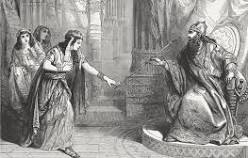
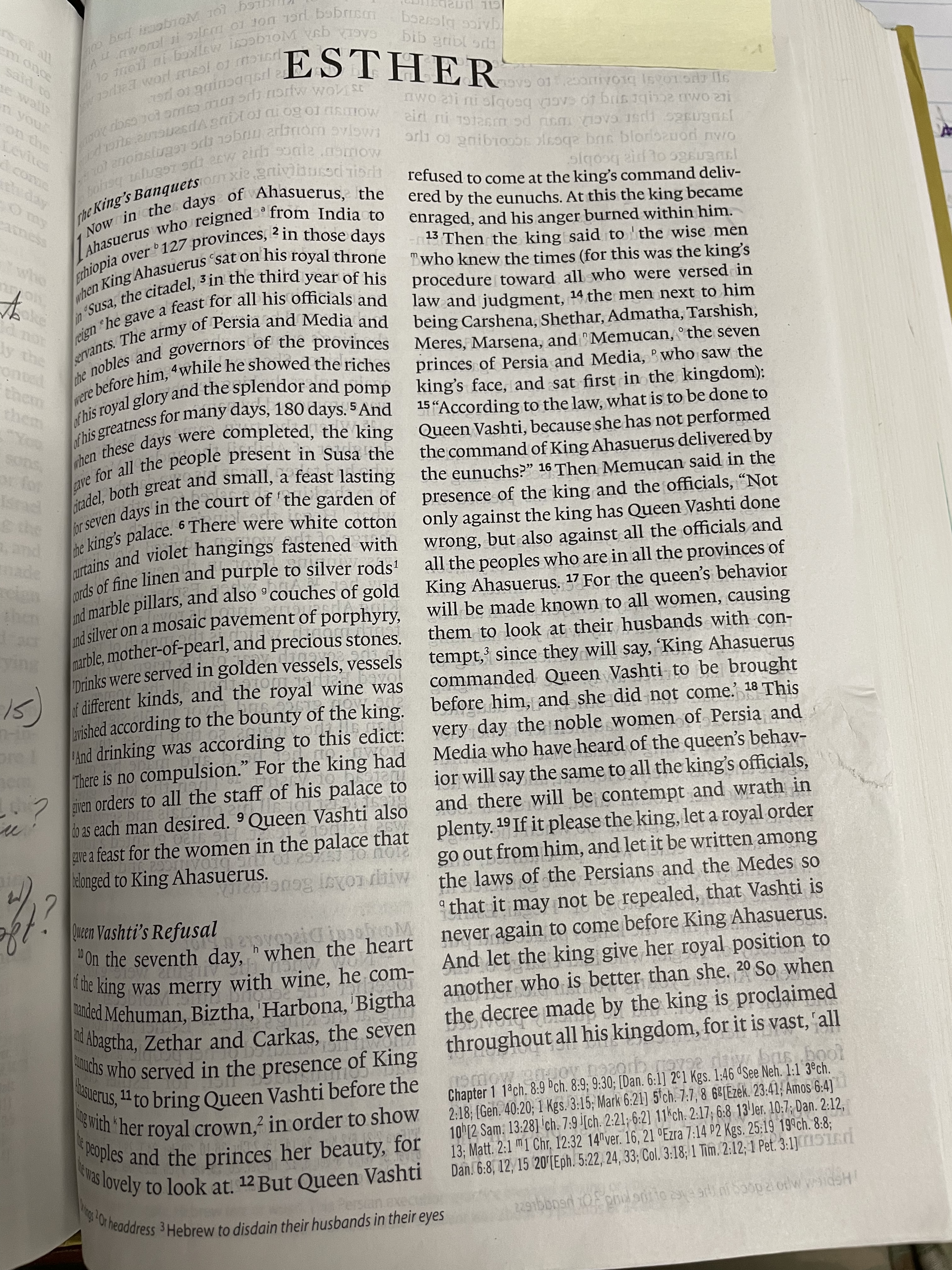
Currently a group of us are going through the Old Testament book of Esther. It is among my favorite books of Scripture. And I am learning it is among the most powerful of books when it comes to exploring issues involviing courage, wisdom, and faith.

Set in the 480s-460s B.C. in Susa of Persia (present-day Iran), Esther’s story covers a series of historical events and explores sundry themes:

  • Good vs. Evil
  • Cowardice vs. Courage
  • Pride vs. Humility
  • Bravery vs. Bravado
  • Trust in Government vs. Trust in the Lord
  • Temporal Power vs. Divine Providence

This list could go on, of course.

Esther is about how the Feast of Purim came to be, about how God sustained the Jewish people during their exile under Persian rule and captivity, about how a humble God-fearing man like Mordecai was used by God to alter the history of redemption, about how a beautiful and brave young woman (Esther) risked it all to trust the Lord, and how God rewarded that trust by vanquishing wicked Haman, his progeny, and how the low and humble (like Mordecai and Esther and the Jewish people) were brought from low to high, and about how God’s providence was manifest–yet again–through examples of faithful men and women.

People often quote phrases from this book, like ” … for such a time as this” (Esther 4:14) and “if I [Esther] perish, I perish” (Esther 4:16), but Esther is an easy book from which to quote. It is much harder to live out, especially if you have skin in the game.

May we be found faithful.

Mordecai was.

Esther was.

Lord, may I be, too.

Love Coming Home

Was it Dorothy from Baum’s The Wonderful Wizard of Oz who said, “There’s no place like home”?

I think so, but it has been a bit since I read it or watched the film.

But the statement is true for me.

My wife was busy fattening the girl deer up on bread from her hands.

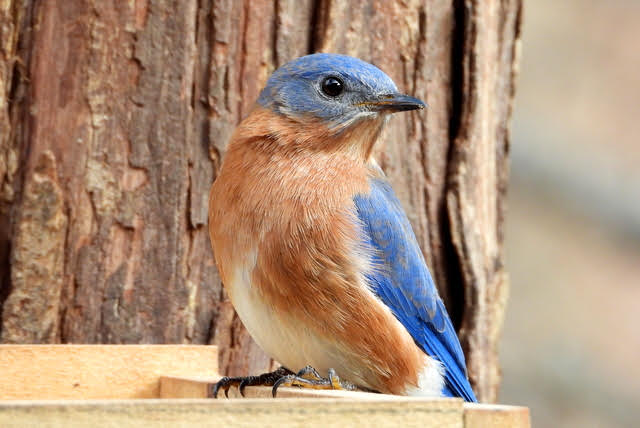
And I fed and watched the birds come and feed on sunflower and other seeds from a feeder.

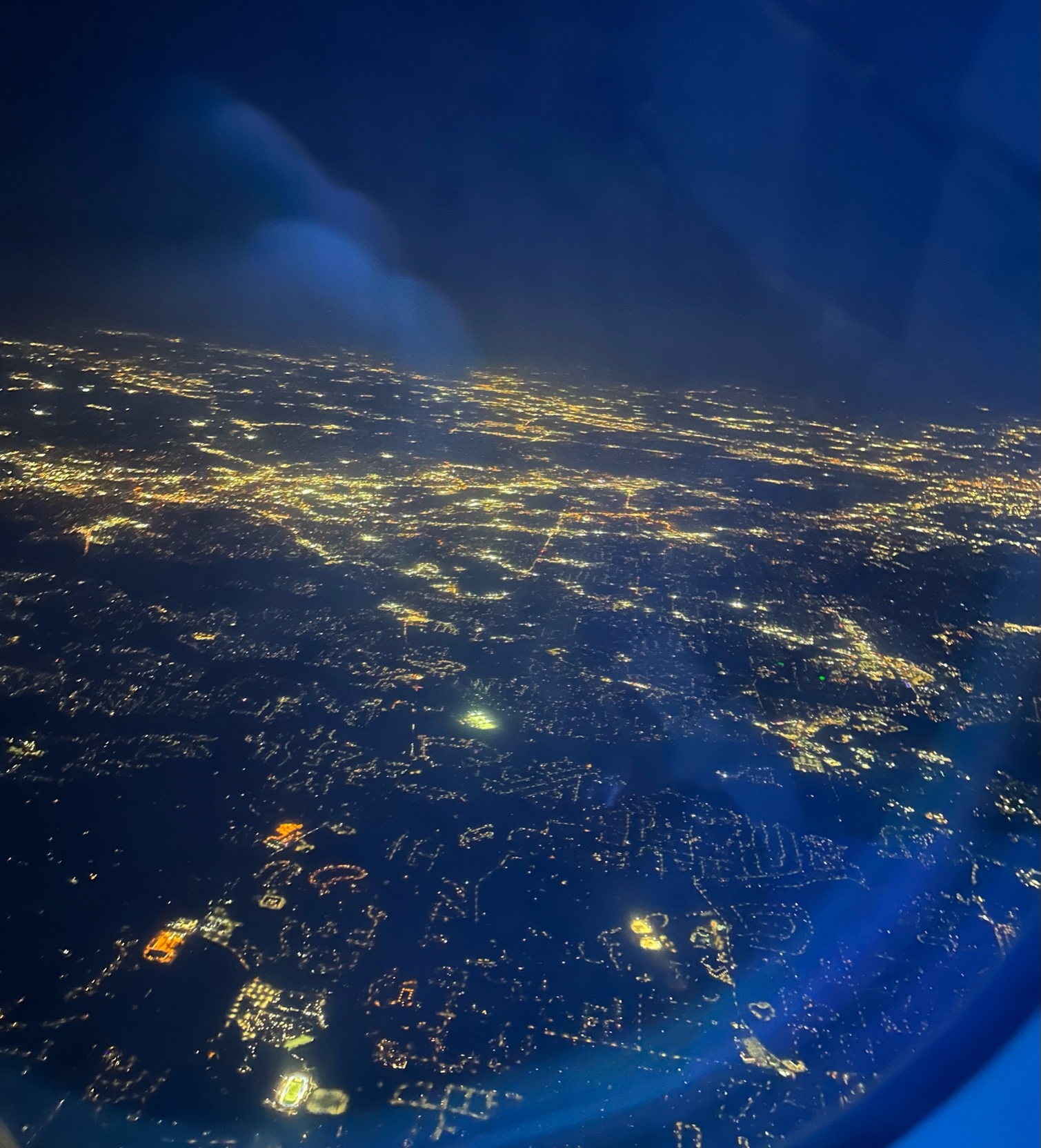
And I think of such times when I’m flying from place to place and look down upon cities electrified at night.

And tomorrow I will be able to gather with the saints at Sunday school and church as we open the Scriptures to the wonder-filled book of Esther wherein we will learn of heroism (Mordecai and Esther), read of romance/love, dangers and threats to the good in a world of pervasive evil, read of one of history’s true villains (Haman), and see how obedience to the Lord was repaid in a temporal sense via Purim but also eternally for the redeemed by the Lord’s presence.

Did I mention that I concur with Dorothy? There’s no place like home.

Cold Temperatures but Warm Personalities: Snowy Days with Soldiers in Iowa

Was able to be with fellow soldiers in Iowa recently.

Some of the friendliest people I have ever encountered are in Iowa.

Grateful to spend time with them and plan future events together.

As I read last night before going to bed, the snow had begun falling.

When I woke this morning, it was still falling.

Pretty part of the country, here.

Thankful for the opportunities to minister to our troops.

Thoughts Upon Rereading Melville’s Masterpiece Moby-Dick

Earlier I laid out a 2023 reading regimen for myself. You can find that link here:

Reading Well: More than a Resolution

Several of the books/series I am going through are leviathans. In the current edition of Moby-Dick I am reading, there are over 600 pages. I am quite familiar with Moby-Dick as the literary masterpiece it is, and so the length of the novel does not intimidate me or hopefully anyone else who dives into its sea of profundities. But even if it does intimidate you, please see it through. Press on. Stick with it. Melville’s encyclopedic wisdom is in these pages. Plus, it’s just a masterful story of will, of good and evil, of humanity and inhumanity, of the great enduring truths of the human condition.

In the copy I’m using, it is marked up from my previous readings. Below are just a few of the places where characters from the novel, or the narrative voice, or perhaps Melvillean avatars utter thought-provoking gems:

“What could be more full of meaning?–for the pulpit is ever this earth’s foremost part; all the rest comes in its rear; the pulpit leads the world. From thence it is the storm of God’s quick wrath is first descried, and the bow must bear the earliest brunt. From thence it is the God of breezes fair or foul is first invoked for favourable winds. Yes, the world’s a ship on its passage out, and not a voyage complete; and the pulpit is its prow” (55).

And one of the funniest scenes is when Ishmael meets Queequeg. Thinking Queequeg is some degenerate cannibal and that he (Ishmael) is the refined and sophisticated person, Ishmael begins to learn that things are often not what they appear. When Ishmael discovers he has to share a bunk with a tatooed cannibal, he (Ishmael) at first is prideful and resentful. But as he gets to know Queequeg, Ishmael learns that virtue abides in action rather than in appearance:

“What’s all this I have been making about, thought I to myself–the man’s a human being just as I am: he has just as much reason to fear me as I have to be afraid of him. Better sleep with a sober cannibal than a drunken Christian” (38).

And of course one of the most familiar passages comes near the beginning of the adventure when Ishmael, trying to understand his reasons for wanting to take to the sea, has this interior monologue:

“Why is almost every robust healthy boy with a robust healthy soul in him, at some time or other crazy to go to sea? Why upon your first voyage as a passenger, did you yourself feel such a mystical vibration, when first told that you and your ship were now out of sight of land. Why did the old Persians hold the sea holy? Why did the Greeks give it a separate deity, and own brother of Jove? Surely all this is not without meaning. And still deeper the meaning of that story of Narcissus, who because he could not grasp the tormenting, mild image he saw in the fountain, plunged into it and was drowned. But that same image, we ourselves see in all rivers and oceans. It is the image of the ungraspable phantom of life; and this is the key to it all” (19).

The characters loom large in this masterpiece, too: Ishmael, Queequeq, Starbuck, Ahab, the sea, and, of course, the whale.

And the meanings are nearly inexhaustible in the book: What does the whale represent? Why Ahab’s animus? Why the motif of sailors and sea? Why all references to Jonah from Scripture? Why the anger against the way things are? Why wrath rather than worship? The questions are nearly inexhaustible, too. If one could read only ten of the greatest novels ever penned, Moby-Dick would have to be on that list. And it will repay you in riches each time.