Illustration: Over the holidays I got in some more time on the trails. My old dog, Brewster, knows my favorite trails, so he maintains an aggressive pace at times. I have to call to him occasionally to slow down so I can take in the scenery. I love the seasons in north GA. Regardless of season, there is beauty to behold if you pay attention. But Brewster just likes to splash in the creeks and chase the deer. The creeks were running well due to recent rainfall. Brewster got in, drank, and smelled the wildlife trails that led to the water. I snapped some photos, opened my ruck for my water bottle, and sat on the bank and sipped, watched, and listened. I heard the red woodpecker working away at a rotten white oak over my shoulder from the direction we’d come. I watched small fish dart away from Brewster as he chased them in the creek. The fish left momentary V’s in the water’s surface as they fled from Brewster. I untied and retied the laces on my boots for the next leg of the hike, and called to Brewster. “Come on, buddy; let’s go up.” And we headed up towards the ridge. We knew from experience it would take us almost two hours to make it to the top, but it has always been worth it. The views; the smells of the cool December air; the wildlife. No computer screens, no traffic, no news of politics.
Scripture: Perhaps my favorite book of the Bible is Ecclesiastes. It comes from what is termed the wisdom literature in Scripture (Job, Psalms, Proverbs, Ecclesiastes, and Song of Solomon). Most folks know a little something from Ecclesiastes 3 due to the hit rock-n-roll song, “Turn! Turn! Turn!” by the Byrds. But I love reading Ecclesiastes because of its literary brilliance. God showcases beauty amidst brokenness. Solomon teaches throughout that, yes, this is a broken and fallen world, but there is still beauty in it. And if you pay attention, you will behold it. “He has made everything beautiful in its time. Also, he has put eternity into man’s heart . . . .” (Eccl 3:11, ESV).
Encouragement: Perhaps holidays afforded you the opportunity to unplug a bit from screen time. Perhaps you were not glued to social media. Perhaps you made good memories with your loved ones. Perhaps you took in some of the beauties that God graciously provides in his creation. He made it, the Bible teaches, beautiful. And he made it to attest to its Maker’s glory. Do we pay attention? It’s no accident that everything–from our strands of DNA, to the trout in these creeks, from Saturn’s rings, to Brewster’s sense of smell alerting him that we’re being watched by whitetails on the western ridge—everything bears witness to its Maker. God does not hide. On the contrary, he celebrates himself through what he has made–as evidences of himself, so that we would seek and find him. He put eternity in our hearts.
Brewster played in the creeks; he chased squirrels up into the massive trees that created the majestic canopy; I climbed the granite rocks topped by green moss that reminded me of the green felt on the billiard table I had as a boy. And in my mind kept running the refrain: “He has made everything beautiful in its time. Also, he has put eternity into man’s heart . . . .” (Eccl 3:11).
How is 2020’s Christmas holiday season going for you? Mine has been different from previous years’ celebrations. Normally my family and I would be with our extended family. But this year I have spent it isolated inside my home, “socially distancing” from my wife and children. Around 23 December, I seemed to have developed what appeared to be a sinus infection. I began sneezing a lot; my eyes grew puffy; I got a piercing headache just above my eyes; my energy level took a nosedive; I lost my sense of taste; I lost my sense of smell. Something was going on, right? I was about to learn what it is like to experience the holiday season off the grid.
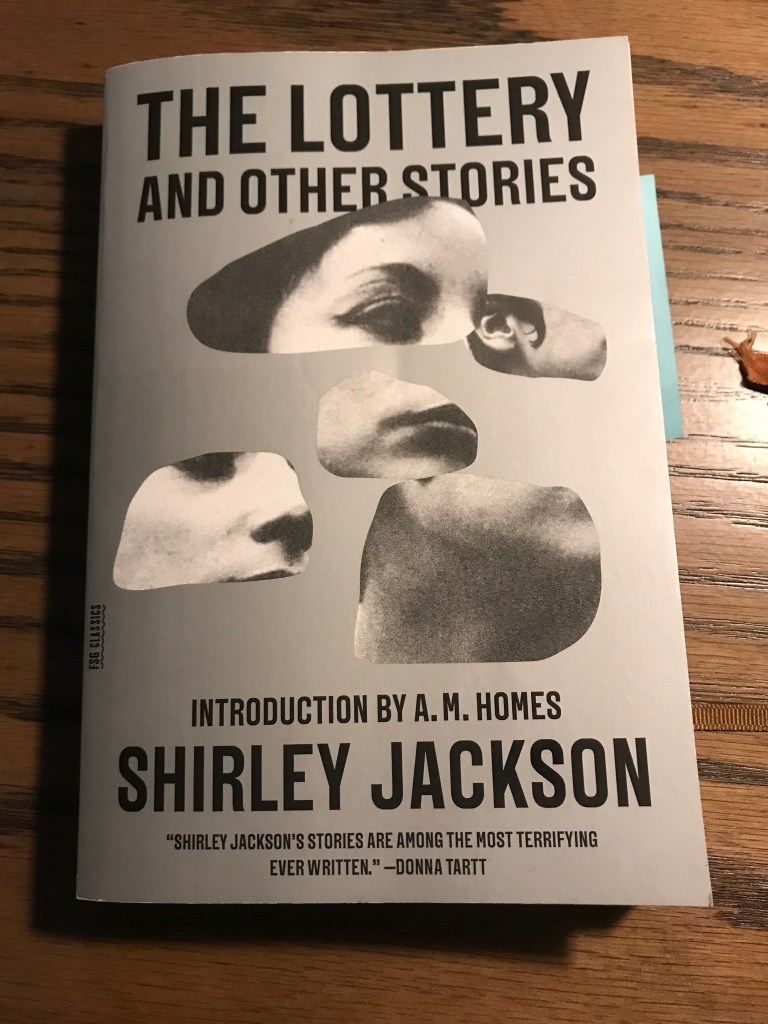
I tried to get an appointment at a pharmacy near the house for a COVID-19 test. However, the websites and links to all of them (yes, all of them) near us said, “Due to high demand, we are unavailable to meet your request at this time,” or something to that effect. Not exactly the message I wanted to read when I felt so miserable. On Christmas Eve my pain got so bad I had to drive to a CVS 40 miles north where my wife finally found an opening for me. I was to remain in my vehicle but go through the pharmacy’s drive-thru and take a COVID-19 swab test. So for my 1:30 appointment, I was in one of the scores of vehicles to stage in the CVS parking lot and wait my turn. Finally my time came. I arrived almost an hour early, thinking I could perhaps get my appointment done sooner. But like so much of 2020, it was not to be. Scores of others were in line, too. Even though I was almost an hour prior to my appointment, as I inched my way closer and closer to the CVS drive-thru, I memorized the back of the silver Dodge pickup truck in front of me, and read a book of Shirley Jackson short stories, while we all waited our turn. Finally at just after 2:15 p.m. I was the next vehicle in line.
I pulled up to the nurse practitioner-teller at the CVS. Wearing her gloves and mask and speaking through a speaker and window, she instructed me on what to do. I swabbed my nostrils, snapped off the swab inside the vial, wiped down the bag, verified my name and date of birth, etc. and deposited my info into the receptacle near the window. My clear plastic bag was just one more among many. The parking lot and drive-thru were, as I said, jammed with us. I could tell from her body language that the nurse-practitioner-teller had been doing this all day. Her words had the lifelessness of someone who has said the same thing so often, the words have become programmatic and empty of human connection.
“Three to four days,” were the words that pushed me even lower. That’s what she told me as I was about to pull away. Three to four days is how long it would take to get my official results of the COVID-19 test.
It was a long drive back home. Rain set in. Temperatures dropped to well below freezing. Then the rain turned to sleet. Then it turned to snow. I got home, updated my wife and family on what I had been told, and now, I am still waiting.
So for Christmas, I sat in my library and tried to read. I love to read, but the level of this headache is a match even for my passionate commitment to reading. I even found myself doing what I usually criticize. I watched TV. My wife has an account to one of the movie channels, so I have watched documentaries and adaptations on Edward Snowden and other folks that intrigue me.
I watched a Netflix series on David Koresh entitled Waco. Events the FBI and other U.S. government agencies (in my opinion) exacerbated in 1993 kept me watching. Then I watched episode after episode of Criminal Minds. The characters played by Mandy Patinkin and Matthew Gray Gubler fascinate me. Gideon, the Patinkin character, is intense and laser-focused. His character speaks to me on several levels. The same goes for Reid, the Gubler character. Spencer Reid reads the classics, and it is not uncommon for him to reference Shakespeare or Sophocles, Plato or C.S. Lewis, Arthur Conan Doyle and the Bible in almost every episode. And I track with the way his mind works. It’s comforting for me to see a character in contemporary entertainment who actually has an intellectual life. Most shows are mere vapid plots with laugh tracks and/or canned characters utterly devoid of depth, but not so with Criminal Minds, in my view, and especially not with those characters. Thomas Gibson’s character, too, fascinates me. I mean, you have to respect a man who can see what he and the others saw, and yet still maintain a commitment to trying to rid the world of such criminality, one bad guy at a time.
So while I am off the grid, as it were, while I am hunkered down in my library at the house, I am reading as much as possible when the headaches subside. So far, I have completed John MacArthur’s Nothing but the Truth; a book of Shirley Jackson’s short stories; Jackson’s short novel We Have Always Lived Here, and have begun Foer’s book Everything Is Illuminated, and I am still in Barry’s long book The Great Influenza.
My wife continues to lay up treasures in heaven by putting up with me, the terrible patient. She has rubbed my chest down with things to help me breathe. She has made capsules of zinc and vitamin C and vitamin D and magnesium, etc. She has made sure to keep me hydrated. She has been better than I ever deserved.
I suppose some folks are good at being sickly, but I assuredly am not. I want nothing so much as to be able to go outside, to hike with my dog, to enjoy the outdoors, to go to work, etc. But none of that is to be for a bit longer it seems. I am checking the little CVS app on my phone now for the email that will tell me if I am positive for this virus. Then, if so, I will likely have to do the quarantine thing and miss work and miss some of my duties as a soldier. It will mean more time off the grid. It will mean more time watching documentaries, and trying to read between headaches, and watching others’ sentimental pictures and videos online of the holidays.
And I will continue to learn how being off the grid from my normal may be used to teach me how much I love those in my life who give of themselves when I have nothing to give in return except gratitude. I am thankful I could at least drive to a CVS 40 minutes north and take a test. I am thankful there are ways to kill this virus, if that is what I have. It is not just for me I say these things. When I looked around at all the vehicles that were inching their way through the drive-thru at the pharmacy Christmas Eve, I became well aware that this is not just about me. This thing levels the playing field quickly. I have seen some in my own extended family who have had this and have–thankfully–come through it. I know of many of my fellow soldiers who have gotten it and seem to be pushing through just fine. I am thankful for the calls, texts, and emails from those I shared with that I may have come down with this.
If you are with your loved ones, by all means, enjoy them. Take the selfies. Eat, laugh, nap, and repeat. Don’t take them–or the normal–for granted. I know that you may be tempted to think that “off the grid” sounds brave or authentic or some such thing, but as for me, I would much prefer to return to the grid, and be with my loved ones, leave off the documentaries, and just go back.
For now at least, Christmas is still a national holiday. Holiday is a term originally rooted in Old English from halig (“holy”) + daeg (“day”). Not much is sacred to most Westerners anymore, but if they are employed, they still tend to take off from work for Christmas, a benefit bestowed because of the work and grace of another.
Christians, too, may take off from work, but they will understand the halig + daeg (“holiday”) differently. Instead of just taking a paid day off from work, they will take heart because they know what the incarnation of God means.
Christians, take heart.
Remember the Lord and what He has done. They are indeed great things. Here are just some meanings of the incarnation:
• God exists
• God has communicated His nature
• God took on human flesh in Israel in the 1st century (hence, A.D., Anno Domini, “in the year of the Lord”)
• The eternal God entered time and space
• God has revealed Himself, His nature, and His power, in the person and work of Jesus, the Christ
• Jesus’ birth, life, death, and resurrection are the most researched and authenticated facts of history
• Jesus fulfilled hundreds of Old Testament prophecies in precise detail
• No one has produced the body of Jesus
• The church endures and the gates of hell have not and will not prevail against it (Mt 16:18)
• Christ has come; Christ has died; Christ will come again
For non-Christians, I know you are probably busy. But would you take the time to think through the significance of these things–that the one and only holy God exists, that He has revealed Himself in creation, in Scripture, and in the incarnation of the Christ, that He (Jesus) lived a perfect life of obedience to God the Father, that Jesus went to the cross and became sin and bore the curse of sin’s penalty for all who will come in repentance and faith to Christ alone, and that the Holy Spirit, the third person of the triune God of the Bible, says, “Today, if you hear his voice, do not harden your hearts . . .” (Ps 95:7-8a)?
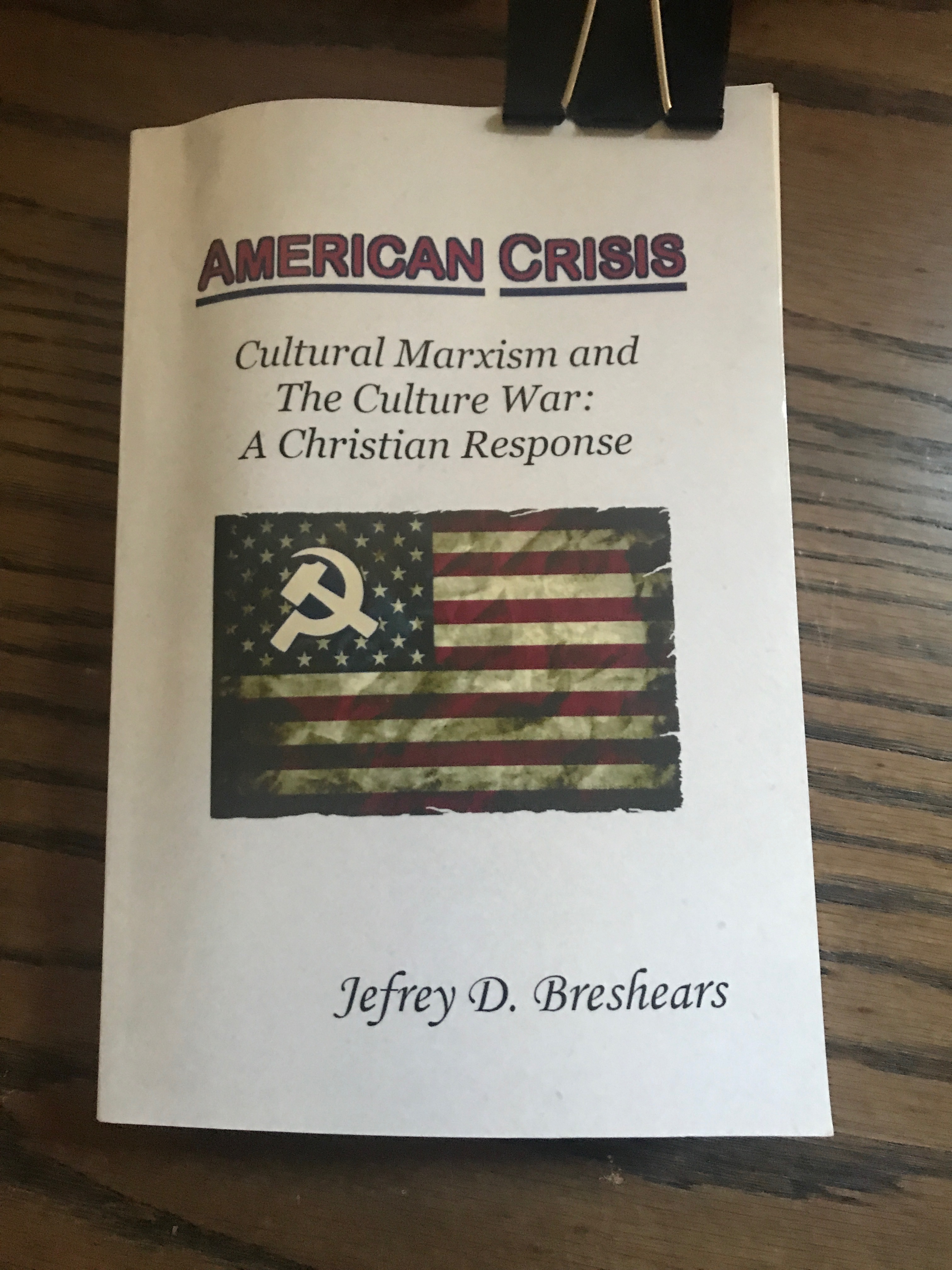
I am reading a book that is accumulating a lot of underlining. One such passage is this one:
Turbulent times call for people of courage and conviction who understand the issues at stake and are willing to engage the fight. Underlying the culture war is a great spiritual struggle. On one side are those who believe in universal moral principles, confirmed in Scripture, which should inform and govern our thinking, our speech and our behavior. On the other side are those who prefer to believe that everything is relative, subjective, and merely a matter of personal choice. Although the culture war is often fought in public, the primary battleground is the human heart, and what we see manifested in our society and culture today is merely the visible expression of a titanic struggle between good and evil being waged in the spiritual realm.[1]
I tend to mark up my books. I read with a pencil in hand. I make notes in the margins. I ask questions of the text. I jot down references that occur to me from prior reading and reflection. When I read the above passage I made this diagram:
Universal vs. Relative
Objective vs. Subjective
Rooted vs. Displaced
Fixed vs. Overthrown
Scripture vs. Human opinion
Biblical Theism vs. Atheism/Secularism
Few things are as important as clarity. Illustrating Breshears’ ideas via a “this vs. that” model clarifies the alternatives.
I don’t know many people who don’t sense that the West is undergoing a sea change, a “fundamental transformation,” if you will.
One side wants to conserve; the other wants to transform.
One side wants to recognize that marriage was created and designed to be between one man and one woman; the other side repudiates that and says it (the secular left) has ‘progressed’ and knows better.
One side recognizes God exists, and that men and women are created in His image; the other side sees men and women as autonomous beings in a godless universe wherein gender is now fluid and constructed.
Per Facebook wisdom, for example, its users can select from 71 gender options. Um, folks, this is a new world. One might go so far as to call it quite plainly what it is: stupid.
Some thinkers have written that we are undergoing a second Civil War. But this civil war is about which values we will hold to and base our identity upon.
Will we recognize God; special revelation (Scripture); objective moral values; marriage as the sacred union between one man and one woman; that boys are boys and that girls are girls; that perhaps “fundamentally transforming” the West is veiled language that means destroying Western Civilization and reshaping it into forms with no objective standards but the preferences of the powerful?
There is a ghastly price to be paid for mocking heaven. I know that we are living in a time when the Bible is mocked. It’s somehow “below” many people today. That’s okay. The Bible has been mocked before. Mocking is the default position of the fool. You know how we know that? Brace yourself: It is in the Bible:
Why do the nations rage
and the peoples plot in vain?
The kings of the earth set themselves,
and the rulers take counsel together,
against the Lord and against his Anointed, saying,
You see, it is not courageous to spit in the wind; it is folly. It is not brave to shake your fist at God and curse heaven; it is folly. God laughs at folly. It does not wound God to mock Him. He is the uncreated Creator, the Maker of heaven and earth, who needs nothing. He is not lacking anything. He is perfect and He is wholly good and holy, holy, holy. So there is no wisdom in being rebels in a foolish cause.
But you see, God is also loving, and He knows what is best for us. Shall He not do what is right, what is “just” (Genesis 18:25)? Yes, He does and He will. He is the Author of Life (Acts 3:15). He is the potter and we are the clay (Isaiah 64:8).
Again, it is a question of clarity. Breshears has it. His book details it with excellence. It is a clarity that demands we be honest, that we count the costs, that we realize the consequences of our ideas. Read his book. Better still, read the Book. Though neglected and mocked by the fools, it abides still and remains what it has always proven to be: the Word of God.
[1] Breshears, Jefrey D. American Crisis: Cultural Marxism and the Culture War: A Christian Response. [Centre Pointe Publishing, 2020], VIII.
When I was in high school there was an A & P grocery store a few miles from the house. It occupied the last space in a small strip mall that held a dry cleaners, a Walgreens, a shoe repair store, and other businesses I have mostly forgotten. Across the main road from A & P there was a Chevron that had the most overpriced gasoline in Atlanta. And a few yards south on Northside Drive from the Chevron was a Steak ‘n Shake, where I developed an early and enduring appreciation for chocolate shakes. The Chevron is still there, somehow still selling petrol for a quarter more per gallon than other dealers. And the Steak ‘n Shake is still there, selling delicious shakes. But the A & P is long gone, replaced by a Publix. Paper bags are gone, too, replaced by plastic or canvas bags with Kermit-green lettering.
“A & P” is a short story by John Updike. I read a lot of John Updike. He remains for me one of America’s great literary fiction writers. Many readers know of his Harry “Rabbit” Angstrom books like Rabbit, Run, Rabbit Redux, Rabbit Is Rich, and Rabbit at Rest, or perhaps The Witches of Eastwick. They are wonderful reads. But Updike’s short stories are gems, too. “A & P” is probably his most well-known short story.
“A & P” is about young lust, about changing cultural mores, and about misconceptions we have of one another. What the boy Sammy (the main character) thinks about is girls, but what the girls think about is, well, not necessarily boys, at least not Sammy. The result is a story about upended expectations. What Sammy wanted was the girls, at least attention from the girls, and to be seen as brave, as a hero. Instead, he ends up merely unemployed, alone, and confused at the end. So much for your bravery, Sammy.
Sammy is a teenaged stock boy at an A & P in the 1950s, and the main character. He is bored with his job. He barely camouflages his disdain for his coworkers. He is restless. He longs for adventure. And in walk three girls “in nothing but bathing suits.”[1] What follows is how Sammy and the other males working at the A & P in the 1950s respond to seeing the girls and their bared skin. Sammy is nineteen. Not surprisingly, girls dominate his thoughts and fantasies. Here are his thoughts of the prettiest one of the three girls as he watches her:
She had on a kind of dirty-pink—beige maybe, I don’t know—bathing suit with a little nubble all over it and, what got me, the straps were down. They were off her shoulders looped loose around the cool tops of her arms, and I guess as a result the suit had slipped a little on her, so all around the top of the cloth there was this shining rim. If it hadn’t been there you wouldn’t have known there could have been anything whiter than those shoulders. With the straps pushed off, there was nothing between the top of the suit and the top of her head except just her, this clean bare plane of the top of her chest down from the shoulder bones like a dented sheet of metal tilted in the light. I mean, it was more than pretty.[2]
Lengel, Sammy’s boss and the A & P’s manager, representing the old moral norms, redresses the girls for their skimpy attire. “We want you decently dressed when you come in here.” The prettiest girl’s response? “We are decent.”[3] There you have it. Sammy exemplifies the younger generation’s view of women. Is it okay, now, to “objectify” women? If girls dress scantily, are boys and men to blame for looking? Do the girls in the story bear no responsibilities? Those seem to be some of this issues “A & P” raises. Lengel, the older man, the manager of the A & P, wants to remain with the standards and mores he has heretofore known. Girls and women are to dress and comport themselves as ladies; otherwise, the culture is degraded. But Sammy, illustrative of youth’s pushing the boundaries, seems to appreciate the girls’ boldness. Plus, let’s be honest, Sammy simply likes seeing the girls in their bathing suits.
The girls don’t take kindly to Lengel’s efforts at reproof and admonition. And Sammy, angry at Lengel and simultaneously desiring to appear brave and sympathetic to the girls’ worldview, makes an impetuous decision: he quits his job as the girls exit the store. He feels he has been brave. He’ll show that he’s sympathetic to the new ways, the new norms, where girls can dress scantily in the local grocery store and should not be criticized by the stodgy Lengels of the world. So Sammy has been heroic, right? Listen to the end:
I look around for my girls, but they’re gone, of course. There wasn’t anybody but some young married screaming with her children about some candy they didn’t get by the door of a powder-blue Falcon station wagon. Looking back in the big windows, over the bags of peat moss and aluminum lawn furniture stacked on the pavement, I could see Lengel in my place in the second slot, checking the sheep through. His face was dark gray and his back stiff, as if he’d just had an injection of iron, and my stomach kind of fell as I felt how hard the world was going to be to me from here on in.[4]
Sammy had great expectations—that he’d be seen as a hero, that he’d be lauded for taking a stand, and that the prettiest girl would be waiting for him in the A & P parking lot. But none of that was to be. He is simply unemployed, humiliated, and standing in the grocery parking lot realizing he knows nothing about girls. “A & P” in my old neighborhood is long gone, replaced by neon lights of another chain store. The trees that lined parts of West Paces Ferry there are gone, too, ground down for more concrete jungle. The shoe repair store is now a Starbucks where boys sport ‘man buns’ and wear skinny jeans. And the girls have their hair dyed purple and aquamarine and wear boys’ plaid shirts. Things have changed. Sammy, like you, I would have looked at the pretty girls but I don’t think I would have quit my job. Sometimes the Lengels of the world may’ve learned a thing or two. Maybe Lengel was not so dumb after all.
[1] Updike, John. The Early Stories: 1953-1975. [New York: Ballantine Books, 2003], 596.
The literary bug bit me when I was young. The deepest bite was from William Faulkner. His short stories and some of his novels marked me in a way only a handful of other literary writers’ works have. I am reading through many of Faulkner’s works again but focusing on his short stories. Recently I reread “Barn Burning.” One of Faulkner’s most anthologized stories, it is often assigned reading for college and high school kids. I, too, read it at that age, but I have read it many times since. My appreciation for “Barn Burning,” like for much of Faulkner’s fiction, has only increased as I have aged. Many of his themes are too weighty for most kids to fully appreciate, in my view.
“Barn Burning” illustrates Faulkner’s philosophy of literature and what enables great literature to endure: writing that lasts is writing that explores “the human heart in conflict with itself.”
Here are Faulkner’s words from his 1950 speech upon receiving the Nobel Prize for Literature:
Our tragedy today is a general and universal physical fear so long sustained by now that we can even bear it. There are no longer problems of the spirit. There is only the question: When will I be blown up? Because of this, the young man or woman writing today has forgotten the problems of the human heart in conflict with itself which alone can make good writing because only that is worth writing about, worth the agony and the sweat.
He must learn them again. He must teach himself that the basest of all things is to be afraid; and, teaching himself that, forget it forever, leaving no room in his workshop for anything but the old verities and truths of the heart, the old universal truths lacking which any story is ephemeral and doomed—love and honor and pity and pride and compassion and sacrifice. Until he does so, he labors under a curse. He writes not of love but of lust, of defeats in which nobody loses anything of value, of victories without hope and, worst of all, without pity or compassion. His griefs grieve on no universal bones, leaving no scars. He writes not of the heart but of the glands.1
“The human heart in conflict with itself.” Yes, that is the stuff of enduring literature. Will Romeo and Juliet’s love endure despite the feuding of the Capulets and Montagues? Will Hamlet avenge his father’s murder and restore order to Elsinore? Will King Lear learn before it’s too late that he has tragically misjudged his daughters? And in “Barn Burning,” will Sarty, the boy-protagonist, son to Abner, a poor, ignorant, violent, vengeful, injured, ravenous, brutal father in the defeated South of post-Civil War America about which Faulkner wrote for a lifetime, will Sarty be able to escape the conflict pulling him two different directions simultaneously?
Sarty loves his rapacious father, even though he (Sarty, the son) knows his father is a doomed man. Abner (the father) is caught. He is a poor ignorant white man who is a sharecropper in the South. He is dependent upon wealthy landowners like Major De Spain for work. But Abner hates his plight. He is proud. He, too, has a family. He, too, is a father, a patriarch, but a very fallen man seeking to provide for his dependents. But he is hateful to his employers and even to his own family. He seems, as is common in Faulkner’s characters, a doomed man.
But Sarty, perhaps, may escape from the cycle. Sarty’s father, Abner, when he is slighted, when he feels humiliated, he avenges his wounded pride through violence. He slaps his children until their lips burst and bleed. He whips the emaciated mules that pull their wagons. He smears excrement on the white rug of his employer, Major De Spain. All these lashings-out bespeak his sense of frustration, of woundedness, of Abner’s heart, too, in conflict with itself. And his family sees it, especially his sensitive son, Sarty, through whose eyes we view the story, “Barn Burning.”
We see Abner’s anger even in the way he speaks to Sarty, early in the story. Listen to the father’s tone and think how this would affect a sensitive boy who both loves his father but is also terrified by him:
“You’re getting to be a man. You got to learn. You got to learn to stick to your own blood or you ain’t going to have any blood to stick to you. Do you think either of them, any man there this morning, would? Don’t you know all they wanted was a chance to get at me because they knew I had them beat? Eh?” Later, twenty years later, he was to tell himself, “If I had said they wanted only truth, justice, he would have hit me again.” But now he said nothing. He was not crying.” He just stood there. “Answer me,” his father said.
“Yes,” he whispered. His father turned.2
Sarty is torn. Should he obey every directive from his father out of love? Or should he disobey and wait for his father’s fist to descend like a malicious claw? This is the human heart in conflict with itself.
One of the most revealing illustrations of Sarty’s conflict comes in these lines:
His father had struck him before last night but never before had he paused afterward to explain why; it was is if the blow and the following calm, outrageous voice still rang, repercussed, divulging nothing to him save the terrible handicap of being young, the light weight of his few years, just heavy enough to prevent his soaring free of the world as it seemed to be ordered but not heavy enough to keep him footed solid in it, to resist it and try to change the course of its events.3
Sarty, a boy smarting from the pain of having been hit by his abusive father, feels almost old enough to flee but too young to leave from what he knows. He, too, seems doomed, trapped in a no-win predicament, aware of his terrible plight but unable so far to extricate himself. Again this is the human heart in conflict with itself. Is he to remain with his abusive father or leave and essentially orphan himself and have nothing to show for it?
Finally, Sarty resolves he cannot endure his father’s ways, the violence, the repeated pattern of vengeance. Sarty warns of his father’s burning De Spain’s barn and De Spain (it is implied in the story) shoots Abner, and Sarty runs away, a fugitive from the only life and way he has ever known:
At midnight he was sitting on the crest of a hill. He did not know it was midnight and he did not know how far he had come. But there was no glare behind him now and he sat now, his back toward what he had called home for four days anyhow, his face toward the dark woods which he would enter when breath was strong again, small, shaking steadily in the chill darkness, hugging himself into the remainder of his thin, rotten shirt, the grief and despair now no longer terror and fear but just grief and despair. Father. My father, he thought.4
I know literature appeals only to a small number of people. I’m in that little remnant. I know that because when I reread passages like these from Faulkner’s “Barn Burning,” and I see a boy who both loved his father but was terrified of him, and I see a boy who somehow knows his father was destroying the very group of people he should have loved the most, and I see the costs Sarty would endure if he stayed weighed against the costs he would endure by fleeing the dysfunction and lies, I am moved in a way that great literature moves some of us. We see the tragedy and the beauty of it all—of families torn apart by forces both external and internal. You move me still, Faulkner. Thank you for enduring and prevailing through what you left us.
My son read “The Lottery” recently for school. And he, like most other readers of this brief and terrifying American short story by Shirley Jackson, was shaken. So I took it off my shelf recently and reread it, too. Like my son, I, too, was shaken.
Overview: The story is simple with regard to plot. A few families from an unnamed small American town are gathered at 10 a.m. on a summer morning. It is June 27th. Children, fathers, and mothers assemble but only after they have gathered stones, “the smoothest and roundest stones” they could find … to be used for … murder.
Mr. Summers (what a happy surname!) arrives in the town square. He carries a black wooden box. He sets the box down on a three-legged stool. Inside the black box are papers with families’ names on them: Warner, Summers, Graves (a sinister surname?), Adams, Anderson, Delacroix, Dunbar, Hutchinson (suggestions of the New England Salem Witch Trials?), etc.
The patriarch of each family is to draw a piece of paper from the black box. If the slip of paper has a black spot marked in it, you win the lottery. But the lottery winner does not inherit money. He/she inherits death by stoning. The fellow townspeople take up the stones they gathered earlier and then stone the lottery winner to death.
Symbols: Two symbols/images figure prominently in the story—the black box and stones. The black box is treated almost like an ark of the covenant in that it figures prominently for a particular group of believers in a particular culture. And stones (for building or for warfare?) likewise figure prominently.
Ecclesiastes 3:5 ran through my mind constantly while reading this story … “a time to cast away stones, and a time to gather stones together; a time to embrace, and a time to refrain from embracing.”
Ideas: Three main ideas remain with me after reading the story again:
Ritualism/traditionalism
Hypocrisy
Cowardice of the crowd
Throughout the story, the characters act out the ritual and tradition of the lottery, but they don’t appear to ever question why. It just seems a matter of course. They have ostensibly “always done things this way.”
The hypocrisy theme is evidenced when the seemingly innocent Tessie is the ‘winner’ of the lottery. Earlier in the story, she orders her husband, “Get up there, Bill,” when she wanted him to draw names out of the black box. She was on board with the tradition then. A few seconds later, however, she would be the victim of the tradition.
Third, we see the nature of crowds and how easily cowards find a home therein. A sort of madness sets in; individual consciences fall away. In almost an instant, ostensibly sensible ‘good people’ are revealed to be murderers.
Final thoughts: Jackson’s “The Lottery” is ten pages of suspense with a horrific ending. What was Jackson suggesting about the ideas I raised here? I do think she was addressing, among other things, some dangers of blind ritualism, the wickedness of hypocrisy, and that she was calling us to think about the madness of crowds.
Preparing for festivities? It is New Year’s Eve. Last night I saw a lady load a shopping cart full of liquor and roll her buggy—bottles clinking against one another—up to the cashier at the register and prepare to spend hundreds of dollars on alcohol at one of the shoppettes here on Fort Benning. No one seemed surprised. The lady was just an ordinary customer, I suppose, and this is what is expected as New Year’s Eve arrives, right? No, I’m not sanctimonious about alcohol. That is not my concern here. I am thinking more about time and how we spend it. Do we often think of our amount of time? Do we not sometimes pretend that death is something that happens to other people? Do we not sometimes distract ourselves so that we do not have to face the ultimate issues, at least not right now? But are not ultimate issues called ultimate for a reason?
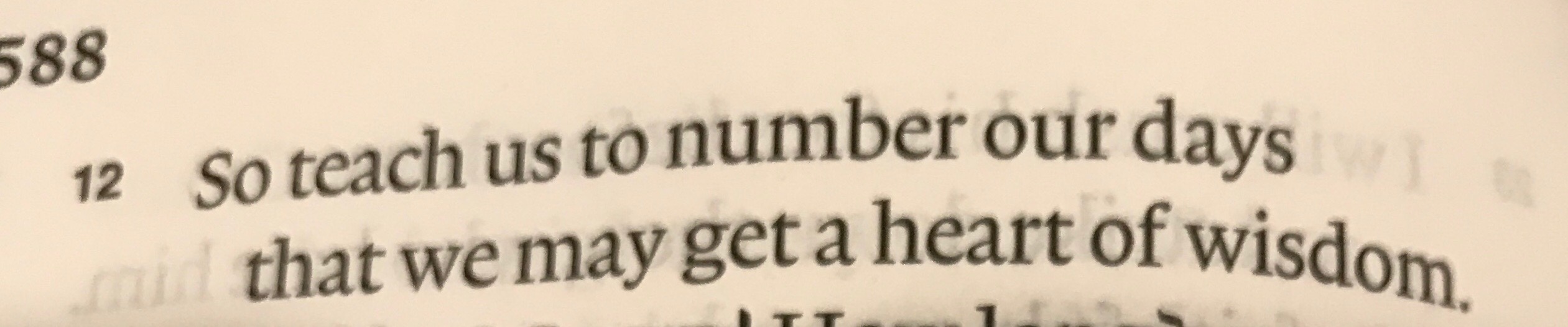
Unfortunately, I will be separated from my loved ones all this week, so I am not preparing anything festive, unless black coffee qualifies. I may get a bit wild with an espresso later. But earlier today I was reading and thinking through Psalm 90. It is one of Moses’ writings in the Psalms. Verse 12 reads this way: “So teach us to number our days that we may get a heart of wisdom” (Psalm 90:12, ESV). To number our days. In the biblical worldview, this means to live our lives with the conscious awareness that our lives are lived before the face of God, Coram Deo. It is a way of saying, live your life knowing that you are in the presence of God. Wisdom, therefore, involves our dwelling upon ultimate issues. That does not mean that festivities are by any means wrong. Scripture is replete with festivals, parties, fellowships, etc. But they are to have their places within a larger theological framework. They are not to be ends in themselves.
But to number our days, that is no small matter, right? Examples help me to think, and here are a few that stirred some reflections on this theme of numbering our days.
In 2019, I was able to take a trip with some of my family to a place near Destin, FL. The beaches are beautiful there. But to get there, we drove through parts of FL that had been devastated by a hurricane earlier. Mighty trees were reduced to sad-looking twisted and snapped timbers. Their boughs were gone. Leaves had been stripped from them during the deluge. Some roads had washed away. Entire restaurants had been washed out to sea. Just like that, as the saying goes, all was gone. And I thought, Do I have a heart of wisdom? Am I numbering my days?
A second weather-related catastrophe got me thinking, too. In the small town where my family and I lived for years, a town where I taught English and pastored, a tornado had recently struck. I viewed pictures online of the devastation. Again, trees were ripped from the earth or left bent into ghastly contortions. Rooftops had been sucked up into the sky. Just like that, gone. And I thought, Do I have a heart of wisdom? Am I numbering my days?
I saw a friend of mine undergo multiple surgeries, and still press on with his responsibilities. I saw another friend run off (that is, he was run off by an oligarchy within the congregation) from a church because of unregenerate church members, small town politics, and power struggles. I watched my wife have to raise our children while I was away in Iraq for nine months. After those nine months, I was still not able to return home to her because of an injury I sustained in Iraq that is still keeping me at Fort Benning. And I thought, Do I have a heart of wisdom? Am I numbering my days?
I have had more than enough reasons to reflect. Many will load their carts with beverages, chips and salsa, finger foods, etc. and ring in another year. That is often the plan. But I have aged some and hopefully learned a few things about how quickly man’s plans can be interrupted by bigger plans. One might even go so far as to say they are plans of the Sovereign. With a goal, too: to teach us to number our days.
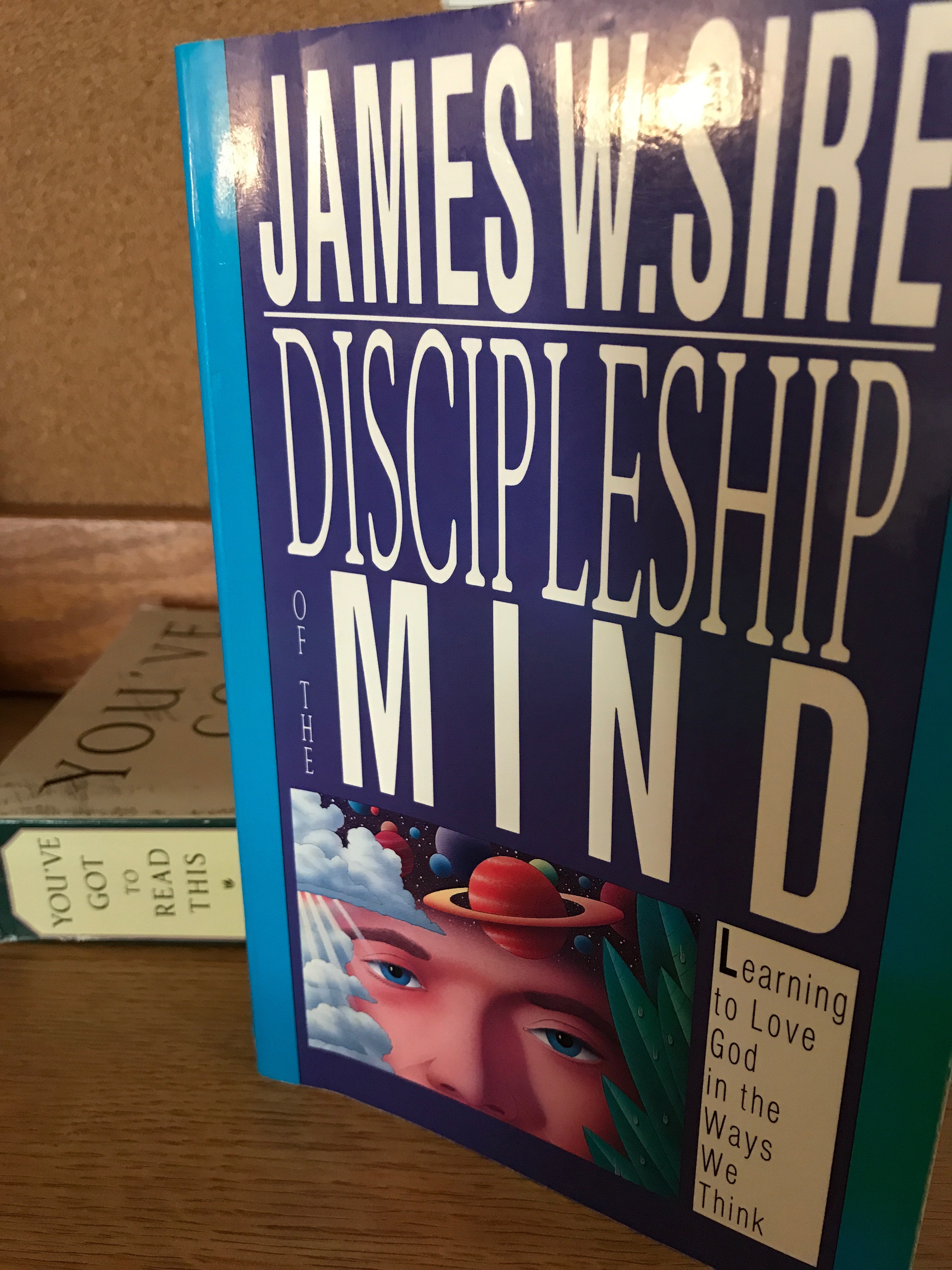
Seven questions reveal a lot … if they are the right questions. In his book Discipleship of the Mind: Learning to Love God in the Ways We Think, James Sire asks the right ones.
In a world rippedapart and oftencharacterized by (pardon the poor grammar) Us vs. Them, Sire excels in this book by demonstrating that all of us have a mental map of the world, a set of assumptions about the big questions and answers of life. We may not be conscious of our own worldviews at all times, but learning to be aware of ours and the worldviews of others—be they politicians, writers, entertainers, teachers, lawyers, philosophers and theologians, etc.—helps clarify what wethink, why we think the way wedo, and why we behave the ways we do.
The questions he asks us to ask are fundamental questions that go a long way in revealing each person’s worldview. In a world ripped asunder via politics, race-baiting,shouting matches, and ad hominem attacks, Sire’s book may encourage you, too.
Sire’ssevenquestionsthat elucidate each person’s worldviewfollow. Each time you listen to a politician, read a newspaper article, listen to the lyrics of a song, watch a film,askthese questions about the person’s or persons’ views behindwhatisbeing promulgated.What worldview are they operatingfrom? How would they answer these questions?
1.What is primereality—the really real?
2.What is the nature of external reality, that is, the world around us?
3.What is a human being?
4.What happens to a person at death?
5.Why is it possible to know anything at all?
6.How do we know what is right and wrong?
7.What is the meaning of human history?
And perhaps most important of all, Sire’s definition ofworldview: a set ofpresuppositions whichwe hold about the basic makeup of our world.
One of the passions of my life is literature. Sire dedicates an entire chapter to worldview analysis of literature. In one chapter he contrasts the worldviews of the Christian poet Gerard Manley Hopkins in his poem “Pied Beauty” with the atheistic writer Thomas Hardy in his poem “The Darkling Thrush.”
The worldview of each writer is manifested. Hopkins, a Christian writer, sees the world as the creation of the infinite-personal God, and beautiful colors and creatures in lifeas indicators and evidences of God’s nature being inseparable from the true, good, and beautiful. God exists, his creation exists, our minds exist, and we reflect God’s glory because we are created as his image-bearers.
Hardy, writing from an atheistic worldview, sees a bird dying alonga fencerow at dusk as symbolic of man’s darkening hopes with regard to life and the future. The universe is a closed system, there’s no God beyond it, and all that exists is material, etc.—yet here we are, trying to make sense of why we feel empty and lonely in a dark world. Well, when we explore Hardy’s worldview, it’s no wonder. Why write poetry if we are just material in a material world?
If you are curious about why we people think, create,and behave the ways we do, you are curious about worldviews, and an excellent place to begin is with Sire’s book.
Over the last few months I have been under medical care due to a shoulder injury that called for surgery. Unable to exercise the ways I have done hitherto, I have spent more time in a recliner and/or on a bed than I would have liked. But these days healing post-surgery have not been wasted. I have been able to read more than usual. Better still, I have been able to reread some of my favorite books and writers.
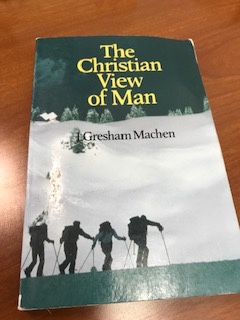
Lastweek I reread one of my favorite writers and thinkers, J. Gresham Machen. What follows are twoitems: 1) my thoughts on Machen’s bookThe Christian View of Man and2) a short list of some books I am rereading.
There are a few writers I return to again and again. J. Gresham Machen is one of my favorites. Why? In short, Machen excelled in getting to the bottom line in his books. He sawtothe heart of the matterand then explored it with a keen mind and sharp pen. Okay, you might say, other writers have done that. Some have, I admit. But Machen saw the issues clearly and did not shy away from declaring them clearly. That is one way he distinguished himself.
Very often I have found academic writers write largely to sound impressive. The writing contains little if anything new or noteworthy, oreven particularly insightful. Andoftenit isladen with abstruse academic jargon, as if that denoted something’s truthfulness.
If veracity is the goal, clarity of expression should be more prevalent. In academic writing, however, many books are never read except by committees, and then only to credential a peer.
With Machen, however, we are spared those irritations.InThe Christian View of Man(a book comprised of lectures Machen gave during the 1930s), Machen addressed fundamental issues with regard to the Christian worldview.The title is accurate. Machen contrasts the Christian worldview with the pagan one. He divides the book into twenty short chapters (usually five to ten pages each). And those few pages are packed with clearly defined characteristics regarding how the biblical/Christian worldview explains reality. Following is an example from Machen on how the Bible differs from secular literature:
The Bible differs from human books on religion not merely in this point orthat but in the centre about which everything moves. Human books are prone to find that centre in man; the Bible finds it in God.
Men do not like that fundamental characteristic of the Bible. The prefer to think of the happiness of the creature as the goal; they wrongly interpret the text ‘God is love’ to mean that God is only love and that God exists forthebenefit of His creatures; reversing the Shorter Catechism, they hold that God’s chief end is to glorify man.(50)
See how Machen clarifies the ways in which worldviews matter? If one comes to the Bible assumingit is just another book penned by men,(maybe even with helpful myths regarding the origin of the universe, of man, of sin, of strife, of ethics, etc.)it is still just another book.
But if one takes the claims of the Bible seriously, and does the work necessary to understand the various types of literature it contains (history, law, poetry, wisdom, gospels, epistles, apocalyptic, et al.), and that it has one central theme uniting the myriad genres, and that there is a unifying storyline reaching its crescendo and fulfillment in Jesus the Christ, that would mean it’s a very different sort of book, would it not? Then it would not be “just another book.”Then there might be good reasonsthe apostle Paul, imprisoned for declaring the truth of the biblical worldview and Jesus as the Christ, would write to his younger child in the faith, Timothy, instructing him to do one thing above all–bring him the parchments (2 Timothy 4:13).
This is what I mean when I write Machen’s bookclarifies what’s at stake.Here is another example of how Machen reveals the mutual exclusivity of the pagan worldview vs. the biblical worldview:
At the heart of everything that the Bible says are two great truths, which belong inseparably together—the majesty of the law of God, and sin as an offence against that law. Both these basic truths are denied in modern society, and in the denial of them is found the central characteristic of the age in which we are living.
Well, what sort of age is that; what sort of age is this in which the law of God is regarded as obsolete and in which there is no consciousness of sin?
I will tell you. It is an age is in which the disintegrationof society is proceeding on a gigantic scale. Look about you, and what do you see? Everywhere the throwing off of restraint, the abandonment of standards, the return to barbarism.(189-90)
See the differences? On the one hand is the biblical worldview, with God and his holy nature revealed in his law. On the other hand is the secular/atheistic view, with man at the center andmoral chaos as its distinctive characteristic.
I was reminded today of how current—how relevant–Machen’s writing still is. Today as I went to the library, I heard the news on my radio. The story was of newborn infants left to die in a “comfort room.”
This is the value of rereading Machen. He clarifies the importance of worldviews. He exploreswinsomelythe truism that ideas have consequences. And he points us to the Scriptures which are able to make us wise for salvation (2 Timothy 3:15).
I am looking on my desk now at other books I am rereading. They are among my favorites: Dickens’David Copperfield, Dostoyevsky’s novels, and the fiction of Flannery O’Connor. There are more. And they are worth our time, dear readers, as much is at stake.