Steadfastness in Leadership

Bottom line up front: Steadfastness in Leadership

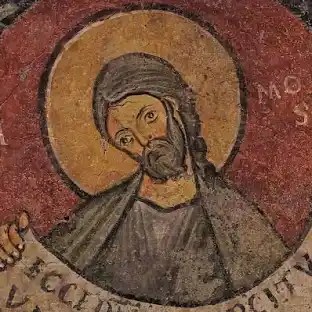
Context: It was the 1440s B.C. in the plains of Moab outside Canaan. Moses, Israel’s great human mediatorial leader during the exodus from Egypt, had died. God took his life when he (Moses) was 120 years old at Mount Nebo (Deut. 34). Now, this rebellious people (Israel) had a new leader after the many years of largely faithful service under Moses. How would Joshua lead? What counsel should Joshua embrace? What principles should guide Joshua? What sort of character should Joshua have? Many more crucial questions could be asked, of course, but the heart of them all is, “Well, what are non-negotiables of a godly leader?”

Text:

“No man shall be able to stand before you all the days of your life. Just as I was with Moses, so I will be with you. I will not leave you or forsake you. 6 Be strong and courageous, for you shall cause this people to inherit the land that I swore to their fathers to give them. 7 Only be strong and very courageous, being careful to do according to all the law that Moses my servant commanded you. Do not turn from it to the right hand or to the left, that you may have good success wherever you go. 8 This Book of the Law shall not depart from your mouth, but you shall meditate on it day and night, so that you may be careful to do according to all that is written in it. For then you will make your way prosperous, and then you will have good success. 9 Have I not commanded you? Be strong and courageous. Do not be frightened, and do not be dismayed, for the Lord your God is with you wherever you go.” (Joshua 1:5-9, ESV)

Encouragement: As a military chaplain, we Soldiers love the book of Joshua. After all, it’s a book about the ultimate divine Warrior, the Lord Himself. But it’s also replete with military battles, with combat, with trauma, with victories and defeats, etc. The book revolves in so many ways around the issue of steadfastness in leadership. There are many ugly, just downright horrific events, in fact, in the book of Joshua, too. Why? For us to learn. Folks respond well to steadfastness, to faithfulness, to those who are consistent. Why? Because those characteristics reflect God Himself.

As Joshua took command after a long time of leadership under Moses, God reminded Joshua of a few fundamentals about steadfastness: 1) God does not quit on his people (v. 5); 2) Godly leadership demands courage (vv. 6-9); and 3) Godly leadership will be judged for its adherence (or lack thereof) to God’s revealed will (v. 8). “Leadership is influence,” is the familiar maxim from a popular leadership personality. But steadfastness is a fundamental building block of good and godly leadership.

Good News Story from a Target Run

I was out of my favorite electrolyte drink mix, so I made a Target run for some more. I found the aisle and grabbed a box of what I needed and turned to the self-checkout scanner aisle. As I scanned my item and then paid and was waiting for the receipt to print out, a man came up to me and extended his hand.

“Thank you for your service, sir,” he said.

I could tell right away he was prior service.

“Thank you, sir,” I replied.

“I did 33 years, myself,” he said.

A conversation ensued. He had served 33 years, most of it in the special operations community. He filled me in on some of his years at Bragg, at Benning, and other locations.

He retired as a Command Sergeant Major (CSM).

He saw the cross on my uniform and said, “Can I tell you one more story?”

“Of course, sir,” I said. People in Target were now interested in our conversation, and were looking our way and listening to him speak.

“Whenever we prepped to roll out, our chaplain would come pray Psalm 91 over our guys. Every time. Then I would go to our guys and say, ‘I’m a Christian, boys; but listen to what the Chaplain said. We’ve trained you, but may God equip you.'”

He stuck his hand out again and said, “Appreciate you, Chaplain.”

“Thank you, Command Sergeant Major,” I said.

And we both understood.

Encouragement from Moses’ Mouth

Intro: For as long as I can remember, Deuteronomy has been my wife’s favorite book of the Old Testament. It is undoubtedly filled with profound moments in its second giving of the Law, if you will. But I would like to take just a moment to remind us of some profound words of encouragement that are found towards the end of Deuteronomy. They are from Deuteronomy 31:6-8:

Be strong and courageous. Do not fear or be in dread of them, for it is the Lord your God who goes with you. He will not leave you or forsake you.”

Then Moses summoned Joshua and said to him in the sight of all Israel, “Be strong and courageous, for you shall go with this people into the land that the Lord has sworn to their fathers to give them, and you shall put them in possession of it. It is the Lord who goes before you. He will be with you; he will not leave you or forsake you. Do not fear or be dismayed.” (Dt 31:6-8, ESV)

Why So Important?

  • They are important because we creatures so easily underestimate God and overestimate fellow sinners.
  • They are important becase God is with His people. Period. Don’t mistake ethnicity and nations and cultures for being God’s people. Whether you’re in Christ, that’s the issue–always.
  • They are important because God goes before his people and does not quit on them.

Be encouraged, Christian pilgrim. God sees, God knows, God goes before you, and God is faithful to His covenant.

Blind & Deaf ?

Moses reminded the people yet again. And yet again, they remained largely blind and deaf:

And Moses summoned all Israel and said to them: “You have seen all that the Lord did before your eyes in the land of Egypt, to Pharaoh and to all his servants and to all his land, the great trials that your eyes saw, the signs, and those great wonders. But to this day the Lord has not given you a heart to understand or eyes to see or ears to hear” (Deuteronomy 29:2-4, ESV).

In spite of historical experiences of God’s provision, deliverance, and sundry miracles, the people remained largely spiritually blind, deaf, and ignorant. No “eyes to see or ears to hear,” per Moses in Dt. 29:4.

The more things change, the more they remain the same. Spiritual blindess & deafness are God’s judgments upon people. And as much as Moses loved the people, it was not in his power to make them see and hear. It had to be God to do it, if it was going to be done.

For folks who can see and hear, this is a lesson that comes as a hard schoolmaster. That is, we long for folks to see and hear, and yet they remain duped by the duplicitous. They become prey for the roaring lions who steal, kill, and destroy.

But this is the testimony of Scripture: God alone has the power to open blind eyes and grant hearing where there is spiritual deafness. Our duty is to plead with the Lord to do just that.

If

“Conjunction Junction, what’s your function?” If you don’t remember that, this piece may be too old for you. It was a cartoon that taught grammar, if you can believe that. Grammar? Do Americans even know what that is now? 


In a world where memes, avatars, sound bites, emojis, and simulacra often replace thoughtful, deep, and reasoned speech, once upon a time, in a land now far, far gone, we taught cursive, subject-verb agreement, logic, reading, writing, and even correct grammar. 


Again, you were warned. This piece may be too old for you. But if you’ve stuck around this long, maybe you’ll stick around a bit longer. 


Here’s the bottom line (not quite) up front: The importance of If


If: (conjunction) In the event that; granting that; on the condition that


In the lyrics to “Conjunction Junction,” know what conjunctions like if do? They serve to “[hook] up words and phrases and clauses.” Exactly. 


The importance of if in our urgent context concerns what’s unfolding between Israel, Iran, and now the U.S. We are at war–again. As a fellow soldier posted on his Facebook recently, “Well, let’s see how this unfolds.” 


As soldiers, we are not to comment on things political. Our job is to serve and to do so honorably and faithfully. And that is what I will continue to do as long as I’m able. 


I only have one objective in this piece: to ask us to think through how conjunctions like if matter profoundly.

  • Hear, O my people, while I admonish you!
        O Israel, if you would but listen to me! (Psalm 81:8, ESV)

  • * If you will fear the Lord and serve him and obey his voice and not rebel against the commandment of the Lord, and if both you and the king who reigns over you will follow the Lord your God, it will be well. (1 Samuel 12:14, ESV)

  • My son, if you receive my words and treasure up my commandments with you, making your ear attentive to wisdom and inclining your heart to understanding; yes, if you call out for insight and raise your voice for understanding, if you seek it like silver and search for it as for hidden treasures, then you will understand the fear of the Lord and find the knowledge of God. (Proverbs 2:1-5, ESV)

  • A mere two letters in English: if.

  • But (I couldn’t resist the conjunction), crucial.

  • My prayer is that we think through what happens if we continue along certain trajectories. Why? Because conditional statements involving if invariably are followed by thens–as in, “If this, then that.” 

  • If you’re a man or woman who believes in praying for wisdom (see James 1:5 and 1 Kings 3:9, e.g.), now might be a good time. 

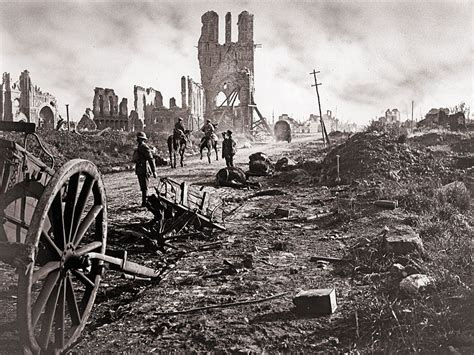
Post bellum . . .

Literature punctures the lungs of the soul best:

Here’s a reminder from Owen (Wilfred, not John):

Bent double, like old beggars under sacks,
Knock-kneed, coughing like hags, we cursed through sludge,
Till on the haunting flares we turned our backs,
And towards our distant rest began to trudge.
Men marched asleep. Many had lost their boots,
But limped on, blood-shod. All went lame; all blind;
Drunk with fatigue; deaf even to the hoots
Of gas-shells dropping softly behind.

Gas! GAS! Quick, boys!—An ecstasy of fumbling
Fitting the clumsy helmets just in time,
But someone still was yelling out and stumbling
And flound’ring like a man in fire or lime.—
Dim through the misty panes and thick green light,
As under a green sea, I saw him drowning.

In all my dreams before my helpless sight,
He plunges at me, guttering, choking, drowning.

If in some smothering dreams, you too could pace
Behind the wagon that we flung him in,
And watch the white eyes writhing in his face,
His hanging face, like a devil’s sick of sin;
If you could hear, at every jolt, the blood
Come gargling from the froth-corrupted lungs,
Obscene as cancer, bitter as the cud
Of vile, incurable sores on innocent tongues,—
My friend, you would not tell with such high zest
To children ardent for some desperate glory,
The old Lie:
Dulce et decorum est
Pro patria mori.

Let us not forget: this has happened before. Think it through. Adrenaline atrophies but human nature abides: Learn.

I pray for my nation but long for my ultimate, desired home. (Distinction.)

Poet, prophetic voice, soldier–speak to my generation.

Watcher of the Skies

The title is not meant to pilfer from the great Genesis song by the same name. It is rather to elaborate more on a theme I find myself exploring more often lately–namely, understanding the times and perhaps speaking in the future about what to do.

I was coming back from a short lunch where I’d drunk a bottle of strawberry watermelon Prime. Love that stuff. And I’d used my lunch to read some history from a slim volume I’m currently working through.

On the way back to the office, I drove down the familiar asphalt road. Pine trees lined both sides of the road, some old and some young. And the humidity was so bad, my hands were swollen and sweaty, even with the car’s air conditioner blasting. A few black clouds crept above. Feelings of foreboding.

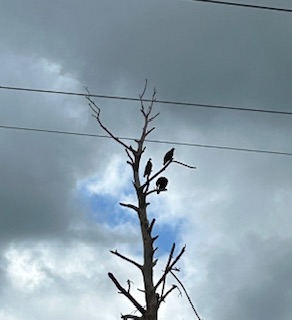
As I drove down the asphalt road, the heat waves were visible in eery throbbing images. A dead pine was on my left side. Black vultures perched on the rotten limbs.

1 Chronicles 12 records this wonderfully instructive line: “Of Issachar, men who had understanding of the times, to know what Israel ought to do …” (1 Chronicles 12:32, ESV). That line about understanding the times and knowing what to do is pregnant with implications. I think it is safe to say that the line was a commendation–to have wise leadership who understood the lay of the land.

Those ominous vultures, though I’d passed them earlier, still circled above in my thoughts.

More to follow …

Chaplain Daily Touchpoint #275

Bottom line up front: First things first

Text: “Commit your work to the LORD, and your plans will be established” (Proverbs 16:3, ESV).

Context: The book of Proverbs is just what it implies; it’s a book of wisdom with a father addressing his son. Its purpose is to communicate how to navigate with wisdom in life, and of how and why that hinges upon doing things God’s way. The other way, the fool’s way, is to trust oneself and trust in the ways of sinners.

Teaching: The beauty of verses like Proverbs 16:3 is that it focuses the wise person’s attention on how the intent behind plans is fundamental. To whom should one commit one’s labors? To the Lord. Even before there’s a decision-making process, whether military or civilian, the intent behind the mission should be to honor God. The plans of the heart (intent) should drive direction (content).

Encouragement: No amount of externals will ever conquer the internals. Smart phones, smart bombs, and smart alecks will never conquer a rotten or cancerous heart/soul. First things first.

God’s Prophets: Some Ruminations

“For the Lord GOD does nothing without revealing his secret to his servants the prophets. The lion has roared; who will not fear? The LORD GOD has spoken; who can but prophesy?” (Amos 3:7-8, ESV)

***When you study the lives of the prophets of God, they shouldered staggering amounts of theological weightiness and truth for the people of God. And the world hated both these messengers of truth and their messages.

When Amos was writing about judgments that would befall the northern kingdom of Israel, the people largely retorted that judgments were for other nations, but surely not their own. And in 722 B.C. Assyria would topple Israel, just as the prophet Amos had written.

Again, I would argue, when you study the lives of the prophets of God, you see that they shouldered staggering amounts of theological weightiness and truth for the people of God. And the world hated both these messengers of truth and their messages.

So much depends on the receptivity (or lack thereof) of the prophets’ messages of truth.

It’s the same principle Christ taught when He spoke of the different soils. He even had to stoop to such a level as to break it down into bite-sized nuggets of truth for some people to understand:

Hear then the parable of the sower: When anyone hears the word of the kingdom and does not understand it, the evil one comes and snatches away what has been sown in his heart. This is what was sown along the path. As for what was sown on rocky ground, this is the one who hears the word and immediately receives it with joy, yet he has no root in himself, but endures for a while, and when tribulation or persecution arises on account of the word, immediately he falls away. As for what was sown among thorns, this is the one who hears the word, but the cares of the world and the deceitfulness of riches choke the word, and it proves unfruitful. As for what was sown on good soil, this is the one who hears the word and understands it. He indeed bears fruit and yields, in one case a hundredfold, in another sixty, and in another thirty. (Matthew 13:18-23, ESV)

Reminders for us: The prophets God raised up in the Old Testament are no more in the sense that Christ has come. Judgment was executed upon God the Son at Calvary for all who will be redeemed. But I would argue that God still sends prophetic voices to His creation in at least one sense–namely, in the form of discerning teachers-shepherds. One of the battles involves helping people to see the reality, to see a message, if you will, that God continually teaches in Scripture: wisdom/discernment.

Here are just a few examples:

  • “Be wise, my son, and make my heart glad” (Pr 27:11a, ESV)
  • “Look carefully then how you walk, not as unwise but as wise, making the best use of the time, because the days are evil” (Eph 5:15-16, ESV)
  • “How much better to get wisdom than gold!/To get understanding is to be chosen rather than silver” (Pr 16:16, ESV)
  • “Whoever walks with the wise becomes wise, but the companion of fools will suffer harm” (Pr 13:20, ESV)
  • “. . . but I want you to be wise as to what is good and innocent as to what is evil” (Rom 16:19, ESV)

Encouragement: No matter how many times one reads through the Scriptures, he finds that the Scriptures actually read him. They are where wisdom resides, in God’s revelation to us of what we are really like, why we are in the conditions we’re in, and why the macro-level issues are what they are. This is a post-lapsarian world, that should be obvious to all. But God sends us prophetic voices still in the form of wise teachers-shepherds. May we be a people who discern the genuine ones, so that we may get a heart of wisdom.