A Prayer for My/Our Nation: Lord, You have no need for me to tell You what is on my heart, because You know all things. You tell us in Hebrews 4:13 that no creature is hidden from Your sight, “but all are naked and exposed to [You] to whom we must give account.” So, I do not purport to pray unwisely. I know that all things, especially my fallen heart, are exposed to You. I know You know all things. Your psalmist records, “Great is our Lord, and abundant in power; [His] understanding is beyond measure” (Psalm 147:5). You have revealed to us who You are.
And because of who You are, my prayer is offered to You and not to man. Your people have always been part of a culture—whether in Israel, in Egypt, as exiles in Iraq, as strangers and aliens dispersed across the former Roman Empire, or whether as Reformers in England, Switzerland, Scotland, Germany, or as missionaries to cannibals in the jungles of South America, or as missionaries in China and India, or as Christians trying to bear witness in our own zip codes in our generation.
Your people are scattered by design, in order to be salt and light to a corrupt and dark cultus of self-absorption and death. Lord, forgive our iniquities, which are many; encourage Your people with Your Spirit by Your Word; and raise warriors for truth and light for such a time as this. This is not a time for self-reliance or secular machinations; it is a watershed in our day wherein our souls are being tested. May You quicken the hearts and hands of Your people to be of good courage, because You are omnipresent and wholly wise. Hear my/our prayer, Lord, for the glory of Christ. Amen.
Wasn’t it Mark Twain who quipped, “The art of prophecy is very difficult, especially with respect to the future”? It certainly can be difficult from a human perspective. For the Christian, however, he/she is commanded to take heart. Why? Here are a few reasons:
God is sovereign over human affairs (Ephesians 1:19-22).
Tumult can be used to return a people to God (Genesis 50:19-21).
God humbles the proud and gives grace to the humble (James 4:6).
To reveal the failures of secularism (Psalm 2).
I do not know what the result of this election will be, if it is any way free or fair, or if there is any integrity left in the system at all. I admit to significant skepticism. My family and I have voted, and we have prayed, and we know where we stand. We trust the Lord. Come what will, our ultimate allegiance is to God, and we pray we would be good citizens who reflect righteousness rather than chaos.
“You just keep thinking, Butch; that’s what you’re good at.”
It remains as one of my favorite lines from great films.
The graphics impressed, for their day. But it was the story. That’s what mattered.
One buddy fancies himself the daredevil. He’s all bravado and swagger.
The other buddy is cerebral (or so he fancies himself).
It was long ago now. I have lost count of how many times I have watched it. Usually it was on long hot soft hot still summer Sunday afternoons, with the pond behind us, and my stepfather, a man from whom I learned many lessons as a boy, taught me when I did not grasp fully that I was being taught. We’d watch that or Cool Hand Luke or Eastwood’s spaghetti Westerns, especially The Good, the Bad, & the Ugly. We’d watch the films year after year. I learned Redford’s mannerisms and Newman’s smirks, and took them into me as cultural iconography.
My stepfather could build just about anything. He taught me to hunt and fish; he and his family built our homes; he laid block; he plumbed; he ran wife; he taught me how to lay shingles; he shot a recurve bow so well, he could halve pears with a broadhead at 35 yards. He cast a fly rod like as smoothly as the language of lovers. He coached basketball and taught school, too, where he was gentle with students who needed a father figure.
The pond behind us was my place, however. Not deep, but mysterious, and my seminary in youth. Sweet gums, dogwoods, maples, Eastern redbuds, and more, limned the pond’s edges. But it was the fallen timber that my stepfather had dragged into the pond when he and his dad carved it out, perhaps more than even standing timber, that drew me. Old scrub oaks and pines, their limbs protruding like twisted symbols from Poe and Hawthorne stories, summoned me to black waters.
The pond behind the house, where I was just a boy– a boy who fell headlong into swampy still mosquitoed waters, where the pines bent under May’s heavy rains and the bream smelled rich and fertile by the banks, and bass fanned sandy bottoms on the pond’s sandy unders, and the sweet gums would drop their thorny brown bombs atop the centipede grass, and the crosstie wormbed grew crawlers for Granddaddy’s channel and blue cats, and I inhaled the smells of bedding fish, piney southernness, and and richness amidst everydayness that perhaps only Thomas Wolfe, William Faulkner, Larry Brown, and William Gay grasp fully in language.
It had to do with the pond behind–the way the sun set over the trees, the smell of water in hot GA days, the feel of the ground, the accent of Mrs. Will as she’d say, “Christopha, come home at dark, now!” in her tremulous voice, to her son, and we’d all go out–yet again–and ride go-carts, and burn pine cones, and I’d go off and fish in a spot I’d not shared with them, and I’d come in at dark–sweaty and happy that I’d understood Huck Finn in my bones. I’d give it all up to go back–to smell it all again, to see that there’s nothing better than to know one’s soil, to love it, to understand it as a gift to be shepherded–and to long for restoration.
If I could do it all over again, if I could ask God for any place to grow up, I would say, without hesitation, “Put me where the sun sets over the pond, where the West blinds me with golden brilliance, where I have to go under the treetops, along the edges of the pond, the pond behind, and smell those smells, and feel those birds’ wings as they lifted from the redbuds, their limbs bobbing in time to nature’s music, and the fecundity of bream and bass by the banks, and the swirl of their departure upon my footfall–yes, bring it, bring it all.
Intro: Currently with our church, I am teaching through Matthew’s gospel. This Sunday we are up to verses 38-42 of Matthew 12. This is the passage, “The Sign of Jonah,” that Christ delivers to unbelieving Pharisees and others as he continues His path to Calvary:
Text:
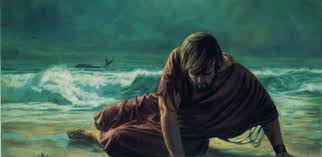
38 Then some of the scribes and Pharisees answered him, saying, “Teacher, we wish to see a sign from you.”39 But he answered them, “An evil and adulterous generation seeks for a sign, but no sign will be given to it except the sign of the prophet Jonah. 40 For just as Jonah was three days and three nights in the belly of the great fish, so will the Son of Man be three days and three nights in the heart of the earth.41 The men of Nineveh will rise up at the judgment with this generation and condemn it, for they repented at the preaching of Jonah, and behold, something greater than Jonah is here. 42 The queen of the South will rise up at the judgment with this generation and condemn it, for she came from the ends of the earth to hear the wisdom of Solomon, and behold, something greater than Solomon is here. (Mt 12:38-42 ESV)
The Matter at Hand: Is the Christian faith a call to the abnegation of reason? Absolutely not! On the contrary, it is rooted in the historical realities easily verified empirically by the intellectually honest. The list is long of skeptics who set out to disprove Christianity and ended up becoming stalwart defenders: C.S. Lewis, Lee Stroebel, the apostle Paul, Doubting Thomas, J. Warner Wallace, Josh McDowell, et al.
Encouragement: Jesus predicted His betrayal, arrest, crucifixion, three days in the tomb, and his resurrection. World history has never gotten over it, and never will. Because all of the promises of God find their ‘Yes’ and ‘Amen’ in Him, as the NT makes clear (2 Corinthians 1:20). There’s a reason our calendars’ fixed point of reference is Christ: B.C. (before Christ) and anno Domini (in the year of our Lord). Christianity is the true, historical, redeeming reality of God taking on flesh and ransoming a people for Himself. It is theology made visible. We don’t have to check our minds to believe Christianity; we have to check our pride. Christ refences Jonah’s historicity as a way of teaching the people: the greater Jonah had come. Just as Jonah was the prophet and truth-teller to Nineveh (present-day Iraq), Christ was and is the truth-teller to all who will listen. Churchill wrote that the truth was such a valuable thing that it had to be surrounded by a bodyguard of lies. Exactly.
Because the veracity of the Christian worldview and of the God-man are undefeatable, those who refuse truth reveal themselves as the enemies of all righteousness.
If you sometimes struggle with wondering, “Lord, will the wicked always prosper and the righteous always suffer mockery in this world?” the answers involve the reality that there’s always the cross before the crown. God will set everything to rights, and all will be revealed. Trust the Lord, do good even unto His enemies, and fight the good fight, knowing that this is God’s world, and we all will answer. Press on.
Today I completed editing and re-editing my message for Sunday. It is good to gather with the saints of church. We are in Matthew 12:33-42, about (among other things) our words. Our professions of faith must be evidenced via matching deeds (vv. 33-37). The authentication of Christ’s prophetic words about His resurrection was unconquerable–because of His works. Think of this vis-a-vis the historical person of Jonah (vv. 38-42). Christ referenced Jonah because he (Jonah) was a real flesh-and-blood man, too–a man of history whose life and imprint were known to countless people. (Can you say, Nineveh?)
Jesus predicted His resurrection. And world history has never gotten over it, and never will. Why? Because all of the promises of God find their ‘Yes’ and ‘Amen’ in Him, as the NT makes clear (2 Corinthians 1:20). Because of 1 Corinthians 15. Because He rose, just as He said.
Christianity is the true, historical, redeeming reality of God taking on flesh and ransoming a people for Himself. It is theology made visible. We don’t have to check our minds to believe Christianity; we have to check our pride.
This morning in my reading I came to one of my favorite prayers recorded in the Bible. There are countless moving and profound prayers in Scripture. Daniel’s prayer is majestic; David’s countless poetic outpourings in Psalms are inexhaustible; and many pastors love to reference John 17, of course; and there is the Lord’s Prayer that Scripture records for us.
But for me, one of my enduring favorites is found in Luke 18. The context is crucial. It centers upon a Pharisee and the tax collector:
10 “Two men went up into the temple to pray, one a Pharisee and the other a tax collector. 11 The Pharisee, standing by himself, prayed thus: ‘God, I thank you that I am not like other men, extortioners, unjust, adulterers, or even like this tax collector. 12 I fast twice a week; I give tithes of all that I get.’ 13 But the tax collector, standing far off, would not even lift up his eyes to heaven, but beat his breast, saying, ‘God, be merciful to me, a sinner!’ 14 I tell you, this man went down to his house justified, rather than the other. For everyone who exalts himself will be humbled, but the one who humbles himself will be exalted.” (Luke 18:10-14 ESV)
There is so much here. We can misspend a lot of time and energy playing the lethal comparison game. You know, the “Well, I’m not like _________” game, wherein we make ourselves into fine, upstanding blessings to the world. We so quicky forget that God is the Judge, not a fellow sinner.
The Pharisee, per Jesus, remained spiritually condemned. His pride damned him. But the repentant, humble, contrite tax collector, how did he fare, per Jesus?
“I tell you, this man [the tax collector] went down to his house justified, rather than the other [the Pharisee]” (Luke 18:14a ESV).
And the tax collector’s prayer? “God, be merciful to me, a sinner!” (Luke 18:13 ESV)
Post tenebras lux. After darkness, light. Ad fontes. Back to the sources. Martin Luther, indubitably among the most important and influtential men to ever make his mark, we remain indbebted to you, sir. So very indebted.
This gem from Martin Luther: “Peace if possible; truth at all costs.”
And this gem from John Calvin: “Faith is like an empty, open hand stretched out toward God, with nothing to offer and everything to receive.”
And this gem from John Knox: “The Scriptures of God are my only foundation and substance in all matters of weight and importance.”
Aging is humbling. Driving back to work after my audiology appointment, I could still hear (forgive the pun) the audiologist’s unsympathetic voice in my mind: “Your hearing has gotten worse.” She had uttered it with about as much concern as a government minion when he tells you that you owe still more taxes.
The audiologist ordered new hearing aids for me. Again, she was so friendly. She reminded me of Laurence Olivier’s character of Szell, the Nazi dentist, in the 1971 film Marathon Man. She had similar bedside manners–about as friendly as ice with frost on top–just for grins and giggles.
I read the novel Marathon Man for the first time in my 10th-grade A.P. English class, and neither that reading nor the terrifying film left me. I can still hear (irresistible hearing pun again) the slapping-upon-pavement sounds of Dustin Hoffman’s tennis shoes as he ran the streets of New York, and later arranged for his ‘neighbors’ to rob him. (It’s a wonderful story and film, in my view.)
But back to the point. My hearing had worsened. It is embarrassing. I should probably rue my many days of blasting shooting cans at the end of the dirt road by my great grandparents’ farm in south GA, and shooting quail and doves as a boy (again with no hearing protection), and years of serving in infantry, cavalry, and artillery units . . . well, the eardrums can take a beating.
Some of my buddies joked about me today as I returned. I took it all, as was fitting. I love these guys–so young, so vibrant, so Icarus-like. The sun’s no threat, they exude. You can’t listen to “I Am the Walrus” on low, they imply. Right. Tell me that when you get hearing aids.
But as I walked out late this evening, a buddy of mine asked me to come shoot over the next few weeks at our various ranges. I get to not be a chaplain for a few minutes, and get some more trigger time with the guys after hours. That’s it, folks; that’s the beauty. It involves guys who love to shoot, and to shoot well, and get more trigger time. I can’t wait; I’m already practicing my breathing and trigger squeeze. (I’ll even wear ear protection, though it’s many years too late now.) Lock and load. How can one not love that phrase?







 MIND & MATTERS