Here’s the link:
Wisdom from the Apostle Peter (Part 5)

Text: Concerning this salvation, the prophets who prophesied about the grace that was to be yours searched and inquired carefully, inquiring what person or time the Spirit of Christ in them was indicating when he predicted the sufferings of Christ and the subsequent glories. It was revealed to them that they were serving not themselves but you, in the things that have now been announced to you through those who preached the good news to you by the Holy Spirit sent from heaven, things into which angels long to look (1 Peter 1:10-12).
Context: A.D. 62-63. Peter, an intimate friend of Jesus, though clearly a fallen man, but also a repentant man and disciple of the Lord Jesus, wrote from Rome, Italy (called “Bablylon” by Peter), wrote to “elect exiles”/Christians with one overarching message: the truth-telling prophet, the truth-living Christian will suffer, but it will all be worth it in the end. Therefore, press on in the truth.
Questions for Consideration:
- What is the office of the prophetic truth-teller?
- Are there not costs involved in telling the truth?
- What are some examples of the prophetic truth-teller in the Old Testament?
- What happened to them?
- Did they quit?
- Why does God raise up prophetic truth-tellers?
- Why is there a need for prophetic truth-tellers?
- Whom does Peter hold up as the model and apotheosis of prophetic truth-telling?
- What happened to the Christ?
- Should Christ’s prophetic truth-tellers expect anything unlike what Christ experienced?
- Whom does Peter say the prophetic truth-tellers served? Was it themselves?
- Do you see the authentic prophetic truth-tellers cave to the world’s system and the world’s way of doing business?
Encouragement: Always, always, always keep the main thing the main thing. Why? Because it’s so very easy to get sucked into comfort. It’s a hook buried inside the worm. It is trick bait for the undiscerning. The fish bites the worm and gets hooked. Then it’s too late. He is caught and landed and slaughtered for the appetite of the angler. The Christian, dear ones, is to recognize the prophetic truth-tellers when God sends them. Why? Because the prophetic truth-teller is God’s man. He is not serving self but you, God’s sheep. He who has ears to hear, let him hear what the Spirit is saying.
Christmas Eve Reflections

“Do you want to push her in the stroller?” my wife asked.
Unhesitatingly, I put down John Irving’s novel, Last Night in Twisted River, that I was reading on the rear patio and hopped up, smiling.
CJ placed Lennon in her new black stroller. Lennon squirmed and cooed, and sucked on her blue pacifier.
It is moments like this when I hear Jim Croce’s “Time in a Bottle” lyrics in my mind’s ear:
If I could save time in a bottle
The first thing that I’d like to do
Is to save every day
‘Til eternity passes away
Just to spend them with you
If I could make days last forever
If words could make wishes come true
I’d save every day like a treasure and then
Again, I would spend them with you
But there never seems to be enough time
To do the things you want to do
Once you find them
I’ve looked around enough to know
That you’re the one I want to go
Through time with
If I had a box just for wishes
And dreams that had never come true
The box would be empty
Except for the memory
Of how they were answered by you
But there never seems to be enough time
To do the things you want to do
Once you find them
I’ve looked around enough to know
That you’re the one I want to go
Through time with
The sun was going down through the pines. Some of the neighborhood dogs barked in the distance at deer down in the branch behind the houses.
I pushed the stroller, Lennon asleep and rocking, as we walked the nighborhood streets. Three kids at the end of the cul-de-sac were playing basketball. A girl skated down the street in what appeared to be new rollerblades. They were a bright pink, matching the ribbons she had in her hair.

I could hear traffic in the distance, the sounds of wheels rolling down I-20. CJ and I found ourselves wordlessly joyful. We just looked at Lennon Ray in her red onesie as she lay in her black stroller, as she nodded to sleep and then would briefly open her eyes as she felt the macadam beneath her stroller’s wheels.
We strolled and strolled. When we came back to our daugher and son-in-law’s home, CJ began cooking fajitas for the adults.
Taylor Ray put Lennon in a bouncing seat on the counter as CJ prepared supper, and I chatted with our son-in-law and played with his dogs.
I sat down again in the wicker chair on the back patio and picked up the Irving novel again, but then put it back down in order to write this. I know what Croce meant in his beautiful song. If I, too, could save time in a bottle, this would be one of those times. Maybe this little writing will preserve it in a small way. Merry Christmas, everyone.
Chaplain Daily Touchpoint #363: Wisdom from the Apostle Peter (Part 4)

Bottom Line Up Front: Ransomed from Futility
Text: Therefore, preparing your minds for action, and being sober-minded, set your hope fully on the grace that will be brought to you at the revelation of Jesus Christ. As obedient children, do not be conformed to the passions of your former ignorance, but as he who called you is holy, you also be holy in all your conduct, since it is written, “You shall be holy, for I am holy.” And if you call on him as Father who judges impartially according to each one’s deeds, conduct yourselves with fear throughout the time of your exile, knowing that you were ransomed from the futile ways inherited from your forefathers, not with perishable things such as silver or gold, but with the precious blood of Christ, like that of a lamb without blemish or spot. (1 Pt 1:13-19)
Teaching: Peter gives multiple imperatives in his sentences above. First, he tells Christians to be prepared for action. That is, be spiritually equipped with the armor of God. We are not to battle in worldly ways. That is, we’re to be above that level of craftiness and guile. We’re to look reality in the face, recognize it for what it is (be that beautiful or wicked or some admixture) and simultaneously set our hope “fully on the grace that will be brought to [us] at the revelation of Jesus Christ” (1 Pt 1:13).
Second, he tells Christians what not to do. We are not to be conformed to the passions of [our] former ignorance” (1 Pt 1:14). That is, we are not to be partakers in deeds of darkness. Our lives should not fear investigation. We should be transparent and open. Why? Because it’s hard to argue against a Godly life. People see us. But what’s infinitely more important, God sees us (and all things). Therefore, we should live lives that glorify the Lord rather than ourselves. We’re to be a people characterized by giving and self-denial by living the crucified life.
Third, Peter tells us that we, if we are Christians, have been “ransomed” from lives and patterns of futility. We are now to keep the main thing the main thing. Jesus was innocent; yet, it was God’s plan for Him to be murdered anyway, so that God would be shown to be just and the justifier of all who look to Him in repentance and faith. God uses evil for His purposes of good. The religious establishment loathed Jesus because He called out their hypocrisy and partiality and lies. And the religious establishment murdered Him for it, after first humiliating Him publicly. And yet . . . Jesus endured it all.
Encouragement: God is bigger than our sufferings, dear ones. He knows them. God sees all. We should fear the Lord, trusting Him to work even and especially the evils of men for our ultimate good and His glory. If we are Christians, we have been ransomed/purchased/redeemed. Therefore, let us trust Him, even and especially during the trials.
Chaplain Daily Touchpoint #362: Wisdom from the Apostle Peter (Part 3)

Good morning, all. Below is today’s CDT #362: Wisdom from the Apostle Peter (Part 3)
Intro: Nativity scenes, sheep, shepherds, wise men, gold, frankincense, and myrrh, mangers, bucolic scenery, etc. Even as secular as most of contemporary culture is, we can all still see these scenes in houses of worship, on church properties, and on occasion, in other venues. But is it possible that we can run the risk of celebrating the incarnation of the Christ and miss and/or minimize that Christ came on a death march to Calvary? The point of Christianity is not the birth of ‘sweet baby Jesus’ but the execution of the God-man and His bodily resurrection three days later.
Text: Concerning this salvation, the prophets who prophesied about the grace that was to be yours searched and inquired carefully, inquiring what person or time the Spirit of Christ in them was indicating when he predicted the sufferings of Christ and the subsequent glories. It was revealed to them that they were serving not themselves but you, in the things that have now been announced to you through those who preached the good news to you by the Holy Spirit sent from heaven, things into which angels long to look (1 Pt 1:10-12).
Teaching: The point Peter is stressing to the elect exiles (Christians scattered across present-day Turkey, and by extension, believers throughout history), is that Christ would suffer for the sake of His people, be betrayed for 30 pieces of silver by Judas, be mocked, scourged, nailed to the tree atop Calvary, buried in a borrowed tomb, guarded (though a corpse), and raised three days later.
Encouragement: The prophets of the Old Testament era, in other words, wrote to encourage Christians throughout time. Peter says the prophets “were serving not themselves but you” (1 Pt 1:12). Folks, that’s encouraging. Christian ministry is not to be for ourselves, but we are to pour out and into other souls who likewise need the gospel. Why? Because it is indeed good news. If you’re in Christ, you’re part of that great cloud of witnesses of the greatness and goodness of God. And that is one more reason we should not say—but indeed demonstrate—Merry Christmas.
Soul Food (20 December 2025)
Today was a blessing. I had conversation with a Christian brother at a coffee shop. I enjoyed a late lunch of Mexican food with my wife and our son. We got to FaceTime with our daughter and see pictures of our granddaughter being strolled around our daughter and son-in-law’s neighborhood. But then, afterwards, I laced up the hiking boots and took to the hills. Below are some snapshots of my time. Hope you enjoy.













Chaplain Daily Touchpoint #361: Wisdom from the Apostle Peter (Part 2)
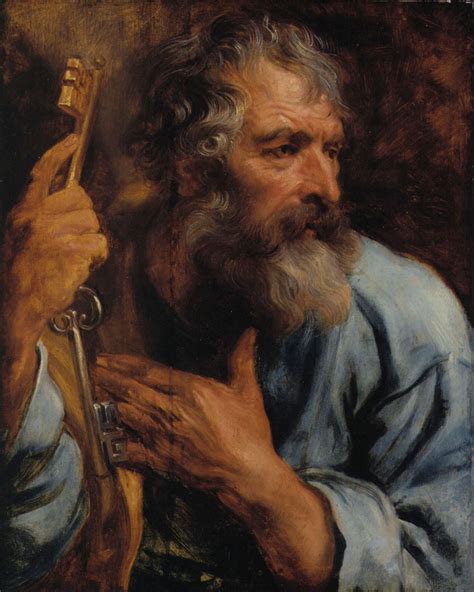
Chaplain Daily Touchpoint #361: Wisdom from the Apostle Peter (Part 2)
Bottom line up front: By the Numbers Theology
Introduction: “By the numbers” is a military phrase that essentially means, “step-by-step instructions.” It’s the method of proper sequencing applied to a task. If you want to break apart your weapon, there’s a protocol for that. Do it “by the numbers” and you’re golden. Go rogue, and you’ll end up in Malfunction Junction. When you want to reassemble a weapon after cleaning it, do it “by the numbers,” and you’ll be good to go for your Functions Check. Ignore the protocol at your own peril. That’s how folks get hurt.
Segue: “By the numbers” sometimes can be even uglier when it comes to spiritual matters. Things can get so sin-saturated, so morally corrupt, so self-centered instead of God-centered, that we sinners can arrive at Malfunction Junction quickly and make shipwreck of our faith if and when the proper protocol is ignored.
This is why Peter writes to believers scattered across present-day Turkey in his first letter–namely, to tell them that suffering comes to them because wicked rulers are in place, and yet God has them (believers) placed where they are to bear true faith and allegiance to the truth.
In this you rejoice, though now for a little while, if necessary, you have been grieved by various trials, so that the tested genuineness of your faith–more precious than gold that perishes though it is tested by fire–may be found to result in praise and glory and honor at the revelation of Jesus Christ. Though you have not seen him, you love him. Though you do not now see him, you believe in him and rejoice with joy that is inexpressible and filled with glory, obtaining the outcome of your faith, the salvation of your souls. (1 Pt 1:6-9).
Encouragement: I don’t know where you are today spiritually. Perhaps you’re in a place where you see evil winning–at least temporarily. Perhaps you see truth, goodness, and beauty being eclipsed. Perhaps you’re witnessing morally rotten people dupe undiscerning sheeple. Be of good courage. God is not surprised. We should not be either.
Beloved, do not be surprised at the fiery trial when it comes upon you to test you, as though something strange were happening to you. But rejoice insofar as you share Christ’s sufferings, that you may also rejoice and be glad when his glory is revealed (1 Pt 4:12-13).
Fight the trials by the numbers. Trust the Lord. Keep short accounts with God, knowing that God sees all, and works even the evils of men for the ultimate good of His people and the sake of His name.
Chaplain Daily Touchpoint #360: The Matter of Honor & Virtue

Bottom line up front: Virtue is its own reward.
Introduction: When I enlisted for active-duty Army in the 1990s, sundry phrases were drilled into my heart and mind in those days and months in Fort Knox, KY. One of those phrases was this: “Right place, right time, right uniform!” Do those fundamental things day in and day out, and that’s a good first step to success in military life. Well, that’s tried-and-true wisdom. Yes, and amen to fundamental principles like that.
But there are other principles which need to be inculcated for all who care to live lives of honor. Why do I say that? Well, lots of folks can show up in the right place, at the right time, and in the right uniform, but they can still be morally rotten people. Good character, or what we might call “honor,” is inextricable from true success. Otherwise, the emperor has no clothes. If someone is a mere shell of leader, discerning people see through the façade.
When I think upon many with whom I have served and continue to serve, certain men invariably rise to the top in my esteem. Were they the strongest in the gym? No. Were they the fastest on the track? No. Were they the coolest? No. But what they all were was men of character, men of honor.
Teaching: That’s what Cicero was driving at when he wrote in one of his aphorisms, “Virtue is its own reward.” It’s a way of saying, “Do the right thing because it’s the right thing. Don’t worry if someone sees you do it. Do it anyway because it’s right.”
Encouragement: The concepts of virtue and honor hinge upon a transcendent principle/law and Lawgiver; otherwise, both concepts are reduced to human sinful opinions where every man does what is right in his own eyes. Moral relativism, in other words. But because God does exist and has revealed Himself in Scripture, we have that transcendent principle/law and Lawgiver. “For I the LORD do not change” (Malachi 3:6a). The half-brother of the Lord Jesus wrote in his epistle that “there is no variation or shadow due to change” with God (James 1:17). God is constant, steadfast, and 100% honor in and of Himself. His very nature is that of holiness and consummate honor.
Takeaway: I learned many wise principles all those many years ago in the beautiful hills of Kentucky, but I learned this one, too, from my wise grandparents: What a man does when he thinks no one’s looking, that reveals his character. Why? Because God’s always looking. Virtue and honor are their own reward. May we be people who cultivate both because we will give an account.
Chaplain Daily Touchpoint #359: Wisdom from the Apostle Peter (Part 1)

Currently I am teaching the saints from one of my favorite men in the early church: Peter. Peter’s two New Testament letters are short epistles that are dense with wisdom. Why are Peter’s letters so important for us? For at least three reasons, they are crucial:
- They speak to the reality of suffering as a Christian
- They speak to the issue of maintaining an eternal perspective amidst temporal trials
- They speak to the issue of the meaning/purpose of trials
This week, we are focusing on verses 3-5 from chapter 1. Those three verses read as follows:
“Blessed be the God and Father of our Lord Jesus Christ! According to his great mercy, he has caused us to be born again to a living hope through the resurrection of Jesus Christ from the dead, to an inheritance that is imperishable, undefiled, and unfading, kept in heaven for you, who by God’s power are being guarded through faith for a salvation ready to be revealed in the last time” (1 Pt 1:3-5).
Context, Context, Context: You remember the historical context out of which Peter’s writing, don’t you? It is A.D. 62-63 and Peter’s writing from Rome, Italy (called “Babylon” in Peter’s letters because of its moral rottenness and corruption). As just one example, “She who is at Babylon, who is likewise chosen, sends you greetings, and so does Mark, my son” (1 Pt 5:13).
In the immediate context, Peter writes to “elect exiles” (1 Pt 1:1) who are scattered across what is modern-day Turkey. In the larger context, Peter writes to believers of each generation who are likewise elect exiles in a hostile culture. His purpose is straightforward: to encourage the saints to endure because God’s mission will triumph, but that mission entails suffering.
That’s where verses 3-5 of chapter one are so foundational. Peter reminds Christians/elect exiles of important doctrines that undergird the gospel’s triumph:
- God is the first cause. That is, God “caused us to be born again to a living hope” (1 Pt 1:3). This is not some man-made decision; it’s God monergistic work.
- The resurrection of Jesus Christ from the dead is the proof of Jesus’ identity and the ultimate reason for the hope Christians have (1 Pt 1:3-4).
- God does not lose any of those who are truly Christians (1 Pt 1:5). We are safe because “by God’s power” we “are being guarded through faith for a salvation ready to be revealed in the last time” (1 Pt 1:5).

Encouragement: In church history, Peter is known as the apostle of hope. I hope that you find encouragement in the truths Peter unfolds in his two New Testament epistles. I hope you will find encouragement in this and the following installments. And I hope you’ll experience the transforming gospel for which Peter laid down his life.
Chaplain Daily Touchpoint #358: Wise Fear

Introduction: Probably like many military service members through the ages, I was fascinated by larger-than-life military figures as a child. When I was a high school boy in Atlanta, my A.P. sophomore English teacher introduced me to a love affair with reading–especially narratives about soldiers and Marines in the Vietnam War. When I read Going After Cacciato as a sixteen-year-old boy, that launched me into all things soldierish. I read the novels and memoirs of Philip Caputo and Tim O’Brien and other writers.
I devoured the movies, too, typical of boys fascinated by war and military things. I viewed Apocalypse Now, The Bridge On the River Kwai, Full Metal Jacket, The Deer Hunter, Deliverance, Platoon, etc. more times than I should have. Then I of course watched all the Rambo films, too; I loved the stories of what war can do to certain men, what the men’s larger contexts were regarding why they served, where they came from, what their childhoods were like, etc. I was consumed by it all. I served in our high school’s R.O.T.C. program and the rifle team, etc. I have always been a good shot, so I excelled in marksmanship. (Now that I’m a chaplain, it’s difficult not to be envious of the other guys when they’re shooting on the ranges, and I am officially a non-combatant, and not allowed to bear arms as clergy. But that’s a discussion for another time.)
My point so far is straightforward: I have been drawn to soldiers’ stories for as long as I can remember. And one of the characteristics that often came through all (or at least most) of the novels, memoirs, and movies was that soldiers must deal with fear. They are to be brave. We call it intestinal fortitude, courage, resolve, grit, and any number of other titles. But we all understand what the message is: soldiering hinges upon courage and bravery.
Connection: This morning I was meditating upon Proverbs 10:27. It reads as follows: “The fear of the LORD prolongs life, but the years of the wicked will be short.” I was wrestling Jacob-like in my mind over the issues involved in the relationship of courage and what I call wise fear. There is, in my view, a type of fear that is wise to inculcate.
We are, according to Scripture, to fear the Lord. The Bible teaches the “fear of the LORD is the beginning of wisdom” (Pr 9:10a). The beginning of wisdom. The genesis. The starting point. In other words, we must put first things, well, first. We must get our theology (our doctrine of God) correct. We must know God accurately and in accordance with how He’s revealed Himself.
Encouragement/takeaway: So what does wise fear of God have to do with soldiering, bravery, and courage? Everything. When I look at the shelves of books I have read over these many years, rows upon rows of those volumes are stories of men who encountered staggering obstacles. Sometimes those men were crushed by them. Sometimes they adopted postures of bravado and other innocent men died due to fools being in charge. Sometimes the men pressed on step-by-step and overcame formidable odds. And sometimes God quickened soldiers and showed them Himself in ways that taught them that He was their rock and redeemer. The wise soldier–whether in the jungles of Vietnam or on the mission fields of today–is to fear the Lord.

