“When the world is running down/You make the best of what’s still around.” That’s the refrain in a pop song from a very popular band, The Police. That line reveals a lot about the theology and worldview expressed in the tune of the same name. This week, many Americans will celebrat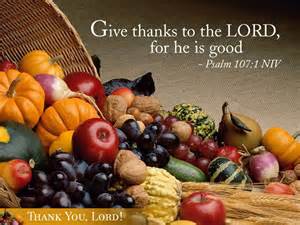 e Thanksgiving. What Americans believe about God will be evidenced in what we do/don’t do this week. Will we pray or not? Will we express thankfulness? To whom? To ourselves? To our predecessors? To our nation? Our military? Why? These questions go to the heart of the matter. If we are thankful, does that thankfulness not assume there is someone to whom to be thankful? It personalizes the act of thanksgiving. Ought we to be thankful to someone? How you answer that question reveals much. Ought implies a moral imperative. It is a way of saying, there is a right standard, a way man ought to follow. But we’re in a day when many will gather together and be at a loss as to whom they should thank. In other words, they’re cut off from the author of life (God), the only One to whom we ought to be supremely grateful.
Antithesis. Literally, the term means “against/opposed to another argument/idea.” Does that sound too sophisticated of a term? I hope not. It’s simple. In informal language, it’s the other side of the coin. It’s a way of saying this vs. that. This way, not that way. God or Satan. Good vs. evil. Justice vs. injustice. Truth vs. lies.
Antithesis is a mark of thinking. Thinking conceptually is predicated upon one’s thinking via antithesis. In other words, the person who cannot make distinctions cannot properly be said to be thinking conceptually. Here’s the upshot: either we’re in a theistic world (where God is sovereign Creator and we’re His creatures) or we’re not. It’s one or the other. Either we are to thank the God who is, who has spoken, who upholds all things by His sovereign power, or we are cosmic accidents who cannot even begin to explain why things exist, why we’re here, why morality is not an illusion, or how nothing gave rise to everything, all the while undirected.
What does that have to do with Thanksgiving? A lot. Ever had this experience? A family gathers in the kitchen or dining room, and someone is called on to offer a prayer of thanksgiving. But do we think about that? Whom are we thanking? It does not make sense to thank randomness/chaos/nothingness. Are our talents our own? Is our strength our own? Is our wealth our own? Our health? Are we in control of seedtime and harvest? Did we control the gifts of our children?
This is just where we need to understand antithesis. If we do not come to terms with the concept of giving thanks, we are eschewing intellectual courage and honesty. This morning, I listened to a fine sermon by my pastor from Psalm 16. It was about, among other things, how believers recognize that we have no ultimate good apart from God. David wrote, “Preserve me, O God, for in you I take refuge. I say to the LORD, “Your are my Lord; I have no good apart from you.” (Psalm 16:1-2, ESV). David recognized that he was to thank God. Why? Because God is the author of life; God is the fount of blessing. In short, life without God is unthinkable. This is the perfect example of why it’s crucial for us to think via antithesis. Either God or an idol. God or Baal/idolatry. Theism or atheism. Pushed logically, how can the atheist justify being thankful, if he/she believes he came into being accidentally, cannot explain purpose, meaning, or origins? Why ought the atheist be thankful if there’s no one to thank?
Was Sting right? If the world is running down, should we just try to make the best of what’s still around? That’s pretty sad. What would it take for you to consider that the reason the world is running down is because we live this side of Genesis 3? What if this world is running down because we are moral rebels from God, trying to cover our sin? What if the world is running down because the whole creation is groaning from shaking its fist in the face of the God who loves the creation enough to take on flesh and come for all who will repent and believe upon Jesus?
The antithesis is this: either God is, and we ought to honor Him as such or we’re on our own, and the jig is up. Either God has spoken through creation, through Scripture, through conscience, through design, and through Christ and His resurrection, or He hasn’t.
The apogee of this antithesis finds many illustrations in literature, but perhaps none is more familiar than Macbeth’s lines: “Life’s but a walking shadow, a poor player/That struts and frets his hour upon the stage/And then is heard no more. It is a tale/Told by an idiot, full of sound and fury/Signifying nothing” (5.5.25-28).
Is life (is your life) a tapestry woven by God or a tale told by an idiot? This is why thinking antithetically is crucial. Let us think with honesty, with logical consistency, with humility, but let us think and then act with conviction. And, yes, Happy Thanksgiving.
 eaders to examine their own assumptions in their search for truth. I’ve read scores of books on Christian apologetics, but what I appreciate about this book is its forthrightness and accessibility for lay persons. I use it as a gift for others whom I believe will actually read it.
 MIND & MATTERS