“When the world is running down/You make the best of what’s still around.” That’s the refrain in a pop song from a very popular band, The Police. That line reveals a lot about the theology and worldview expressed in the tune of the same name. This week, many Americans will celebrat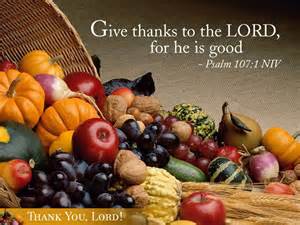 e Thanksgiving. What Americans believe about God will be evidenced in what we do/don’t do this week. Will we pray or not? Will we express thankfulness? To whom? To ourselves? To our predecessors? To our nation? Our military? Why? These questions go to the heart of the matter. If we are thankful, does that thankfulness not assume there is someone to whom to be thankful? It personalizes the act of thanksgiving. Ought we to be thankful to someone? How you answer that question reveals much. Ought implies a moral imperative. It is a way of saying, there is a right standard, a way man ought to follow. But we’re in a day when many will gather together and be at a loss as to whom they should thank. In other words, they’re cut off from the author of life (God), the only One to whom we ought to be supremely grateful.
Antithesis. Literally, the term means “against/opposed to another argument/idea.” Does that sound too sophisticated of a term? I hope not. It’s simple. In informal language, it’s the other side of the coin. It’s a way of saying this vs. that. This way, not that way. God or Satan. Good vs. evil. Justice vs. injustice. Truth vs. lies.
Antithesis is a mark of thinking. Thinking conceptually is predicated upon one’s thinking via antithesis. In other words, the person who cannot make distinctions cannot properly be said to be thinking conceptually. Here’s the upshot: either we’re in a theistic world (where God is sovereign Creator and we’re His creatures) or we’re not. It’s one or the other. Either we are to thank the God who is, who has spoken, who upholds all things by His sovereign power, or we are cosmic accidents who cannot even begin to explain why things exist, why we’re here, why morality is not an illusion, or how nothing gave rise to everything, all the while undirected.
What does that have to do with Thanksgiving? A lot. Ever had this experience? A family gathers in the kitchen or dining room, and someone is called on to offer a prayer of thanksgiving. But do we think about that? Whom are we thanking? It does not make sense to thank randomness/chaos/nothingness. Are our talents our own? Is our strength our own? Is our wealth our own? Our health? Are we in control of seedtime and harvest? Did we control the gifts of our children?
This is just where we need to understand antithesis. If we do not come to terms with the concept of giving thanks, we are eschewing intellectual courage and honesty. This morning, I listened to a fine sermon by my pastor from Psalm 16. It was about, among other things, how believers recognize that we have no ultimate good apart from God. David wrote, “Preserve me, O God, for in you I take refuge. I say to the LORD, “Your are my Lord; I have no good apart from you.” (Psalm 16:1-2, ESV). David recognized that he was to thank God. Why? Because God is the author of life; God is the fount of blessing. In short, life without God is unthinkable. This is the perfect example of why it’s crucial for us to think via antithesis. Either God or an idol. God or Baal/idolatry. Theism or atheism. Pushed logically, how can the atheist justify being thankful, if he/she believes he came into being accidentally, cannot explain purpose, meaning, or origins? Why ought the atheist be thankful if there’s no one to thank?
Was Sting right? If the world is running down, should we just try to make the best of what’s still around? That’s pretty sad. What would it take for you to consider that the reason the world is running down is because we live this side of Genesis 3? What if this world is running down because we are moral rebels from God, trying to cover our sin? What if the world is running down because the whole creation is groaning from shaking its fist in the face of the God who loves the creation enough to take on flesh and come for all who will repent and believe upon Jesus?
The antithesis is this: either God is, and we ought to honor Him as such or we’re on our own, and the jig is up. Either God has spoken through creation, through Scripture, through conscience, through design, and through Christ and His resurrection, or He hasn’t.
The apogee of this antithesis finds many illustrations in literature, but perhaps none is more familiar than Macbeth’s lines: “Life’s but a walking shadow, a poor player/That struts and frets his hour upon the stage/And then is heard no more. It is a tale/Told by an idiot, full of sound and fury/Signifying nothing” (5.5.25-28).
Is life (is your life) a tapestry woven by God or a tale told by an idiot? This is why thinking antithetically is crucial. Let us think with honesty, with logical consistency, with humility, but let us think and then act with conviction. And, yes, Happy Thanksgiving.

 ng headlines. First, a female student at Spring Valley High School in SC was so defiant in class that the police were called to deal with her. Let that sink in. Classroom misbehavior in the government-run school system has reached such lows that police are necessary. That’s how much is tolerated in a culture given over to eschewing personal responsibility. If that’s insufficient, now the student has raised nearly $50,000 via an internet fundraising maneuver. See the tragic paradox? Students who were doing their work, obeying the rules, and even being (ready for this?) self-disciplined are not the protagonists. Nope, they are invisible. The one who gets the attention is the rebel, the defiant, and the one whose behavior is so bad that police have to be called. And no
 w she’s making money. We’re amidst moral breakdown. Most people reject the diagnosis that we are all sinners in thought, word, and deed. Most people reject the only remedy—namely, repentance and faith in the gospel. And the moral breakdown continues.
 s/Democrats are calling for more government, more taxes, the redistribution of wealth, political correctness, and socialized health care. Conservatives/Republicans are calling for less government, lower taxes, wealth creation via private enterprise, freedom from political correctness, and free market competition in health care.
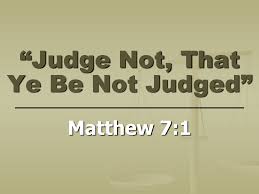 now next to nothing of Scripture spew this verse as a quip aimed to terminate discussion. We rarely hear this verse taught in context. What usually happens is instead a person is failing to make a cogent and/or coherent argument for his position. He does not want to offend or seem hateful. He wants to be tolerant of even the most inane people or ideas. He wants to be loving and respectful. And this one verse surfaces like a reflex. It is viewed as a way of assuaging one’s own conscience and mollifying those with whom you disagree. It is used as a kinder and gentler way of saying, “Well, I wouldn’t live my life that way, but it’s not really for me to say the other person is wrong.”
 s to the ground, most of the chairs on the rostrum were vacant. Most people did not know or care of this man’s passing. As I read Scripture, prayed, and consoled a couple of his friends, I had an overwhelming sense that there were multiple deaths at hand. We were not just marking the
 passing of another veteran’s life. I was witnessing in microcosm a culture that chooses to forget what is praiseworthy. What/whom one generation fails to honor, thenext generation will forget altogether.
 my hours are taken up in study and preparation. Contrary to some people’s experiences, sustained research and study are not burdens to me; I emerge from those disciplines reinvigorated. Recently I was requested to speak at a Bible study to military personnel and Department of Defense civilians. I’d been studying in Psalm 67, so I thought that would be a sound passage from which to teach. It was not just because that is where I’d been in some of my recent studies. It was more than that. I consistently see the longing for encouragement that we all have.
 a long run. At the end of my run, I entered a gym where I work out when I’m away from home. Upon entering, I was flooded with images of the massacre by 26-year old Chris Harper-Mercer. Multiple people at Umpqua Community College in Roseburg, Oregon had just been murdered. Based upon some eyewitnesses to the murders who’d barely escaped death, Mercer had a track record of hatred, especially for Christians. Sound familiar? Are you still surprised at the violence? Now, I have no idea what worldview Mercer lived by. That is not my main concern here. What is my main concern, however, is how many people express surprise at violence perpetrated against others. Before someone objects that I’m inciting violence, read on. I am not inciting violence; I’m asking readers to go deeper. I’m asking you to examine your view of man, your anthropology. Why? Because the end depends upon the beginning. If you have an incorrect view of man’s nature as fallen, you will continually be surprised when violence invades our lives. However, if you have a correct view of man’s fallen nature, a correct anthropology, you will still grieve, yes, but you will understand why violence occurs with such frequency.
 No, I would not presume to tell anyone for whom to vote, but I would presume to speak to Christians about biblical guidelines for voting. Christians have an objective guide. Scripture is to inform our beliefs and behavior. In other words, the Christian worldview is to be shaped by the Bible. That means Christians are to be a discerning people. In a culture given over to superficiality, glitter, and celebrity, Christians ought to discern the differences between what God reveals as praiseworthy and what God reveals as wicked.
 were folks to tweet/post/blog about it, it just might. See the temptation? Here’s the issue for consideration: Are we not more connected digitally than ever in history, yet perhaps more lonely than ever in history? There’s a paradox in the fact that people have hundreds, or even thousands, of virtual friends but few, if any, actual friends. It’s now in the vernacular to call people “Facebook friends.” That is revealing. When is the last time we went to dinner with our Facebook friends? We may view posts and tweets, but I wonder if we are meaningfully connected to other people.
 We’re often connected to the Web but not to each other. So, what to do? The Web is not going away, I’d venture to say. Technology will increase rather than decrease, in its availability and speed. But might we pay a price? Might we be paying it already? It bears repeating: I hear from husbands, wives, and children repeatedly: “My wife/husband/son/daughter/friend won’t talk to me. Instead they play on their iPad or phone all the time.” Again, I’m not blind to how the logic cuts both ways. Here I am writing on a computer, posting it on the Web, and hoping others will be on the Web to read it and think about it. I see the paradox. However, just like the girls gathered near that bench this weekend up at the lake, I want genuine contact, not just virtual contact. The Digital Tower of Babel is just as idolatrous as the ziggurat in Genesis 11. In the Confessions, Augustine wrote, “Our hearts are restless until they can find rest in you [God].” That’s often quoted. But what’s less explained is the context out of which Augustine wrote. Despite being raised by a Christian mother, Augustine pursued a life of sexual lust and idolatry until Christ convicted him of his sin. It was only after being convicted of his sin that he understood his own Tower of Babel, wherein he was the god at the top. Because he excelled in academia, in rhetoric, law, languages, etc. his pride led to his downfall—a constant theme in literature and in life. Yet Augustine longed for true friendship, true rest, true connection—and this was millennia before the Web.
 Scripture records one of history’s most moving tributes to friendship: “As soon as he [David] had finished speaking to Saul, the soul of Jonathan was knit to the soul of David, and Jonathan loved him as his own soul” (1 Sam 18:1 ESV). What you see in the subsequent pages is a story of true, rather than apparent (we’d say virtual in our day), friendship. Should we use technology to improve relationships? Yes. However, I am not confident that will occur until we scroll our feeds less, and love our neighbors more.
