The end depends upon the beginning. That seems reasonable enough, right? If it’s reasonable, then why are many people surprised at the results of wrong beginnings? Yesterday, I went for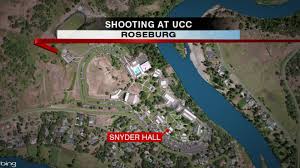 a long run. At the end of my run, I entered a gym where I work out when I’m away from home. Upon entering, I was flooded with images of the massacre by 26-year old Chris Harper-Mercer. Multiple people at Umpqua Community College in Roseburg, Oregon had just been murdered. Based upon some eyewitnesses to the murders who’d barely escaped death, Mercer had a track record of hatred, especially for Christians. Sound familiar? Are you still surprised at the violence? Now, I have no idea what worldview Mercer lived by. That is not my main concern here. What is my main concern, however, is how many people express surprise at violence perpetrated against others. Before someone objects that I’m inciting violence, read on. I am not inciting violence; I’m asking readers to go deeper. I’m asking you to examine your view of man, your anthropology. Why? Because the end depends upon the beginning. If you have an incorrect view of man’s nature as fallen, you will continually be surprised when violence invades our lives. However, if you have a correct view of man’s fallen nature, a correct anthropology, you will still grieve, yes, but you will understand why violence occurs with such frequency.
It makes all the difference in how you view human nature. What is man like? Are we born good? Is man’s nature by disposition one of love, unselfishness, magnanimity, self-sacrifice, and humility? Do those terms describe what you see and read each day on your TVs, computers, and newspapers? Do you have to teach your children how to misbehave, since they are so innocent, so good? Don’t you remember someone having to teach you how to lie, how to be selfish, how to make the world about you? Nor do I. But why? It’s because man is fallen. Therefore, we ought not to be surprised when fallen and unredeemed people act in accordance with their nature. We should be surprised if people were good by nature, but we’re not. We’re fallen. We are sinners. We need to be redeemed from our fallen state. The end depends upon the beginning. If we begin with the presupposition that man is good by nature, then it would make sense to be surprised at violence. But if we begin with the admission that man is evil by nature, then we may understand occurrences like yesterday in Roseburg, OR, and Sandy Hook, NJ, and Virginia Tech, and Fort Hood, TX, and Aurora, Colorado, etc. The end depends upon the beginning. View man’s fallen nature correctly, then we can begin to address the answer.
The Bible uniquely addresses the issue of man’s nature. Unredeemed man is, according to Scripture, wicked and a deceiver: “The heart is deceitful above all things, and desperately sick; who can understand it?” (Jer 17:9 ESV). Jeremiah wrote in the 600s B.C. But Moses penned the same description of man’s nature thousands of years prior: “The LORD saw that the wickedness of man was great in the earth, and that every intention of the thoughts of his heart was only evil continually” (Gen 6:5 ESV). But perhaps this description of man’s nature changed with New Testament writers, right? Surely, we have progressed. Listen to Paul in his epistle to the Romans, written in the 50s A.D: “For we have already charged that all, both Jews and Greeks, are under sin, as it is written: “None is righteous, no, not one; no one understands; no one seeks for God. All have turned aside; together they have become worthless; no one does good, not even one.” “Their throat is an open grave; they use their tongues to deceive.” “The venom of asps is under their lips.” “Their feet are swift to shed blood; in their paths are ruin and misery, and the way of peace they have not known.” “There is no fear of God before their eyes” (Rom 3:9b-18 ESV). Now ask yourself this question: Which view of man’s nature is more accurate? Which view corresponds to what you see with such frequency? The end depends upon the beginning. Understand man’s nature, and only then will we understand his behavior.
But here is the good news. God offers us fallen sinners a way out. It’s not a program; it’s not therapy; it’s not turning over a new leaf; it’s not trying to be a better you tomorrow. It’s repentance of our sins and looking to Jesus as the Savior. Here is the good news in microcosm: “For our sake he [God the Father] made him [Jesus, God the Son] to be sin who knew no sin, so that in him [Jesus] we might become the righteousness of God” (2 Cor 5:21 ESV). The end depends upon the beginning, at least in most things. But because of Christ, all who flee to him in repentance and faith, have transformed natures. It’s not because we’d ever reform our own natures; we wouldn’t. It’s not because we are smarter than our neighbors; we’re not. It’s because God circumcises our hearts of stone and gives us hearts of flesh. Scales fall from our eyes. We see that this gospel redeems our fallen nature and fits us for heaven, all because of God who came to seek and save the lost. The end depends upon the beginning, and the beginning and the end of all things is found in Jesus.

 No, I would not presume to tell anyone for whom to vote, but I would presume to speak to Christians about biblical guidelines for voting. Christians have an objective guide. Scripture is to inform our beliefs and behavior. In other words, the Christian worldview is to be shaped by the Bible. That means Christians are to be a discerning people. In a culture given over to superficiality, glitter, and celebrity, Christians ought to discern the differences between what God reveals as praiseworthy and what God reveals as wicked.
 were folks to tweet/post/blog about it, it just might. See the temptation? Here’s the issue for consideration: Are we not more connected digitally than ever in history, yet perhaps more lonely than ever in history? There’s a paradox in the fact that people have hundreds, or even thousands, of virtual friends but few, if any, actual friends. It’s now in the vernacular to call people “Facebook friends.” That is revealing. When is the last time we went to dinner with our Facebook friends? We may view posts and tweets, but I wonder if we are meaningfully connected to other people.
 We’re often connected to the Web but not to each other. So, what to do? The Web is not going away, I’d venture to say. Technology will increase rather than decrease, in its availability and speed. But might we pay a price? Might we be paying it already? It bears repeating: I hear from husbands, wives, and children repeatedly: “My wife/husband/son/daughter/friend won’t talk to me. Instead they play on their iPad or phone all the time.” Again, I’m not blind to how the logic cuts both ways. Here I am writing on a computer, posting it on the Web, and hoping others will be on the Web to read it and think about it. I see the paradox. However, just like the girls gathered near that bench this weekend up at the lake, I want genuine contact, not just virtual contact. The Digital Tower of Babel is just as idolatrous as the ziggurat in Genesis 11. In the Confessions, Augustine wrote, “Our hearts are restless until they can find rest in you [God].” That’s often quoted. But what’s less explained is the context out of which Augustine wrote. Despite being raised by a Christian mother, Augustine pursued a life of sexual lust and idolatry until Christ convicted him of his sin. It was only after being convicted of his sin that he understood his own Tower of Babel, wherein he was the god at the top. Because he excelled in academia, in rhetoric, law, languages, etc. his pride led to his downfall—a constant theme in literature and in life. Yet Augustine longed for true friendship, true rest, true connection—and this was millennia before the Web.
 Scripture records one of history’s most moving tributes to friendship: “As soon as he [David] had finished speaking to Saul, the soul of Jonathan was knit to the soul of David, and Jonathan loved him as his own soul” (1 Sam 18:1 ESV). What you see in the subsequent pages is a story of true, rather than apparent (we’d say virtual in our day), friendship. Should we use technology to improve relationships? Yes. However, I am not confident that will occur until we scroll our feeds less, and love our neighbors more.


 So, Denver International Airport’s board, heavily influenced by leftist/secularist ideologies, may bar Chick-fil-A from setting up a business inside the airport, despite the demand for their products. “Count no man happy till he dies.”
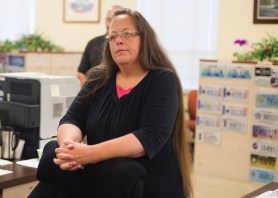 convictions, based upon the Bible, forbid her condoning so-called same sex marriage, because that would violate her sincerely held religious belief that marriage always has been, and always will be, the sacred union of one man and one woman, under God. Today, she’s in jail for refusing to abide by the arm of secular law. “Count no man happy till he dies.”


 eaders to examine their own assumptions in their search for truth. I’ve read scores of books on Christian apologetics, but what I appreciate about this book is its forthrightness and accessibility for lay persons. I use it as a gift for others whom I believe will actually read it.
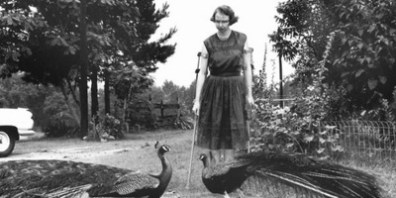
 e story, it’s a simple plot: A grandmother, the protagonist, persuades her only son, Bailey, to take her along on a family vacation Bailey and his family have planned to FL. The grandmother, a complaining prig and gossip, would rather go to east TN, but she acquiesces to the FL plan. Referencing the newspaper, the grandmother alerts her son (Bailey) that an escaped convict called the Misfit, is on the loose:

