What’s a Biblical Paradigm of a Virtuous Leader? (Part 1)

Question: Who is a biblical paradigm of a virtuous leader?

Like many believers, I read through the Bible a couple of times each year. The first books I go through each year are Job and Genesis. In Genesis, one of the most important leaders we see is Joseph. Joseph is an amazing case study in biblical leadership in several ways:

  • Joseph’s integrity was not for sale
  • Joseph keeps short accounts with God
  • Though betrayed by those ostensibly closest to him, Joseph remembers the ultimate prize
  • Joseph honors God in his daily life
  • Joseph does not settle for temporary glitter but aims for eternal gold
  • Joseph seeks the welfare of others at his own expense

Just one example from Joseph’s life:

Joseph, though earlier lied about and betrayed by his brothers, and then sold to Ishmaelites and brought to Egypt, was sustained by God, and put in positions of authority. Why? “The LORD was with Joseph” (Genesis 39:2). The rest of Genesis 39:2 says that Joseph “became a successful man, and he was in the house of his Egyptian master.” Verse 3 always strikes me in its wisdom: “His master saw that the LORD was with him and that the LORD caused all that he did to succeed in his hands.” Joseph’s pagan boss “left all that he had in Joseph’s care, and because of him [Joseph] he had no concern about anything but the food he ate” (Genesis 39:6).

Encouragement: I have had several men who have impacted my years in the Army. One of them has said something to me several times that remains with me and that reminds me of Joseph. He said, “We have two files in the Army—the official file (our experience/OERs/NCOERs/education, etc.) but then we have our ‘street file’ (our reputation).”

Joseph’s official file and his street file were aligned; they were congruent. Why? Because his integrity was not for sale. He maintained short accounts with the Lord because he knew his ultimate commander and evaluator.

One on Either Side of the Cross

Nothing teaches quite like an image.

Think with me for a moment about very familiar terrain. Specifically, let’s think about Psalm 1 and then the two criminals crucified on either side of Jesus in Jerusalem on that Friday at Calvary (Luke 23:39-43).

You remember the contrast that runs through Psalm 1, right? It is the contrast between two types. The first type is the person characterized by pursuing God, and the path of righteousness, which leads to blessing. The second type is the person characterized by pursuing the wicked, ungodly things and ways, ways that bewitch and lead to ultimate judgment and condemnation.

Blessed is the man
    who walks not in the counsel of the wicked,
nor stands in the way of sinners,
    nor sits in the seat of scoffers
;
2 but his delight is in the law of the Lord,
    and on his law he meditates day and nigh
t.

3 He is like a tree
    planted by streams of water
that yields its fruit in its season,
    and its leaf does not wither.
In all that he does, he prospers
.
4 The wicked are not so,
    but are like chaff that the wind drives away.

5 Therefore the wicked will not stand in the judgment,
    nor sinners in the congregation of the righteous
;
6 for the Lord knows the way of the righteous,
    but the way of the wicked will perish
.

The imagery is so clear, as are the contrasts:

  • One eschews wickedness vs. One pursues wickedness
  • One is rooted in God vs. One scoffs at God
  • One is pictured as a tree of blessing vs. One is pictured as chaff, the cast-off part of wheat
  • One is ultimately blessed vs. One is ultimately condemned

Segue to the Crucifixion of God:

In Luke 23, a conversation is recorded. It is the conversation of two criminals, crucified on either side of Jesus. Both were guilty men. But one of them repented. One remained a scoffer and unbeliever. One was the picture of ultimate blessing; one was the picture of ultimate condemnation.

The Conversation:

39 One of the criminals who were hanged railed at him, saying, “Are you not the Christ? Save yourself and us!” But the other rebuked him, saying, “Do you not fear God, since you are under the same sentence of condemnation? 41 And we indeed justly, for we are receiving the due reward of our deeds; but this man has done nothing wrong.” 42 And he said, “Jesus, remember me when you come into your kingdom.” 43 And he said to him, “Truly, I say to you, today you will be with me in paradise.”

The Good News:

It’s not an image of how one man was good and one was bad. No; both men were bad. It’s the man in the middle that matters most. He was the lone good man who was made bad in order that we bad might be reckoned as good.

One criminal repented and believed and was thereby redeemed. The other criminal remained in disbelief and was, like the chaff from the picture in Psalm 1, cast away.

But everything hinged on the man in the middle. He’s the one with whom we must come to grips. That is why he matters most. That is what we need to think upon when we picture those on either side of the cross. We need to think upon the man in the middle.

Moving Pictures

I was on my way to the airport after training some fellow soldiers from my lane as chaplain. The weather was about as textbook winter as one might ask for. It was like something out of a Robert Frost poem or perhaps like something from a Wordsworth poem of England’s countrysides. It was in the 40s temperature-wise. No wind. The air was heavy with mist and fog hovered much of the day over the fields.

In the distance were two images/pictures that moved me so deeply that I pulled the car off the side of the road and snapped a couple of pictures with my old iPhone.

To anyone who knows me well, he/she knows I love trees. Always have. This one in the fallow field captured my attention like a splash of cold water; I was absolutely arrested by the scene.

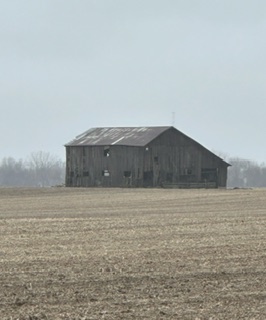
Farther along in the same massive field was this image of an old barn/home/both. It, too, grabbed me by the aesthetic throat.

Simple bucolic scenes like these cover the Midwest. These and countless other scenes are just some of the reasons I love coming up here to be with these soldiers. These scenes are shepherded by salt-of-the- earth folks, and the ways they love and tend their lands makes me track with their spirit, and grateful for the opportunities I have been granted to travel our nation and try and minister to her soldiers.

Midwest Reflections

I love traveling to America’s Midwest. Disparaged by some as “flyover country,” where there is ostensibly little to see but farmland and silos, I see its beauty. Yes, there is no paucity of corn, soybeans, or countless acres of agricultural cultivation; no want of barns, tractors, irrigation pumps; no shortage of silos and storage bins. But it is beautiful to me each time I am here, even in winter. Maybe it is because God created in me a love of rural life with its little Mom & Pop stores, bait-n-tackle shops, groceries where the lady behind the bakery counter knows your face and even your name.

Here’s an example of what I mean: I was in a local grocery here to purchase donuts for the soldiers I’m teaching this week. The guys all knew of this local establishment, and it came highly recommended. So, during lunch, I drove to the store, walked back to the bakery section, asked the friendly lady in the hairnet who was putting frosting on cakes she had baked, “Ma’am, good afternoon. I’d like to see if I can order a couple dozen donuts for my guys tomorrow morning and pick them up at say, 0700, when you guys open, please. Maybe a dozen glazed and a dozen chocolate. May I do that?”

“Sure,” she said. “Let me just check with my staff and see if that works.” She disappeared behind the door for a moment and then returned. “No problem,” she said. “I just need your name and phone number.”

I provided both pieces of information. I pointed to my surname on my uniform and gave her my first name, along with my cell number, and asked a couple of other questions. “May I pay you now?”

“Just wait till tomorrow, hon, if that works.”

“Sure,” I said. “Whatever’s best for you guys. 0700 okay, then?” I asked.

“What’s that?”

“Seven a.m. okay, then?” I asked, remembering I was talking to a civilian.

“Yes, sir,” she said. “And thank you for your service.”

“Thank you, ma’am,” I said.

I turned to walk out, and an elderly woman was behind me at the bakery counter. She had her spotted hands upon the yellow plastic bar of her shopping cart (what we call a buggy, in my neck of the woods). “Thank you for your service,” she said.

“Thank you, ma’am,” I said.

As I flew into Indianapolis, it was snowing lightly. This was my view from my seat as we descended into Indy:

As I drove towards where my fellow soldiers were and where I’d be conducting the training, I drove across one of the local rivers:

A couple of one-year-old whitetails were browsing in the winter landscape:

It may be flyover country to some, but I think it’s beautiful. Each landscape has its own beauty, I think. Deserts were ugly until I was in them; swamps can be brutal in the humid summers down South, but there’s nothing like the fecund mystery of a swamp in spring with its gators and herons and the smell of the good earth, etc. Each place has its own beauty. This week it’s the Midwest and its friendly folks.

Led Zeppelin, the Stairway, & the Gospel

Question: Does anyone not know of Led Zeppelin’s “Stairway to Heaven”? Most likely, we’ve all listened to it multiple times. It’s one of the most iconic songs in music history and it contains some very powerful imagery. Bear with me as I list some of Robert Plant’s lyrics below and then pose a question:

There’s a lady who’s sure
All that glitters is gold
And she’s buying a stairway to heaven
When she gets there she knows
If the stores are all closed
With a word she can get what she came for


And she’s buying a stairway to heaven
There’s a sign on the wall
But she wants to be sure
‘Cause you know, sometimes words have two meanings


In a tree by the brook
There’s a songbird who sings
Sometimes all of our thoughts are misgiven

Ooh, it makes me wonder

Ooh, it makes me wonder

There’s a feeling I get
When I look to the west
And my spirit is crying for leaving
In my thoughts I have seen
Rings of smoke through the trees
And the voices of those who stand looking

Ooh, it makes me wonder

Ooh, it really makes me wonder

And it’s whispered that soon
If we all call the tune
Then the piper will lead us to reason
And a new day will dawn
For those who stand long
And the forests will echo with laughter

If there’s a bustle in your hedgerow, don’t be alarmed now
It’s just a spring clean for the May Queen
Yes, there are two paths you can go by, but in the long run
And there’s still time to change the road you’re on

And it makes me wonder

Your head is humming and it won’t go

In case you don’t know
The piper’s calling you to join him

Dear lady, can you hear the wind blow?
And did you know
Your stairway lies on the whispering wind?

And as we wind on down the road
Our shadows taller than our soul
There walks a lady we all know
Who shines white light and wants to show
How everything still turns to gold
And if you listen very hard
The tune will come to you at last
When all are one and one is all, yeah
To be a rock and not to roll

And she’s buying a stairway to heaven

If you were humming the tune in your head, don’t worry, I was, too. But now for the question: Do you see the recurring image Plant has in the lyrics? It’s this stairway that ascends to heaven. Everything hinges on that. It “lies on the whispering wind” and it the lady of the song is “buying” this stairway, per multiple lines. Over and over again, the heroine of the song labors to purchase her craving because she’s convinced that “all that glitters is gold.” This stairway to heaven is the link, the nexus, the connection between the human and the divine.

Jacob’s Dream: In Genesis 28, the patriarch Jacob (Abraham’s grandson) has a dream. The text reads as follows: “And he dreamed, and behold, there was a ladder [stairway] set up on the earth, and the top of it reached to heaven. Ang behold, the angels of God were ascending and descending on it! And behold, the LORD stood above it and said, “I am the LORD, the God of Abraham your father and the God of Isaac. The land on which you lie I will give to you and to your offspring” (Gen 28:12-13, ESV). 

The imagery is straightforward. This massively important man Jacob, grandson of Abraham and son of Isaac, soon to be renamed Israel, lies down for a nap on his way to Haran. He has this dream. And in his dream, he sees this stairway to heaven. God is atop it. And going up and down this stairway to heaven are angels/heavenly hosts. God was getting Jacob’s attention, you see, to teach Jacob something about himself and a lot about God. 

Connection to Christ: When the Gospel of John opens, the first chapter is one of the richest in the entire Bible. For good reasons, John is called the gospel of Christology. It focuses on Christ as God. It hinges on the person and work of Christ/Christ as the God-Man. John teaches over and over again that Jesus was and is God incarnate. 

There’s a scene in the last section of John 1 where Jesus interacts with Nathanael: 

 47 Jesus saw Nathanael coming toward him and said of him, “Behold, an Israelite indeed, in whom there is no deceit!” 48 Nathanael said to him, “How do you know me?” Jesus answered him, “Before Philip called you, when you were under the fig tree, I saw you.” 49 Nathanael answered him, “Rabbi, you are the Son of God! You are the King of Israel!” 50 Jesus answered him, “Because I said to you, ‘I saw you under the fig tree,’ do you believe? You will see greater things than these.” 51 And he said to him, “Truly, truly, I say to you, you will see heaven opened, and the angels of God ascending and descending on the Son of Man.”

Question: Did you catch that in verse 51? Jesus told Nathanael that he would see heaven opened and the angels of God going up and down. Where? On the Son of Man (Jesus’s favorite appellation for himself). The exact same imagery as from Genesis 28 with Jacob. 

Encouragement: The stairway to heaven is not something that can be purchased but only received. The stairway to heaven is not a thing but a person. The stairway to heaven is the one who bridges the chasm between sinful men and holy God. “For there is one mediator between God and men, the man Christ Jesus” (1 Tim 2:5, ESV). Jacob was awed by what he saw in his dream. And Nathanael was awed by what he was privileged to see—namely, God in the flesh, Christ Jesus, the stairway to heaven, the one who can never be purchased as if he were gold, because he is the one who created gold and everything else, and upholds it all by the word of his power, God himself. 

But How About the Bad Stuff, Eh?

Introduction: Recently I texted a person I love and asked for some wisdom. I asked, “What to write about?”

Why the Question? In my role in Christian ministry, I do a fair share of writing. I’m typically better with a pen/pencil, cup of coffee, and a notebook than with a microphone or at a lectern. The second medium, in today’s climate, tends to focus on the visual rather than the intellectual and/or the content under review. Words and the Word rule the world, however, and I’m content to remain a penmeister. I love few things as much as words fitly [writt]en (Pr 25:11).

The Response: The response I got shook me. And this is a direct quote: “How about something along the lines of we will at some point deal with tragedy, grief, hurt and who should be our foundation.”

Why’s That So Helpful? Well, because it’s accurate, isn’t it? Do you know anyone who does not suffer or deal with tragedy? Is anyone immune to hard times? Must everything in ministry be sunshine and rainbows? Must the minister’s job be a life coach for happy-clappy thoughts? Has ministry degenerated into Oprahism and Joel Osteen shiny watches, bleached teeth, and gelled hair, and Steven Furtick emotional pep rallies–cliches of pop humanistic psychology, fit for coffee mug bromides and aphorisms stenciled as refrigerator magnets? (Shhh … don’t tell me, because I think I know the answer.)

Keeping It Real: I’m old enough, and have been in ministry long enough, that I know better. So do you, if you’re honest. We all know that hard times come to us all. We all suffer. We all know sadness. We all have experienced loss. Each day is not sunshine and rainbows, even for Smilin’ Joel.

Scripture Is Not Silent:

“Share in suffering as a good soldier of Christ Jesus” (2 Tim 2:3, ESV).

“And you will be hated by all for my name’s sake. But the one who endures to the end will be saved” (Mt 10:22, ESV).

“If you were of the world, the world would love you as its own; but because you are not of the world, but I chose you out of the world, therefore the world hates you” (Jn 15:19, ESV).

“For we do not have a high priest who is unable to sympathize with our weaknesses, but one who in every respect has been tempted as we are, yet without sin. Let us then with confidence draw near to the throne of grace, that we may receive mercy and find grace to help in time of need” (Hb 4:15-16, ESV).

But What About Unbelievers?

An easily anticipated objection is, “But what if I don’t believe that?”

It’s answered just as easily: Who cares? If you’re an atheist, you don’t believe there’s anyone there, anyway. So, what are you whining about? You claim to believe that everything came from nothing. No-thing somehow gave rise to every-thing. And you say I have faith?

If you’re a consistent materialist, just have the intellectual integrity and logical consistency to admit you’re just so much cosmic dust, brain fizz, not qualitatively different from pond algae or indigestion. For you to complain about anything, especially moral categories or metaphysics, is both a non sequitur and just downright funny.

And Now . . . the Encouragement: I have to mock the professing atheist. Why? Because he shakes his fist and rages at the God he professes to deny. Psalm 2 and Psalm 14 address this overtly. I commend them to you.

For those who are serious, for those who are suffering, and who are struggling to reconcile pain and suffering with the existence of the God who is and the God who cares, stand by. I will write more. For now, just know you’re not alone. Many have wrestled with this: Job is just one example. Be patient. Reach out. Listen. And seek out those who truly care and are not just trying to get 15-minutes of fame. More to come.

Tests of Faith, a Son, & Wood: Gospel in the Old Testament

Main Idea: The Faith, The Son, the Wood: Gospel in the Old Testament

Text: Genesis 22:1-15, ESV:

After these things God tested Abraham and said to him, “Abraham!” And he said, “Here I am.” 2 He said, “Take your son, your only son Isaac, whom you love, and go to the land of Moriah, and offer him there as a burnt offering on one of the mountains of which I shall tell you.” 3 So Abraham rose early in the morning, saddled his donkey, and took two of his young men with him, and his son Isaac. And he cut the wood for the burnt offering and arose and went to the place of which God had told him. 4 On the third day Abraham lifted up his eyes and saw the place from afar. 5 Then Abraham said to his young men, “Stay here with the donkey; I and the boy will go over there and worship and come again to you.” 6 And Abraham took the wood of the burnt offering and laid it on Isaac his son. And he took in his hand the fire and the knife. So they went both of them together. 7 And Isaac said to his father Abraham, “My father!” And he said, “Here I am, my son.” He said, “Behold, the fire and the wood, but where is the lamb for a burnt offering?” 8 Abraham said, “God will provide for himself the lamb for a burnt offering, my son.” So they went both of them together.

9 When they came to the place of which God had told him, Abraham built the altar there and laid the wood in order and bound Isaac his son and laid him on the altar, on top of the wood. 10 Then Abraham reached out his hand and took the knife to slaughter his son. 11 But the angel of the Lord called to him from heaven and said, “Abraham, Abraham!” And he said, “Here I am.” 12 He said, “Do not lay your hand on the boy or do anything to him, for now I know that you fear God, seeing you have not withheld your son, your only son, from me.” 13 And Abraham lifted up his eyes and looked, and behold, behind him was a ram, caught in a thicket by his horns. And Abraham went and took the ram and offered it up as a burnt offering instead of his son. 14 So Abraham called the name of that place, “The Lord will provide”; as it is said to this day, “On the mount of the Lord it shall be provided.”

Theology/Doctrine: It is significant that the first verse of Genesis 22 tells us that “God tested Abraham.” That was not so that God might learn anything, of course, but that Abraham might learn what it means to walk by faith in the covenant faithfulness of God. Then, God told Abraham to take the son he loved and offer him on the mountain. Abraham of course had Ishmael, too, but Isaac was the beloved son, not Ishmael. So, Abraham takes his son and placed him upon the wood. The son asks, “Where is the lamb?” In other words, where’s the sacrifice unto God? And the Lord, having seen Abraham’s faith, disclosed to Abraham and Isaac what the plan had been all along—that God would provide for himself the offering. And there was a ram, caught in a thicket, for the sacrifice. The son Isaac was spared; the ram was sacrificed; and salvation history continued to unfold. But it all hinged upon faith, a son, wood, and a gospel message.

Connection: “The LORD will provide” did not end at Mount Moriah with Abraham and Isaac and a ram. No, in God’s infinite wisdom, God would again disclose his purposes. Instead of Isaac, it was Jesus on the wood. Instead of a ram in the thicket, it was Jesus on the old rugged cross. Instead of Mount Moriah, it was Calvary. Instead of Abraham being tested, it was Jesus who alone is both satisfaction for sin’s punishment and propitiation for perfect obedience. The holy was made sin for us in order that we might be redeemed (2 Cor 5:21).   

Application: Now that we have seen the covenant faithfulness of God to provide for himself the sacrifice, how ought God’s redeemed people therefore live in a world captured by spiritual darkness. May we be salt and light in our circles of influence and trust the results to the Judge of all the earth who only and always does what is right.

Atonement (for the atheist): Nonsense

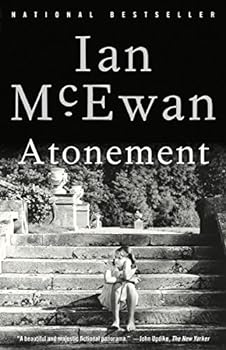
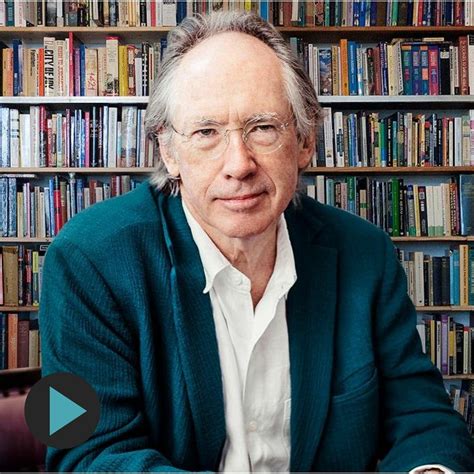
I’m reading McEwan’s oft-referenced novel Atonement. The writing is, like the other McEwan novels and short stories I’ve read, superb. He’s understandably compared to Dickens and Updike. He is a master of portraying childhood wounds like Dickens, and he’s equally gifted in examining the cruelties and dark imaginations of adult life like John Updike.

McEwan’s atheism is no secret. Yet he seems determined to explore the theme of atonement (or lack thereof) in this novel. (How can there be atonement if there’s no saviour?) And it is proving to be a rather circuitous (and solipsistic) route.

Franklin’s Deeds & Creeds

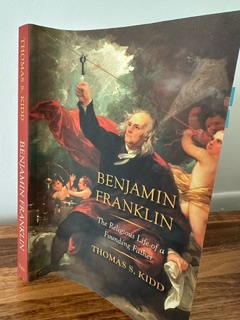
I completed reading Kidd’s Benjamin Franklin: The Religious Life of a Founding Father recently. Highly recommended.

Replete with primary and secondary sources, this is theology and history written in an engaging manner. Kidd’s writing is captivating. He demonstrates the mind of a true, called historian who likewise understands theological presuppositions from the various sides. Truly a wonderful read.