When we pulled into Momo & Granddaddy’s home the full magnolia tree was the first thing I always saw. The picture above is not the actual tree but it resembles it. Roots were often massive and often surfaced. The grass did not grow much underneath. The broad deep green leaves of the magnolia abosrbed the sunlight. If the weather was cool I found cones underneath. If warm, there were cream-colored flowers on the branches, white flowers pungent when I smelled them. (When I smelled magnolias I did not forget them. Like honeysuckle on hot summer days I don’t think I would ever want to forget that sweet smell.)
Today as I drove to my apartment where I am away from family due to being in the military, I passed a general’s manicured grounds. The estate was replete with oaks, dogwoods, and magnolias. And suddenly I was a boy again–climbing the magnolia at Momo and Granddaddy’s place, where the garden was twenty meters east of the tree, directly behind the house, and Grandaddy’s corn grew in rows, as did the butterbeans, okra, squash, and tomatoes. His gray gloves were draped over the backporch handrail, and his pronged hoe lay propped at an angle beside his work boots and straw hat.
Inside the door, Momo fried fatback in a black cast iron skillet and she and Granddaddy had us sit around the formica table and hold hands and pray before we ate the best food I’ve ever tasted. I did not know it then, but I was being fed–not just prayers of amazing grandparents, not just butterbeans and peas and Vidalia onions from the soil just outside the backdoor, not just love from women and men who’d survived the Great Depression and known life without electricity, but I was being fed my deepest riches.
The magnolia, the garden, the garden tools, the smell of my beloved Momo when she hugged us and we believed that all would be well because she was there, and my soulmate Granddaddy, with his arthritic hands and black Scofield Study Bible, and the way he’d laugh, and they way he’d eat cereal before he went to bed in his blue pajamas–it was all there. All of it. Richness but not in dollars. In impact and in love.
To you, dear ones, I will never be able to repay you sufficiently. You were precious. Like the corn and tomatoes and the countless hours in which you worked literal and spiritual soils, you reaped impacts. You still live in me, in us, in those you reached. I can never see a magnolia, or touch a hoe or rake, or eat fatback at a buffet, and not remember that all things were sweeter, richer, and better with you. Words won’t reach high enough to tell how much I miss you. Even the magnolia in spring, cluttered in white, fails. But you did not fail. No, you were precious. And you reached heaven.
Introduction: I was blessed to have a father who instilled in me a love of travel. One of the most powerful and lasting memories I have is of a trip where he took me and others to Africa. We traveled to Kenya and parts of Tanzania. We saw the lions hunt on the safari. We saw zebras chased and gazelles chased and all were taken down by the rulers–the lions.
Literary Connection: I know of few short story writers who excel Ernest Hemingway. In his short stories, he is simply magnificent. I was reading a lot of Hemingway in the years before and after Dad took us to Africa. And if you know anything of Hemingway’s short stories, more than a few are filled with scenes from Africa that involve men and women, courage and cowardice, lions and prey. All play parts in the masterful fiction of Hemingway. When I read of lions in Scripture and in literary fiction, the scenes from my times in Africa burn brightly in my imagination. When you see blood of safari animals smeared on the visage and mane of majestic lions, and you see the puissance of the mighty and see the sweat on their muscular shoulders, you feel your finitude. You feel a “Zero at the Bone,” as Dickinson referenced when we cross a serpent.
Biblical Connection to Psalm 57: This week I am camping out in Psalm 57 and studying each phrase and image in it in order to teach it to my fellow Christian pilgrims Sunday at church. And in verse 4 of this poem from David, he writes, “My soul is in the midst of lions; I lie down amid fiery beasts–the children of man, whose teeth are spears and arrows, whose tongues are sharp swords” (Psalm 57:4 ESV).
My mind naturally tracks with figurative language; literature comes naturally to me. I don’t struggle to view the world via a literary lens like some do. Most people I know struggle with literature; it’s too “gray” for them, they tell me. Geometry and mathematics are their lenses for viewing. Hey, so be it. I wish that God had also given me that way of seeing, but alas, that didn’t happen. Words are my way; Euclid remains a mystery to me, in most ways.
But the imagery here in v. 4 is of the heart of the man (David) being “in the midst of lions.” And those lions are people. Their teeth are “spears and arrows.” Leonine imagery to depict human violence and terror. People’s tongues David calls “sharp swords.”
Takeaway& the Big Picture: So often in Christian Scripture, leonine imagery is used. Daniel is cast into a den of lions (Daniel 6). Satan prowls around like a roaring lion (1 Peter 5:8). Paul is rescued from the lion’s mouth (2 Timothy 4:17). Jesus is the Lion of the tribe of Judah (Revelation 5:5).
David pictured it. Paul experienced it. Daniel experienced it. Peter wrote of it. But Jesus faced it (the ultimate adversary/lion) and overcame him/it. You see, the reason the gospel is good news is because the greatest Lion was not in Babylon threatening Daniel; it was not Demas and Alexander and false brethren of the apostle Paul; it was not enemies of David, wicked men like Saul. Satan is a great lion seeking to devour God’s people.
But Satan is not the greatest lion. The greatest Lion is the one who crushed the serpent’s head, the one whose word is a sword, the one who laid down his life in order that he might take it up again three days later, and he is good, and terrible, and righteous, and he is the conqueror, the Alpha and Omega, and he bids you welcome. He is the Lion to watch.
Rode the steel horse with Carrie Jane for a couple of hours, stopped in for some Mexican food in the hills, and, well, it was all just about perfect.
Came home and saw some of the critters browsing early in the day under full sun and with a slight breeze.
Crossed the lake and it was smooth and inviting.
Was able earlier in the day to serve as the chaplain for the WWII Observance, too, and spoke with four WWII veterans from the branches of service, several of whom fought at Normandy, Utah Beach, and the Battle of the Bulge. One even helped liberate Buchenwald. Each time I speak with men of this caliber I am humbled and grateful. My cup today was full. Thankful.
Introduction: It has been said that “Our lives begin to end the day we become silent about things that matter.” I appreciate that insight. Speaking truth is a dangerous undertaking. It is much easier to just go along to get along or to seek distraction endlessly. We have substituted entertainment and distraction for depth of meaning. The means of entertainment are endless. As Neil Postman wrote, we are amusing ourselves to death. Critical thinking is about as common as an Apatosaurus excelsus dinosaur in your town square.
Loss of Transcendence: This week I have been with fellow soldiers in the Midwest. One of the tasks I am able to do as a chaplain is equip soldiers with means of preventing, or at least reducing, suicide in the military. It is a tragedy how many Soldiers, Sailors, Airmen, Marines, and Coast Guardsmen take their own lives. The military sees the statistics, professes to want to prevent suicides, but seems powerless oftentimes to reduce and/or eliminate suicide. Why? At the risk of being too reductionistic, I think it’s the loss of the transcendent.
Many soldiers don’t know who they are or why they are or why there is anything that matters because they deny the Author of life. That is, if you raise a generation to believe that they are only so much cosmic dust, it should not surprise us when suicide is an epidemic. Again, “Our lives begin to end the day we become silent about things that matter.”
My Favorite Book: Like many other believers I read the Bible several times through a year. But my favorite book of the Bible has remained for many years the same: Ecclesiastes. Why? Well, it is literary in nature, that’s one reason. I relish literature and my mind naturally runs in literary grooves. But another reason is that Solomon’s Ecclesiastes is a masterful case study in meaning vs. meaninglessness. Solomon had it all, so to speak, at least in a worldly sense. He gained the whole world. He had looks, wealth, health, wine, women, and song. He was the envy of the world. He was wise, but he became oftentimes the fool.
Why? Because he lost, at least at times, the transcendent. He suppressed God. He wrote, in just one of his refrains, “Then I considered all that my hands had done and the toil I had expended in doing it, and behold, all was vanity and a striving after wind, and there was nothing to be gained under the sun” (Ecclesiastes 2:11 ESV).
Perhaps his most well-known line is found in Ecclesiastes 1:9, “What has been done is what will be, and what has been done is what will be done, and there is nothing new under the sun.”
The refrain of “under the sun” runs through Ecclesiastes. It’s the secular life. It’s life without God. It’s a life given over to entertainment. It’s a life of distraction. It’s a life of “Eat, drink, and be merry; for tomorrow we die” thinking (Luke 12:19-20).
Segue: When we abandon the transcendent, we lose. We cut ourselves off from the very source of wisdom. We deny the Author of life (Acts 3:15). We reveal ourselves to be living lives of hebel. That’s the Hebrew word for vanity or vapor or mere breath. We are here, but like a mist, a vapor that vanishes. No impact.
See why suicide is rampant in the ranks? Because we’ve lost the transcendent. But (and here’s where the danger of truth-telling surfaces), I don’t know that is that we have lost truth so much as we have suppressed it.
Solomon’s Wisdom: I return to the magnificent book of Ecclesiastes. When you study Solomon, you see a man of extremes: wisdom and folly; not just one wife but scores of wives, and concubines, too (1 Kings 11:3); mirth and madness. Here was a man who gained the whole world and arguably often lost his soul. He penned that even for him, “All things are full of weariness; a man cannot utter it; the eye is not satisfied with seeing, nor the ear with hearing” (Ecclesiastes 1:8). He felt that all his accomplishments were just hebel, mere mists of nothingness, vapors. There was to be no remembrance of former things (Ecclesiastes 1:11). But he did not end this wonderful book with dourness. No, he summoned us back to the good news, the truth of redemption, the way back to transcendence:
Besides being wise, the Preacher also taught the people knowledge, weighing and studying and arranging many proverbs with great care. The Preacher sought to find words of delight, and uprightly he wrote words of truth.
The words of the wise are like goads, and like nails firmly fixed are the collected sayings; they are given by one Shepherd. My son, beware of anything beyond these. Of making many books there is no end, and much study is a weariness of the flesh.The end of the matter; all has been heard. Fear God and keep his commandments, for this is the whole duty of man. For God will bring every deed into judgment, with every secret thing, whether good or evil.(Ecclesiastes 12:9-14 ESV)
Encouragement: I love teaching my fellow soldiers, absolutely love it. However, what would happen, I wonder, if we simply read and implemented Solomon’s book Ecclesiastes? What might happen if we equipped soldiers and civilians with the truth of God? What if we reintroduced them to the truth that gets so often excluded from discussion and replaced by groupthink and moralistic bromides? What if we allowed them to study the actual history of Solomon, a king and ruler, who lived to tell the tales about the costs–the devastating costs–of secularism? What if, in sum, we abandoned the age of folly and sought to be a people of wisdom?
Introduction: In a culture awash with bad news, horrors, and the profane, just a light piece to brag on an airport I love using: Indianapolis, Indiana’s. Why? Well, I left Atlanta’s airport early in the morning, and the best view of ATL’s airport is in the rear view mirror. ATL’s is a zoo that seems to bring out many folks who were raised on MTV, Skittles, and TheJerry Springer Show. One need only watch and marvel at the things you see in ATL’s airport.
Leaving ATL:
Welcome Aboard: This Southwest flight was on a pretty new 737. There were plenty of unoccupied seats and we passengers were able to spread out.
A gregarious friendly stewardess saw me in uniform and welcomed me aboard. Then she told me of her dad who was with 1st CAV in Vietnam from 1967-69, and of how he was killed while serving there during combat operations. I listened. She pulled out her cell phone and showed me pictures of her dad, an infantry officer and an O-4 (Major) when he was killed in combat. She talked of her dad, of her memories growing up on Ft. Benning and Ft. Hood. I listened. She was so genuine, grateful, and clearly still adored her dad.
Literary Tingles: I always smile when I look at the literature sign in the seat pocket in front of us when we are seated.
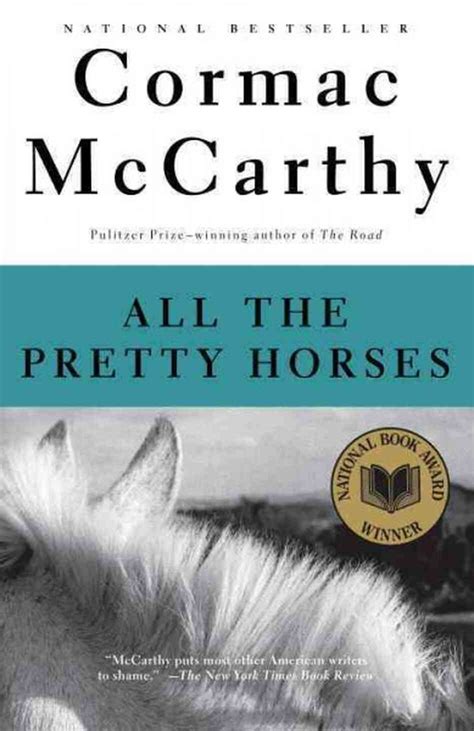
I pulled out my paperback of All the Pretty Horses that I’m reading for the umpteenth time. I love it that much and thought to myself, “Hey, literature time! I’m ready!” That tends to get some strange looks from the non-literary types nearby, so I smile.
Midwest from the Sky: Indiana came into view after I’d read for an hour-and-a-half. In my reading, I had been on horseback with John Grady Cole and been in a prison fight with Mexican thugs in McCarthy’s literary world.
Indianapolis’s Airport Doing Right by the Military: I was slated to meet my buddy at the USO in Indy’s airport. I had a few moments before he arrived, so I walked around the USO and out front, admiring the work that made this USO so welcoming. Plus, the veteran-volunteers were all friendly, welcoming me to patronize the free books, help myself to bottled water and coffee and beef jerky, and toiletries if I needed a new can of shaving cream, etc. It was all done well here with attention to detail.
Link-up with My Buddy: My buddy showed up about 20 minutes later. We hugged and immediately began catching up since last time. He was as witty as ever, and we laughed aloud so often that we got some stares from some recruits that were about to ship out to San Diego for their initial training. They were still in civilian attire and the boys still had long hair and they played on their cell phones, and my buddy and I chuckled at their wide-eyed nervousness and the way they huddled together as if comfort rested in numbers.
Indy, you guys do it right here, at least via your airport. Salute!
Introduction: I had a medical exam today as part of being a soldier. Had all my bloodwork examined recently; went through optometry and audiology, too. A familiar regimen to us military types. But when the nurse was talking with me today after she took my blood pressure and I was waiting for the physician’s assistant to come in and listen to my heart, the nurse shared with me that she was a committed reader. She showed me the new Kindle from which she reads regularly. She was so proud of it as she retrieved it from the side of her scrubs. It had a cover on it like the composition books we used to use in writing courses when I was young. I asked her a few questions, as she was so friendly.
“So, what types of books do you read?”
“I like dystopian stuff, apocalyptic stuff, especially the paranormal. I’m in a series that has seventy-five volumes, and I’m in volume seventy-two,” she said.
“Seventy-five volumes? Wow!”
We went on like that for a while. I listened as she recorded my vitals and made notes in my medical records. And she told me of her fascination with those types of reading and how enthralled she was with it all. I could not offer much in terms of relating to it all. But it got me thinking about things I notice more and more nowadays. Specifically, we are awash in all-things-dystopian/apocalyptic/demonic.
More examples: I met with the physician’s assistant, and he listened to my heartbeat and made me inhale and exhale deeply, as the medical types invariably tell us to do, and he told me of my good and bad cholesterol levels, etc. And afterwards I called my wife to give her a kind of update on my health, and all that kind of thing. And I drove later to the gym to get in some PT on the treadmill and the weights. I listened to Dave Matthews and the Doobie Brothers and the Zac Brown Band on my playlist and watched the other soldiers in the gym while I jogged on the treadmill.
I was the only one I could see who was not tattooed. Most soldiers were covered in them. Many of the white soldiers were so tattooed that their skin was no longer white but blue, black, and green with ink. The patterns were often of serpents and swords or of blood or perhaps a phrase of Latin related to courage, sacrifice, strength, victory, and/or death. Several tattoos involved some variation of a cross. And I remembered the nurse from earlier and her fascination with dystopian/apocalyptic literature—replete with spiritual questions about invisible forces and the way warfare is manifested.
After I worked out, I went to the latrine to wash up some and towel off, so that I could go grab a bite to eat later on. On the way towards the door, I passed a soldier. I was raised not to stare at people, because that is impolite, as most would agree. But when I passed the soldier, he/she was “in transition” and covered with ink. I could not tell if it was a man trying to look like a woman, or if it was a woman trying to appear as a man. He/she had characteristics of both—broad shoulders like men, but a thin neck and cheekbones and a pretty face and skin like a woman.
And it hit me again: dystopia/apocalyptic/paranormal stuff; tattoos of spiritual warfare and symbolism; and physical surgeries that transfigure men and women into misshapen creatures contrary to the way they were born. There was a recurring theme. And, quite frankly, it affected me spiritually.
Direction: I tend to mull things over until I get a firm idea of what I think is true about them. For me, that comes by writing. I don’t really know what I think until I can write it clearly. Writing has a way of concretizing the abstract. And as I was studying later in the day and working on my lesson for class Sunday at church, I was in Matthew’s gospel, and I was studying the passages where Jesus casts out demons:
And as they were going away, behold, a demon-oppressed man who was mute was brought to him. And when the demon had been cast out, the mute man spoke. And the crowds marveled, saying, “Never was anything like this seen in Israel.” But the Pharisees said, “He cast out demons by the prince of demons.” (Matthew 9:32-34 ESV)
And then in Matthew 15, a Canaanite woman begged Jesus to heal her daughter of the demon oppressing her:
And behold a Canaanite woman from that region came out and was crying, “Have mercy on me, O Lord, Son of David; my daughter is severely oppressed by a demon. (Matthew 15:22 ESV)
Just thinking: I got back to my place later and was about to continue studying and writing and preparing. And a recommendation came up on a list of movies I might be interested in. It was titled Cabinet of Curiosities. And can you guess what it is about? Seances, Satan, demons, and spiritual warfare.
I continued to try and think through what all I had seen in just one day—at the doctor’s office for my physical health assessment (PHA), at the gym and its sea of tattoos of daggers and serpents and soldiers whose gender I could not discern, and of how so much Scripture is filled with illustrations of demon oppression, possession, and spiritual warfare, and of how even the realms of darkness are under the feet of Christ.
Then I could not even escape this theme when I was on my computer, because Netflix was suggesting to me that I watch a series about seances, Satan, and spiritual warfare. At the very least, I would say that there is a spirit of warfare that is overt in our day, but you must have eyes to see it. And it is painful, at least to me, when we do see it.
Because if we are tender to it, our hearts will break for those bending their knees to the darkness. I don’t want that for myself, for my loved ones, or for much of anyone. I know that may sound like the sentiments of a schoolboy, of as of someone naïve or saccharine. But it is true. The darkness spoken of so often in Scripture (Ephesians 6:10-13, etc.) is real; it is spiritual and visceral, and it is not to be taken lightly.
Introduction: When I was a student in seminary and serving as a chaplain candidate, there was a fellow chaplain candidate that said something one day just before he stood up to preach from the Sermon on the Mount (Matthew 5-7) in the New Testament. He said, “This is the greatest sermon ever ignored.” And then he began to teach. I remember almost nothing from that man’s sermon from decades ago now, but I do remember that phrase–the greatest sermon ever ignored.
This morning I was studying the Sermon on the Mount again. No matter how many times I read it, I am broken. Why? Because I cannot keep the standards. I will have a good run spiritually for a day, maybe a week, maybe longer, but then Blam! And I totally blow it. That is the point, of course–that no one is righteous, no not one. As David writes in Psalm 14:1b, “there is none who does good.”
And Paul, the one-time Pharisee and spiritual legalist, reemphasizes that truth in Romans:
as it is written: “None is righteous, no, not one; no one understands; no one seeks for God. All have turned aside; together they have become worthless; no one does good, not even one. (Romans 3:10-12, ESV)
Paul would go on to write that he counted all his spiritual pride prior to knowing Christ:
2 Look out for the dogs, look out for the evildoers, look out for those who mutilate the flesh. 3 For we are the circumcision, who worship by the Spirit of God and glory in Christ Jesus and put no confidence in the flesh— 4 though I myself have reason for confidence in the flesh also. If anyone else thinks he has reason for confidence in the flesh, I have more: 5 circumcised on the eighth day, of the people of Israel, of the tribe of Benjamin, a Hebrew of Hebrews; as to the law, a Pharisee; 6 as to zeal, a persecutor of the church; as to righteousness under the law, blameless. 7 But whatever gain I had, I counted as loss for the sake of Christ. 8 Indeed, I count everything as loss because of the surpassing worth of knowing Christ Jesus my Lord. For his sake I have suffered the loss of all things and count them as rubbish, in order that I may gain Christ 9 and be found in him, not having a righteousness of my own that comes from the law, but that which comes through faith in Christ, the righteousness from God that depends on faith—(Philippians 3:2-9, ESV)
Why is that passage so important? Because Paul is reemphasizing what God teaches throughout Scripture: our works will only damn us. What saves is being broken over our fallenness and sin, fleeing to Christ alone as savior and redeemer, and having his righteousness imputed to us. In short, we are to flee to God in Christ through repentance and trust/confidence in his saving work.
The constant theme: Paul taught that. Isaiah taught that. Moses taught that. David taught that. Jesus taught that. Abraham was counted righteous by what means? By his merits? No. By his trust in God. He believed God. His confidence was not in himself but in God.
Christ alone is sufficient. And in Christianity alone, all those clothed with Christ’s righteousness are reckoned/counted righteous. That is why Christians are to disciple the nations. It’s a rescue mission for fellow sinners.
And Christ offers himself to us sinners who blow it spiritually. He offers forgiveness, hope, peace, redemption, restoration, and more to us via his sovereign grace. Forgiveness, redemption, and restoration. Let that sink in. Why would we resist that? He says to us, “I am your righteousness. Come to me.”
In Matthew 5:20 Christ says, “For I tell you, unless your righteousness exceeds that of the scribes and Pharisees, you will never enter the kingdom of heaven.” I remember when I was young in my thinking, I took that to mean that I needed to really buckle down and do better. Try harder. Get better. Sin less. Show improvement, etc. But no! That way of thinking is exactly our problem. Why? Because no work of ours is sufficient to merit God’s favor. On the contrary, our works are filthy rags, sufficient only to merit God’s just condemnation.
Pharisaism runs deep and deadly: Jesus reserved his most scathing condemnations for religious legalists, those who thought their works set them apart unto God sufficient to merit his favor. And the Lord excoriated them and their theology. He called them hypocrites (Matthew 23:13) and blind guides (Matthew 23:16) and serpents and broods of vipers (Matthew 23:33). The list could go on and on. The point should be clear. Legalism, adding to the gospel, spiritual pride and posturing, kill. They damn people.
Encouragement: This Sunday, Lord willing, I will unite with fellow sinners and rejoice in the truth of the saving gospel–that Christ came to save us sinners. And those sins so often are related to our focus on ourselves rather than on the redeemer himself. It is God who saves. Any good works the redeemed do are results, not the grounds, of acceptance by the saving God.
Towards the end of one my favorite novels, the wise woman Alphonsa speaks to the protagonist of the story about how and why she came to her worldview:
When I was in school I studied biology. I learned that in making their experiments scientists will take some group–bacteria, mice, people–and subject that group to certain conditions. They compare the results with a second group which has not been disturbed. This second group is called the control group. It is the control group which enables the scientist to gauge the effect of his experiment. To judge the significance of what has occurred. In history there are no control groups. There is no one to tell us what might have been. We weep over the might have been, but there is no might have been. There never was. It is supposed to be true that those who do not know history are condemned to repeat it. I don’t believe knowing can save us. What is constant in history is greed and foolishness and a love of blood and this is a thing that even God–who knows all that can be known–seems powerless to change (239).
Reflection: As I have written other places, it is unwise to ascribe the words of an author’s created character as representing the author’s own worldview. At the same time, however, it is unwise to neglect an author’s created character’s views as irrelevant or necessarily contrary to the author’s own.
The character of Huck Finn was not Mark Twain. The character of Hamlet was not Shakespeare. The character of Jay Gatsby was not Scott Fitzgerald. However, to not try and see the world as Huck did would be to miss massive themes about freedom versus slavery, about nature versus urbanization. To not understand betrayal and corruption and the lust for vengeance like Hamlet did would be to miss massive explorations of what it means to strive for honor, to confront decay, to weigh what makes life worth living. To not understand the tragedy of Jay Gatsby’s dissolution would be to not grapple with the perils of materialism and the lust for stuff and for seeming instead of being.
The beauty and challenge of great literature is that we are invited to explore the depths of the issues raised and engage in order to deepen our lives–to use our mind, heart, soul, and strength for those ideas that ought to most matter.